Archive | work in progress RSS feed for this section

In Progress: Butterick 6019

13 Apr

Hey guys, guess what.

I’M GOING TO PROM.

This is 100% not a joke. I am going to a literal high school prom.
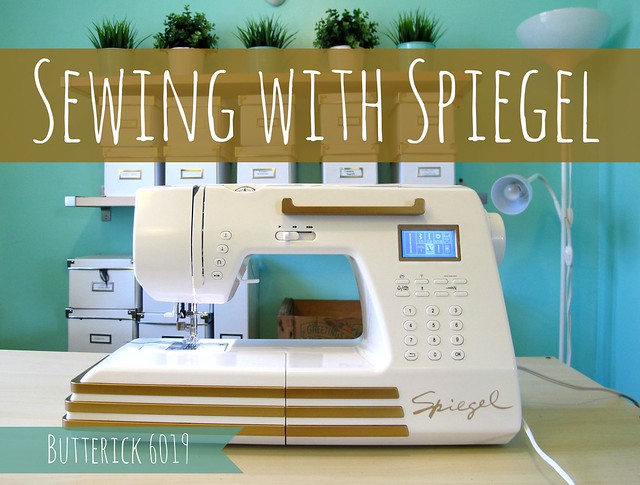
Butterick 6019

Before anyone starts thinking that I’m dating someone WAY too young for me, I should probably use this opportunity to point out that my date is my BFF, who happens to be a high school English teacher and gets 2 free tickets to prom every year πŸ™‚ I will take any excuse I can get when it comes to dressing up, though – especially if it means I get to make a party dress! The bulk of my sewing used to involve a lot more frosting than cake, and while I’ve reverted to making a lot of useful basics, I still get starry-eyed when I think about ridiculous party dresses. Prom is the *perfect* excuse to get some fancy sewing out of my system!

My pattern of choice is Butterick 6019, which I have been wanting to make for ages. I’m going with view A, which includes removable halter straps and a circle skirt. The fabric is a black solid silk faille from Mood Fabrics. I ain’t gonna lie – I originally tried to buy something with actual color, red being my first choice. But it being prom season and all, Mood ended up selling out before my order was fulfilled and I had to choose a different color on the spot. Since I didn’t have time to get swatches for color comparison (and I didn’t want to end up with a bad color, considering this silk is $50/yard and non-returnable!), and the selection was super limited at that point, I ended up getting basic black. This means I probably am sewing the most practical formal dress ever. Oh well! πŸ™‚ At least I’m ready for my next black tie wedding, ha!

One more thing I want to point out about silk faille – it’s pronounced “FILE.” Not fail or foll (both of which I have tried and been laughed at for. Ok, y’all, it’s been like 10 years since I studied French and I wasn’t very good at it to begin with! Give me a break). I already made an ass out of myself, so now you don’t have to! β™₯

Butterick 6019 - In progress

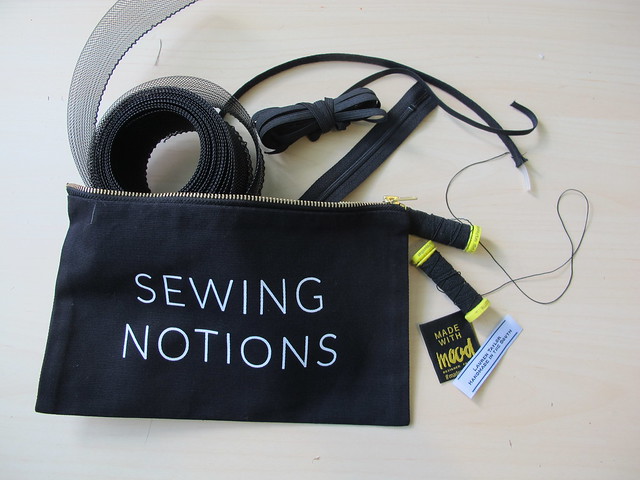
This project is definitely a labor of love – there’s a lot of work (and notions!) that go into a dress like this. The bodice is lined with self fabric, and features boning, shirring, a lapped zipper, bust padding, and that beautiful bias-cut crossover piece. For the skirt, I decided to add horsehair braid to give it some extra body and really make it flare out. Whenever I start a project that includes a lot of notions, I like to corral them into one place so they are easy to find. In the past, it’s been Ziploc bags – which are super useful, but not really that pretty! I recently received this sewing notions pouch from Tailor Made Shop and it’s perfect for this use! The pouch is roomy enough to hold everything I need (it even fits a pair of 8″ Gingher scissors – not really necessary for this particular use, but GREAT for when I’m teaching and I need to take some tools with me!) and it zips securely so nothing spills out. And it’s way prettier than a Ziploc bag πŸ™‚

Butterick 6019 - In progress

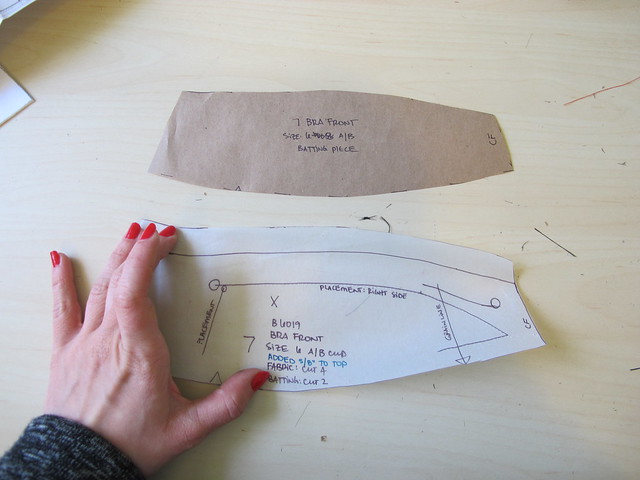
I don’t want to freak anyone out here – but I actually TRACED my pattern pieces for this project. lolwut right!? I had a hard time determining my size (even with the finished measurements and cup sizing – the sizing on this pattern just doesn’t make sense to me at all), and so I needed to keep the sizes intact in case I cut the wrong one. Fortunately, the bodice of this pattern involves a lot of small pieces, so it wasn’t a huge time suck. I ended up going with a size 6 A/B cup at the bust (FWIW, I wear a D/DD bra so yeah, um, the cup sizing is a bit skewed here!) and graded out to an 8 at the waist. Since the skirt is just a giant circle, I didn’t trace those pieces.

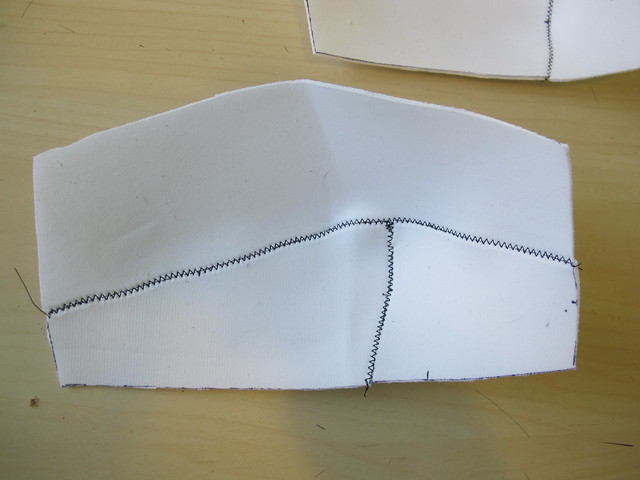
I made a muslin of the bodice – shirring included, but no boning. The shirring is extremely necessary if you’re muslining this dress, as it drastically affects the fit. The sizes I traced and cut ended up being perfect, albeit the top of the dress itself is quite low (which I had read about in reviews, so no surprise there!). The pattern changes I made were to add 5/8″ to the top of the bodice all the way around, and then shorten every piece by 1/2″ at the lengthen/shorten line so the skirt seam would hit my waist. I also traced the cup pieces a second time and removed the seam allowances all the way around. These pieces ended up making the bust padding, which is constructed the same way a foam cup bra is made (with the pieces butted up together and zigzagged across the seam). Rather than cut my pieces and then remove the seam allowance – which is wasteful as hell, sorry – I did this instead. Look at the difference in their size!
Butterick 6019 - In progress

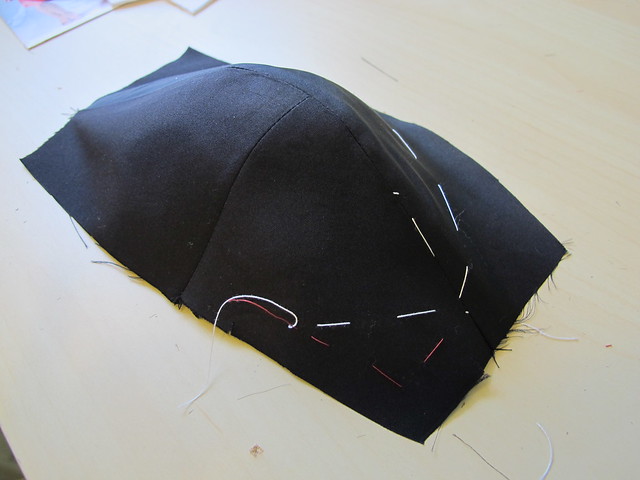
The pattern has a lot of markings for placement – boning placement, the bias strip, and just basic construction seam allowances. Since I didn’t want to risk a permanent stain on my dress, I marked the wrong side and then thread traced the markings with silk thread. The silk thread allows the markings to be seen from both sides, and can easily be removed. I used a different color for the type of markings – tan for the strip, white for boning, red for construction. This was MASSIVELY helpful when putting together the puzzle that is this dress.
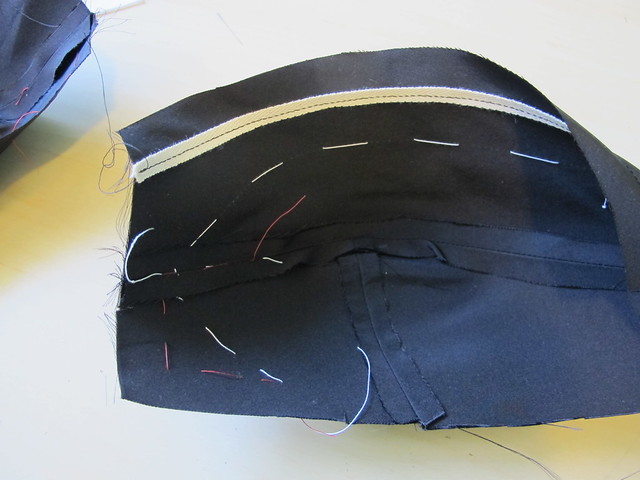
Butterick 6019 - In progress

To keep the cups curved against my body and to prevent them from stretching out, I added twill tape to the seam allowance. This isn’t instructed in the pattern, but it’s good practice for anything that runs the risk of gaping (such as bustier tops like this, or woven wrap dresses). You basically just cut 1/4″ twill tape the length of the neckline minus 1/4″, then place it inside the seam allowance, up against the seam line. Since the tape is shorter than the neckline, the neckline gets eased into the length of the tape. The easing means the neckline curves with your body, and the twill tape provides some stability to an area that would otherwise stretch out over time.
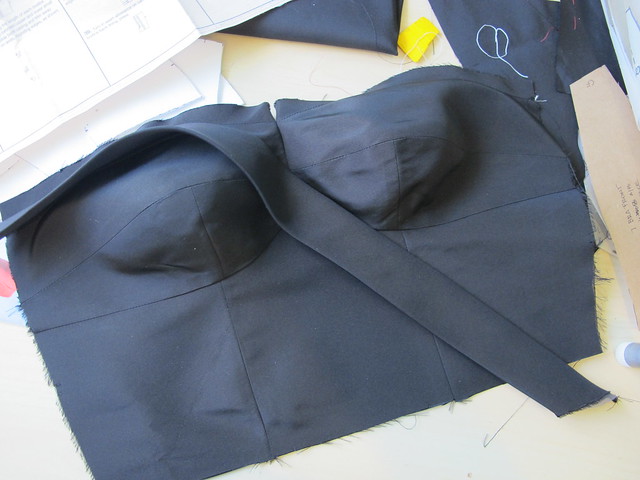
Butterick 6019 - In progress

Assembling the bodice is pretty easy and straightforward. I trimmed down, clipped, and graded my seam allowances pretty aggressively to prevent a bunch of bulk (silk faille is quite stiff), and pressed the life out of everything. #1 reason why I went with silk faille instead of cheaper polyester faille – it’s just easier to work with. I really shudder at the thought of trying to make this dress with something that doesn’t press well.

And now it’s time to shirr! I STRONGLY recommend testing this out on a scrap of your fabric first, as you might need to tweak your machine settings a bit.
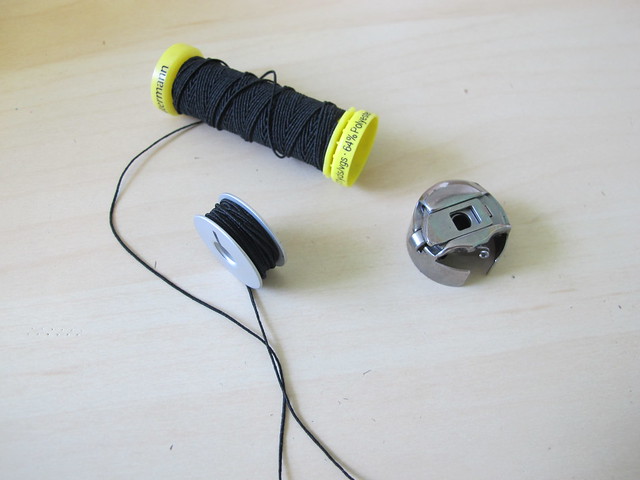
Butterick 6019 - In progress

For shirring, you need elastic thread. Be *very* aware of the yardage amounts that your spool contains, by the way – I didn’t realize this brand only has like 11 yards, which is not enough for this project and I unfortunately ran out and had to stop and buy more (also, black elastic thread is harder to find than white, ugh). I used 2 spools, even though the pattern has you only buy one. Just FYI! Anyway, the elastic thread goes in the bobbin, and it is wound by hand with only a slight tension in the thread. The upper thread is your basic all purpose polyester.
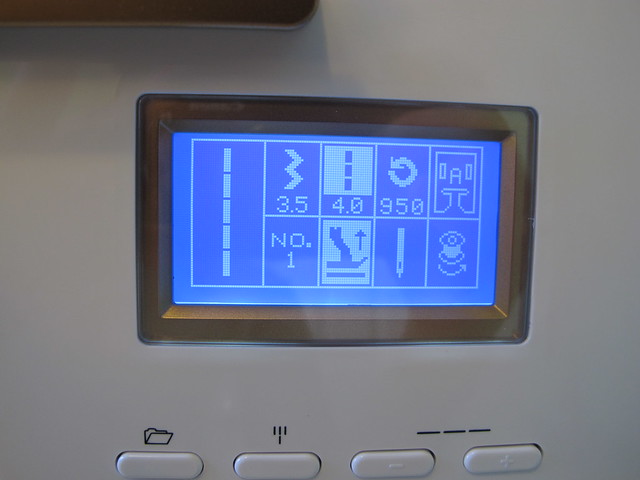
Butterick 6019 - In progress

Set your machine with a longer stitch length. For the Spiegel 60609, I used a 4.0 length.
Butterick 6019 - In progress

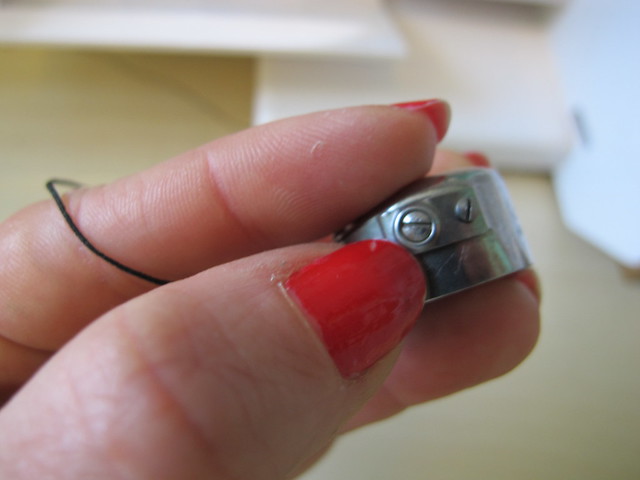
At this point, you’ll want to test the stitches and make sure the tension is good. If it’s not, you can adjust the tension in the bobbin (the little screws you see here). The needle tension (the numbered dial at the top of the machine) can also be used. If you mess with the bobbin tension, its a good idea to mark the location of the screws before you start twisting them around – just use a really fine point marker and draw directly on the bobbin. Otherwise, you might have trouble getting the tension balanced again when you’re done shirring – and you’ll need to take the machine in for a service to set things back to default (and this question has come up a few times – you can get a Spiegel machine serviced at pretty much any sewing machine dealer, regardless of the brand that they sell. *Most* dealers will service all machine brands, even if they sell something different). My Spiegel 60609 did not require any tension adjustments for shirring, so yay!
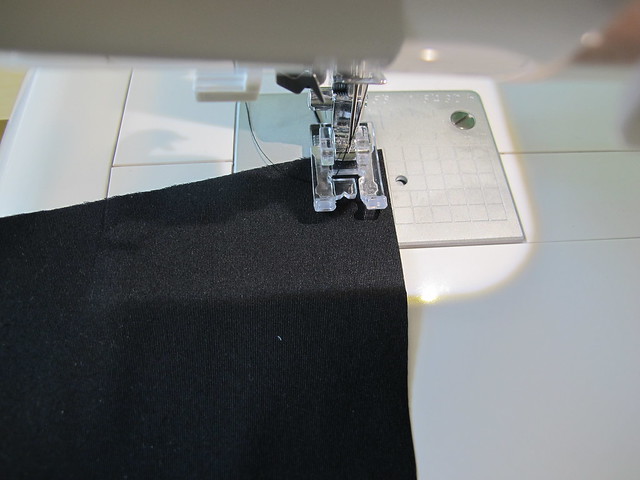
Butterick 6019 - In progress

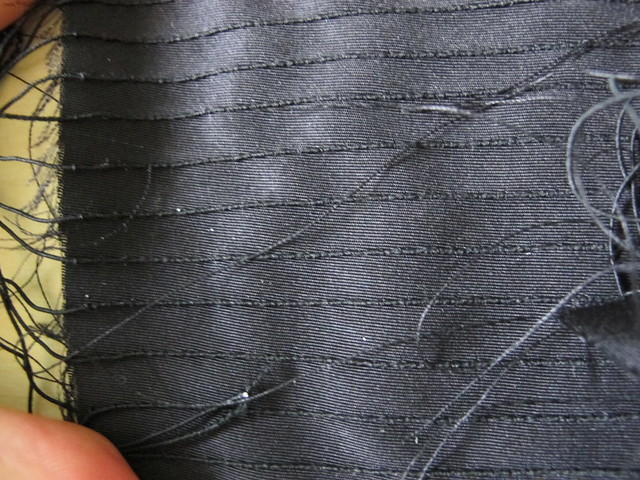
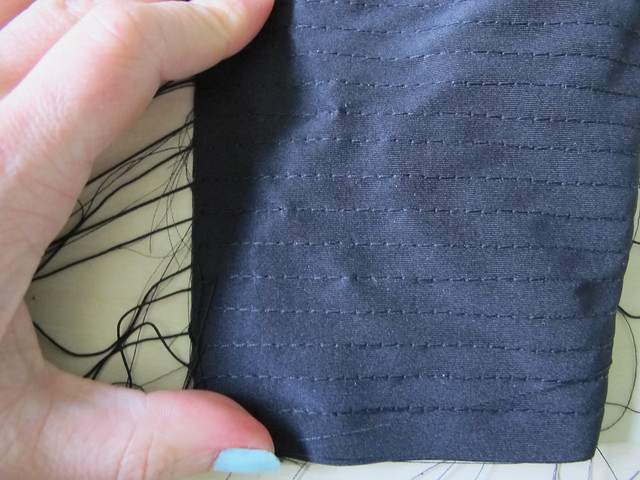
To shirr, you’ll sew long lines of parallel stitching 1/4″ apart. Some people draw guidelines for this, but I just use the edge of my presser foot as a guide. The foot on the Spiegel 60609 is the perfect width for this. Start your first line of stitching a little outside of the seam allowance, and continue sewing parallel lines until the whole piece is covered. Leave long thread tails at the beginning and end of each line, otherwise your shirring will come undone.

Here are what my shirred pieces look like after stitching. Also, I know my nail color keeps changing. I told you, I had to go out and buy more elastic thread! Sewing came to a stall for a few days! blech!
Butterick 6019 - In progress
Right side

Butterick 6019 - In progress
Wrong side

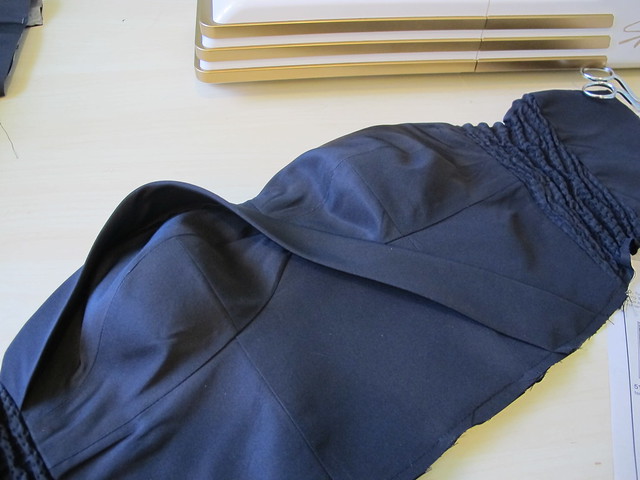
After you’ve finishing sewing all those lines, you’ll have a really hairy looking piece of fabric that still doesn’t stretch. The real magic happens with you steam the crap out of it, which shrinks up the elastic thread and makes the whole piece really stretchy and awesome. It’s fun to watch it shrink up! However, I recommend skipping this step for now and waiting until the bodice is constructed first. It is a lot easier to sew those pieces when they are flat and non-stretchy. You’ll see the shirred pieces in all their glory at the end of this post πŸ™‚

Ok, back to the bodice construction!

Butterick 6019 - In progress

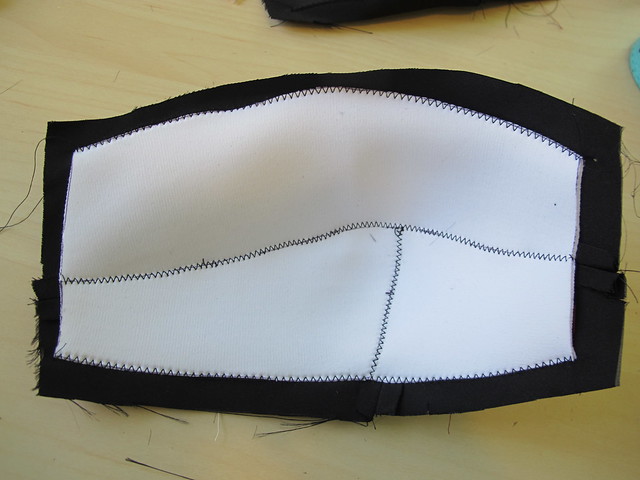
As I mentioned at the beginning of this post, the bust cups are slightly padded (to give that area some structure and also for modesty reasons, if you’re wearing this dress without a bra). The pattern calls for cotton batting, which I did not have on hand. Instead, I used foam padding that is used for bras. The pieces have the seam allowances removed, and then the edges are butted up next to each other and sewn across the split with a zigzag stitch.
Butterick 6019 - In progress

Then the little padded cups are nested in the cups of the bodice lining, and sewn in. The pattern has you catchstitch this part, but I don’t particularly care if you see stitching inside my lining so I zigzagged those pieces in. YOLO, y’all.
Butterick 6019 - In progress

Butterick 6019 - In progress

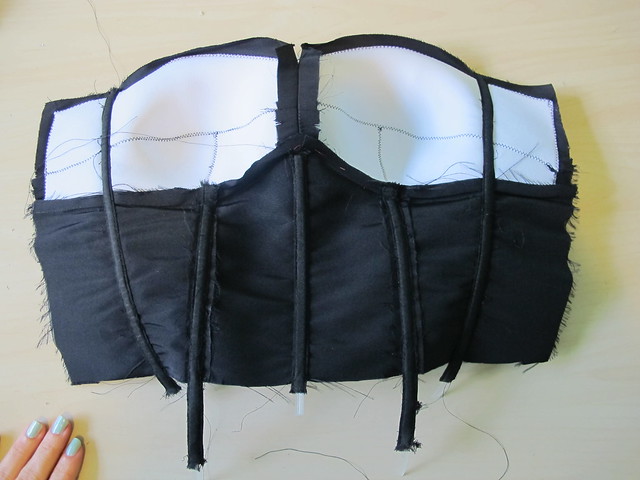
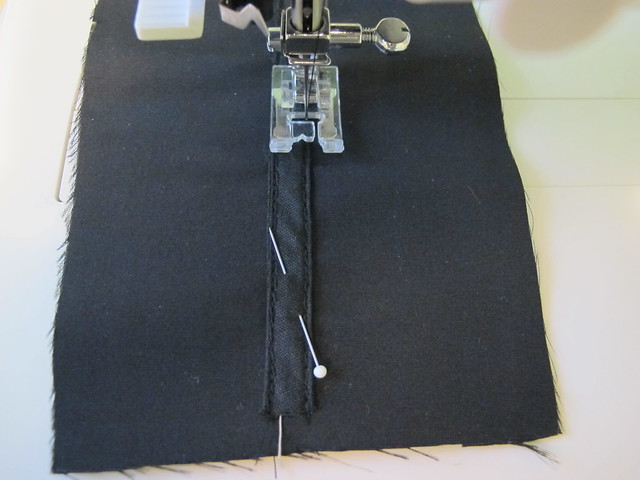
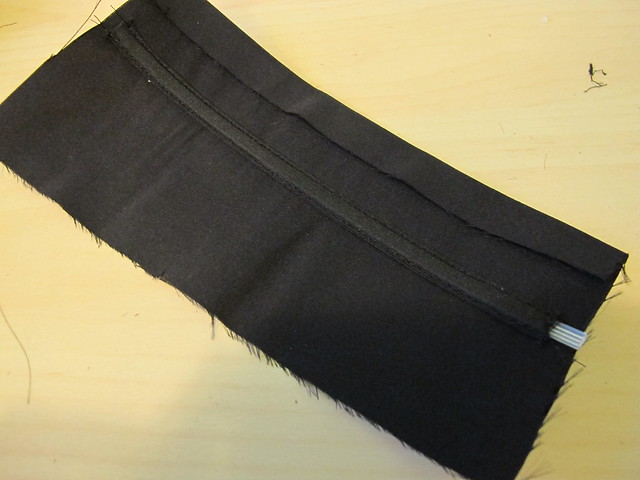
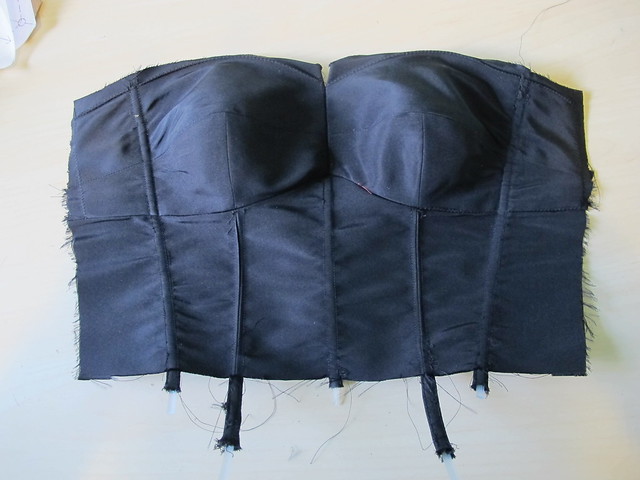
I used plastic sew-in boning for this dress – the kind that comes pre-covered (purchased at Mood Fabrics, if you’re curious!). Spiral steel boning is nice, but a pain to work with (it has to be cut *exactly* to size and capped, and no). This stuff is much easier to use. I straightened out the pieces by blasting them with steam while they were still in their fabric casing (you can also dunk them in hot water to relax the plastic), and then removed the boning and sewed the empty casing to the bodice lining. Like I said, the boning can be sewn through – but it’s easier to get a consistent straight line if the casing is completely flat. After the casing is sewn down, you can just slide the boning in. I trimmed off the sharp corners at the top of the boning so it won’t tear through my dress fabric, and left the ends long (those will be trimmed when I attach the skirt).

Here is the bodice lining once assembled:
Butterick 6019 - In progress

Butterick 6019 - In progress

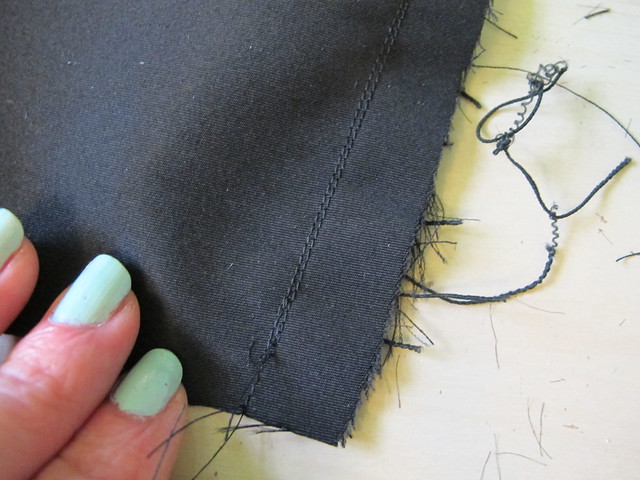
I added a couple extra pieces of boning for additional support – the center front was especially necessary to keep things smooth. Looking good so far!
Butterick 6019 - In progress

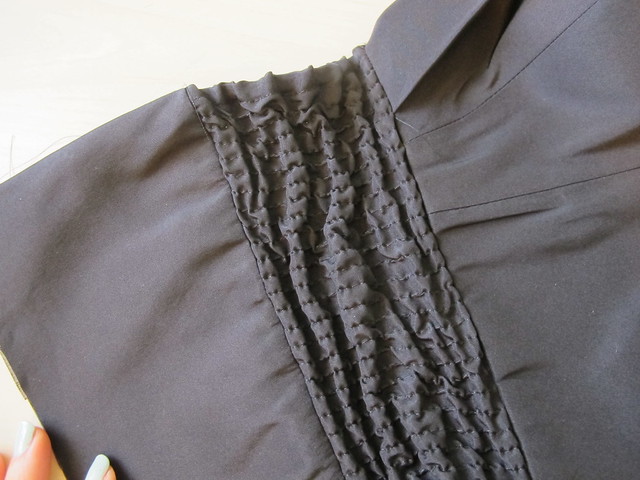
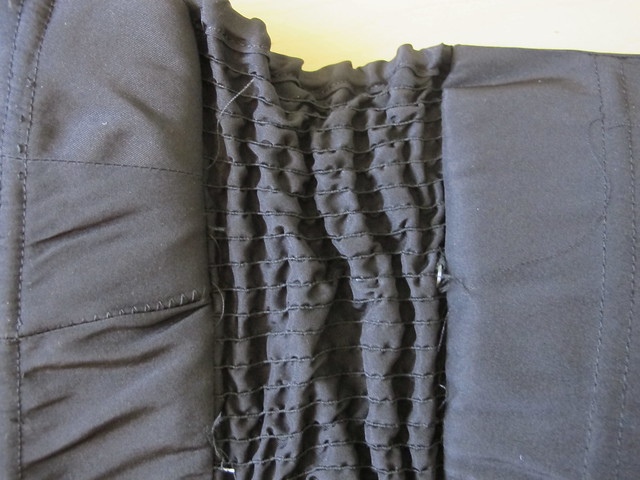
Finally, time to attach those shirred pieces and cut off the thread tails! The pattern has you tie off each individual line of shirring… I don’t know about y’all, but pretty sure ain’t nobody got time for that. Instead, I shortened my stitch length and sewed two lines of stitching when attaching the shirred panels to the rest of the bodice. Once those were secure, I gave all those thread tails a haircut and then steamed the elastic.
Butterick 6019 - In progress

Butterick 6019 - In progress

It shrunk up quite nicely!

Butterick 6019 - In progress

Here is the finished bodice flat.

Butterick 6019 - In progress

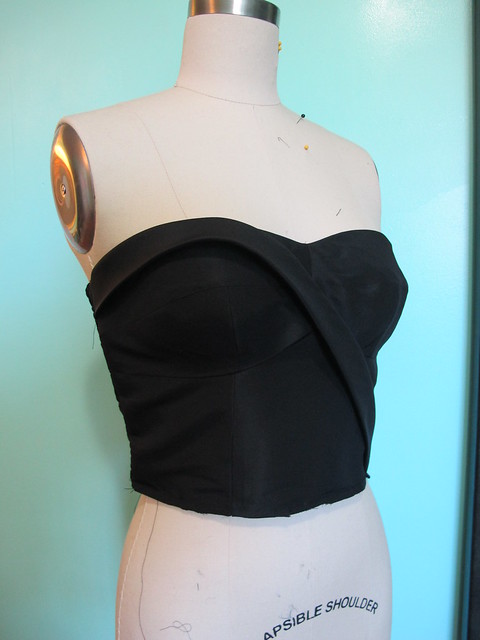
And here it is on my dressform! πŸ™‚

WHEW that was a lot of post! Next week, I’ll go over the rest of the construction. Can’t wait for prom! Yay for fancy dress making! πŸ˜€

In Progress: Corduroy Mini Skirt

22 Mar

IMG_2367

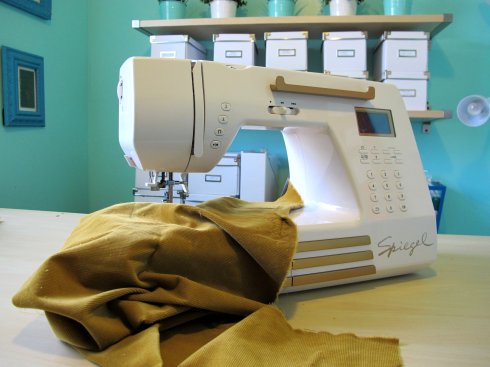
Following up on part one of my Spiegel 60609 sewing project for March (here is that post, in case you missed it!), let’s get to part 2! The bottom half πŸ™‚

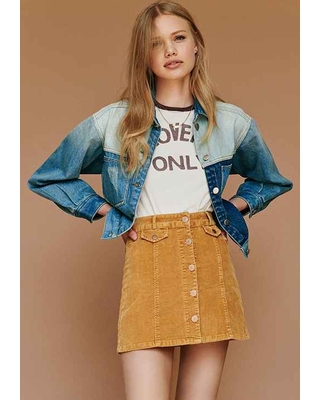
bdg-corduroy-button-front-mini-skirt-mustard-6

My original inspiration came from a skirt I saw at Nordstrom a couple of months ago – the most adorable a-line mini skirt, made in mustard corduroy with pocket flaps and snap closures down the front (above is an image of it – I think. It’s been a while and I’m forgetful!). I liked it enough to actually try it on (which was weird enough in itself – I haven’t been in a fitting room in ages, ha), but the fit wasn’t very good so it didn’t leave the store with me. Instead, I thought I’d try to make my own (surprise!).

I found this mustard cotton corduroy on the Mood Fabrics website and immediately set about finding a good skirt pattern for the fabric (unfortunately, that fabric is already sold out – sorry! I guess a lot of us snapped it up at the same time – it’s really the perfect shade of mustard, and a nice light weight with a subtle stretch. Just gorgeous!). Lots of googling around led me to eventually settle on the RosarΓ­ skirt as it included pretty much all the elements of the original inspiration skirt, minus the separate side panels and with big (usable) pockets instead of just flaps. Honestly, it totally looks like something I’ve already made, I still wanted to give it a try. The patterns were just different enough to justify a second purchase, and plus, I’ve been wanting to try a Pauline Alice pattern.

Going by the finished measurements, I cut a size 34 and made the mini length with pocket C. Spoiler: The fit is really excellent and I’m totally gonna make this again with those zippered pockets. Anyway, back to the corduroy!

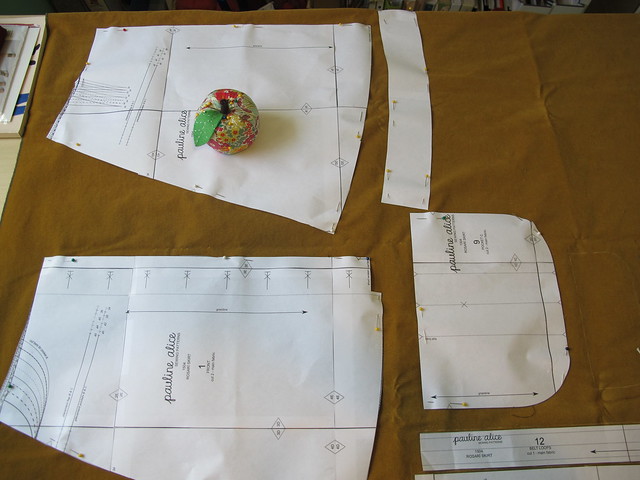
Corduroy Mini Skirt - cutting

One of the most important things to keep in mind when dealing with corduroy is the very visible nap. On fabrics with a pile (basically… hairs. Velvet, velour, corduroy, even fake fur – are all examples of fabric with a pile), the hairs lie in a particular direction, which is referred to as “nap.” If you run your hands up or down the pile, you can feel the pile. The pile can change color very subtly depending on the direction of the nap, so it’s extremely important to cut everything in the same direction – or else you run the risk of your pieces looking like they are slightly different colors. For my skirt, I made sure to lay all my pieces with the top facing the same end of the yardage, as shown in the picture.

Corduroy Mini Skirt - pressing naps

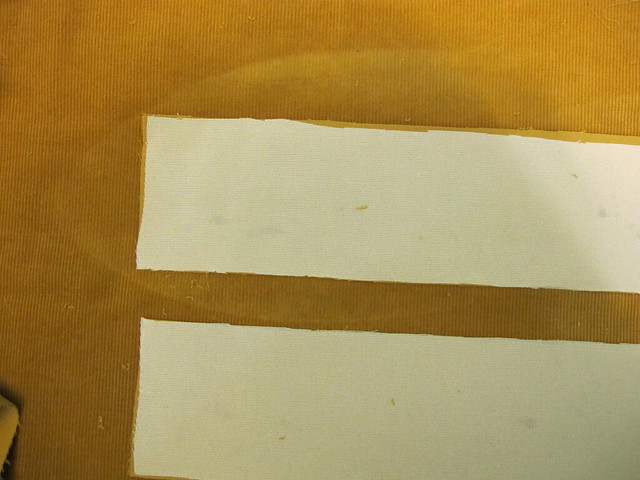
Another issue with naps and piles is that it’s *really* easy to crush the pile with your iron if you’re not careful. To prevent, this, the fabric can’t be pressed against a flat surface (like the ironing board, or the iron itself). One way to do this is to use a velvet needleboard, which has a million tiny wires to make a not-flat surface that the pile can lay against while you press. However, needleboards are freaking expensive (that one is $40, there, I just saved you a click haha)! They are fun to use, but ain’t kind on the wallet. So the cheap alternative is to just use a scrap piece of your napped fabric, and lay it right side up on your ironing board. You can press all your pattern pieces with the right side down, against the scrap fabric, and that provides enough texture to keep the nap from crushing. I had about 1/4 yard leftover from cutting my skirt, so I had a nice big piece to lay on my ironing board for pressing. Look at the picture above – do you see the iron imprints around my interfaced pieces? That’s what happens if you don’t protect the nap before pressing!

So those are two big things to keep in mind if you’re sewing with corduroy (or any other napped fabric, for that matter). Mind the nap πŸ™‚ And just FYI – some napped fabrics (especially velvet and faux fur) require a little more finesse with sewing as they don’t like to feed evenly through the sewing machine. That being said, I didn’t have any problems with this particular fabric. Normally, I would use a walking foot – but the feed dogs on the Spiegel 60609 did a good job on their own, no extra foot required. Yea!

Since this is a really straightforward pattern with very few seams, I thought it would be fun to go the extra mile and do some pretty seam finishing on the inside πŸ™‚ I decided to bind my seams with bias tape, which not only looks nice, but prevents the seam allowances from unraveling as the skirt gets washed/worn. This particular corduroy frays like a MOTHER, so it’s a very necessary step. I could have used my serger, but this looks prettier (and I didn’t have matching thread, ha!)!

Corduroy Mini Skirt - bound seams

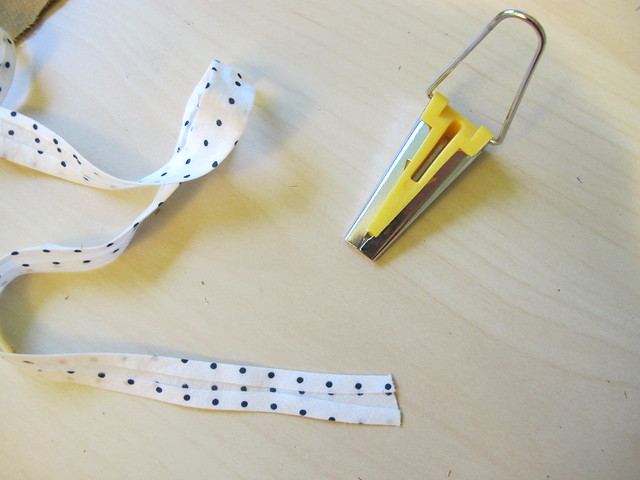
You can use pre-packaged bias tape to bind your seams, but I like to make my own because it’s a bit softer (and you get a waaaay better selection of colors and prints). This particular fabric has showed up on soooo many of my makes – I made a truckload of bias strips with it and it’s like the gift that keeps on giving! πŸ™‚ I will be so sad when it runs out hahaha. Anyway, I like the Clover 1/2″ bias tape maker – I find the width is great for this finish, and the Clover brand ones in particular work really well. I’ve tried cheaper bias makers and they just don’t work as well for me. This one is tight enough at the opening to really fold the bias, and then it’s easy to press it flat so it stays that way.

Corduroy Mini Skirt - bound seams

For this skirt, I did a Hong Kong bound finish – so both sides of the seam allowance are bound and then pressed open. You can also press the seam allowances to one side, and bind them together.

Corduroy Mini Skirt - bound seams

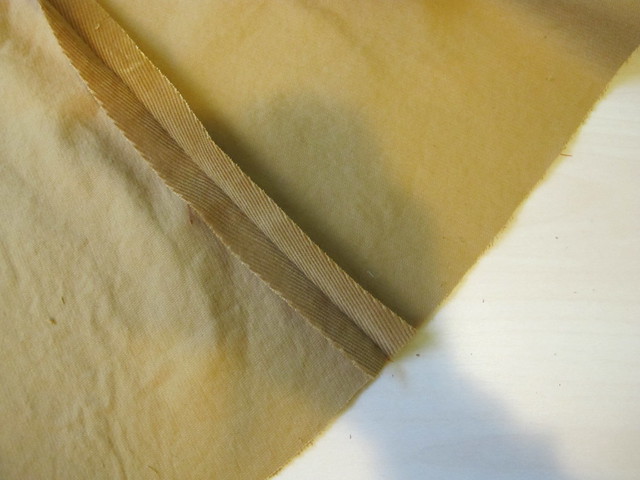
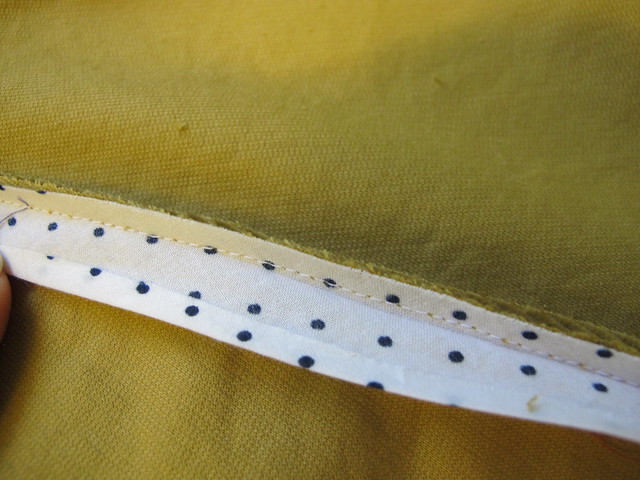
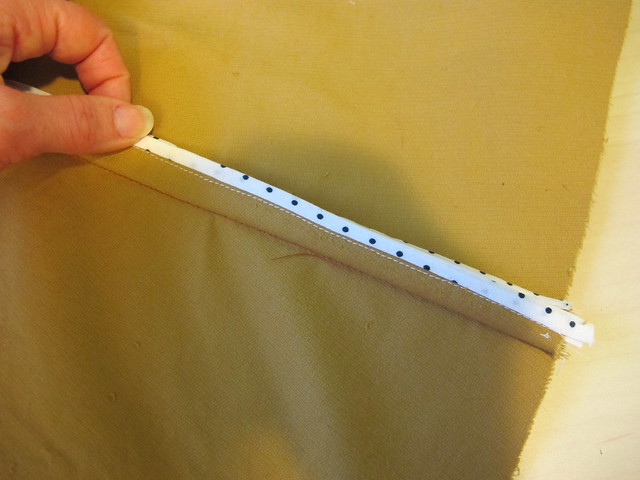
On the first seam allowance, sew the bias binding to the underside (the side that is against the garment when it’s pressed into place),Β  keeping your stitching line right along the pressed crease of the binding.Corduroy Mini Skirt - bound seams

Corduroy Mini Skirt - bound seams

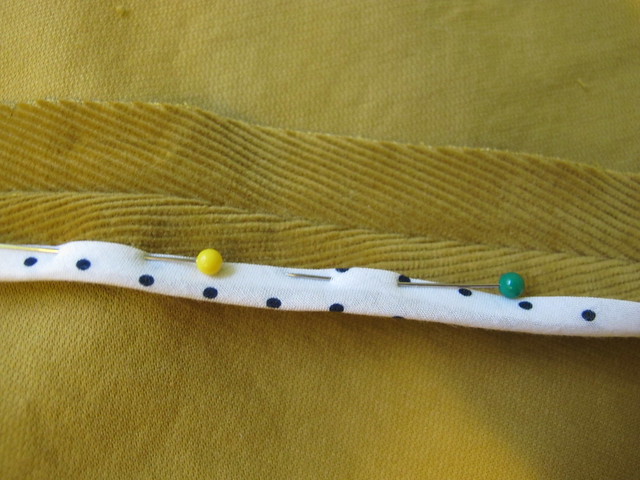
Pull the unsewn side of the bias around so it comes to the top and just covers the stitching line you created. Pin into place, and then topstitch close to the fold. Repeat for the opposite seam allowance, then press the seam allowances open.

Corduroy Mini Skirt - bound seams

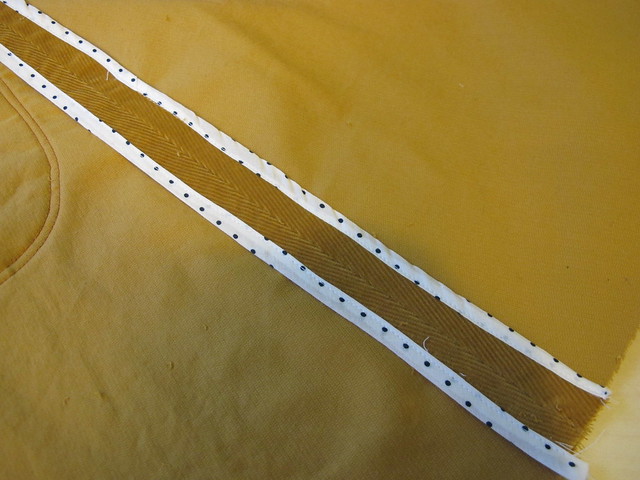
Here is what the underside of the seam allowance looks like. I do the first pass on the underside, so any stray topstitching is hidden when the seam allowances are pressed open πŸ™‚

Corduroy Mini Skirt - bound seams

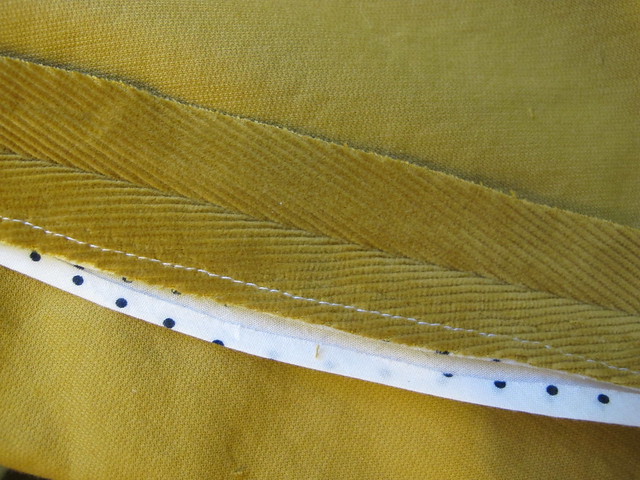
And here are both sides bound πŸ™‚

Corduroy Mini Skirt - bound seams

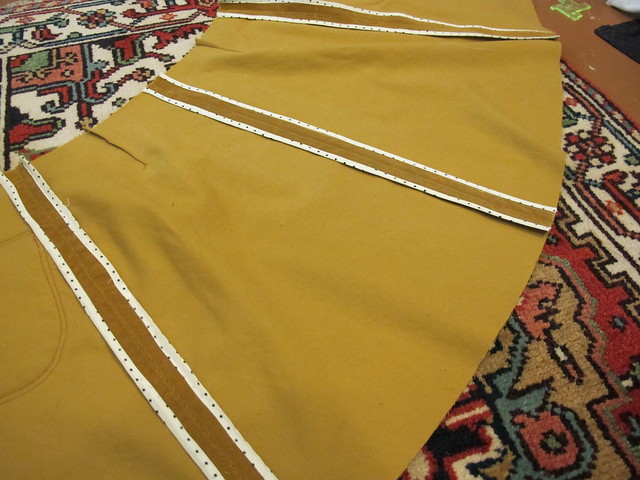
AND HERE IS THE WHOLE DAMN SKIRT πŸ˜€

I love this finish! It’s definitely a time-consuming addition, but it’s not so bad when the garment in question only has 3 seams to bind πŸ™‚ And it looks soooo pretty on the inside!

Corduroy Mini Skirt - grading seam allowances

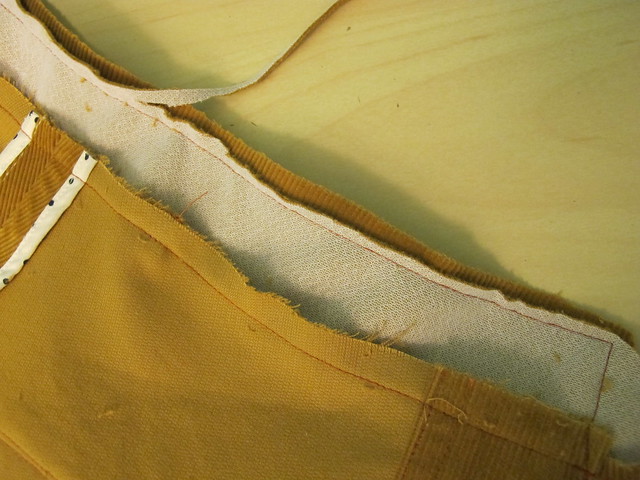
Last corduroy tip! This fabric tends to be really bulky, so it is important to really grade down your seam allowances in any part where there are multiple layers – such as the waistband. I trim my seam allowances down at staggering heights so that there isn’t a giant bulky ridge showing from the outside once the skirt is complete.

Corduroy Mini Skirt

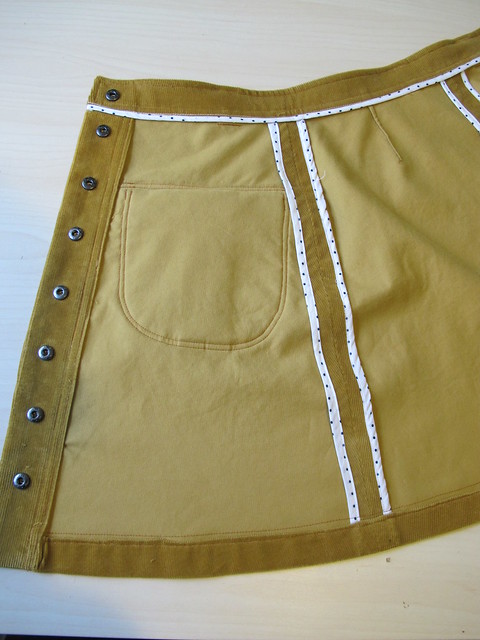
And that’s it! Here’s a little sneak of the pretty insides πŸ™‚ I also bound the lower edge of the waistband – instead of turning it under 1/4″ to hide the raw edge – as I’ve always liked the way that looks in dress pants hahaah. Oh, and my snaps were set using a professional snap setter (cos I work for a clothing manufacturer!)! They look GOOD.

Corduroy Mini Skirt

Corduroy Mini Skirt

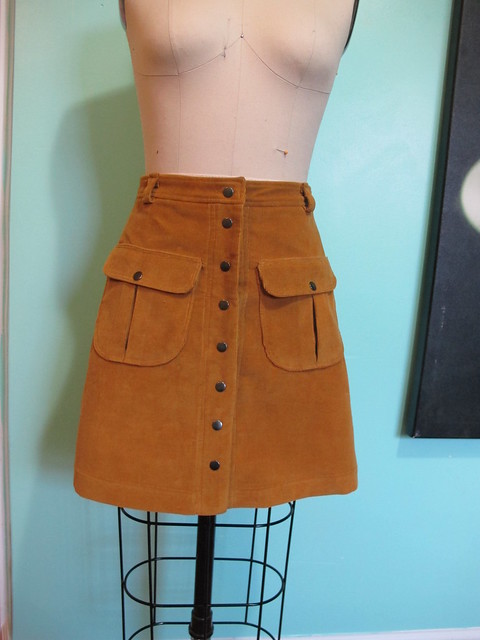
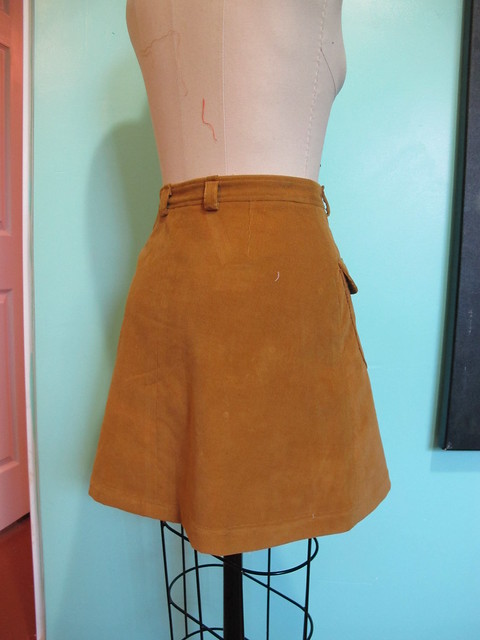
Some shots of the finished skirt on my form πŸ™‚ I’ve already worn the hell out of this thing – the fit is great, I love the mini length, and the mustard color goes with pretty much everything in my closet. It looks EXTRA good with black and white polka dotted silk, though πŸ™‚ I will be sharing the completed outfit next week!

In Progress: Polka Dot Silk Crepe Blouse

15 Mar

Hey everyone! A little different sort of post for today – instead of showing you a finished project, I want to share some progress pictures and tips. I used to do these kinds of posts in the past, and I’ve missed nerding out on construction talk. Since this is my blog and I do what I want, that’s what you get today πŸ™‚

Silk Tie Blouse

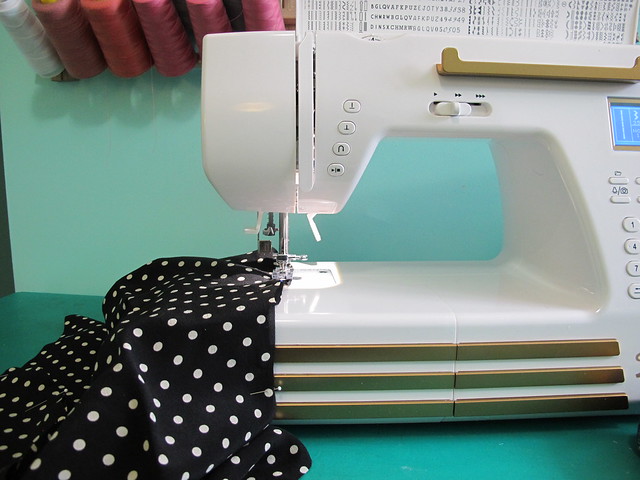
Plus, I’m gonna make it on my new Spiegel 60609 sewing machine! Woohooo! πŸ˜€

This is *also* part of my Mood Sewing Network project for March, so you’ll have to wait a couple weeks until the Big Reveal πŸ™‚

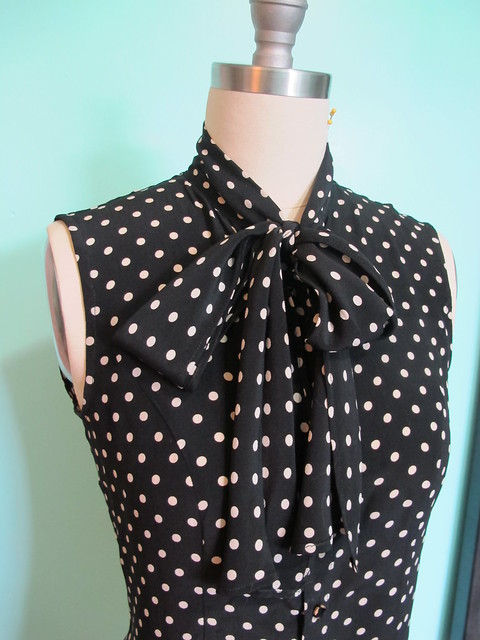
Anyway, I bought this fabulous black with white polka dot silk crepe while I was in Mood Fabrics flagship NYC store last November. I decided to make a silk button up shirt with it, although originally I planned to do a shirt with the standard collar (as I tend to do). Right before cutting into it, I thought it might be cool to give the shirt a big floppy bow at the neck instead, just to mix things up a little bit. I have vintage Simplicity 4676 in my stash, which I’ve made before. While I love the way the bow looks, I’m not as big a fan for the shape of the actual shirt – so I just put the bow on my beloved TNT Butterick 5526 and it worked out perfectly! As long as the neck measurements on the two patterns are similar (which for these, they are), then it’s easy to sub one neckline for another.

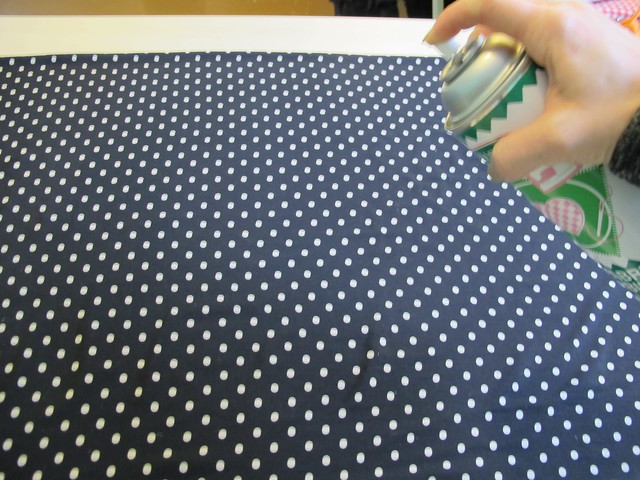
Silk crepe is one of the easier silks to work with, as the texture gives the fabric some grip, but it can still be quite shifty. It doesn’t have to be a nightmare, though, if you know how to work it! And, honestly, I think the hardest part about dealing with shifty fabrics (this isn’t necessarily limited to only silk, btw!) is getting an accurate cut without the piece morphing into a map of the United States once you move it around. There are tons of ways to accomplish this, but my personal new absolute favorite method is to use a stabilizer to make the fabric crisp, which gives it less chance to shift around. I use Sullivan’s Spray Stabilizer, as I like that I can direct that ~stable flow~ to whatever part of the fabric I need it to (sometimes you don’t need to cut your entire yardage, you know?), and it dries very fast. I have received some really good tips on other things to use for stabilizing fabric, such as gelatin, which I will eventually try! But spray stabilizer is also the bomb.

Silk Tie Blouse - cutting silk fabric

I spray it on evenly, then lay my fabric flat and straight on the table and allow it to dry (I guess you could do this on the floor if you don’t have a table, but my cat thinks that things laid on the floor are a special running obstacle course I have created just for her, so I personally try to avoid that route!). Since the fabric dries into whatever shape you leave it in, it helps to fold it in half and pin along the selvedges. Once the fabric is dry, it will feel like a silk organza – MUCH easier to handle. For pieces that really need to be accurate, such as a collar, it’s easy to reapply a second layer after you’ve cut, just to make sure there’s not shifting happening. Once your garment is completely assembled, you simply wash it out and it softens right back up. I always prewash my silks on cold water, so I don’t have to worry about water spots or shrinkage when I wash the garment.

Silk Tie Blouse - mirroring fronts

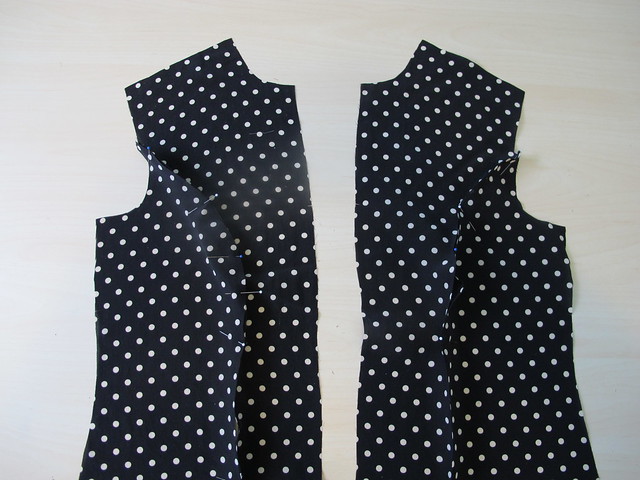
When I’m sewing a fabric that doesn’t have a definite right or wrong side, I try to be extra careful that I don’t sew two of the same piece. Unpicking sucks, and it’s even worse on a delicate fabric (that has been French seamed, no less!). To prevent this, I lay my pieces out so they mirror each other, and pin them like so before I take them to the machine. That way, I don’t accidentally sew two right fronts or whatever.

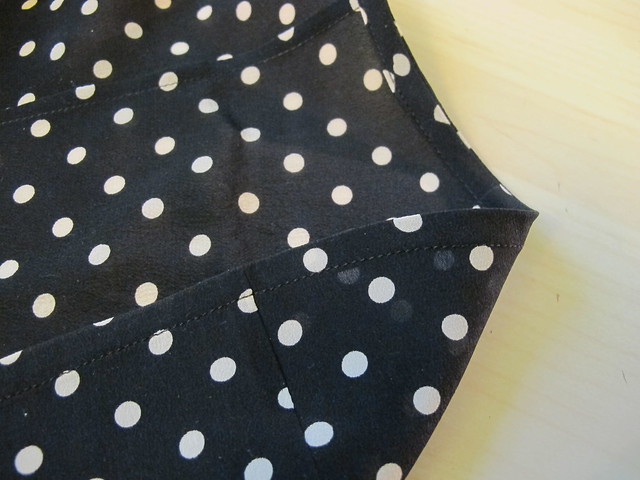
Speaking of French seams, the entire blouse is constructed using them. I love French seams because they are a beautiful finish, and they work really well with delicate fabrics. They do take some extra time because you are essentially sewing the same seam twice, but I think it’s totally worth the effort.

Silk Tie Blouse - sewing French seams

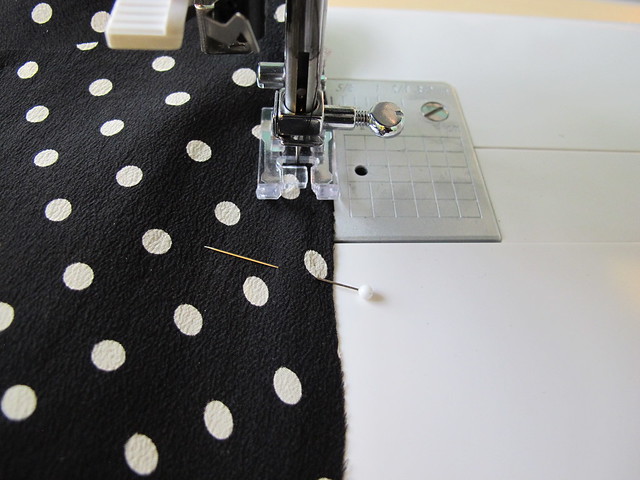
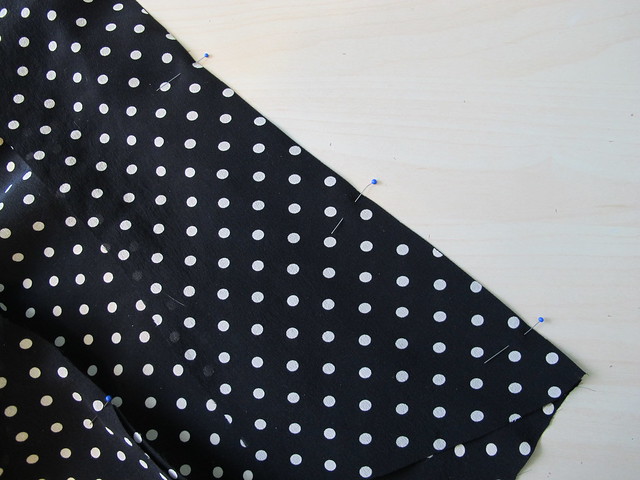
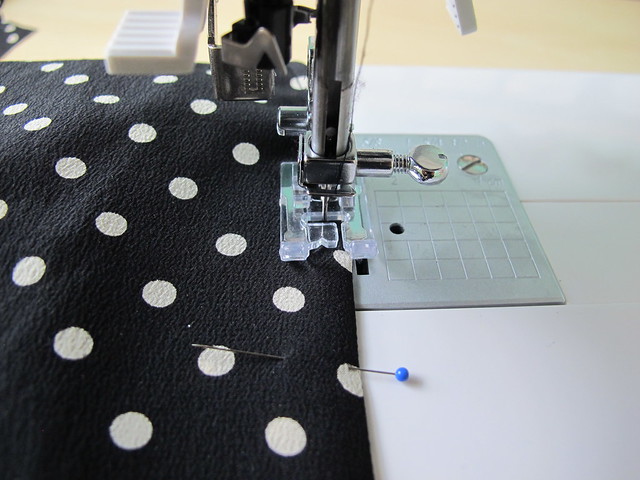
With WRONG SIDES TOGETHER, sew the first line at 3/8″ (this is assuming a 5/8″ seam allowance, which otherwise you’ll want to adjust accordingly). I know, sewing wrong sides together sounds totally backwards and all kinds of wrong, but trust.

Silk Tie Blouse - sewing French seams

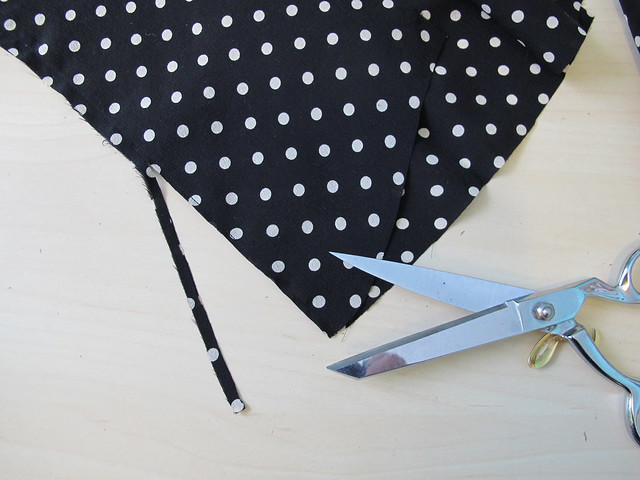
Trim the seam allowance down to about 1/8″.

Silk Tie Blouse - sewing French seams

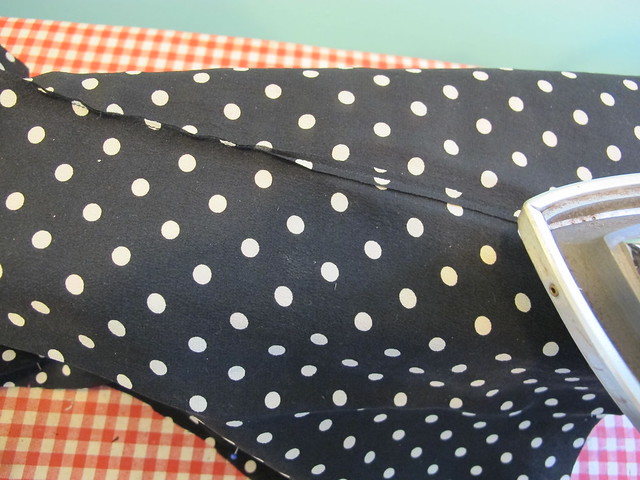
Press the seam allowances open. This can be kind of difficult if your seam allowances are super tiny, so do the best you can. I have a really hot iron and that helps a lot πŸ™‚ Otherwise, you can press both seam allowances to one side – but I think pressing open gives a better end result.

Silk Tie Blouse - sewing French seams

Fold the fabric so the right sides are facing and all the seam allowances are encased on the inside, and press.

Silk Tie Blouse - sewing French seams

Sew again at 1/4″, then press one more time.

Silk Tie Blouse - sewing French seams

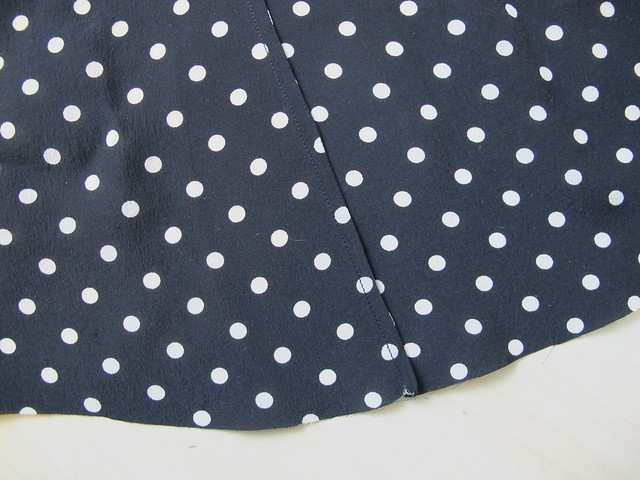
You should end up with something that looks like this – the seam allowances beautifully encased πŸ˜€

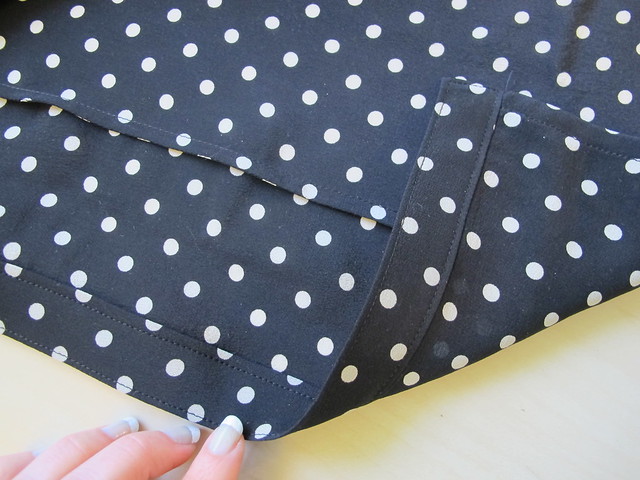
Silk Tie Blouse - bias faced hem

For hemming shirts – silk or otherwise! – I like to finish the hem with a self bias facing. Since the hem of shirts is usually curved, I find this gives me a MUCH easier way to get a MUCH cleaner finish. Contrasting bias is also fun, for a little flash of color! Here’s my tutorial for sewing bias facing. I like this method because you don’t have to pre-press the bias pieces – you press them after they are sewn, and it’s much faster and more accurate. I also used this method to finish the arm holes of my (obviously sleeveless, ha) blouse.

Silk Tie Blouse - button placket

After hemming the shirt, I added the button placket. Since this is one of those areas where you want to be really accurate and careful, I fused lightweight interfacing (I use this stuff from Fashion Sewing Supply, it’s a little pricey but it is 100% worth it in my opinion!) to my pattern pieces and then re-applied the spray stabilizer just so everything was really easy to handle. Honestly, attaching that silk crepe placket was no more difficult than if it were made out of cotton. YES!

I seem to have lost the pieces of me adding the neck tie – whoops! But that was pretty easy. It is cut on the straight grain, and the edges are rolled up to where the tie is attached to the neckline. It’s doubled over *only* at the neckline, and the ends are twice as wide so you can make a nice fat bow. In silk crepe, it’s super floaty and awesome. Love.

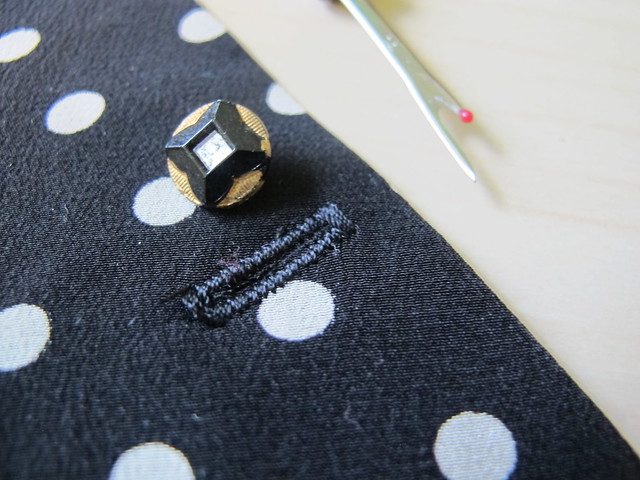
Silk Tie Blouse - button hole

The last step was adding all those button holes! I wasn’t sure if the Spiegel 60609 machine was going to come through on this one – button holes can easily look really terrible, really fast – but it did not let me down! The stitches are nice and tight, and the button hole foot calculates the correct size using the actual button. Also, how about those buttons? I found them at the flea market years ago and I’ve been hoarding them ever since for the ~perfect~ project, ha.

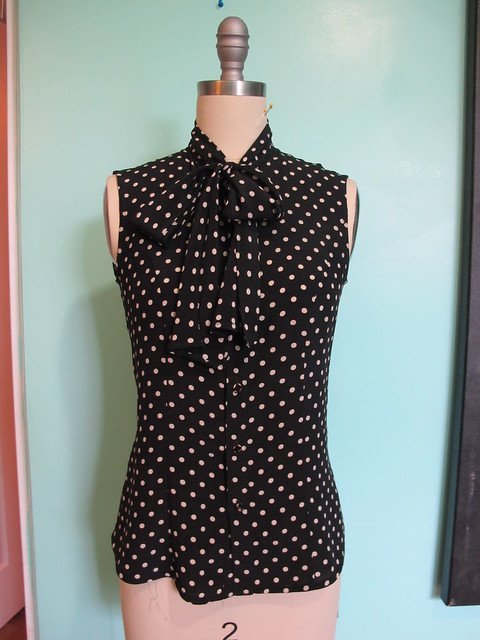
The finished blouse:

Silk Tie Blouse - finished!

Silk Tie Blouse - finished!

I am REALLY happy with how it turned out! I think the silk crepe is the perfect fabric for this type of blouse – it skims over the body, and the bow has a beautiful drape. Even with the polka dots and that big neck bow, it’s still not super incredibly sweet looking, which I like. And it feels SO GOOD to wear! I will never tire of wearing silk πŸ™‚

~Big Reveal~ outfit photos to come soon! Next up – the bottom half of this outfit πŸ™‚

As a side note, I’m headed back to NYC for the weekend to teach another Pants Making Intensive at Workroom Social! Just a head’s up that I’ll be a bit delayed in email/comment responses, as I tend to take off from the computer when I go out of town πŸ™‚ I’m excited to go back to the city and get people making some pants, though! This particular workshop is sold out, however, there are still a couple spots open at my Garment Sewing Weekend at A Gathering of Stitches in Portland, Maine! Yay sewing! :DDD

V1419 Sewalong: Cutting and Prepping

13 Oct

Good morning, sewalongers! (sewalongees?) Today we are going to go over the final prep work before we start sewing (next week! Eep!). This is the last slow post of the sewalong, which gives you another week to perfect your muslin and choose your fabric. Of course, these posts will also be up indefinitely so don’t feel like you have to rush to keep up!

blog-sewalong-image-650x563

The very first thing you need to do – yes, before you do anything else with that lovely fabric – is pretreat your fabric. How you pretreat your fabric will depend on the fiber you chose, as well as how you plan on cleaning the coat in the future. For those of you who are sewing wool (like meee!), this means you need to get any shrinkage out of your fabric *before* you cut the pattern pieces – otherwise, once you start steaming that bad boy, you may end up shrinking pieces and that’s no good. There are lots of ways to pretreat wool – and none of them involve washing the fabric (please don’t do that!). You can either steam the piece yourself (this involves lots of steam and probably a lot of time), take it to the dry cleaner and have them pretreat it (this involves money)(and also dry cleaning), or you can shrink it up in the dryer (which is what I do). Here’s a blog post outlining the entire process, but basically – you just need to throw your wool in the dryer (finish the edges if necessary to prevent unraveling), add a couple of towels that are soaked in hot water (and then wrung out, so they’re not dripping) and blast the dryer on high heat for however long it takes before everything is dry. Easy! This is the method I use for all my wool fabrics. If you are at all hesitant, try it out on a swatch first πŸ™‚

For other fabric types that are not wool – you may not need to pretreat (unless you plan on washing the coat in the washing machine? If then, defintely prewash that shit!). If using a cotton or silk, you may want to at least steam the crap out of it just to be sure there is no shrinkage. Polys should be fine and not shrink at all.

Once you’ve pretreated your fabric in whatever way need, then it’s time to cut! I’m not going to go over cutting here – I assume anyone brave enough to tackle sewing a coat is probably fine to cut fabric without guidance πŸ™‚ – but if you need a refresher, here is an old post I wrote about cutting and marking your pattern pieces. One thing I did notice while I was cutting my fabric – I was able to reconfigure the layout and use slightly less fabric. Don’t be afraid to change up the layout if your fabric is wide enough, just be sure that you are keeping all the pattern pieces on the proper grain.

If you are including an underlining for your coat, you will need to cut out pieces 2, 3, 4, 7, 8 & 9 from your underlining fabric.

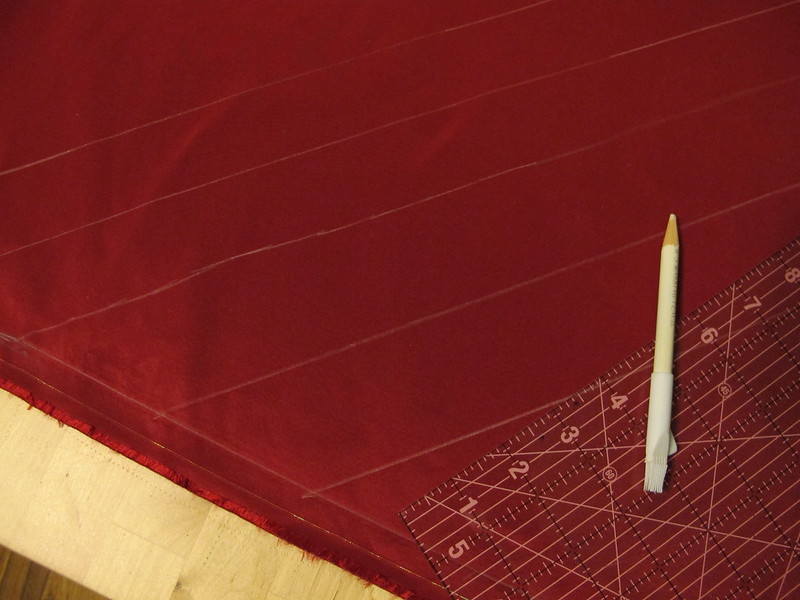
For the contrast – specifically, all those bias pieces – I found it easier to draw the pattern pieces directly on the fabric, rather than try to pin a bunch of stuff and then try to cut a straight line and nope.

V1419 Sewalong: Prep

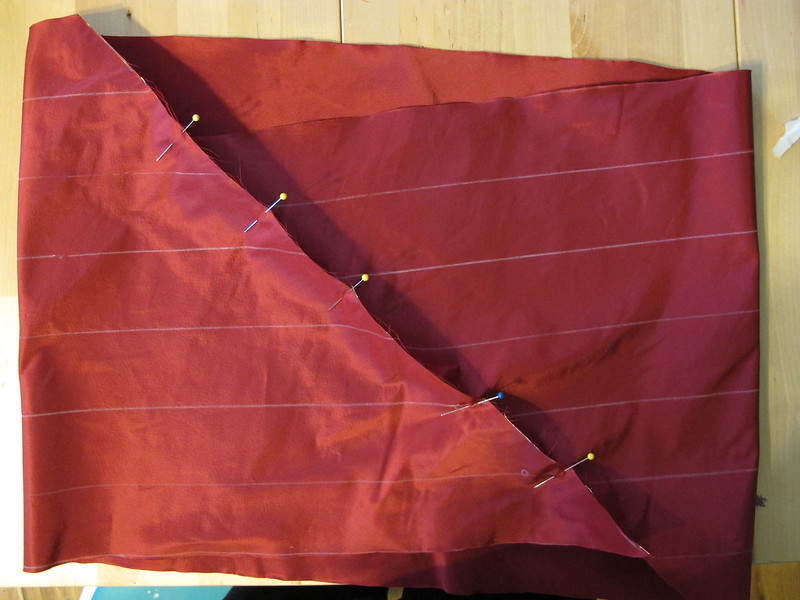
The long, straight pieces – I just measured them and use a ruler and marking pencil to draw them on my taffeta. For the big bias contrast pieces (those giant parallelograms), I pinned down the pattern piece, traced around the edges with my marking pencil, and then used a ruler to draw in the lines 2″ apart (as they are on the pattern piece). I did all this on the flat fabric before I cut anything out, and I think it made things a lot easier!

Once you’ve cut out all your pattern pieces, you will need to apply the underlining (assuming you are underlining – if not, skip ahead and start marking your pieces). Underlining is very easy. It is also very time-consuming – so I recommend watching some crappy TV or something equally entertaining while you do it πŸ™‚ For this sewalong, I won’t be going over underlining, but here is a tutorial if you need one. Some things to keep in mind:
– Sometimes you can get away with basting the pieces together by machine. This coat is not the time to try that method. Because the pieces are very large, you run the risk of shifting your fabric – which will give you bubbles or hang weird if you’re not careful. Try to keep things as flat as possible. Meaning: sit at a table, underline by hand. Watch a movie. Drink some wine. Whatever makes you happy!
– I use silk thread to underline, because it removes very easily. I also happen to have several spools on hand in strange colors, so that’s a big part of the reason. I realize silk thread is a bit expensive, so don’t feel like you have to break your budget on some thread that’s about to get pulled out as soon as you sew a seam. Use whatever you got! I would recommend using a threat in a contrasting color, just so it’s easier to see/remove.
– Feel free to use giant stitches. You’re just basting the pieces together to keep them from shifting when you sew them. Big stitches are ok – and they’re easier to remove!
– Sew well within your seam allowances, especially if your fabric shows pin holes (mine does!).
– I like to underline first, *then* mark the pattern pieces on the wrong side. You can also mark, then underline. Up to you – I just think the former is easier! Don’t freak out if you accidentally snip your basting when you cut notches – it’s ok!

V1419 Sewalong: Prep
See? I did it too. No big deal!

Once you’ve finished underlining (or have skipped ahead), you will need to mark your pieces. It is very important to get every stitch line (for the welts and the button holes), dot and notch – it’ll make things muuuuch easier to match up when we start sewing. You may want to use wax tracing paper and a rotary wheel for the lines, and a marking pen (or tailor’s tacks) for the dots. Just snip the notches. We won’t judge you.

Ok, bias binding! This is the same method outlined on the Coletterie, btw – except you are starting with a parallelogram piece, and not creating one from a square (if that makes sense).

V1419 Sewalong: Prep
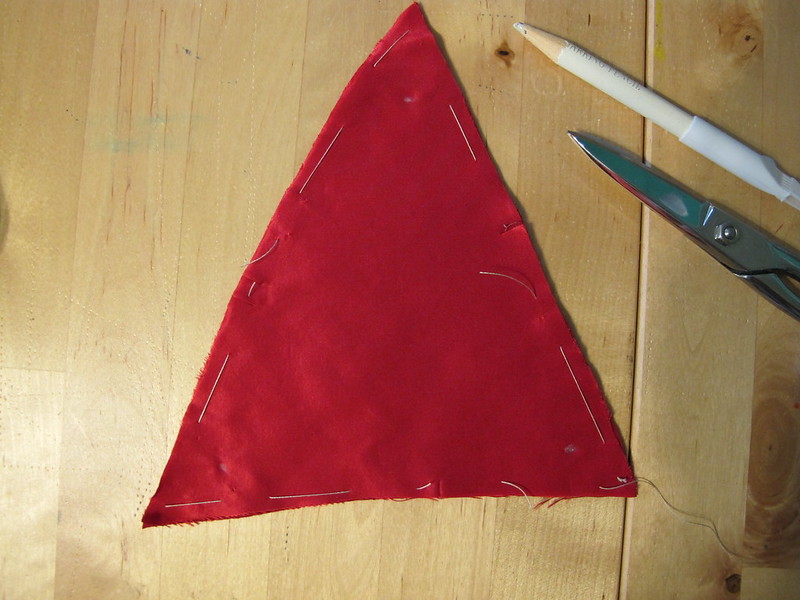
You should have 3 parallelograms with 2″ diagonal lines drawn on the wrong side of the fabric. Matching the notches and markings, pin the two angled edges together, right sides together, to form a strange off-center tube. The edges will not match at the ends.

V1419 Sewalong: Prep
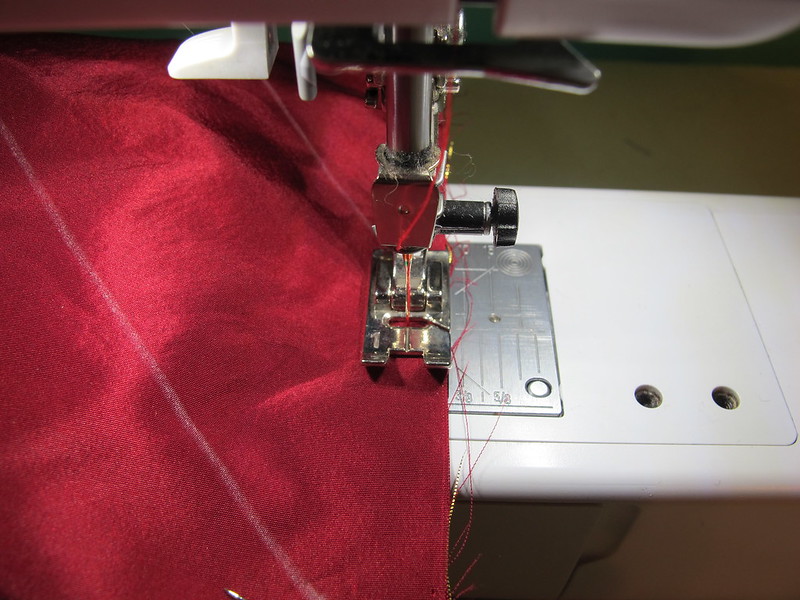
Sew the seam you just pinned. I used 1/4″ because – well, that’s what I always use. I think this pattern was drafted for 5/8″ – even at the bias binding – and if you sew with that amount, you will need to trim it down to 1/4″ after sewing.

V1419 Sewalong: Prep
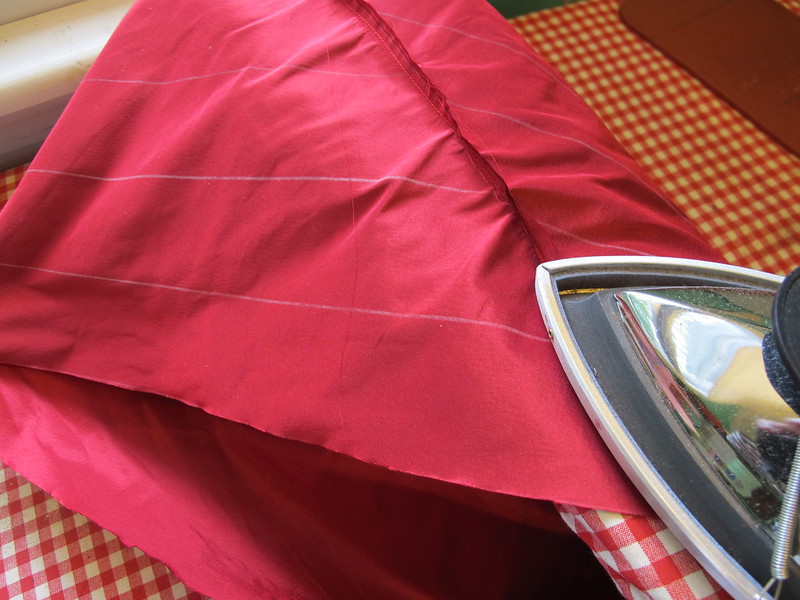
Press the seam open.

V1419 Sewalong: Prep
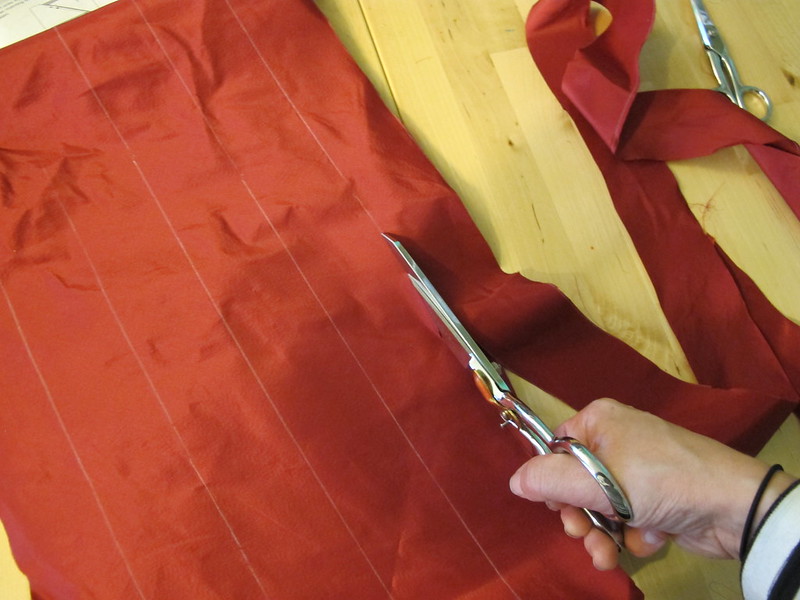
Starting at once end, begin cutting along the line you drew. You should end up with a looooong string of continuous bias. Do this for all 3 parallelograms.

V1419 Sewalong: Prep
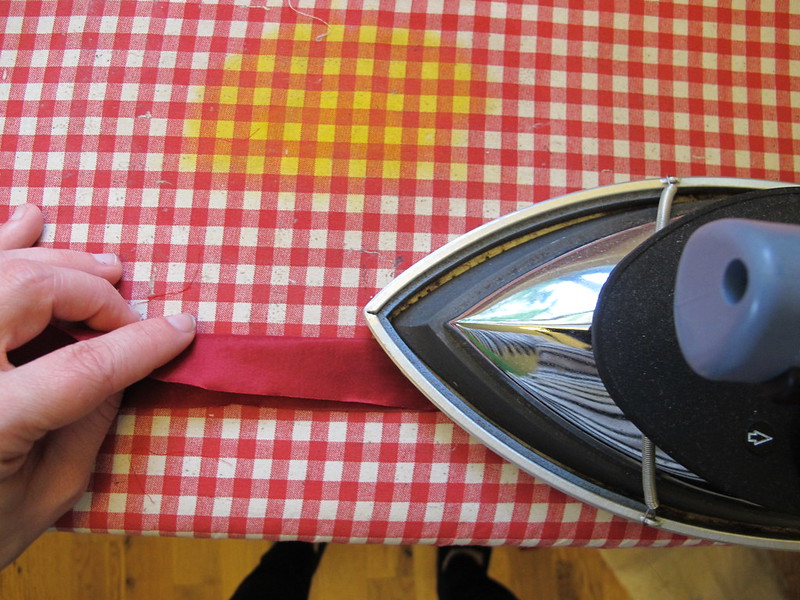
Once you’ve finished cutting all your bias strips, fold them in half with the wrong sides together and press.
(I promise that big yellow spot on my ironing board cover is not pee. That’s actually what happens when you put your iron on top of a piece of tailor’s wax. Whoops.)

V1419 Sewalong: Prep
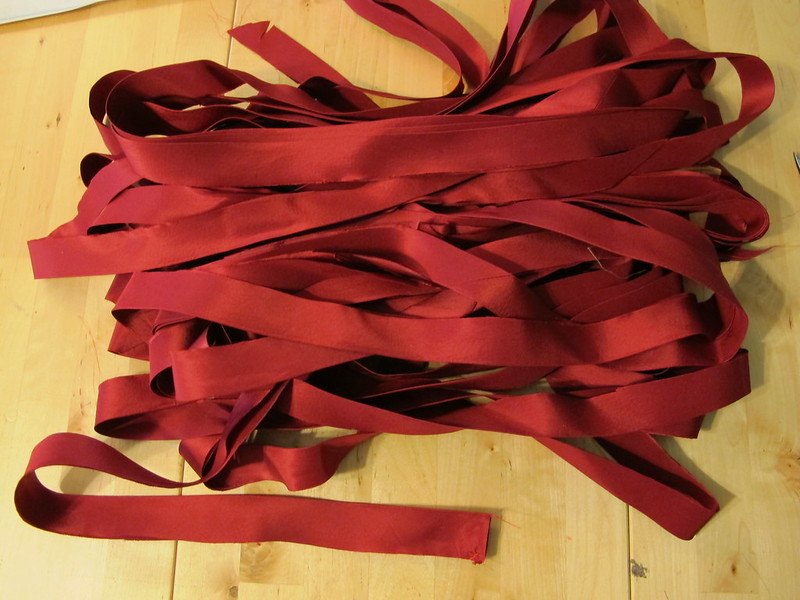
You should end up with a big pile of bias strips. Mine kind of look like intestines. Cool.

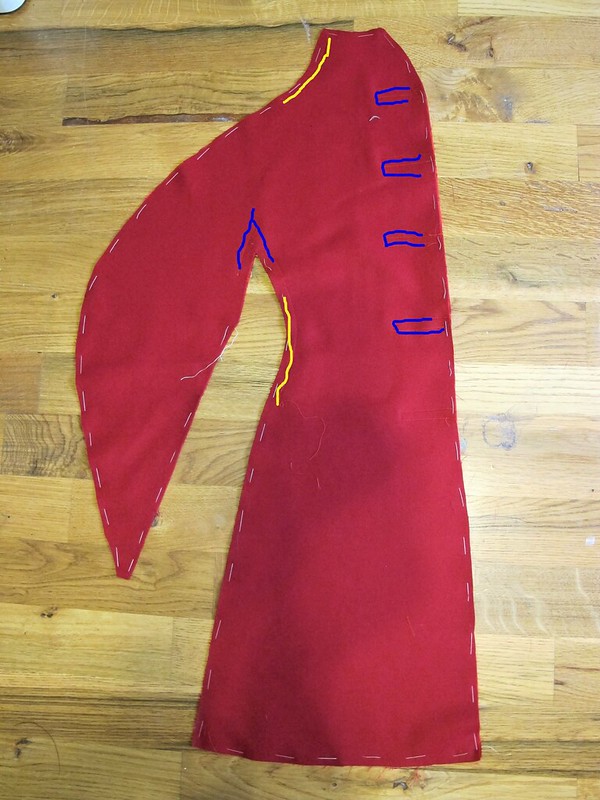
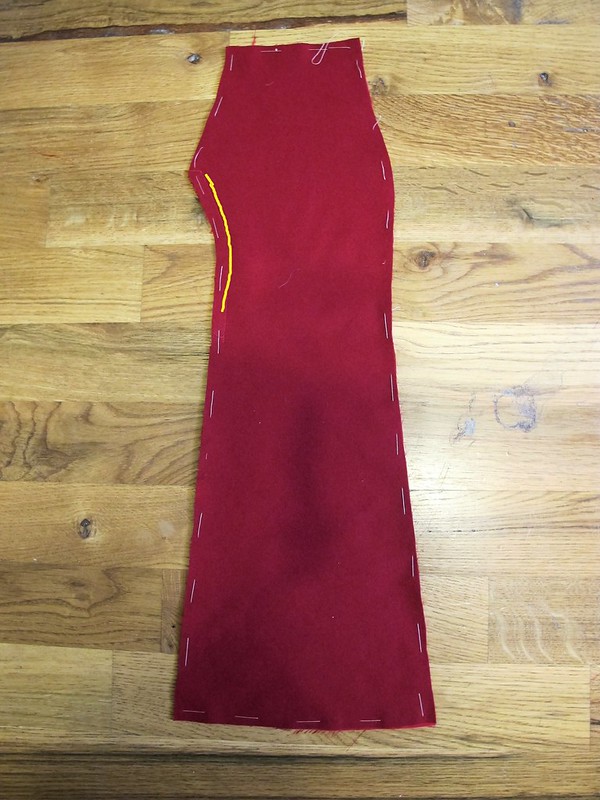
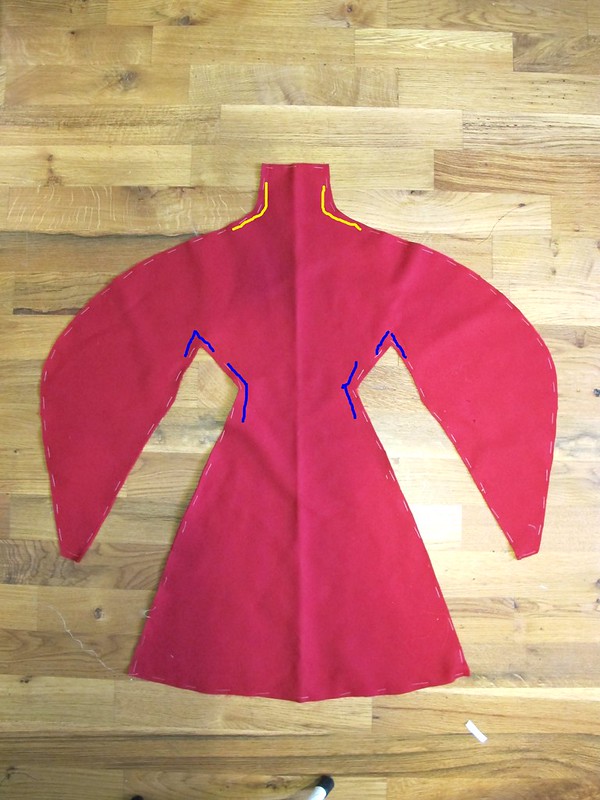
Finally, you will want to staystitch and reinforce your coat pieces as directed in the instructions (steps 1-3 & step 35). For both – use a slightly shorter stitch length (I use 2.0 vs my standard 2.5) and be sure to backstitch at both ends. For staystitching, sew 1/2″ away from the edge. For reinforcing, sew along the stitching line at 5/8″.

Here are the pieces you will be prepping. Lines marked in blue are reinforcement stitching, lines marked in yellow are staystitching.

V1419 Sewalong: Prep

V1419 Sewalong: Prep

V1419 Sewalong: Prep

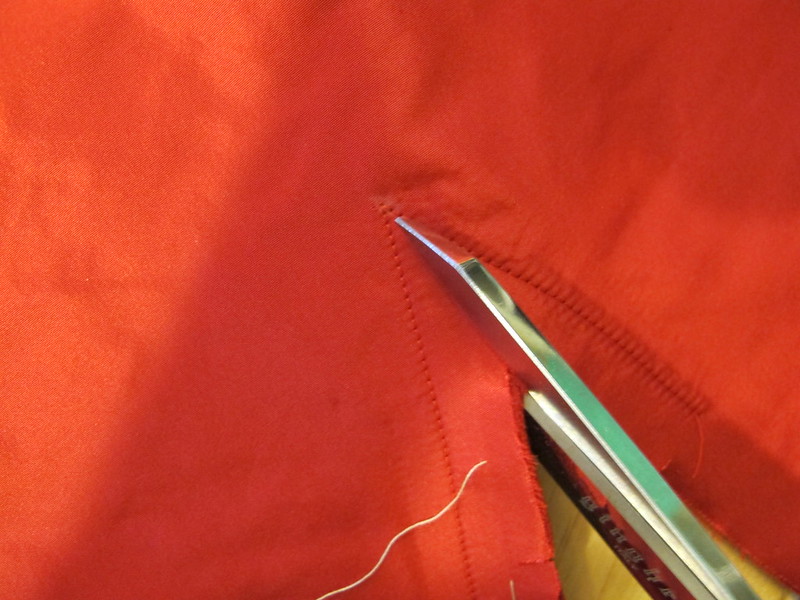
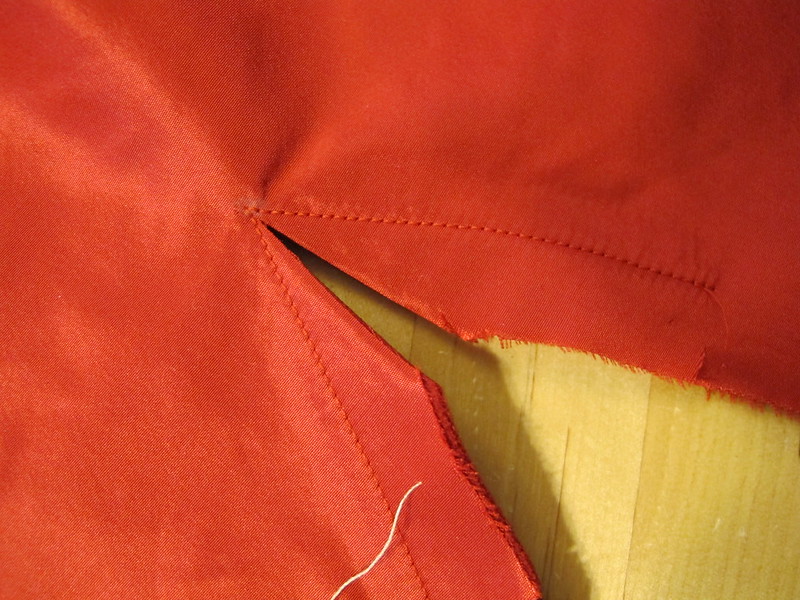
ONCE LAST THING: Once you’ve reinforced all those tricky edges, you need to clip the seam allowances all the way to the dot.

V1419 Sewalong: Prep

V1419 Sewalong: Prep
Clip to the stitching line, but do not clip the stitching line. This will make it easier to sew those tricky sleeve seams.

And that’s it! Whew! Sorry for the post overload today. Oh, I almost forgot – here’s my fabric!

wool coating
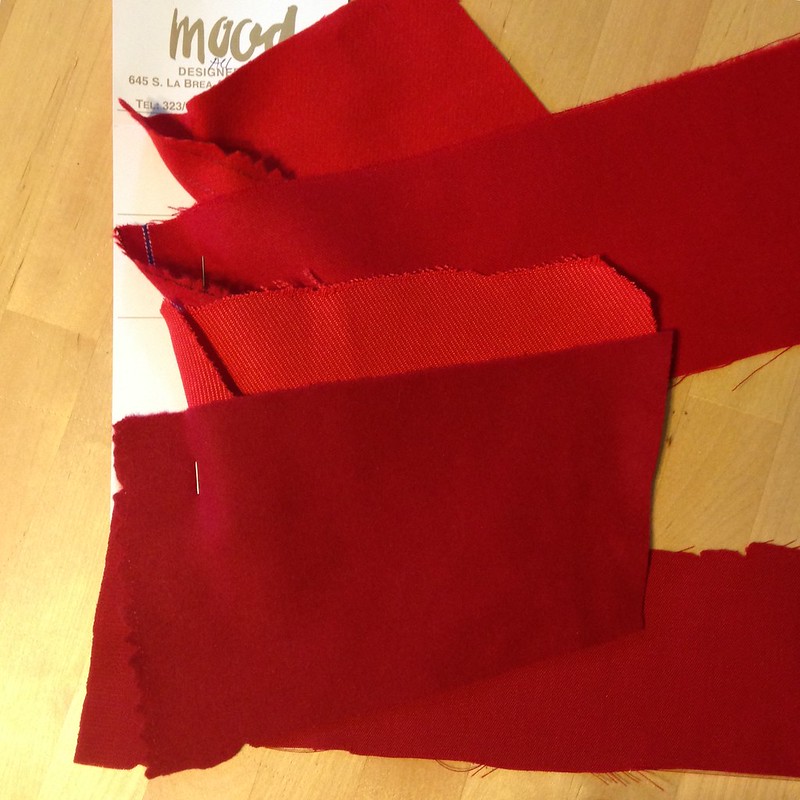
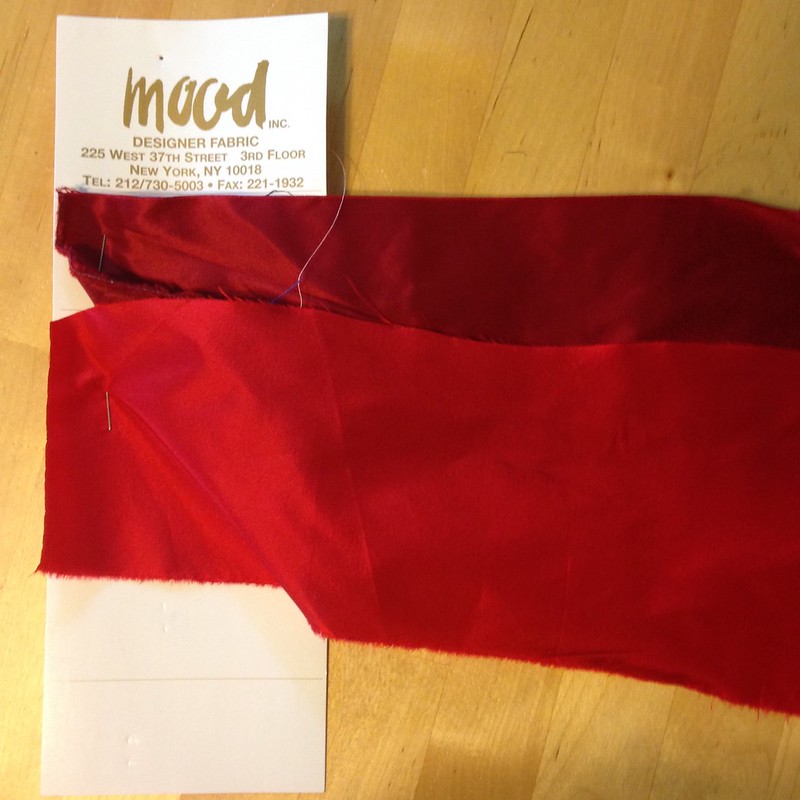
These are the swatch cards I got from Mood. The wool coating I chose is piece piled on the very top (4th one down). It’s a nice, thick virgin wool coating.

taffeta underlining and contrast
I am using 2 different silk taffetas – the brighter red will be the underlining, and the darker red is the binding and contrast.

How are we doing this week, seawlongers? Any questions about the cutting or prep?

Fall/Winter Sewing Plans for 2014

10 Oct

It just occurred to me that I haven’t share any seasonal sewing plans in… well, a while. Which is lame, because these are some of my favorite types of posts (both to write *and* to read) – I mean, who doesn’t like lurking inside someone’s brain, even if it’s just to see what they plan on doing over the next couple of months? Too creepy? Naw.

Anyway, now that London/Paris is looming on the horizon (less than 2 months! Omg less than a month and a half! Eee!), it’s really time that I start figuring out what I’ll be bringing with me (and making, for that matter! Don’t want to end up with another frantic last-minute sewing disaster, ugh). Especially since my luggage space will be very limited – I’m only allowed to bring one suitcase with me overseas (well… I use the word “allowed” loosely here. I can bring two suitcases if I want to – but I get to pay $130 for the second one! LOL GURL NO.), and I want to fabric shop while I’m there! So, I will be packing a capsule wardrobe, one that mixes and matches with itself, for maximum outfit options, as well as warmth. This is much different than how I usually travel (as I fly Southwest, where you can bring 2 bags free – so why the hell not, you know?), but I’m up for the challenge! πŸ™‚ Adulting and all that πŸ™‚

I’ve already made/chosen a couple of pieces to base my capsule around, as well as chosen my theme (like Devon, I think all vacation wardrobes should have themes, because, duh) – Minimalist Parisian Chic. Mostly because my capsule will be very minimal – or, as minimal as I can get it down to, because I am still one of those people who delights in overpacking – with lots of black. Not much on the Parisian Chic side (I’m sure Parisian women will be horrified when they see what I wear to stomp around their city, ha!), but it has a nice ring to it πŸ™‚

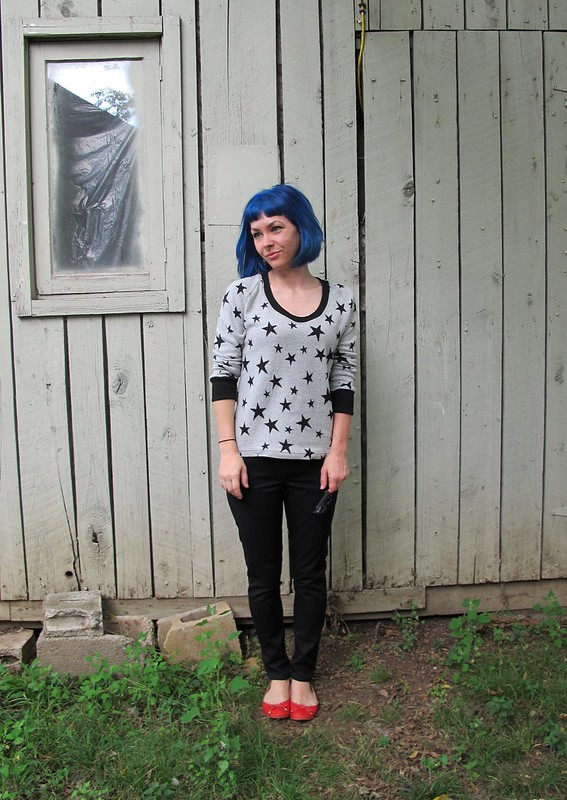
Anyway – to start – I have these black Jamie jeans that I made a couple of weeks ago:
Jamie Jeans + SJ Sweater Made with Mood Fabrics
I haven’t decided yet if I’ll be bringing the star sweater. It’s a little bulky! On the flip side, regarding the jeans – I just finished wearing them for the 5th time in a row (sans wash), and they’ve stayed very close to their original shape. No bagging out, woohoo! So that makes me feel good, because I’ll be wearing these a LOT come London.

Stripey Renfrew
I will also be bringing my Imogene + Willie slim jeans (pictured here), because they are basically the best jeans ever. Oh, and probably that stripey Renfrew top. Can’t have enough tshirts!

Now for the sewing plans! Sidenote: By the time of publishing this post, I’ve already finished more than half these makes. Whoops! Guess y’all see where my priorities lie when it comes to posting vs sewing hahaha. Oh well!

Ikat Lady Skater
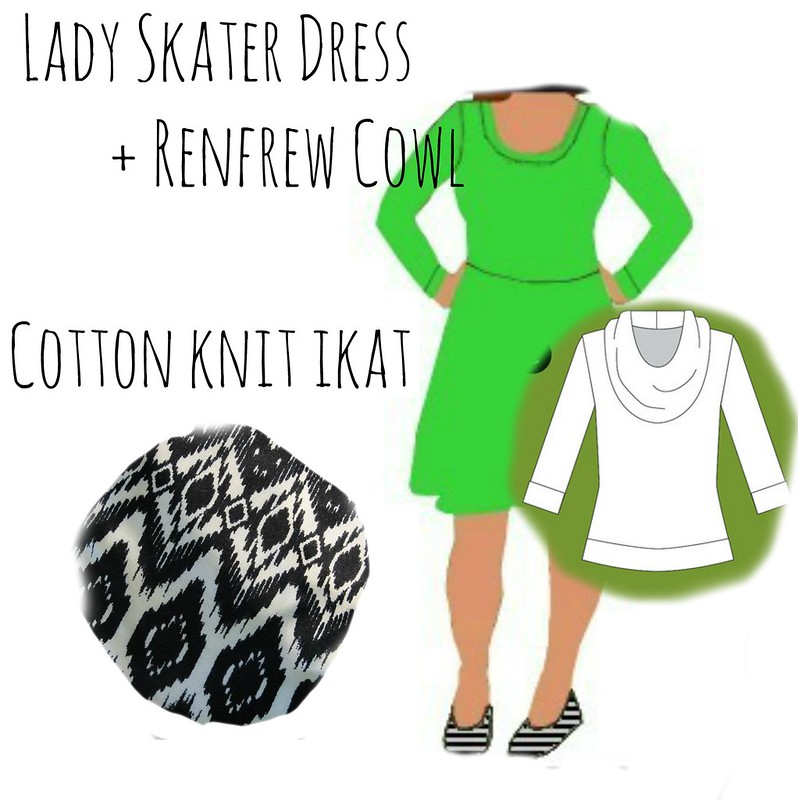
The Cowl-Necked Skater Dress
I’ve had this idea in my head for a while now – a Lady Skater dress // Renfrew top mash-up! This cotton Ikat knit fabric (purchased at The Fabric Studio here in Nashville) will be the perfect match for this dress – like a giant, snuggly Christmas sweater! I actually don’t know if I’ll be bringing this one to London, due to bulk factor (my capsule really only allows for one dress, which I’m thinking will be the one below – but we’ll see!), but the plans were too good to keep to myself πŸ™‚

DVF Wool wrap
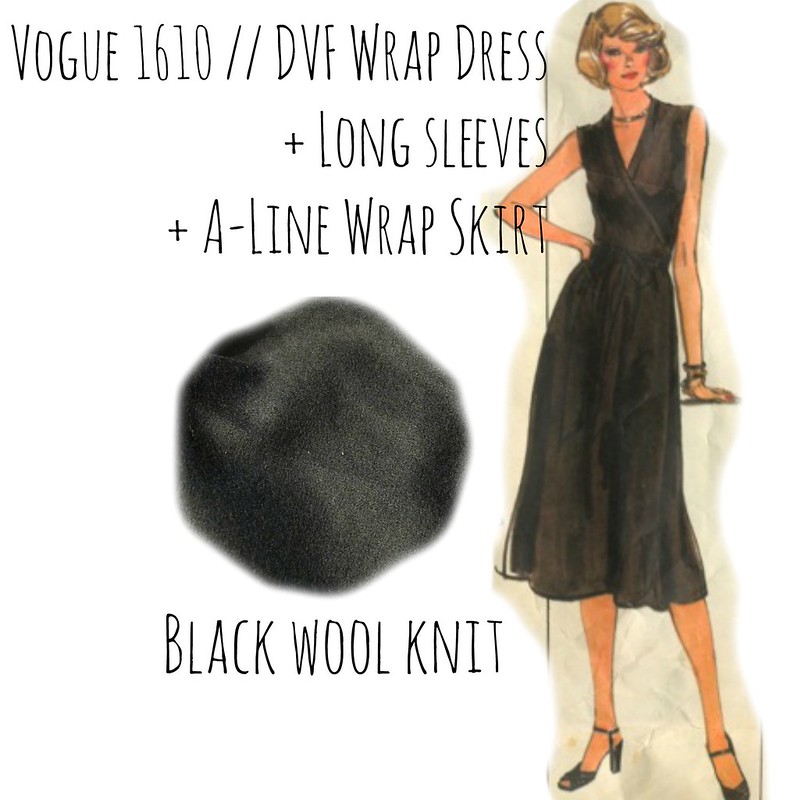
The Wool Wrap dress
Another big mash-up – I’m starting with the DVF Wrap dress pattern, but adding long sleeves (stolen from the Lady Skater, naturally) and swapping out the gathered skirt for a wrap A-line (Miette Wrap skirt – I’m looking at you). The black wool knit fabric was picked up at Mood in NY a couple of months ago – it’s SO soft! Like, cashmere soft. I’m so in love β™₯

Silk v neck
The Silk Button-down
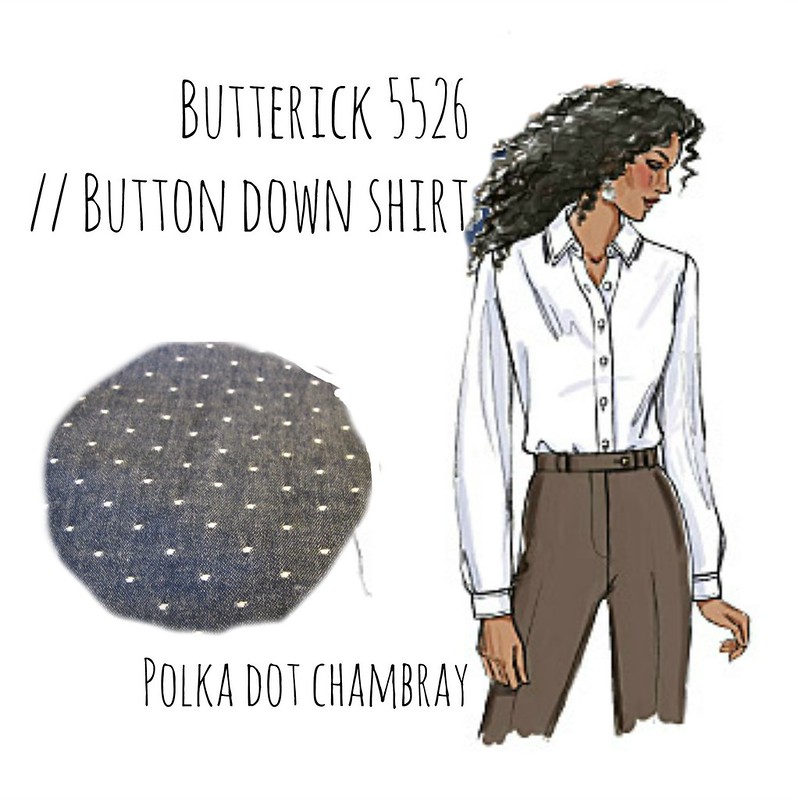
I already have a nice white button-down – made from the same pattern, Butterick 5526 (my favorite!) – but it’s not really cold weather appropriate, due to the length of the sleeves. Since they are 3/4, they don’t really layer nicely with my long sleeve sweaters! I’d love to make another one, but up the ante with some beautiful silk double georgette, and modify the neckline to be more of a v shape (likely using this V-Neck variation tutorial by Jen!)

Chambray Button down
The Polka Dot Chambray Button-down
Another thing I already have one of, but need a winter version. This one will be made using a gorgeous cotton polka dot chambray, picked up here locally at Textile Fabrics.

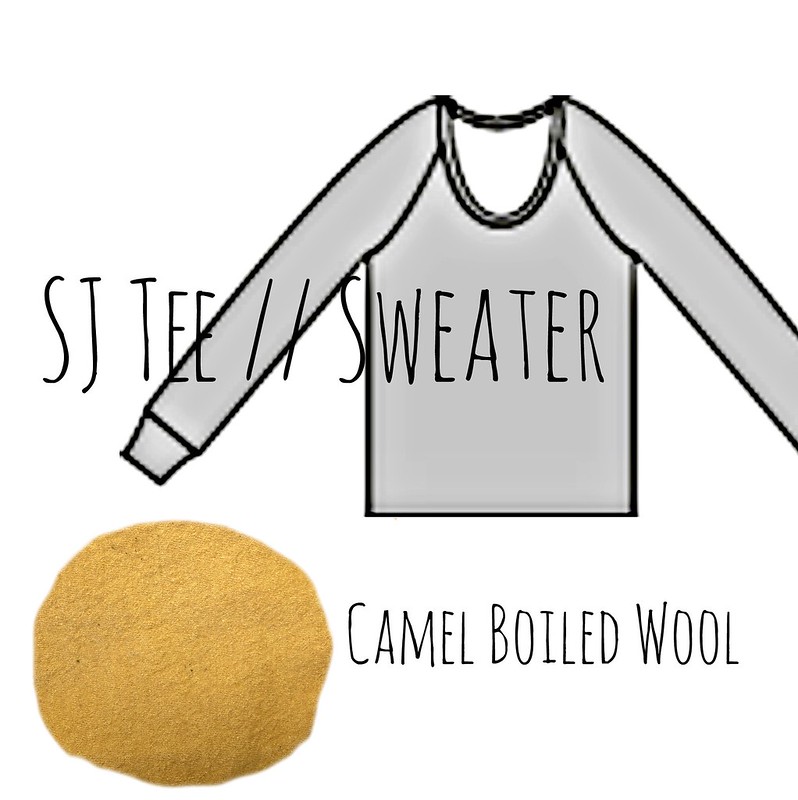
SJ Sweater
The Wool Sweater
Button downs need a nice sweater, yeah? I want to try sewing a sweater, using the SJ Tee as a basis (with a higher neckline, and omitting all bindings). The fabric I have is a lovely camel-colored boiled wool, that I bought from Elizabeth Suzann (aka I totally jacked her wholesale order hahaha). I think it’ll look equally good over both those button down shirts I have planned!

rigel bomber
The Bomber Jacket
I know – I’m already planning a pretty sweet coat. However, the weather in London (and Tennessee, for that matter!) can be fickle, so I’d like to bring a lighter-weight jacket for days when the temperature isn’t as low. I’ve been meaning to make the Rigel Bomber for, well, months now. Just been waiting on the perfect fabric – and I think I found it! Check out this black wool coating – to be paired with gold china silk for the lining.

Other plans I have (no photos, sorry! Use that imagination of yours, ha!)
– Need some thin long sleeve shirts for layering – maybe just a couple out of wool knit, such as this textured black wool jersey (that’s apparently already sold out?! Wah!). I wear these pretty much daily in the winter – and sometimes I like to sleep in them if it’s really cold – so it’ll be nice to have a few to choose from.
– Speaking of sleeping – I need some new pajama pants! Currently lurking Margot pj pants in Tilly’s book, Love at First Stitch, since they seem to be a pretty quick/easy make (I really want to make the Tofino pants, but right now I need quick and easy!). I picked up some really fun orange plaid flannel to make them with – I know, that fabric is ridiculous, which is exactly why I chose it. It’s nothing like I already own! When it comes to pjs, why not, you know?
– I would like to make a flared A-line wool skirt to make as well – thinking about using the Delphine pattern (also from Love at First Stitch), because I love the shape. A little stuck on fabric selection, though! My go-to is usually wool crepe, but that will be too drapey for this shape. Thoughts? I need it to be 100% wool (pretty nitpicky about this, sorry!) and I’m looking for lipstick red. Budget is no more than $25 a yard (and obviously I’d be delighted if it was less than that!)
– Bras! I want to finish at least one bra before I leave – using the Marlborough pattern and one of my kits from Bra Maker’s Supply. Obviously I want new bras, but even more – Norma will be in Paris while I’m there, and you better believe I’m going to drag her into a bathroom and make her assess and critique my fit. Haha! Man, sewing people are weird πŸ˜›

I think that’s it for now! It feels good to get everything listed out in one place. I’m hoping I can get all this done before I leave – but if not, no worries. It’s not like I’m lacking clothing or anything as it is!

As a side note, I was just notified that one of my lovely sponsors, Indie Sew, is holding a pretty sweet contest where you can win a YEAR of free patterns! Fuck yes! You can read all about the contest and the reasoning behind it on this blog post, but the general gist is that Indie Sew wants to help you transform your entire wardrobe into handmade and end the cycle of cheap/fast fashion. And what better way to jump start a new handmade wardrobe than with some FREE FREAKING PATTERNS AMIRITE? Such a cool idea, and I really really hope the winner shares their journey via blog or social media so we can follow along! Anyway, soapbox rant over – go throw your name in the hat!

What’s on the table for your fall/winter sewing plans? Do you have any capsule wardrobe suggestions for me? Tips for packing light? Are you going to judge me if you see me wearing the same thing for 3 days in a row while I’m on my trip? πŸ™‚

Tailoring the Vogue Coat, pt 2

23 Dec

Man. Tailoring. It is always (always!) worth the extra cost and effort, but lord I always forget how much extra effort is actually involved. I’ve been plugging along on my coat since I last posted my progress, so here’s what I’ve been up to in the meantime!

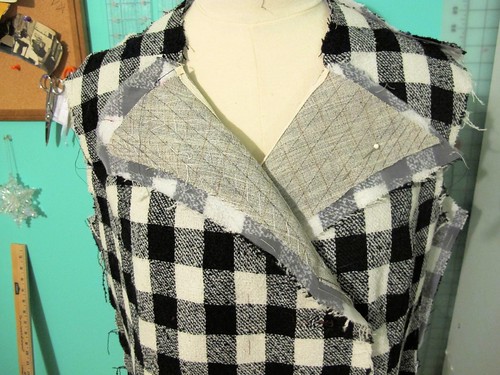
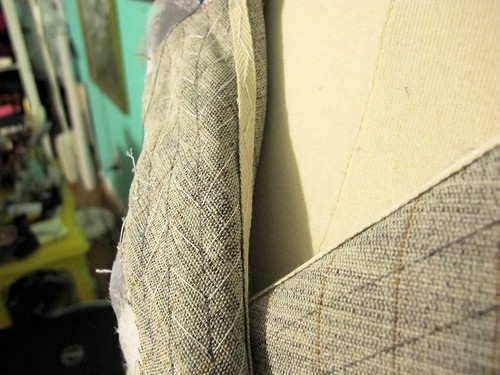
I finally got the padstitching on the lapels done. That alone took the longest – not because padstitching takes forever, necessarily (well, I guess it depends on the size of the lapels), but because I kept putting it off for as long as possible. I was not looking forward to how long it would take. Guys – when I finally sat down and made myself do it, I finished both lapels in like 45 minutes. I’m such a baby, haha! Fortunately, while I was putting off the padstitching, I was not sitting idle – I skipped ahead of the instructions, and assembled the coat back (minus the tailoring) and lining, so that should save me some time now.

Now, I totally could have skipped the padstitching – it’s not 100% necessary, although it will 100% of the time make your coat look sooo much nicer. RTW coats do NOT have this sort of tailoring in them, and they obviously get away with it because people still buy them. But look at what a difference it makes:

Vogue Coat - Tailoring

If you can’t tell, the padstitched lapel is on the left (the side that overlaps), and the one that hasn’t been padstitched is on the right (the underlap). Do you see how flat the non is in comparison to the one with stitching? It’s pretty incredible!

Vogue Coat - Tailoring

LOOK AT THAT ROLL LINE, JUST LOOK AT IT.

Padstitching, in a nutshell, is basically just sewing diagonal stitches in straight lines (eventually forming a bunch of chevrons) using silk thread, so the hair canvas adheres to the coating fabric. You don’t sew all the way through the fabric – just pick up a little nip here and there to keep things connected. You hold the fabric+canvas over your fingers so it is encouraged to roll while you sew, and then when you’re finished, you steam the shit outta that sucker so it is hold it’s shape. Again, time consuming and not totally necessary, but it really is the difference between “Hey, I made a coat” and “~*Hey I tailored a fucking coat are you so impressed*~”. I mean, I’m impressed with myself and I haven’t even finished the thing yet!

After I finished the Dreaded Lapels, I focused my attention on the collar.

Vogue Coat - Tailoring

First, I sewed the two under collar pieces together. These are cut on the bias, so they will stretch and sit correctly underneath the upper collar. They are also cut slightly smaller than the upper collar, so the seam will roll to the underside and you won’t see it. That’s the plan, anyway.

Vogue Coat - Tailoring

To sew the interfacing pieces together (remember, they need to be on the bias so I can’t cut them on the fold), I removed all seam allowances and zig-zagged the pieces together at the center, secured with a piece of seam binding. I then marked my roll line and, I know, it looks really shitty. Sorry about that.

Vogue Coat - Tailoring

As with the lapels, I marked the padstitching lines with my trusty Sharpie. Above the roll line gets heavy padstitching (1/4″ tall, spaced 1/4″ apart) and below the roll line is more lightly padstitched (1/2″ tall, spaced 1/2″ apart). This will help the collar to stand so it looks nice and full and not sad and flat.

Vogue Coat - Tailoring

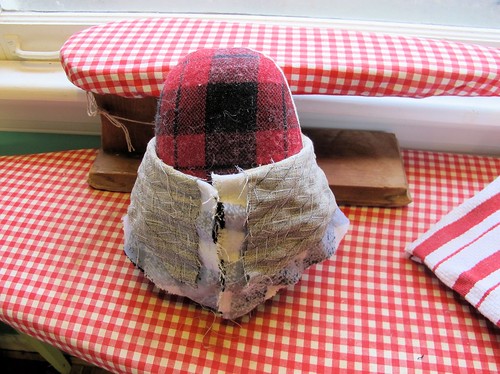
After I finished padstitching, I wrapped the collar around my tailor’s ham and, again, steamed the shit out of it. So qt, so pro.

Vogue Coat - Tailoring

I drafted a back stay, although my pattern doesn’t call for it. It’s always a good thing to include, though – it’ll reduce the strain on the coat back from moving your arms around/hugging people, and thus give your coat a longer lifespan. Plus, you can use cheapie muslin and I love me some cheaping out.

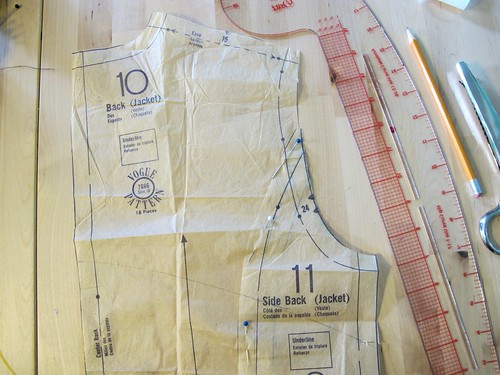
By the way, I use the term “draft” veryyyy loosely. I pinned my back and side back pieces together (so they would be one continuous piece with no seams) and marked 8″ below the neckline and 3″ below the armhole, then used my curved ruler to connect the two lines.

Vogue Coat - Tailoring

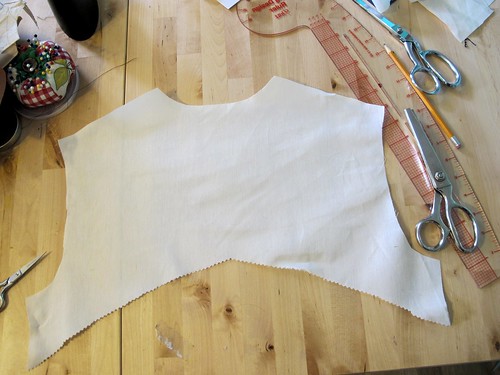
The resulting piece (cut on the fold, because, again, no seamlines) is the back stay. I pinked the bottom edge so there wouldn’t be a sharp line on the outside of my coat. Real talk: this is the only reason why I own pinking shears at all. For tailoring. I’m not even kidding about that a little bit.

Vogue Coat - Tailoring

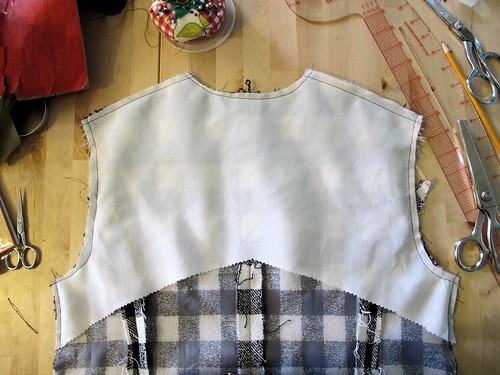
The back stay then lays on top of the coat back and is basted to the arm holes, side seams, neckline, and shoulder edges. The bottom just kind of flaps free in the breeze. And that’s all there is to it!

Vogue Coat - Tailoring

I also stabilized my shoulder seams with twill tape – no real reason, except that my Tailoring book (lol why the fuck is that listed at $65 what is this madness) said it was a good idea so I just went along with it. It should reduce the strain at the shoulders, which is good because this coat is starting to get a little heavy!

Vogue Coat - Tailoring

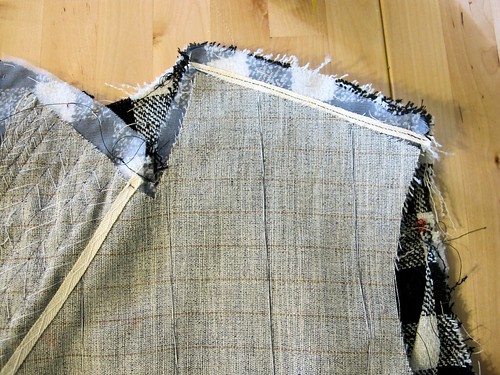
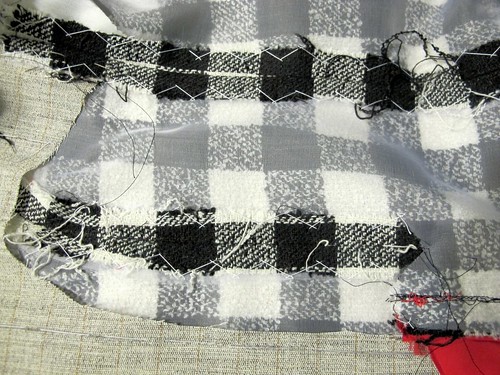
Finally, I catch-stitched down all my seams on the coating fabric, catching only the underlining. Honestly, I should have done this as I sewed each piece – I really had to reach up under the back stay to get some of those seams sewn down – but I wasn’t thinking about it at the time. Catch-stitching down the seam allowances is one of those weird optional steps that isn’t necessarily bad if you skip it (like I was planning to), but it does help keep everything in place on the inside, thus prolonging the life of your coat. And, I mean, it’s sort of relaxing. I really love to catch stitch, what can I say?

So there’s that! I’m mostly done with the fiddly tailoring at this point – I still have the sleeves to deal with, but they shouldn’t be too bad. Since I’ve already assembled the lining, it’s really now just a matter of putting everything together.

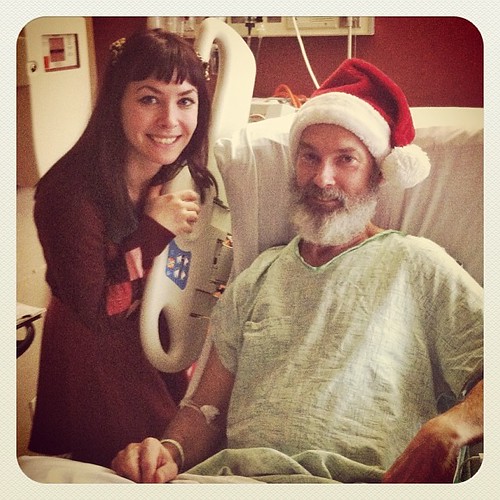
My original plan was to have this finished by Christmas, but I’m now shifting that to a (hopeful) NYE completion date. Construction hasn’t necessarily been dragging- I just haven’t been home at all to work on it! My dad ended up in the hospital last Monday, where they discovered that his colon was completely blocked due to cancer, so they wheeled him into emergency surgery on Tuesday and cut out 30% of that shit (pun intended). They also removed a bunch of lymph nodes and tested those – turns out that stuff is cancer-free, which is AWESOME – but he does have spots on his liver that will require him to go through chemo. Scary, scary shit, man. Fortunately, my dad has been a total trooper and by Wednesday morning he was walking up and down the halls like a champion. Things are good now – he finally passed gas yesterday (lol @ us being excited about my dad farting, considering he regularly likes to stink us out), and we’re hoping he can be home in time for Christmas. Fingers crossed! Although, to be honest, I’ll totally spend Christmas in that tiny hospital room if I have to!

I don’t like to discuss my personal life here much, this being a sewing blog and all, but my dad is a pretty inspiring/amazing dude. He regularly runs ultra marathons – 50-100+ miles at a time, up a mountain, sleeping in the bushes, that’s all normal for him. I laugh when someone corrects me for saying 500k (“Oh, you mean 5k, silly.” “No, dipshit, I meant 500k. He ran 314 miles.”) when I brag about his racing. And dude is fast – he regularly smokes out all the little 25 year olds who run the same races. Not bad for a 54 year old who looks like Santa! Not to be a total sap, but getting to spend the last week with my family (despite the less-than-ideal circumstances) and knowing that my dad is going to be a-ok is literally the best Christmas present I could have ever asked for. I’m just so thankful.
❀️❀️

Anyway, I hope everyone has a Merry Christmas! I’m hoping to get in some much-needed sewing time – my machine has been idle for way too long πŸ™‚

Tailoring the Vogue Coat

5 Dec

When I originally posted my Vogue coat muslin posts, there was quite a bit of interest about what goes in the process of making a coat from start to finish. I’m not one to tease, so here’s a glimpse into what I’ve been up to, coat-wise, for the past couple of weeks.

The first thing I should mention is that coat-making isn’t hard. It is time consuming, for sure, but anyone with a few projects under their belt could easily tackle this. It might take you a couple of months, and you may have some hair-pulling moments (either with deciphering instructions or actually trying follow them), but it’s doable. I don’t know who started this whole thing of ~omg coat-making is so hard~ (probably the same person who said that sewing with knits was also difficult. Nope! It sure ain’t!), but, ugh, just ignore them. It’s not hard. It’s time consuming, it’s expensive, and you definitely need to muslin the shit out of your pattern before you even think about cutting into your coating… but in reality, it’s not terribly different from making a lined skirt or dress. You just need to follow a few more steps. You can also totally omit the whole tailoring part, with the special interfacing and padstitching and bound button holes and all that – and then shit gets super easy (well, as super easy as sewing a lined garment can get :)). Personally, I don’t see the point in spending all that money on a garment if you’re not going to go all out and do the whole nine yards, but then again, I think tailoring is fun. So do what you will.

My first task, post-muslin, was to start cutting the plaid coating. I won’t go into detail on that process – basically the same steps as the tutorial I posted on matching plaid – and it took foreverrrr. Seriously, I think I spent close to three hours just cutting the outside fabric! WOOF. I also had to cut interfacing (I am using hair canvas, which is a hefty interfacing commonly used for tailoring purposes, such as coats!), lining, and silk organza. The silk organza was a last-minute addition – I originally wasn’t planning on underlining, although the pattern calls for it, since I don’t need my coating to be super warm in our mild winters. However, my pattern is a fairly structured peacoat, and the coating has a bit of a loose weave, so I decided to underline with silk organza to give it that nice crisp hand without adding a lot of bulk or unneeded warmth.

Vogue Coat WIP

Silk organza can be expensive, and some people like to use poly if it’s not touching the skin… but personally, if I’m going to dump all this time and money into a coat, the couple dollars in price difference doesn’t really effect my final budget. So I went with silk, since it presses nicely along with the wool.

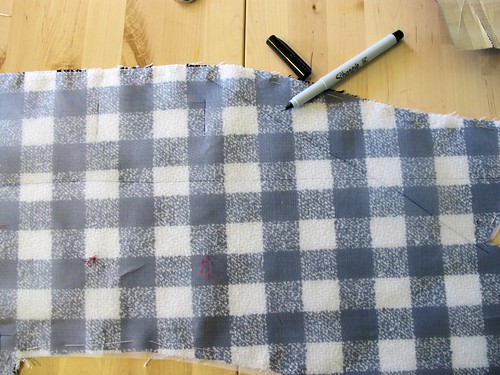
The bonus part of using an organza underlining (or really, any underlining at all) is that you can mark directly on the underlining and you don’t have to worry about it showing through the coat fabric. I totally use a sharpie. Go ahead, judge me.

I underlined my pieces flat on my tabletop (see this tutorial if you need more info on underlining!), using silk basting thread and going alllll the way around each piece. Every piece is underlined except the facing – only because I ran out of silk organza :). I will be interfacing that piece with a fusible. This process took a long time, but it’s pretty relaxing work – perfect for grabbing the computer and watching shitty documentaries. That’s my excuse, and I’m sticking to it.

After underlining, it was time to put in the bound button holes!

Vogue Coat WIP

I was actually a little scared of this part! I don’t know why – I’ve sewn plenty of successful bound button holes in my day, and used a different technique each time. Maybe I’m out of practice, but for whatever reason, I was not looking forward to this part and I definitely put it off for like, a week. Which is shitty because bound button holes are the kind of thing that get done before you do any other work on the coat, so that meant the project was put on hold until I got my ass in gear and put those damn button holes in the front piece!

To make my button holes, I wanted to try yet another technique, so I downloaded Karen’s e-book on bound button holes and followed her instructions. Folks, these are the prettiest, most perfect button holes I’ve ever made on the first try. Seriously! If you have any concerns about doing these, or have fucked them up in the past, you should definitely check out her book. I think I paid about $3.50 for it after the rate conversion. For $3.50, you really have no excuses.

Vogue Coat WIP

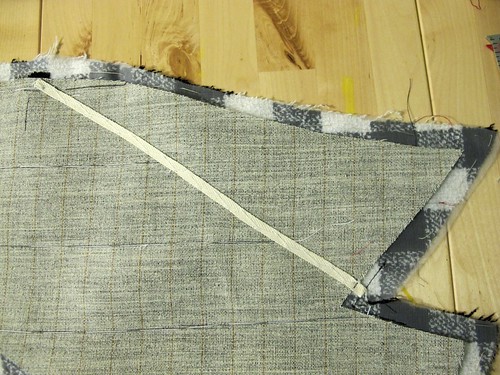
I mean – look at them! I even managed to match up the plaid on that particular one, ha!

Vogue Coat WIP

As I mentioned previously, the instructions include all the steps needed for a fully tailored coat, so fortunately I don’t need to compile a list of steps and modify the pattern to suit my needs. They are a little different from the previous coats I’ve made, in that some of the pieces are sewn together before you start with the interfacing and pad stitching. Personally, I like to do all that before I assemble the rest of the coat because it makes it easier to handle, but I’m also a stickler for following instructions. So, I attached the pocket, the front and side pieces (being careful to match up the plaid, which for some reason took me like an HOUR. Shifty plaid, go die.). I attached the interfacing using long basting stitches with my silk thread. This took a while, but I also recently rediscovered all my favorite awful pop-punk and ska bands from my youth, so I may or may not have had a personal dance party in the process.

Vogue Coat WIP

Here you can see some of the details – the hair canvas, the uneven permanent basting with the silk thread, my underlining, the pressed open seams. It’s coming along, that’s for sure!

Vogue Coat WIP

Next, I sewed my twill tape to the roll line of the collar. This will help the collar keep it’s shape as a wear it, since the twill tape will dictate how it falls at the fold line. You measure your twill tape to the length of the roll line, then subtract 1/4″ from the length and ease the coating to the tape and catch stitch it down. Pretty simple, but it makes a huge difference in the finished coat.

I also marked my pad stitching lines on the collar, but I forgot to take a photo. I totally used that sharpie, too. Ha!

Vogue Coat WIP

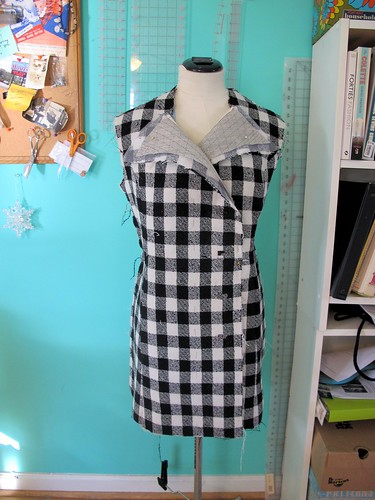
So that’s where we are now! The coat fronts have been mostly assembled – I just need to pad stitch the collar, and it’ll be ready to attach to the back and side back pieces. Obviously, it’s not anywhere near completion, but that doesn’t stop me from pinning it to my dress form and pretending it’s a coat. Call it inspiration, or call it a kick in the pants, or whatever. Either way, I’d love to finish this by Christmas, but we’ll see!

I know the plaid looks like it doesn’t match in those pictures, but the fronts are not properly overlapped. Trust me. Three hours of cutting means all the plaid fucking matches, dammit.

What’s on your sewing table this week?

The Vogue Coat: Muslin #2

15 Nov

Well well, 3 posts in one week! That doesn’t happen too often, huh? Hopefully y’all aren’t tooooo sick of hearing from me, because I have lots to say apparently!

Starting with yet ANOTHER muslin post. Forreal, tho, y’all were so helpful in my last muslin post, that I’m sticking my hand back in the cookie jar again. A little help, yes yes?

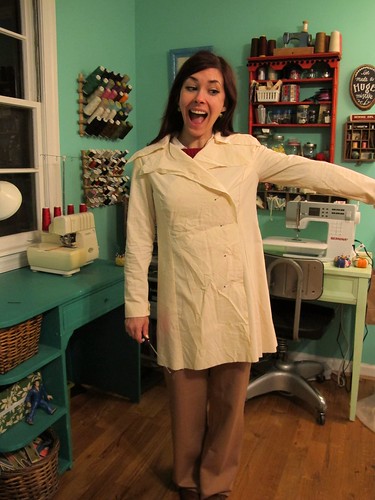
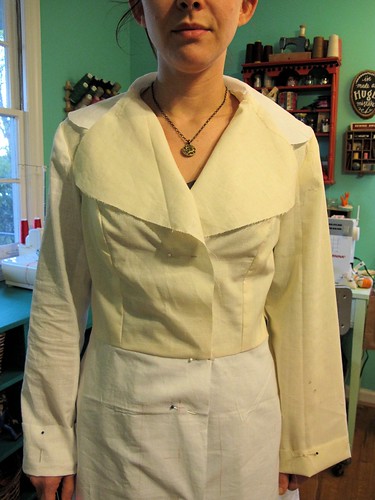
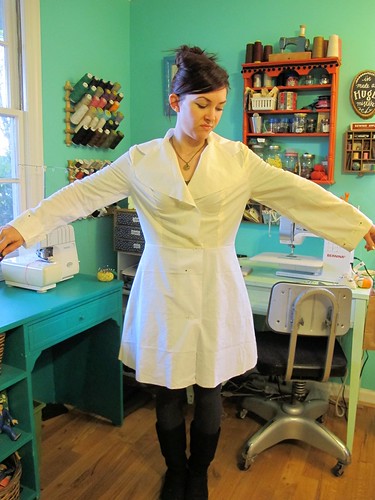
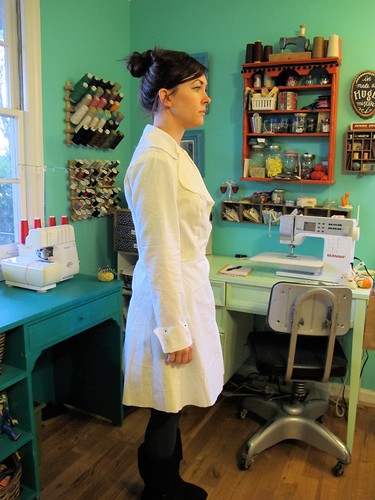
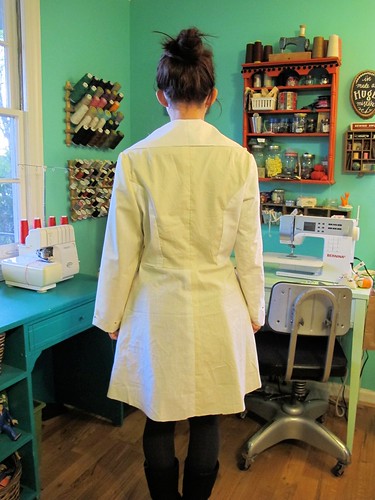
Coat Muslin, part 2

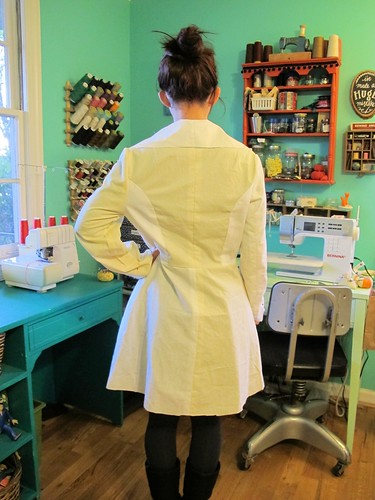
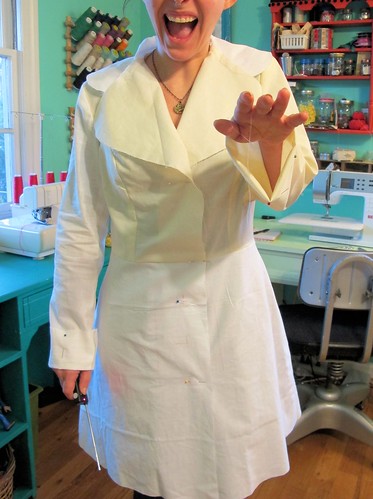
First things first, you probably noticed that this coat looks entirely different – that’s because it’s a different pattern altogether! I ended up scrapping the original Vogue pattern plan – a shame, because I really wanted to use it (it was a gift from a reader, and I like to make use of awesome things, see), but there’s no point in trying to make something work that needs, well, that much work. Especially considering all the modifications I’d have to make beyond just sizing – including drafting a new lining, facing, and undercollar. No, no thank you.

So I dug around in my stash and pulled out Vogue 7666, which happens to actually be in my size. And to make things extra exciting, this pattern has all sorts of fun goodies in the instructions for creating a beautiful hand-tailored coat – things like separate lining pieces, instructions for padstitching, a marked roll line, etc. Fun!

Coat Muslin, part 2

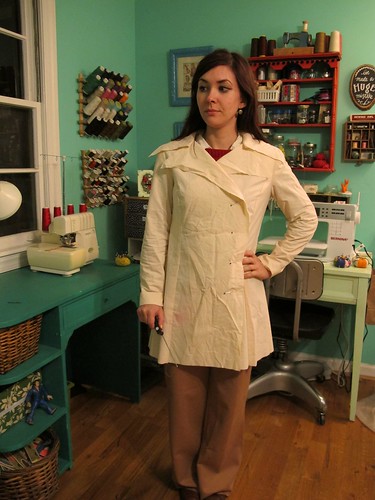
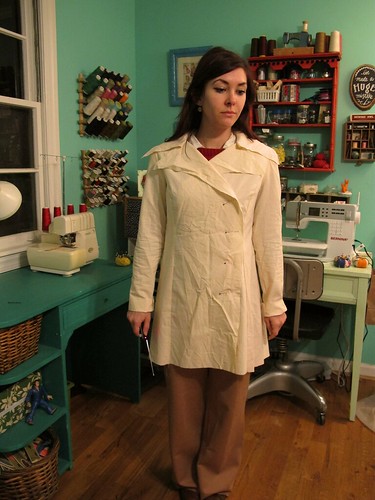
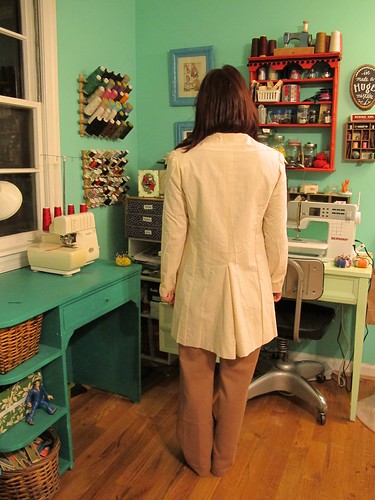
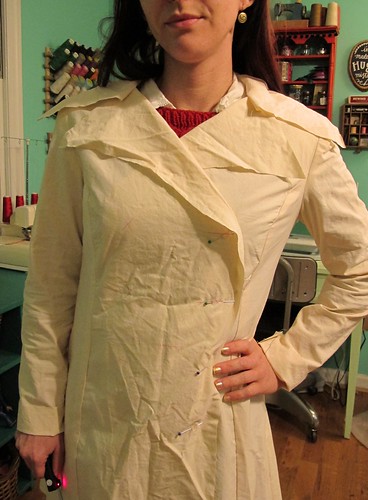
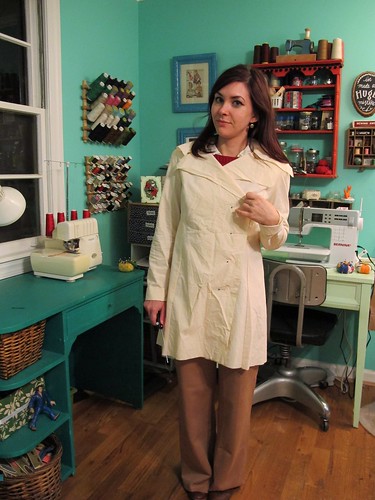
I made up a quickie muslin and here are the pictures! Based on everyone’s suggestions, I am wearing this muslin with a sweater underneath, and I slipped some shoulder pads in the muslin as well. The shoulder pads may be on the large size, I dunno, they were in my stash.

Coat Muslin, part 2

I think it fits much better than the first, off the bat. Look, the arm holes are normal!

Coat Muslin, part 2

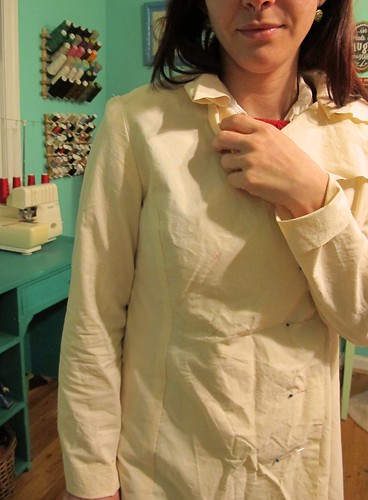
I can’t tell if the shoulders need to be narrowed a little, though?

Coat Muslin, part 2
Coat Muslin, part 2

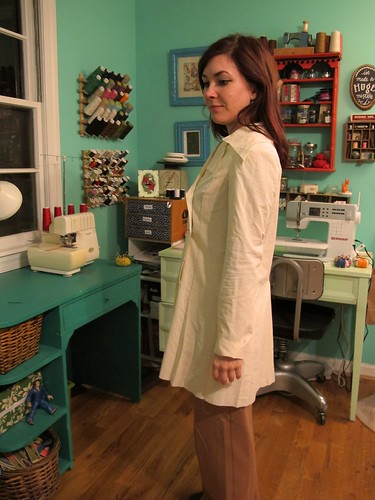
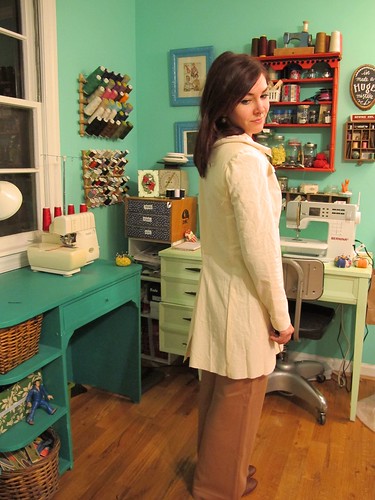
Back and sides look ok.

Coat Muslin, part 2

I know the back looks a little loose, but I honestly can’t go much smaller without making the coat difficult to move around in.
Also, ignore that weird shit going on at the bottom half – there will be a back vent there, but I didn’t bother sewing it in the muslin, ha.

Coat Muslin, part 2

I know the collar and lapels are kind of weird and pointy, but I like them! Keep in mind that they will be a little bit smaller – the 5/8″ seam allowance is there, and once I get the facing installed there will be notches and topstitching and all that.

I also need button help! What would you choose? I really love these black glass buttons from Mood Fabrics – one, two, three or four?

Or do you have a better suggestion? My only requirements are that they are black (sorry, but I think anything other than black is just going to look off with my fabric choice), 1″ with shank, and they reeeeally need to be $3.50 or less because I need 8! Again, you can see my fabric and pattern in this Instagram picture.

Coat Muslin, part 2

Sooo, to sum up: coat muslin #2, y/n? See any fitting changes I need to address before I start slicing in to my beautiful coating?

Vogue 2765, The Muslin

4 Nov

I’m afraid I don’t have a finished object to show y’all today. For exactly one week now, I’ve been dealing with a kidney stone that will NOT leave my body. Seriously, I’ve had these before and they generally pass within a day or two, but these little shits have made a home inside me, I guess, and no amount of water (or other weird home remedy, yes, I drank the olive oil and lemon juice, eww) will expel them. I hate peeing into a screen, I hate taking painkillers, and I hate this little segment of my life right now. I missed half a week of work last week, and get up to go to the bathroom about every twenty minutes on average. Shit blows.

Anyway, enough about me and my TMI, let’s talk more about… me! While I didn’t make anything finished, I did finish the muslin for my Vogue coat! Let’s have a look see.

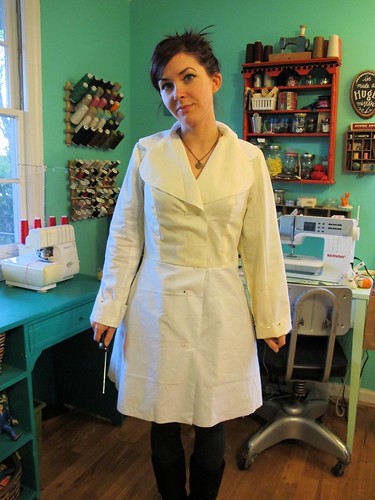
V2765 Muslin

To be honest, I’m a little underwhelmed. It’s just so… meh. But then again, it’s a coat muslin made with a patchwork of different muslin fabrics, two different sleeves, and I’m not wearing a sweater under it. I was, but I took it off for the pictures because I don’t know why. I guess I wanted to make sure that it still looked good when it was loose. It’s not like I always wear a sweater 24/7, this is Tennessee we are talking about here.

I can’t tell if it really looks ok or if I’m just delusional. Help me.

V2765 Muslin

My pattern was a size too big to start, so I sewed most seams with a 3/4″ seam allowance and I think that really helped with pulling in the fit. It still looks a little loose, but this is also lightweight muslin and not a heavy coating.

V2765 Muslin

The underarms, though. Yikes. Need to raise that quite a bit.

V2765 Muslin

So, more about those sleeves. The right side is the original pattern piece. It’s terrible. I actually left it on so we could laugh at it together. The left sleeve is a two piece sleeve from my Fabiani coat (whyyy can’t I just wear that this winter? Wish it still fit πŸ˜₯ ). I definitely like the two piece better, but it needs some tweaking as it’s a bit tight when I have on a bulky underlayer. I sewed it with the same 3/4″ seam allowance, so I think the normal 5/8″ will be fine.

V2765 Muslin
V2765 Muslin

Ahaha! See how bad the underarms are? Granted, that’s the shitty sleeve, where the problem was actually worse.. but still. It’s bad either way.

V2765 Muslin

Speaking of the original sleeve, this is why it’s so bad. It is a straight line from underarm to wrist – no tapering whatsoever. So the cuff, you can see straight to the elbow. Who thought that was a good idea?! God, it’s so terrible.

Anyway, I’m still on the fence about this, although I will say that leaving it alone overnight on my dressform (which, if you were wondering, is almost entirely what I use the dressform now these days. Putting shit on it so I can decide if I hate it the next day) gave me a ~fresh eye~. I guess I just want to make sure I’m not off my rocker here.

To recap, the fabric I’m using is this black and white checkered coating (which I’m almost having second thoughts about because, ughhh princess seams) and I haven’t settled on a lining, but I’m leaning heavily toward tango red. Also haven’t picked buttons (lolol I’m a hot mess), but I’m thinking toggles would be FUN.

Soo, what do you think? Vogue 2765, yea or nay? See any other fitting issues I failed to mention (beyond the underarms)? Want to sew a coat along with me (I’m going the “barely tailored” route)? Have any well-wishes you’d like to share with a lady who needs to exorcise this demonkidney stone? I’m all ears!

Sewing Plans – Fall/Winter 2013

20 Sep

The best part about the season change is planning a new wardrobe, amirite? As my current plans appear to be spread all over the world (some on Pinterest, some on Flickr, some just in my head), I like to group it all into one place. So here we go!

Of course, there are the not-as-exciting basics – leggings and hoodies and sweaters. I also have specific plans for special patterns and fabrics, which can be a little harder to keep track of – hence this post. Obviously y’all don’t come to my blog for my stellar photography and photoshopping skills, so overlook that part, thnx. Also, I got way too into this and could have continued slapping pictures together and creating link parties here for the next 24 hours, but I made myself stop at 10. You are welcome.

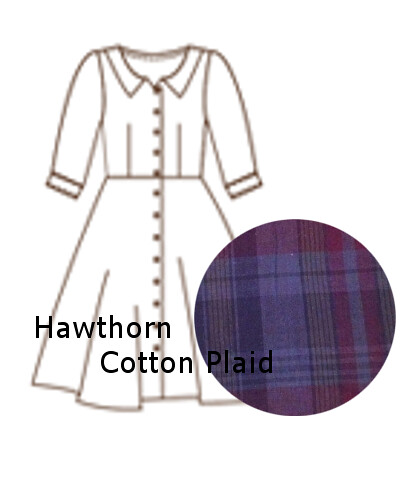
Hawthorn
Pattern: Colette Pattern’s Hawthorn dress, with some sleeve modifications.
Fabric: Blue/Purple cotton plaid from my stash (srsly been hoarding this for a couple of years)

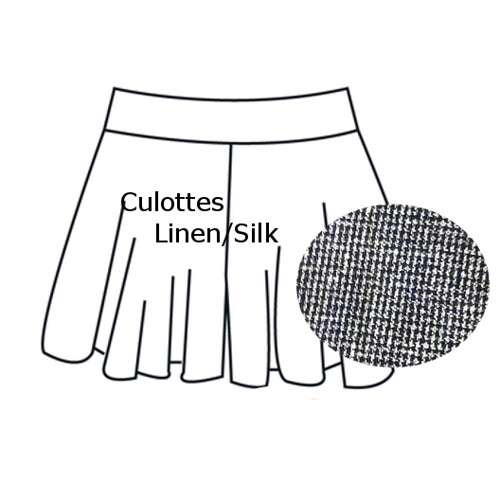
Tania
Pattern: Megan Nielsen’s Tania culottes
Fabric: Linen/Silk suiting blend, also from the stash. This stuff is so beautiful and I’ve never settled on a suitable pattern for it. The more I wear my summer Tanias, though, the more I love the idea of a flippy wool miniskirt. Except by skirt, I mean shorts πŸ˜‰

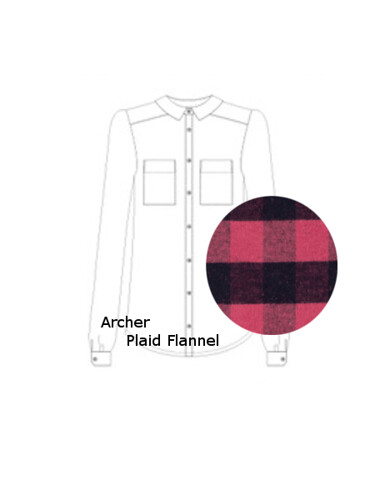
Archer
Pattern: Grainline Studio’s Archer button-up
Fabric: Plaid Cotton Flannel. Actually, can I just make everything in flannel?

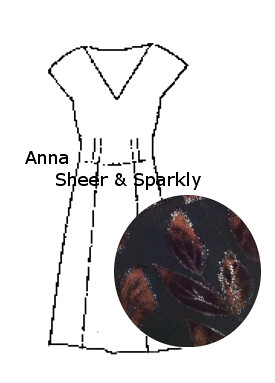
Anna
Pattern: By Hand London’s Anna Dress – short with slash neckline
Fabric: Sheer black with sparkly leaves all over, another stash piece. God, this stuff is amazing. I plan on wearing it over a black slip, instead of lining.

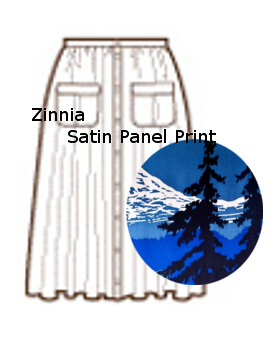
Zinnia
Pattern: Colette Pattern’s Zinnia skirt (the newest one!)
Fabric: Anna Sui Satin Panel print. I don’t know why I’m so in love with this print – nor am I sure it will actually fit on the skirt pattern pieces – but I’m willing to try.

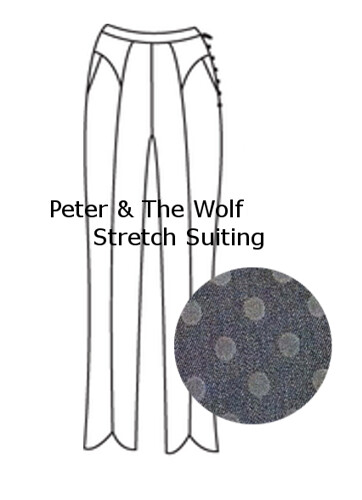
Peter and the Wolf
Pattern: Papercut Pattern’s Peter & The Wolf Pants
Fabric: Stretch suiting (with flocked polka dots!) from Mood Fabric’s store. DREAM FABRIC, Y’ALL.

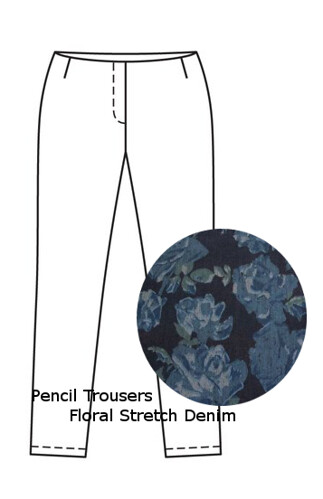
Pencil Trousers
Pattern: Burdastyle Pencil Trousers
Fabric: Floral Stretch Denim

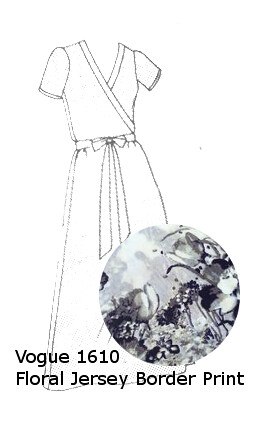
Vogue 1610
Pattern: Vogue 1610, vintage
Fabric: Floral border print jersey, a fabric gift from Carolyn. What’s funny is she also has apparently made this same pattern (although not with the same fabric I’m planning, obviously). Does that sound like fate or what?

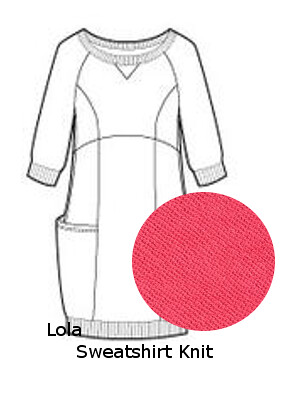
Lola
Pattern: Victory Patterns’ Lola dress
Fabric: Thakoon Cotton sweatshirt knit

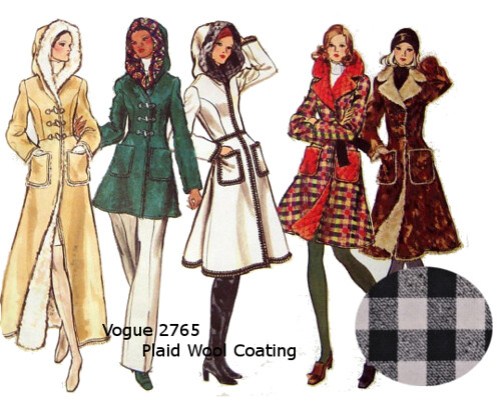
Vogue 2765
Pattern: Vogue 2765, vintage
Fabric: Black & White Plaid wool coating

Ok, now we need to talk about this coat. I haven’t decided what view to make – it will be short, but hood or no hood? I also haven’t settled on a lining color, so let’s have some opinions! Midnight Blue? Tango Red? Mandarin? Buttercup Yellow? I don’t really want to go with white or black, too boring!

What are your plans for the new season? Anyone else want to make a coat with me? πŸ™‚