
Hey everyone! Welcome back for the second (and final!) sewing post of the Outfit Along 🙂
At this point, you should have your skirt mostly assembled (all seams except the center back seam) with the waistband partially attached (not finished). Today, we will insert the zipper and finish the waistband in one go! I am making my skirt with this awesome rayon crepe from StyleMaker Fabrics (don’t forget that there is free US shipping/discounted international shipping on all orders through 6/30/16 when you use the code OAL2016 😉 ), using my Spiegel 60609 sewing machine. If you missed the previous posts, here is Part 1!
For this particular skirt, I am sewing an exposed metal zipper. If you hate exposed zippers, that’s ok! You have options! Check out my tutorial for sewing a lapped zipper, and also my tutorial for sewing an invisible zipper.
For sewing the exposed zipper:

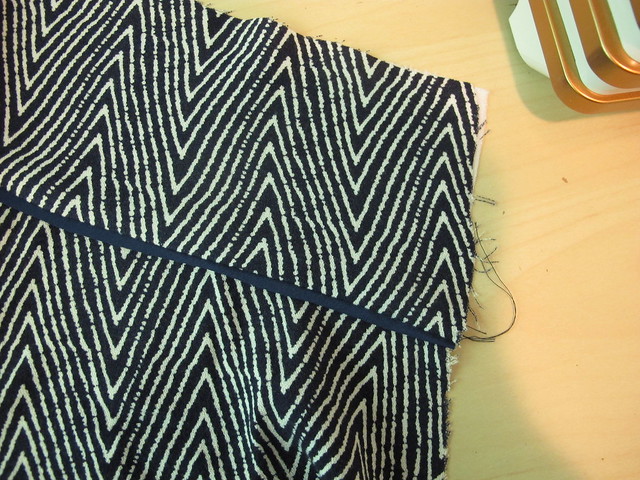
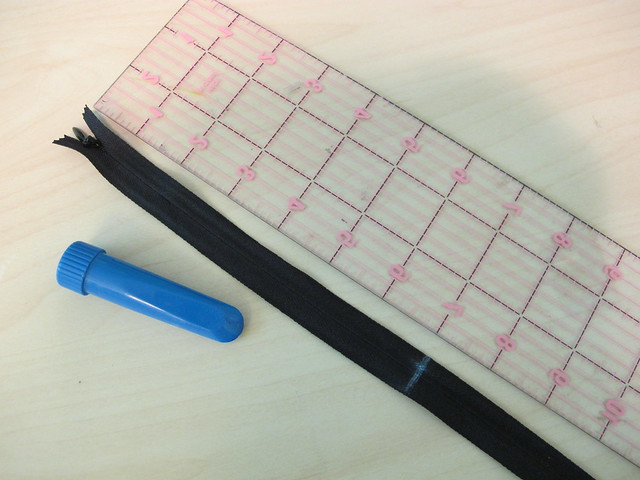
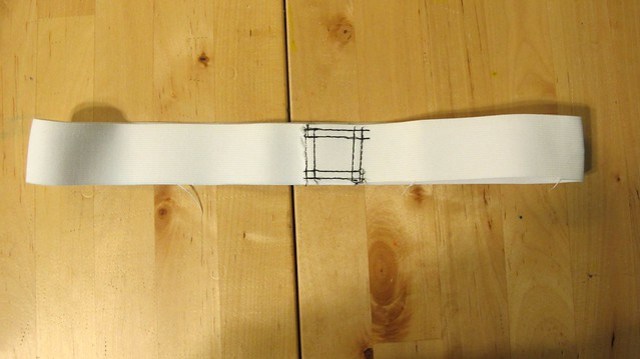
Start by marking a rectangle where the zipper is to be inserted. For a 9″ exposed zipper on a garment with a 5/8″ seam allowance (if your measurements differ, you will need to adjust these accordingly!), make a rectangle that is 10″ long and 7/8″ across. I use a Chaco Pen liner, but again – anything works! Then go over your markings with a long basting stitch on your machine. Don’t be lazy and skip this step. I know it’s tempting, but trust me on this one. The stitches will make it visible from both sides, and also won’t rub off.

If your fabric is very lightweight and/or drapey, you will want to interface the area where the zipper is going, just to give it some extra support. I cut strips of lightweight fusible and applied them over my basting lines.

Clip into the bottom corner of the rectangle at a 45 degree angle, being careful not to snip into your basting lines.

Fold along the vertical basting stitches and press.


Starting at the horizontal basting stitches, sew the center back seam at 5/8″, ending at the hem.

Press the seam allowances open.

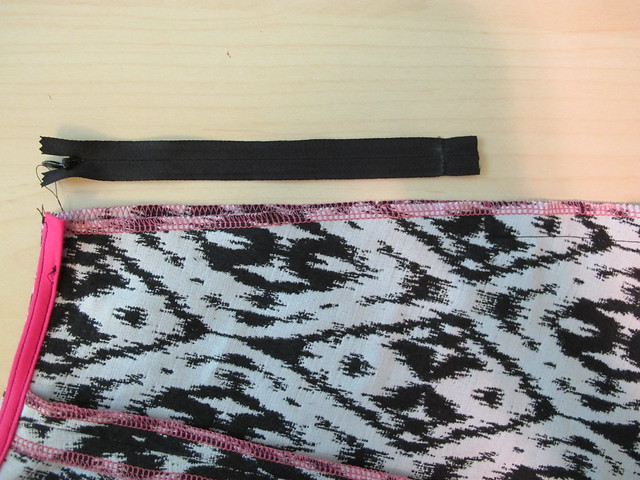
On the right side of the skirt, lay the zipper face down with the bottom facing toward the waistband. Line the horizontal basting stitching just below the zipper stop.


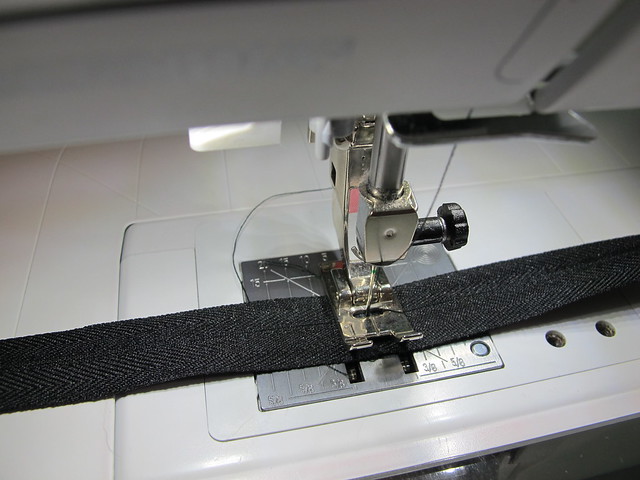
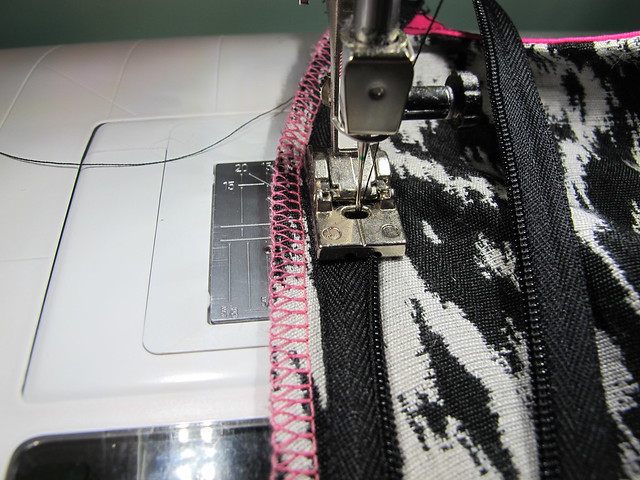
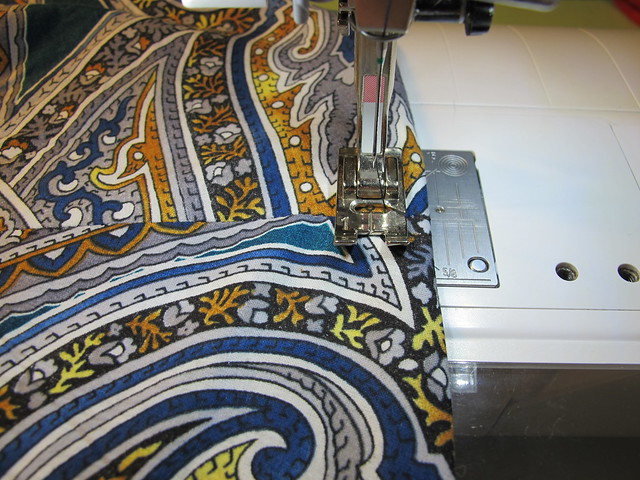
Sew along the horizontal basting ONLY, using a zipper foot. PROTIP: I just found this out, but you *can* move the needle of the Spiegel 60609. While the machine is on straight stitch (#1), increase the zigzag width to 7.0 and that will move the needle! So you can get RIGHT UP IN THERE to do that zipper!

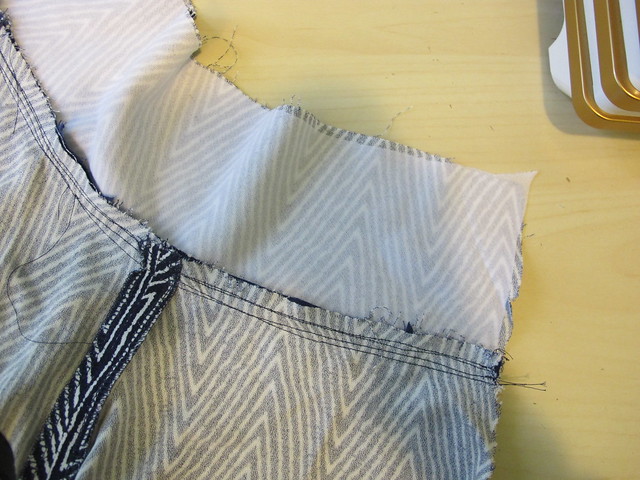
Here is the bottom of my zipper after it is attached. You only need to sew along the basting stitches – not the entire width of the zipper tape.

Flip the zipper to the inside of the skirt and press the line you just sewed.


Now turn back the skirt pieces, one at a time, and sew the zipper tape to the skirt along the vertical basting stitches, starting at the zipper top stop and ending at the bottom stop (don’t sew all the way to the very end of the tape). Again, use a zipper foot and move your needle over to one side if you can.

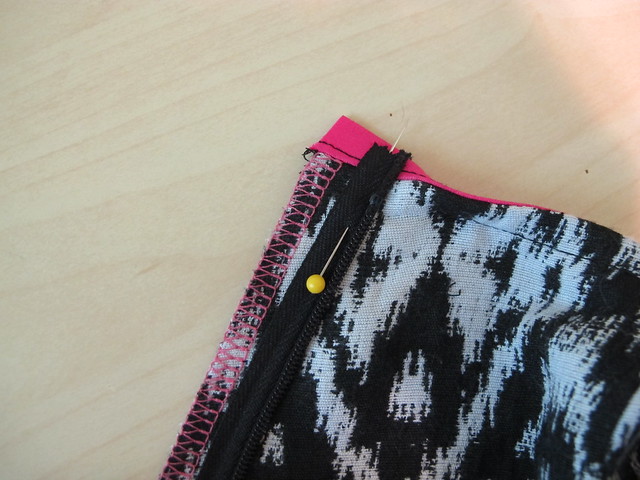
Here is what things should look like after you’ve attached both sides. Note that the top of the zipper will NOT reach the top of the waistband – it should only go about halfway, since we are folding the waistband to the inside. On the Hollyburn, there is a notch to indicate where the waistband folds – so the zipper stop should reach that notch.

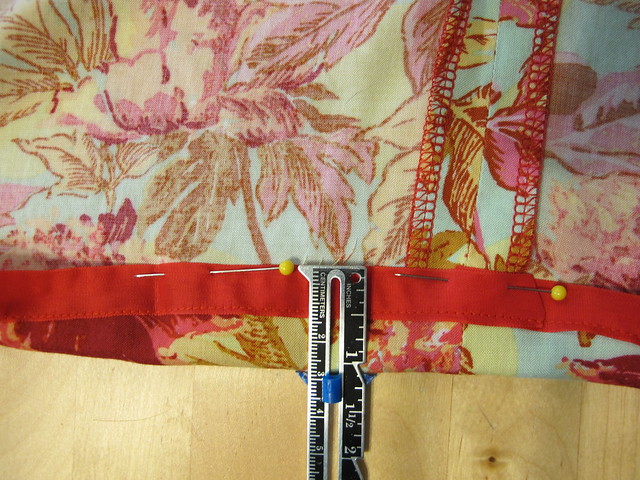
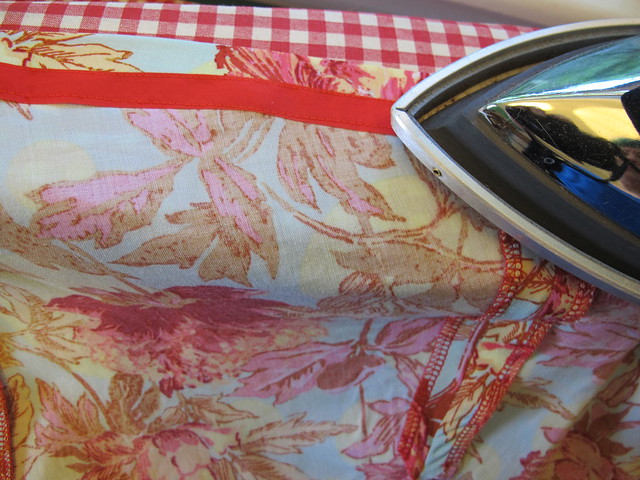
Now we need to finish the waistband. Fold the seam allowance (5/8″) along the long raw edge to the inside, and press. You may trim this seam allowance down to 1/4″ if it’s bulky.

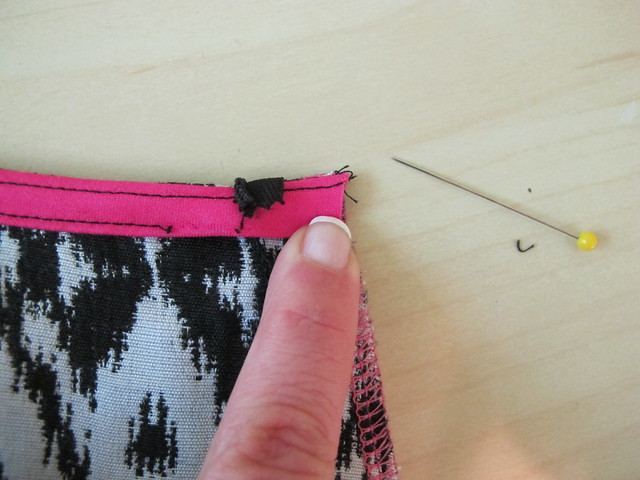
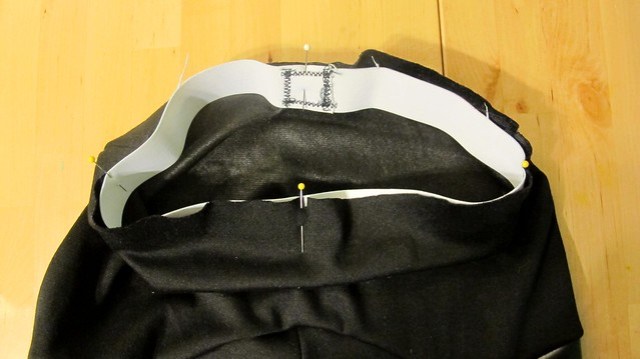
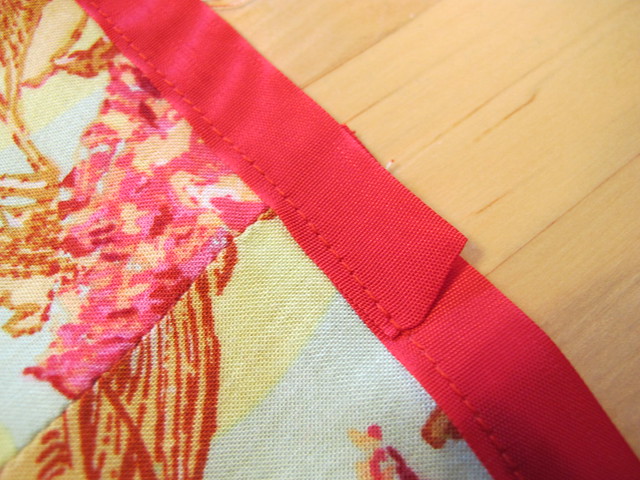
Fold the remaining bits of the top of the zipper tape toward the inside of the waistband, and pin to keep them out of the way (if you accidentally sewed down this part, you gotta unpick 😉 ).


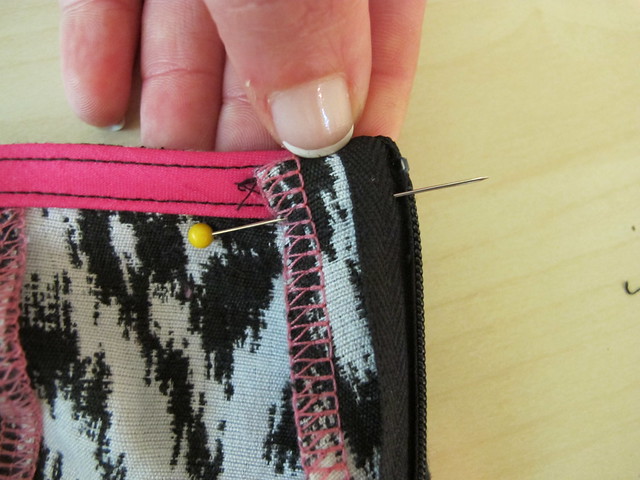
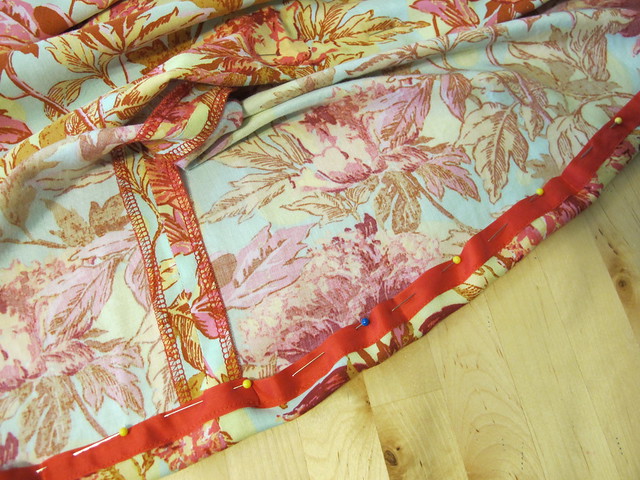
Now fold the waistband down to meet right below (about 1/8″) the stitching line at the top of the skirt, making sure that the top zipper stop is even with the top of the waistband fold. Make sure the raw edges are tucked in around the zipper and pin everything into place.


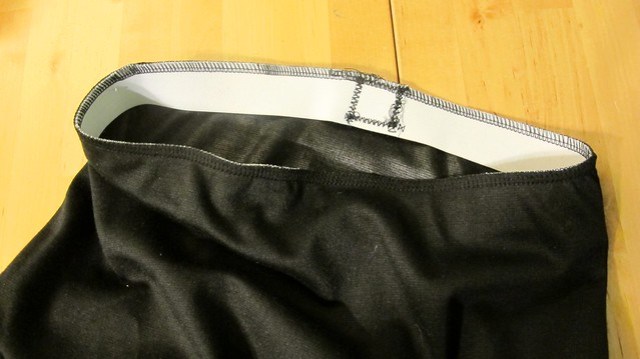
Now to topstitch! Starting at the top of the zipper, topstitch 1/8″ from the edge down to the seamline where the skirt meets the waistband, lower your needle and pivot. Then continue around the entire waistband until you reach the other side of the zipper, pivot, and sew back up to the top.
Alternately, you can also topstitch around the entire exposed zipper – but you’ll need to sew down the waistband in a second pass 🙂


Now pat yourself on the back for sewing an AWESOME EXPOSED ZIPPER WTF.
Finally, just a couple more things to finish your skirt! If you want to add belt loops or the waistband tabs, you can do so now. Then you just need to hem. I ended up taking about 3″ off my skirt length to make it more of a mini, and then finished with a double turned hem (1/4″ on the first turn, 3/4″ on the second) that is simply topstitched. Here are my hemming tutorials if you need a refresher!
That’s all for today! As always, please let me know if you have any questions!! How is your sewing coming along? 🙂


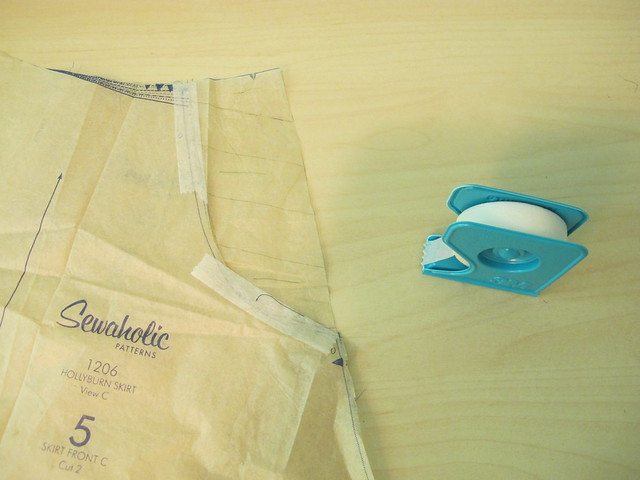




 and then handle them as one (a tip I learned from Maddie).
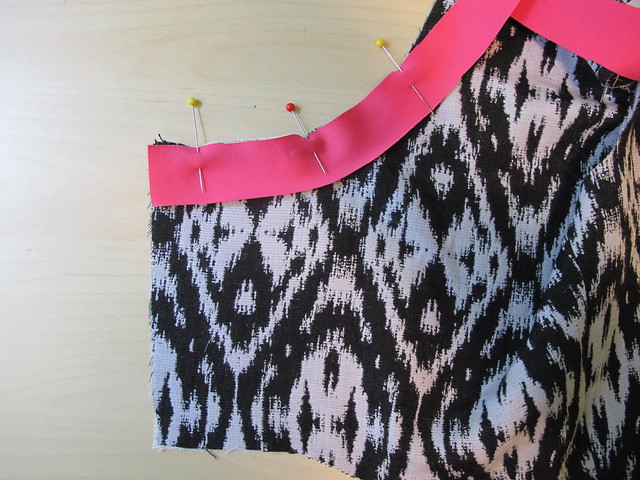
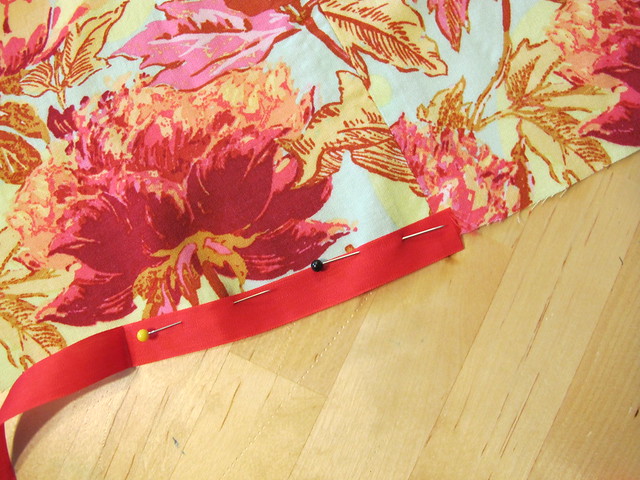
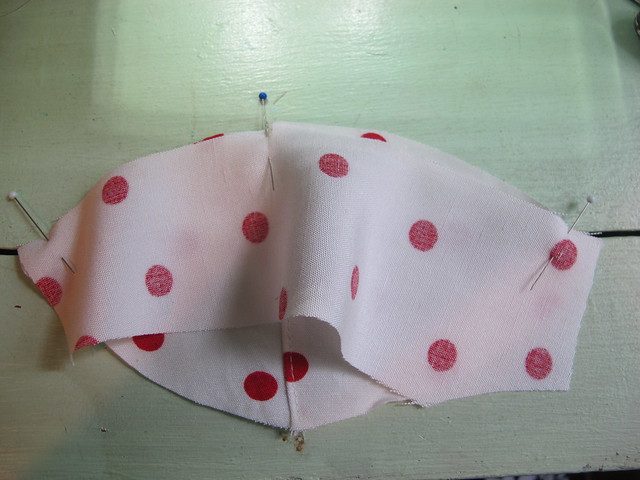 PROTIP #1: Pinning
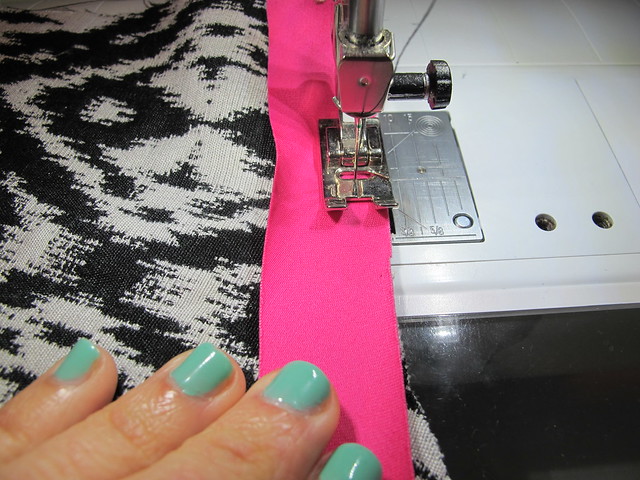
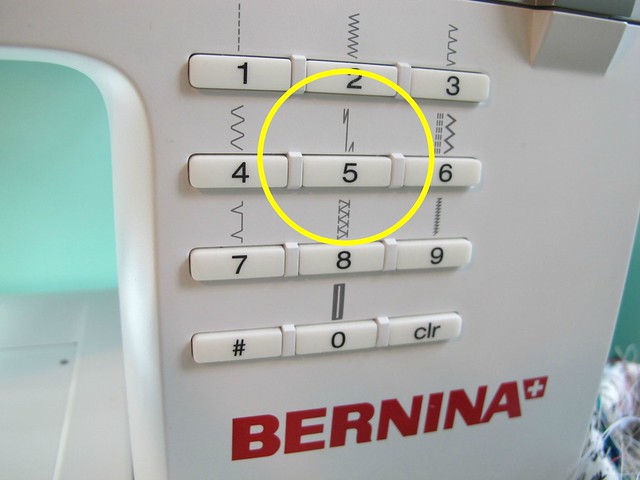 PROTIP #2: Starting & stopping, part 1
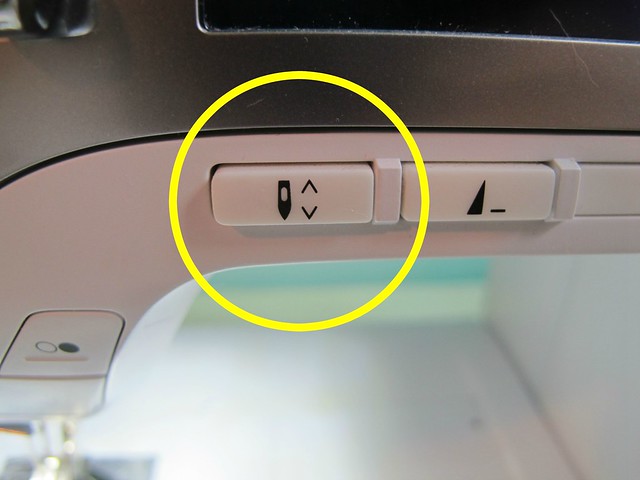 PROTIP #3: Starting & stopping, part 2
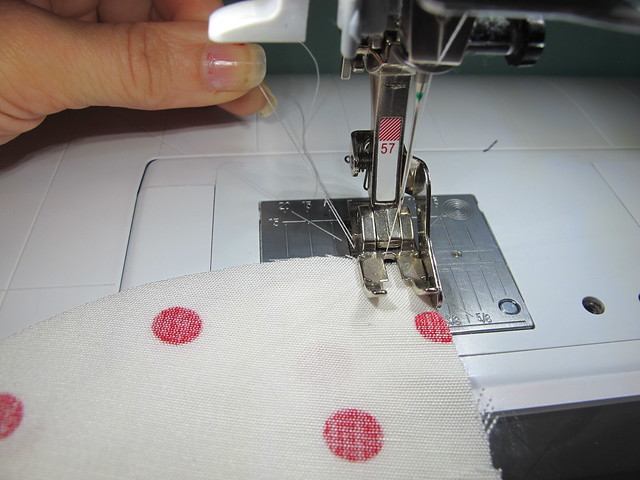 PROTIP #4: Starting & stopping, part 3
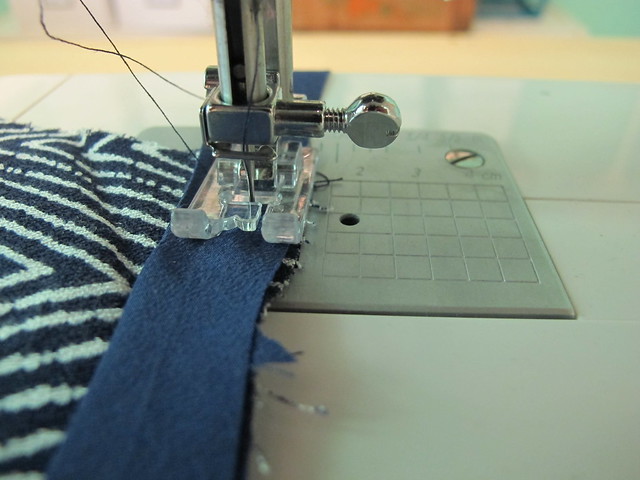
 PROTIP #5: Keeping 1/4″ seam allowances
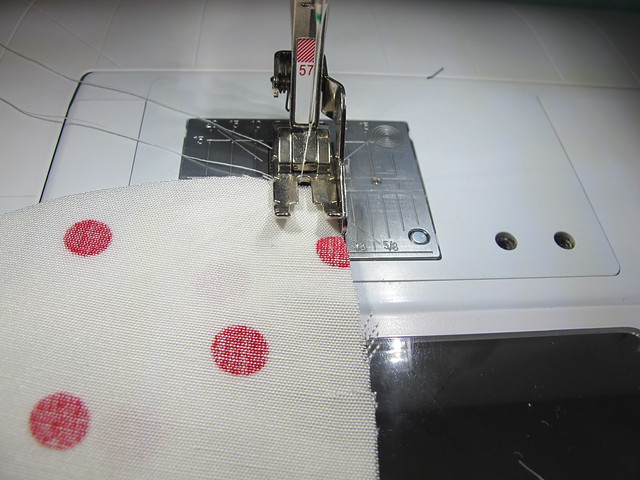 Here it is in action. The dull blade runs against the raw edge of the fabric, keeping the needle exactly 1/4″ from the edge.
 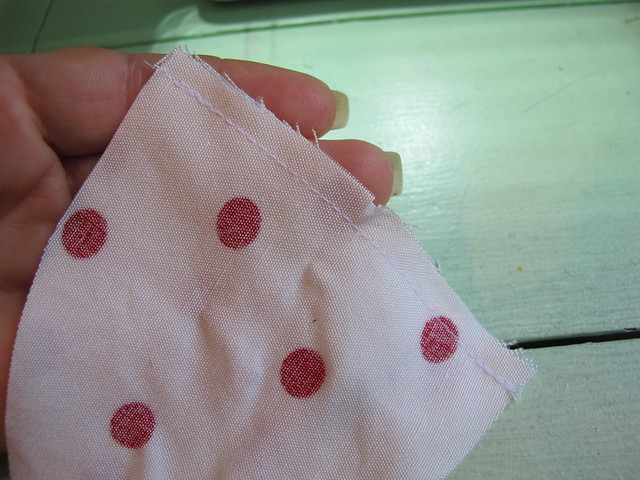 And here is my finished seam. Ah! Perfectly 1/4″ from the edge, every time. Ooh, see my backtacking, too? Thanks, securing stitch!
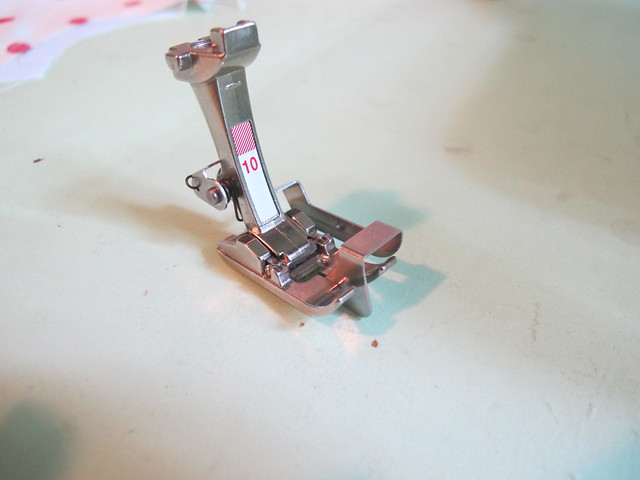 PROTIP #6: Perfect topstitching This is my secret weapon for topstitching, lingerie or not. It’s a special foot and it’s called the edgestitching foot. Besides the 1/4″ foot, it’s the best thing ever. You can also use it to understitch and stitch in the ditch, with little to no tears of frustration and/or wonky stitch lines.
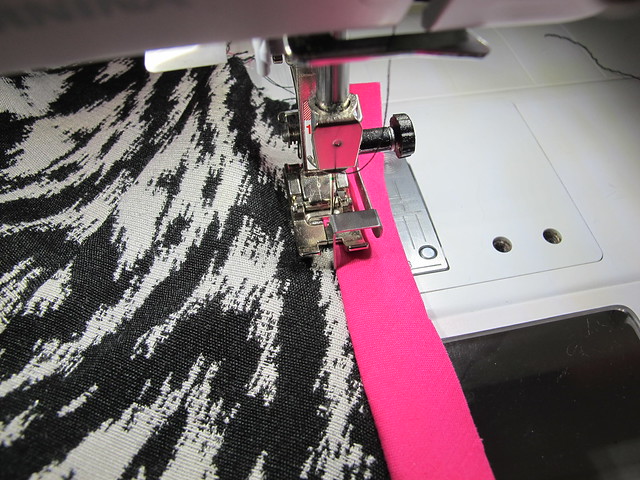
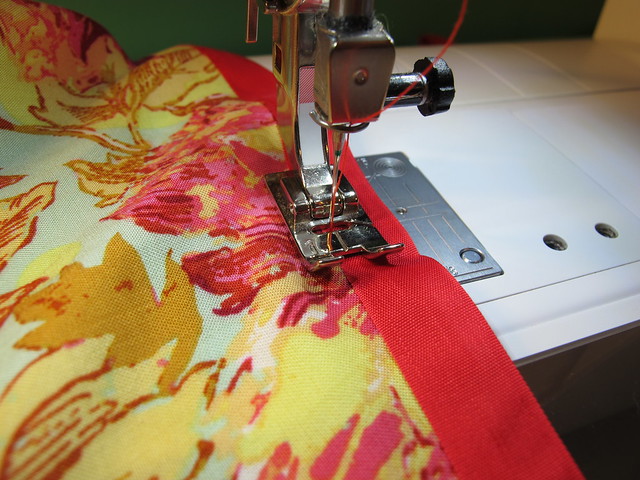
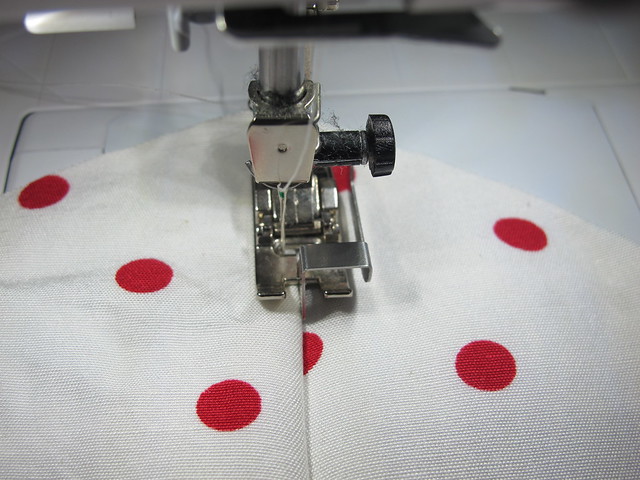 Here it is in action. The dull blade goes right in the center, and you can move the needle either right or left as needed. If you keep the blade against your seamline and move the needle all the way to one side, you’ll end up with a perfect 1/8″ topstitching line. I find this easier than trying to line up part of my foot with the seamline; for whatever reason, shit always goes wonky when I try to do that.
 Here is the finished topstitching. One thing to note – I don’t backtack my topstitching if it’s going to intersect with another piece. I only backtack construction seams (otherwise they’ll pull apart at the ends). Since I use a different stitch for each of these steps, that means I can keep my settings saved for each step and just flip between stitches. Which is super handy, because that means I don’t need to re-enter all my preferences each time I move from constructing to topstitching. I use stitch #1 for topstitching (with a slightly longer stitch length and the needle moved all the way to one side), and stitch #5 for constructing.
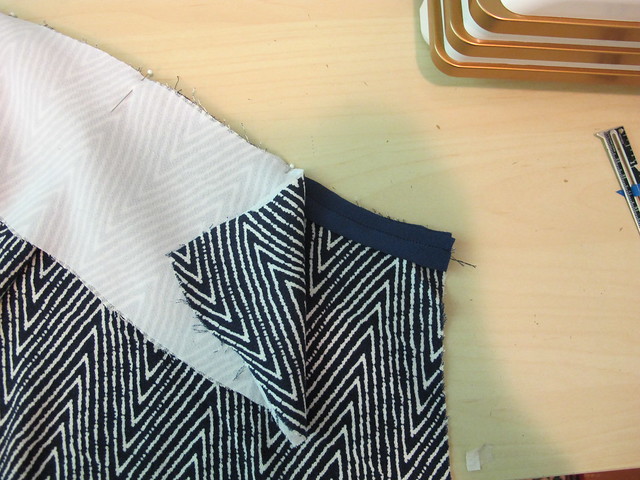
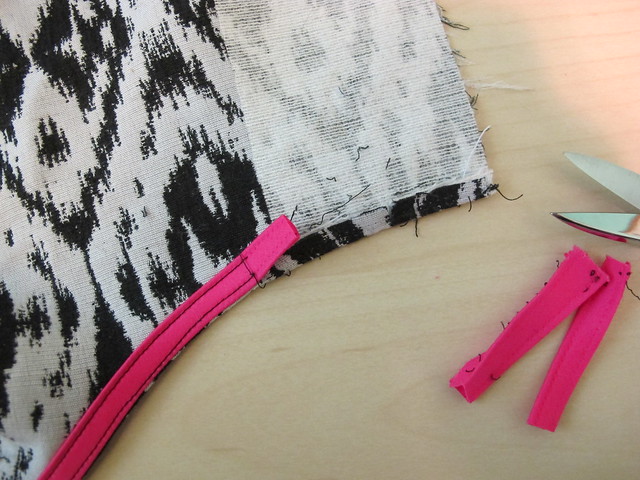
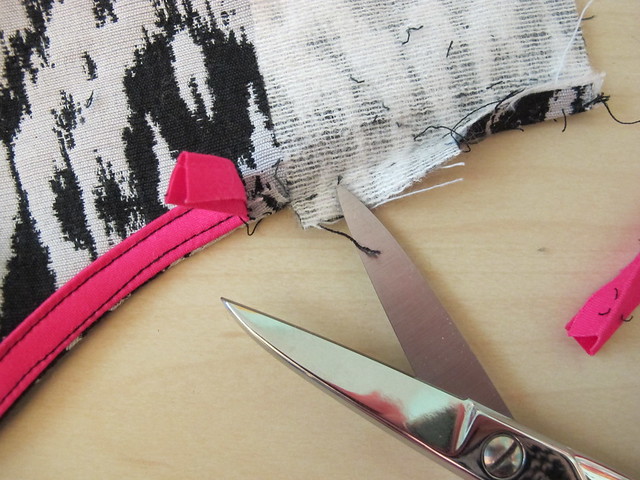
 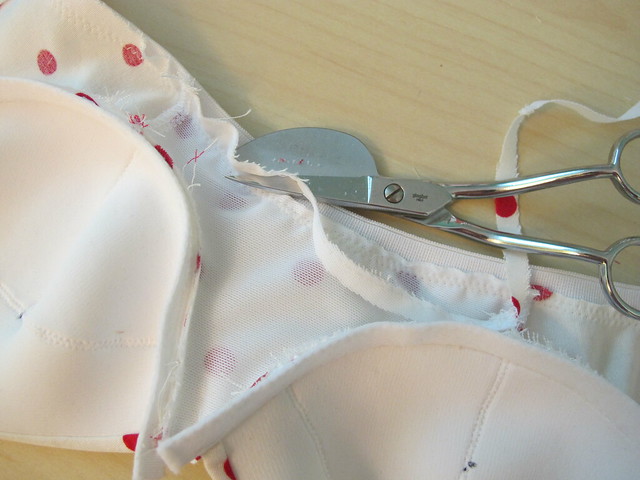 PROTIP #7: Trimming
 . The way they are constructed makes trimming down seam allowances almost foolproof and you’re less likely to cut a hole in the seam allowance that you’re trying to avoid. These scissors are awesome for non-bra things, too (I bought them looong before I got into sewing lingerie) – coat making, grading seam allowances, applique. They also look kind of crazy and I like that a lot.











 LLADYBIRD