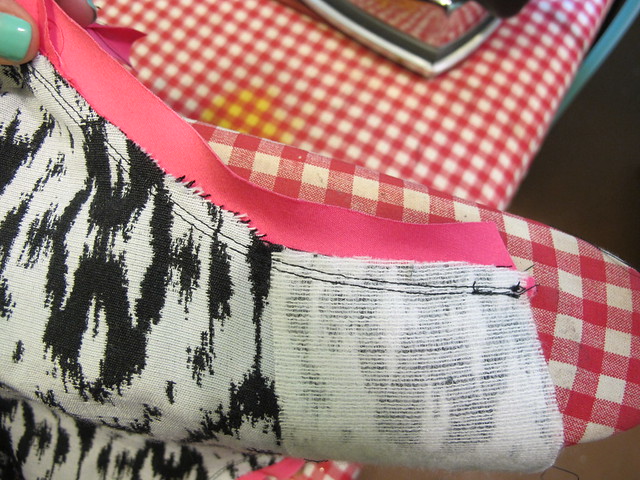
Completed: Um… another Hollyburn :]

17 Jul

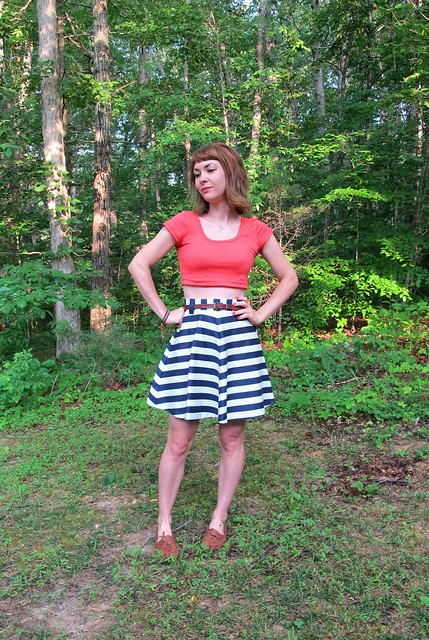
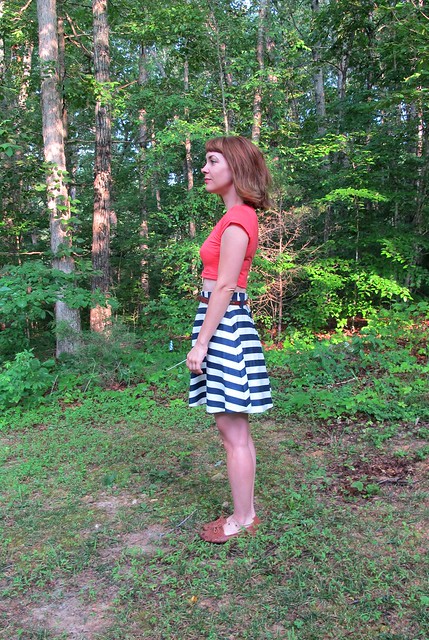
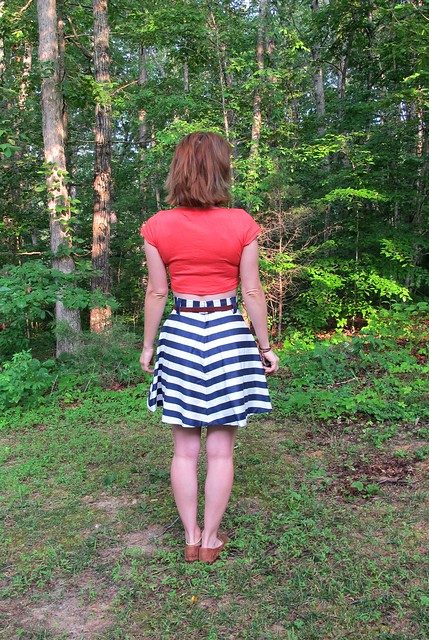
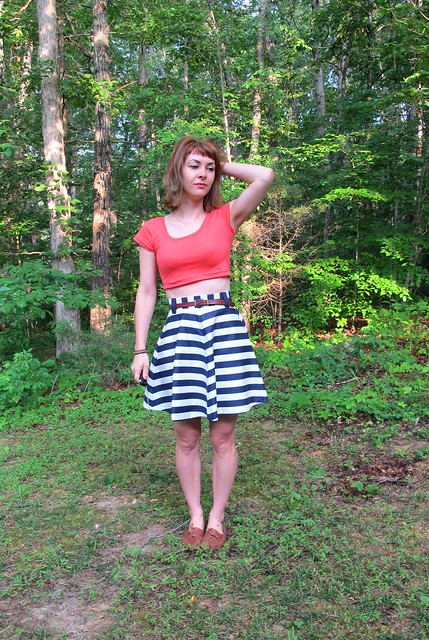
Y’all, I don’t know how many times is too many to make the same damn pattern over and over again… but here’s Hollyburn #5. Hahaha.

Striped Hollyburn

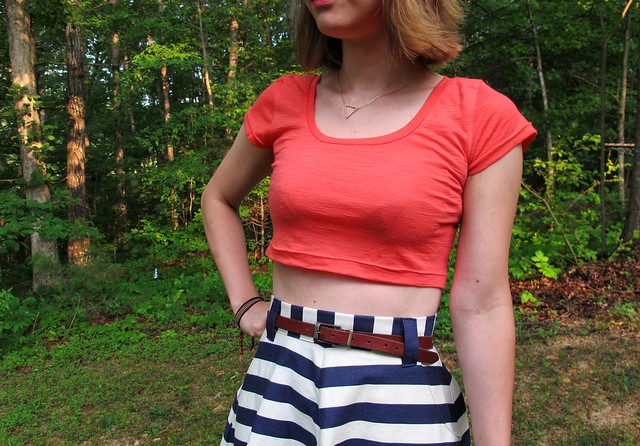
I am pretty sure I don’t have anything else to say about the making of this pattern, considering I’ve sewn (and posted about) it soo many times. This particular rendition with the wide navy stripes has actually been in the plans since my very first Hollyburn skirt. Ever since I made my solid denim version, I’ve been on the hunt for a good striped fabric to make my dream striped flared skirt. Actually, I think I’ve been on the hunt for that fabric since way before this pattern was a little twinkle in Tasia’s eye. It’s been a couple of years, at least. And yet I’ve never been able to find what I’ve been looking for – medium weight cotton fabric with 1″ wide navy and white stripes – despite all odds being that that should be a common enough fabric. I’ve found similar stuff – but the stripes were too narrow, the wrong color, or the fabric was the wrong weight.

Striped Hollyburn

So let me tell you about where I found THIS fabric. Back when I still lived in the ‘burbs in West Nashville (ok, it wasn’t the suburbs because we were like 5 miles from the city, however, it’s more ‘burby than where I am now in the woods of Kingston Springs, so there’s that!), I went to a yard sale at the neighbor’s house 2 doors down. That whole experience was an adventure in itself – the woman living there was in her 90s and had lived in that house since she was 6. SIX!! Oh man, and she had the BEST neighborhood gossip. She also had this amazing little garden paradise of a backyard – all overgrown in the most beautiful way, and totally private and lush and green and dammit I was so jealous of that garden. AND she told me a bunch of ghost stories. Most awesome lady ever. Anyway, the yard sale was kind of like going to the flea market – lots of odds & ends and antiques and random stuff, all collected and resold for extra cash. I sniffed out the bag of fabric hidden in the shadows of the carport (I am telling you, I have a nose for this sort of thing) and found my dream fabric lurking at the bottom. Not just my dream fabric – but somewhere around 15 yards of it. Which I bought the whole lot of for $1. Apparently, this fabric lived a previous life as a kind of faux curtain/drape, arranged just so by some famous interior designer.

Striped Hollyburn

This is a really nice home decor weight cotton fabric. Unwashed, it has a little bit of a sheen to it and quite a bit of body. I tore off about 4 yards and washed it – just to see what would happen – which made is lose the sheen and gave it much more drape. It was really easy to sew and press. AND I still have over 10 yards of this stuff! Striped dresses in my future, yeah? I’m just ashamed that it’s taken me a year to get to sewing it. Too much ahead in the queue, I guess.

Striped Hollyburn

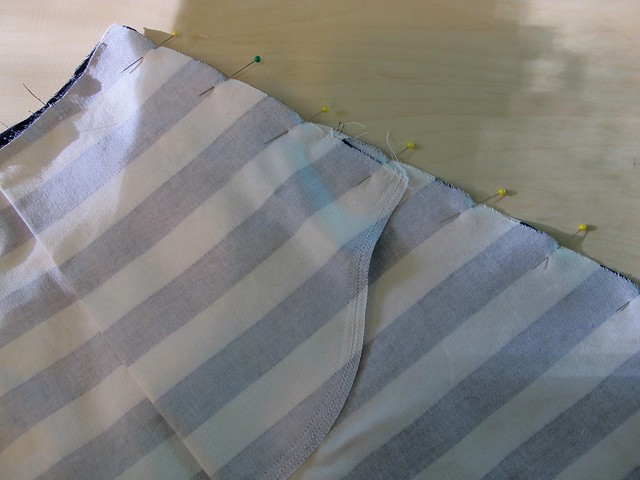
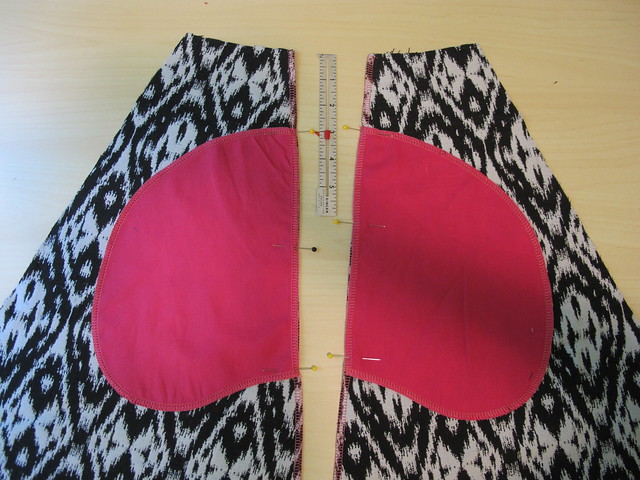
Check out how well those stripes line up at the pockets! Yeah buddy! In an effort to make this post at least somewhat useful, here is how I did that:

Striped Hollyburn

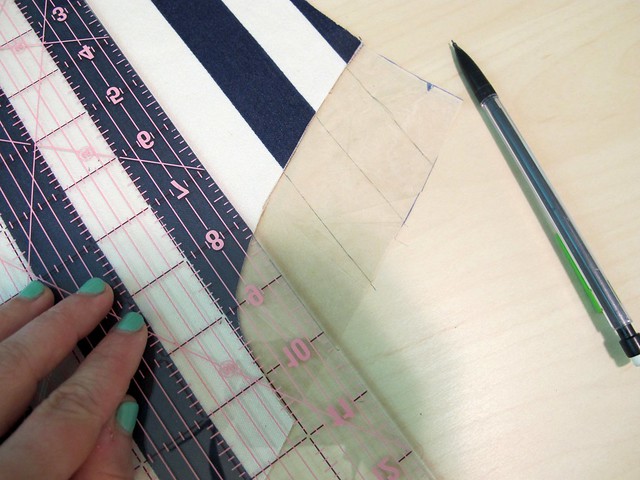
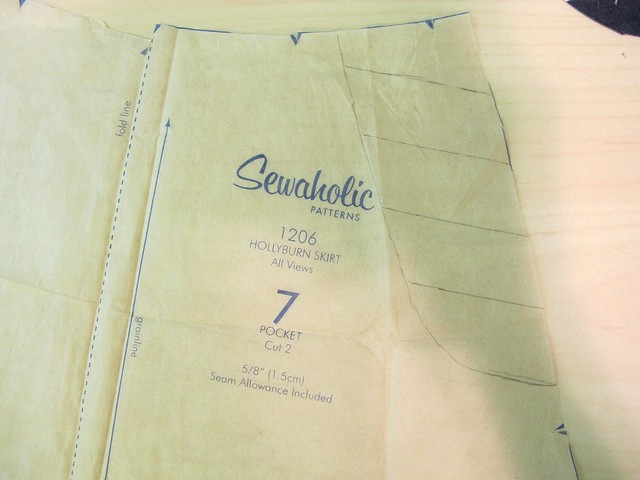
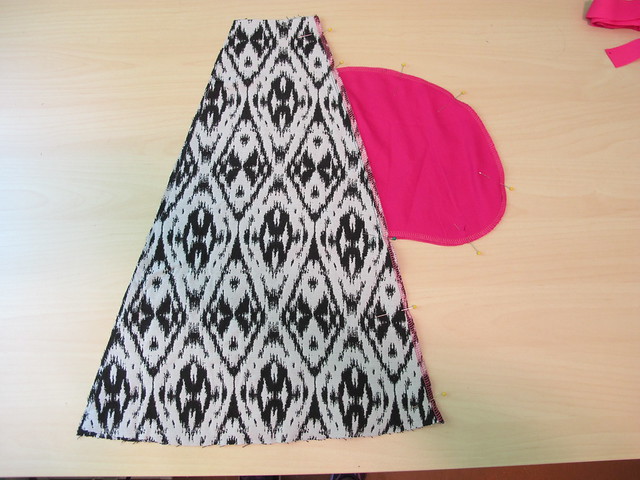
After cutting out the front skirt pieces, I laid them on top of the pocket/pocket facing piece (for this pattern, it’s all-in-one. If you’re using a pattern that has 2 separate pieces, choose accordingly) and traced along the pocket edge. Then I used a ruler to draw the pocket lines as they continue from the skirt front to the pocket facing, so that the lines were unbroken.

Striped Hollyburn

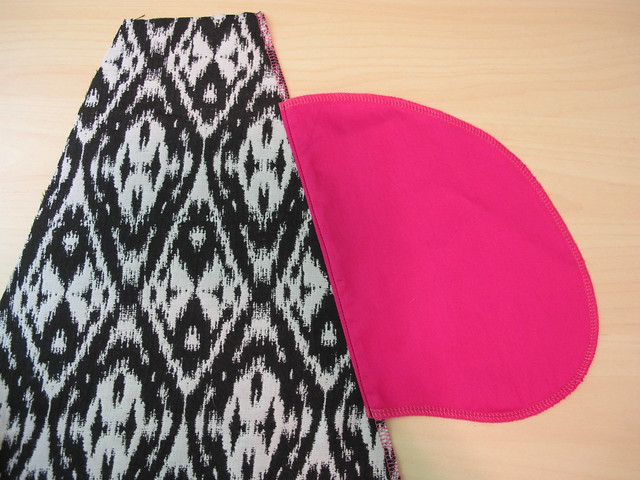
Here’s what my pattern piece looked like. Not shown but SUPER helpful – it’s a good idea to mark the colors of the lines as well, so you don’t end up with inverted stripes 🙂

Striped Hollyburn

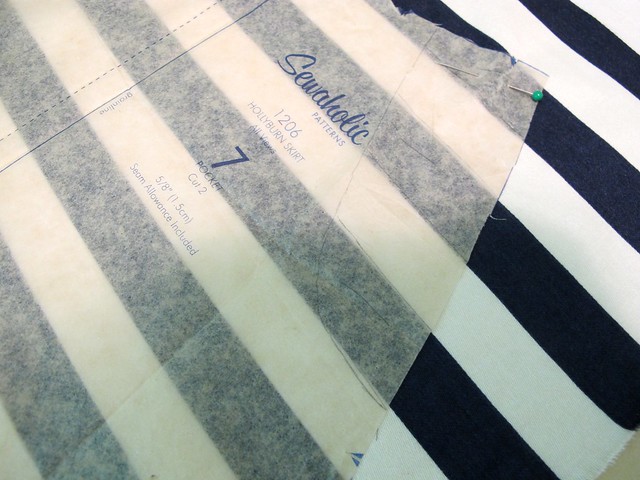
Then just lay the pattern piece on your fabric and arrange it until the lines of the print match up with the lines you drew on the pattern piece 🙂 Easy!

Striped Hollyburn

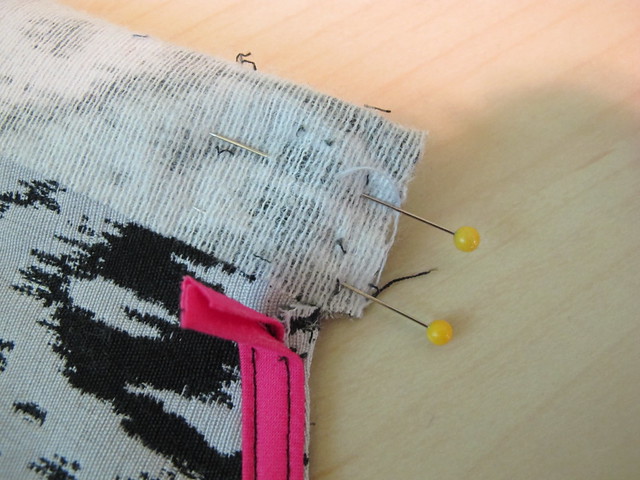
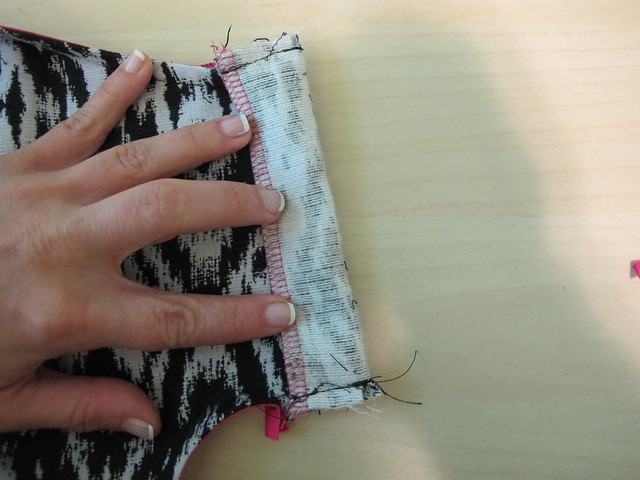
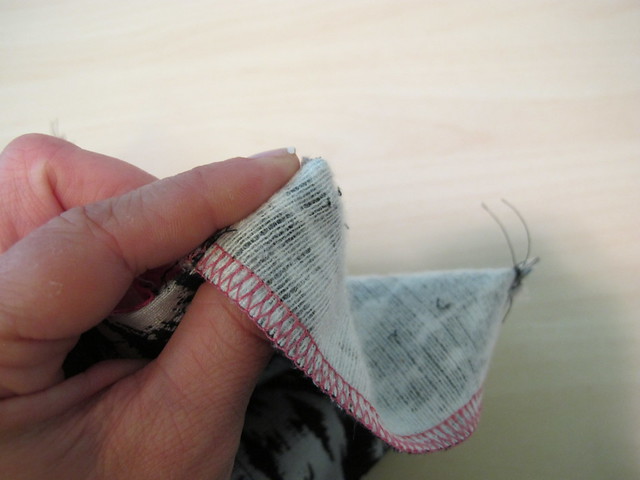
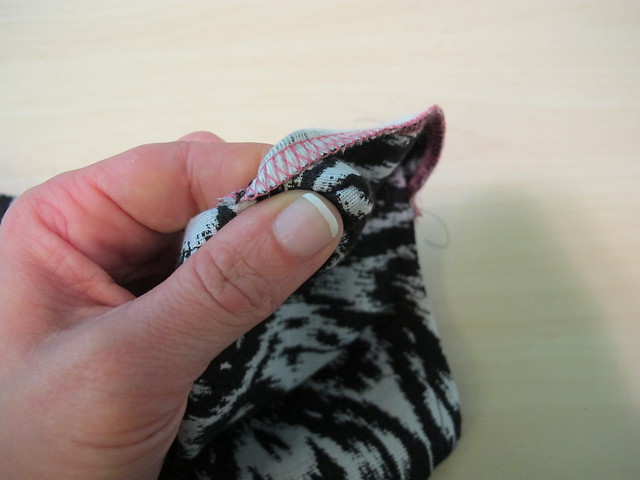
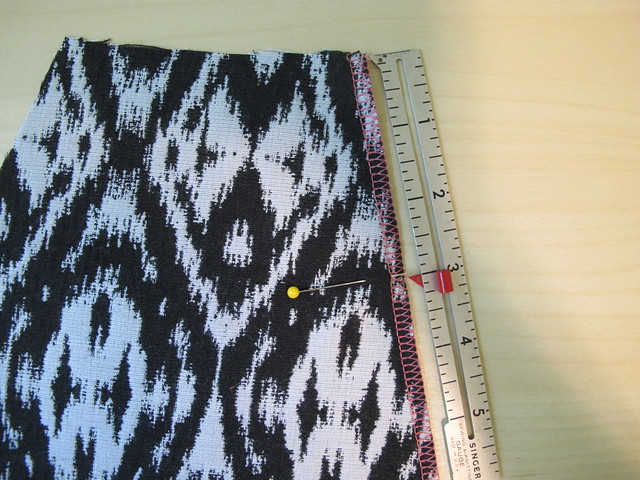
I also made sure to pin each stripe before I sewed my pieces together, which made for very accurate stripe-matching.

Striped Hollyburn

I guess that’s it! Easily the cheapest garment I’ve ever made 🙂 Now tell me – what’s the sewing-related yard sale haul you’ve ever been lucky enough to experience? I think this $1 mass of fabric might go right up there with the $1 DVF Vogue Designer Original pattern (that happened to be in my size, no less) score.

New Vogue Sewing Patterns: Fall 2015

14 Jul

Aaaaand they’re back again! I was actually right in the middle of working on a project (no shit, I just turned on my iron so I could start fusing interfacing once it was good and hot) when I noticed that Vogue had released Fall 2015 patterns. Took a quick lurk, and I’m afraid my poor project is just gonna have to wait because I have opinions and I need to share them right now!

V1466Vogue 1466 // Donna Karan Vogue 1466 – the jacket with a it’s own SARS mask! V1465

Vogue 1465 // Donna Karan

Forreal, tho, how low are those armholes? Looks like we’re fixin to head into sideboob territory any minute now. V1458 1Vogue 1458 // Ralph Rucci

I can’t wrap my head around this dress. The front looks ok (if you ignore the eye-searingly hideous fabric it’s made up with) – I’m all about some interesting seam lines à la Ralph Rucci, except that big diamond on the side just looks like a really shameful attempt at patching a hole. Then I looked at the back: V1458 2

The hell is going on back here? That wonky neckline just looks like a mistake (and now I’m noticing the wonk on the front neckline, too, ugh) and the horrible exposed darts are making me feel twitchy (especially considering they look like they’ve barely been pressed and now they’re all puffy and sad). Is the patchwork diamond pulling down that side of her dress with the weight of it’s shame? Straight outta the funny house, this dress. Ralph Rucci, ILU but why you gotta do this to yourself your patterns?? V1460Vogue 1460 // Badgley Mischka

“Ugh, when is this bitch going to shut up? I have to pee sooo bad.” V1462

Vogue 1462 // DKNY

“Hello, Ladies…”

V1461Vogue 1461 // DKNY

“You don’t understand – this is an Alaïa! It’s like a totally important designer!”V1459

Vogue 1459 // Koos Van Den Akker

I… sort of like this? Someone send help, I’m losing it.

V1467Vogue 1467 // Anne Klein

This is a seriously gorgeous jacket! The shiny buttons are cracking me up, though.V1467 2

Good day, sir!

V1463Vogue 1463 // Anne Klein

Now including eyebrows for your boobs – a must-have for the season’s fashion. V9127 1V9127 2Vogue 9127 // Vintage Vogue

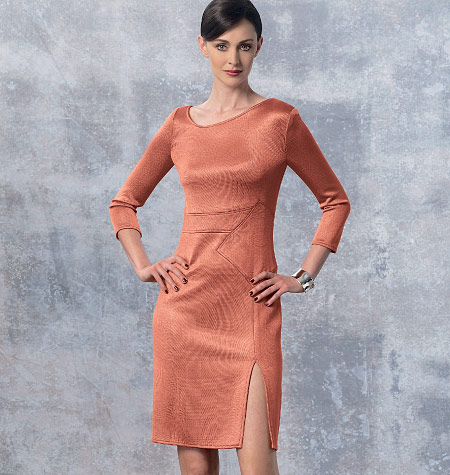
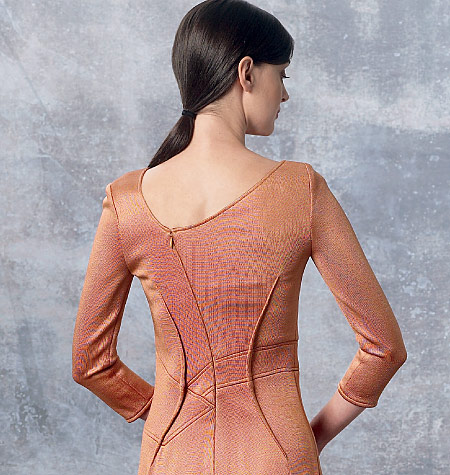
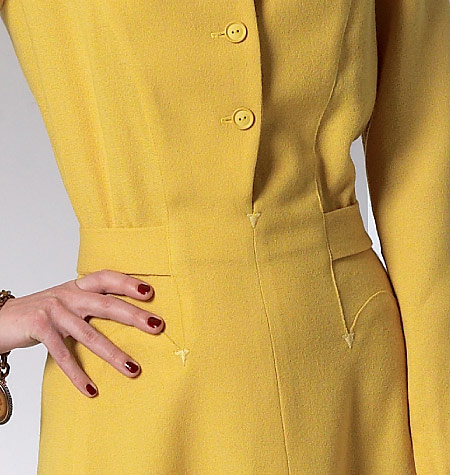
Holy shit, the seaming details on this pattern are amazing. Total eye candy. Look at those little arrowhead tacks! Eep! I would totally make this just for the fun of it (and then never wear it, bc when the hell in my life does a dress like this fit?)V9135

Vogue 9135 // Kathryne Brenne

No words for this one. I think the picture is hilarious enough on it’s own.

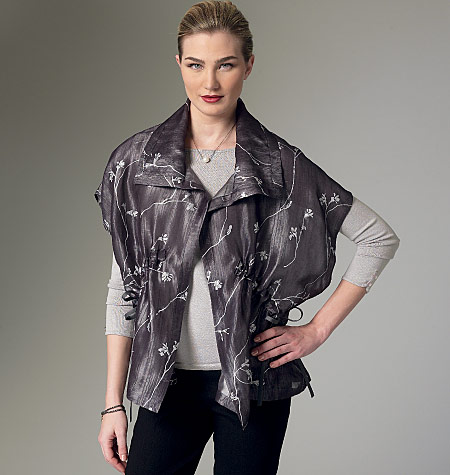
V9140Vogue 9140 // Marcy Tilton

Oh my god, you guys – Marcy Tilton made something that actually looks normal! V9128

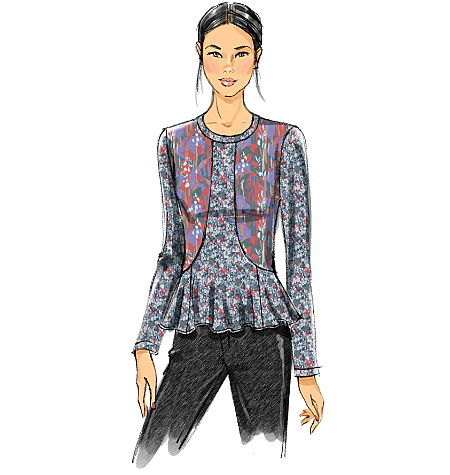
Vogue 9128

Who the hell chose this wretched print combination?

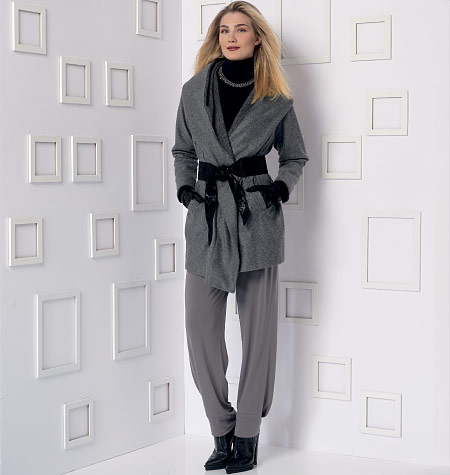
V9139Vogue 9139

~~ Haters gonna hate ~~ V9142

Vogue 9142

Not even an adorable little child can save you from this mistake of an outfit.

V9143Vogue 9143

VOGUE. WHAT IS HAPPENING. WHAT ARE YOU DOING. V9144

Vogue 9144

“Come and play with us. Forever… and ever… and ever.”

the-grady-twins-copy

What are you loves/hates from this collection?

OAL2015: Finishing!

13 Jul

One last installment of these OAL2015 tutorials and then we are OUTTA here! Finally!

OAL_Banner

This post is gonna be pretty short and sweet (well, compared to the other ones haha) – all that’s left is inserting the zipper into our skirt, adding the buttons and buttonholes to the back of the bodice (or sewing that section shut) and hemming the skirt. That’s it! Yay!

Let’s get to it!

OAL2015

OAL2015

OAL2015

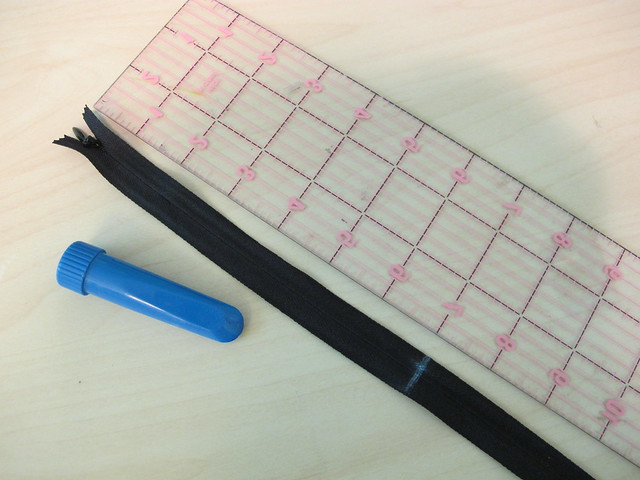
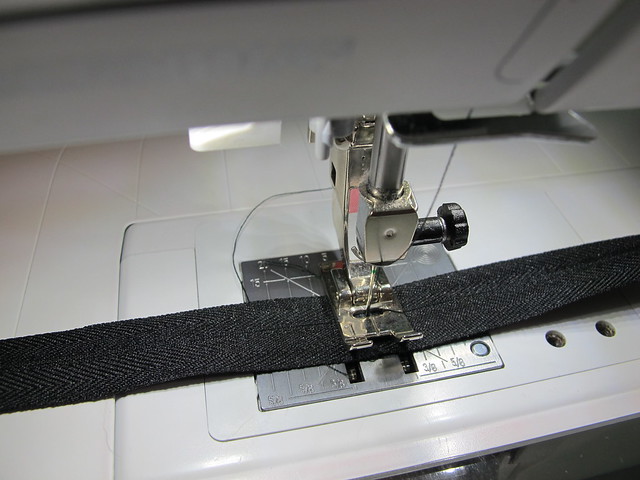
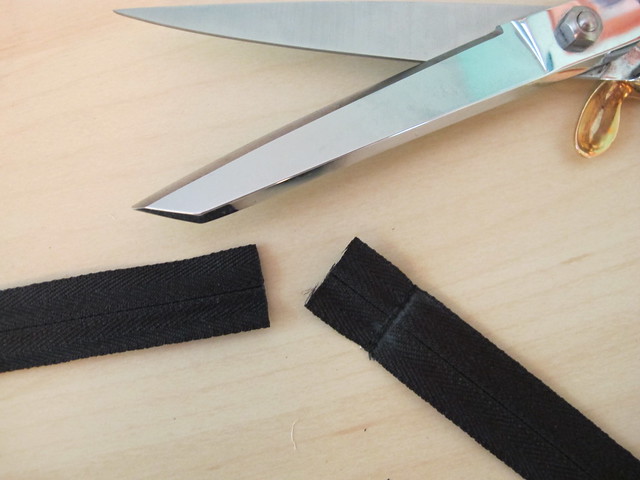
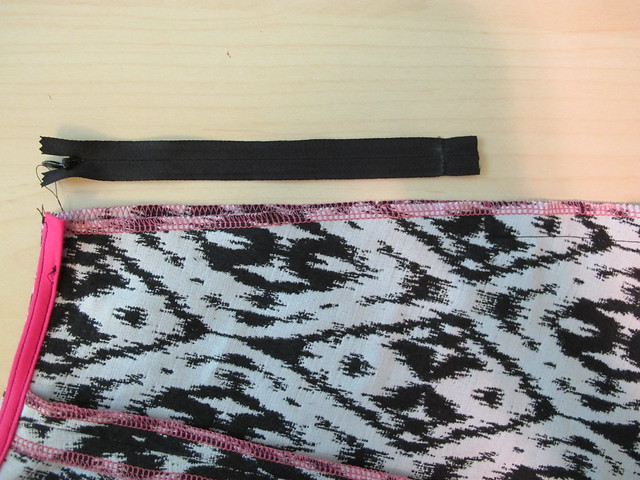
If you’re making the view with the back cut-out, you’ll need a 7″ invisible zipper. If you’re anything like me and only have 22″ zippers lurking around, it’s pretty easy to shorten the zipper. Just mark the length where the new zipper stop needs to go, sew over the mark a couple of times (I use my machine and go back and forth twice each way -you can also do this by hand) and then cut off the excess zipper, leaving about 1″ between the cut and the new zipper stop.

OAL2015

Sew the center back seam of the skirt at 5/8″, ending 1-2″ from where the zipper stop will be located.

OAL2015

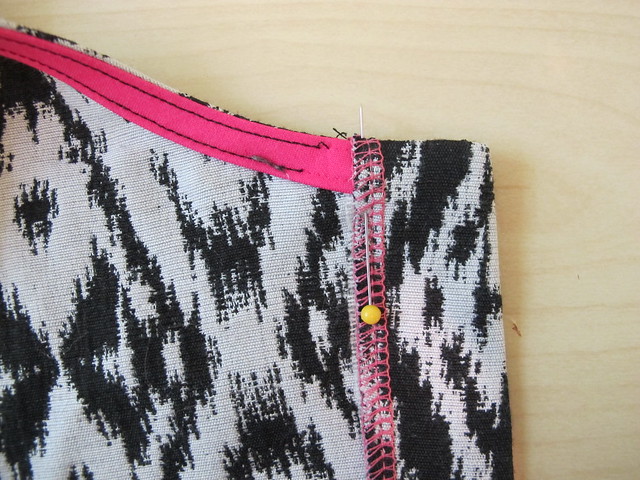
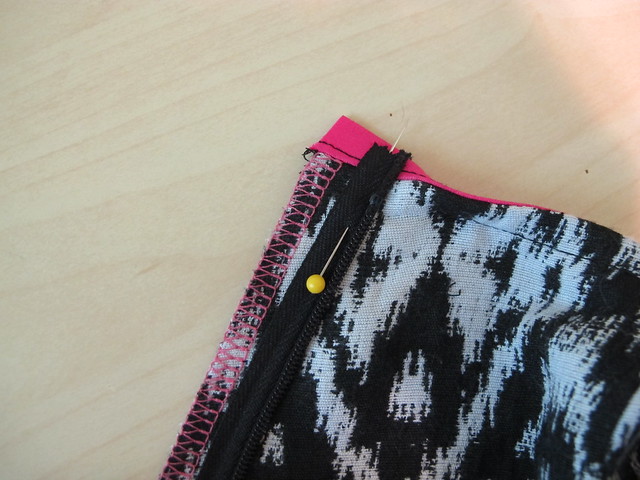
Unpick the topstitched part of the bias facing along the edges of each side of the back cut-out, just about 1-2″ from the edge. Position the zipper stop so that it’s about 1/8″-1/4″ away from the bottom edge of the bias facing, and pin so that the facing is flipped out flat (see photo if this doesn’t make sense!).

OAL2015

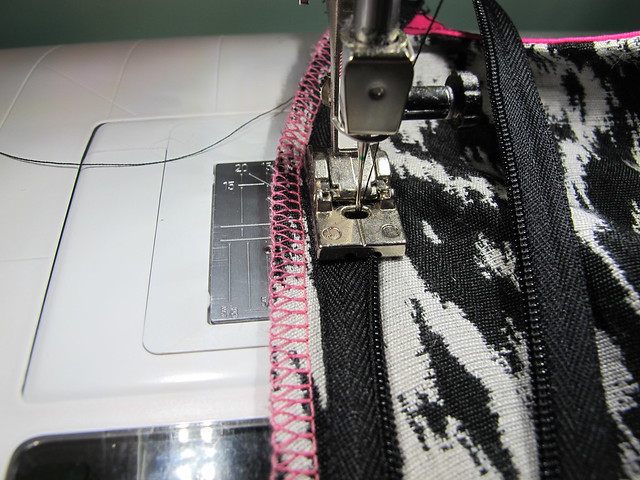
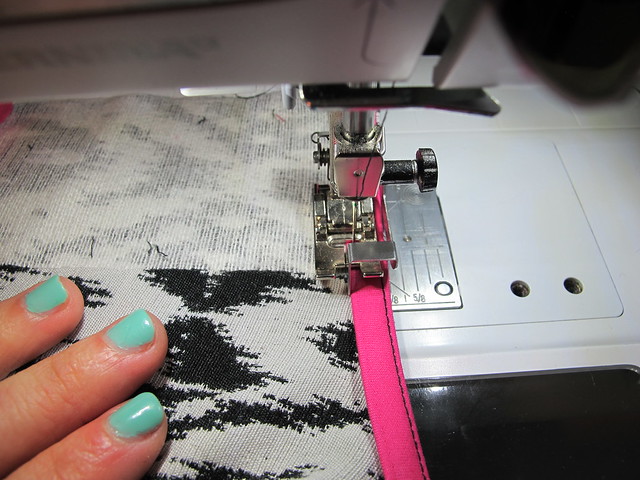
Attach the zipper to the skirt back using an invisible zipper foot and a 5/8″ seam allowance, then close up the hole at the bottom where the zipper stop meets the center back stitching. If you need more instructions for this, here’s my tutorial on inserting invisible zippers 🙂

OAL2015

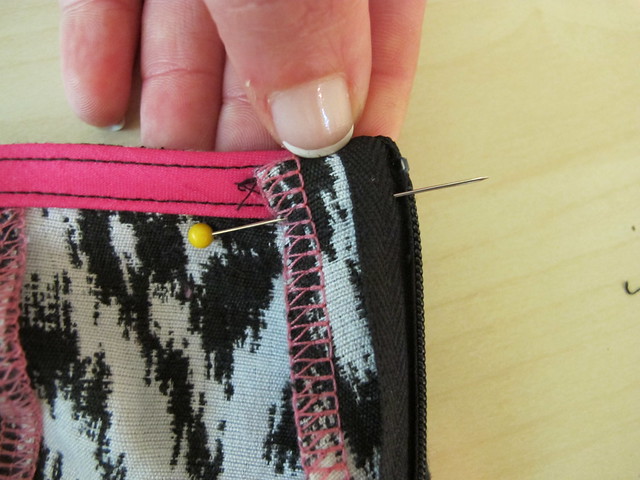
Once the zipper is sewn down, you should be able to fold the bias facing back to the wrong side, like so.

OAL2015

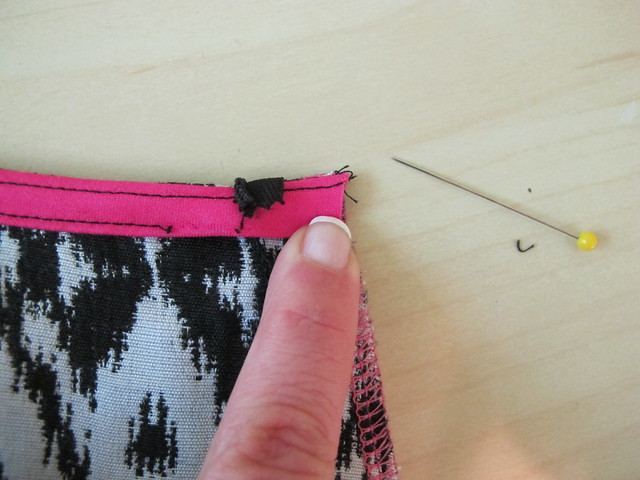
Then fold the zipper seam allowance back to the wrong side as well, like so. Topstitch the bias facing back down, being careful not to sew the zipper teeth. You can also tack down the edges at the top of the zipper/seam allowance if you’d like.

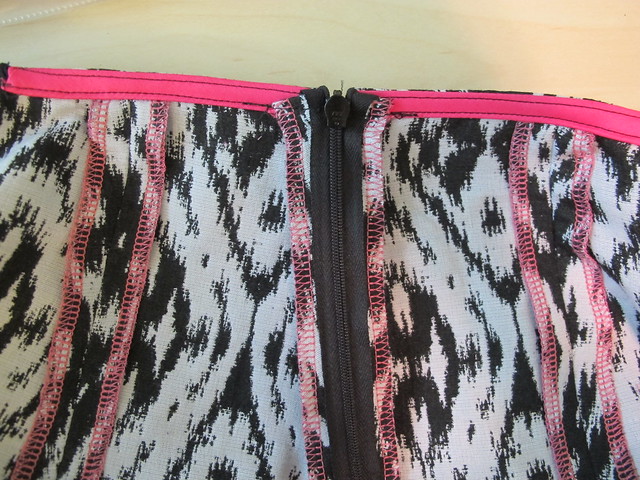
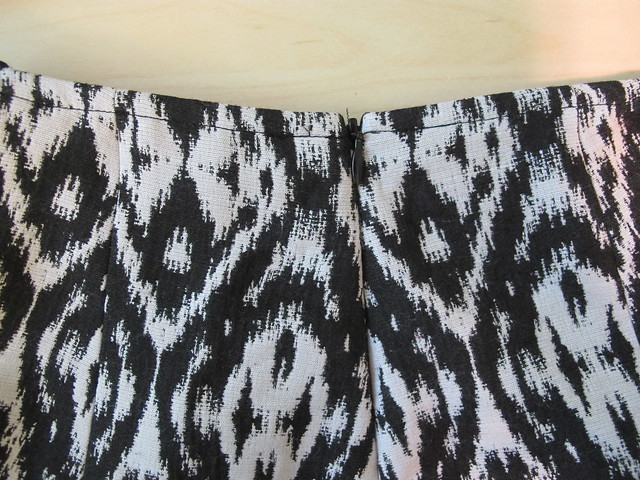
Finished zipper:
OAL2015

OAL2015

If you’d like to add a hook & eye to the top of your zipper, you may do so now.

OAL2015

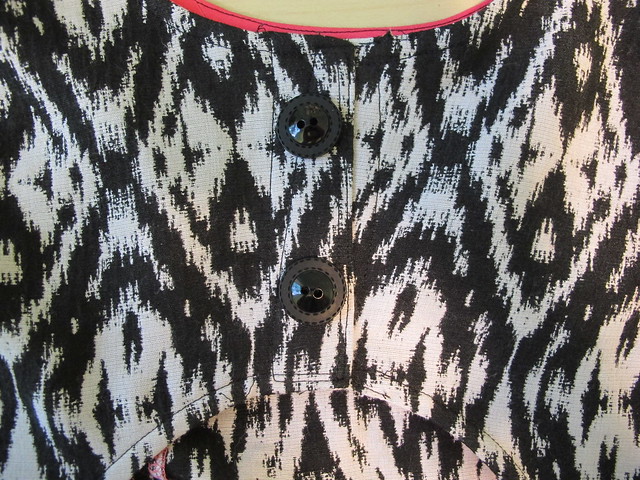
To finish the back bodice, you’ll either want to sew buttons & button holes – or just close the entire thing up. I lapped one side over the other and topstitched all the way around, then sewed buttons in the middle. If you decide to close this off, MAKE SURE you can get the dress on without needing to undo the back! I can wriggle into mine, but only just barely hahaha.

OAL2015

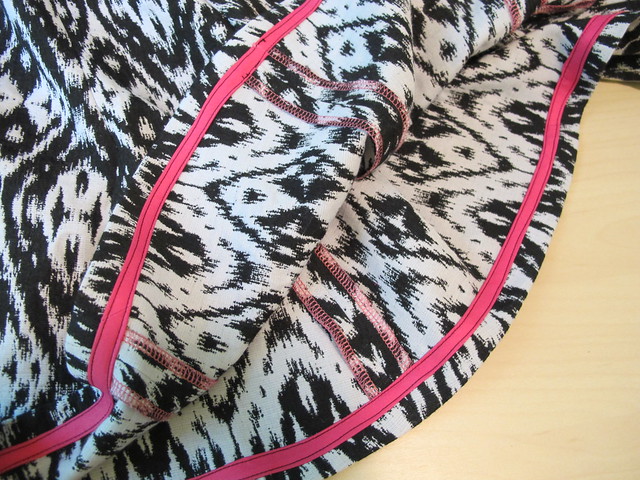
Finally, hem your dress! I used the rest of my bias facing so I’d have a happy hem 🙂 I followed the same method for attaching the bias to get this hem finish. Here is a tutorial from last year’s OAL on hemming if you need it!

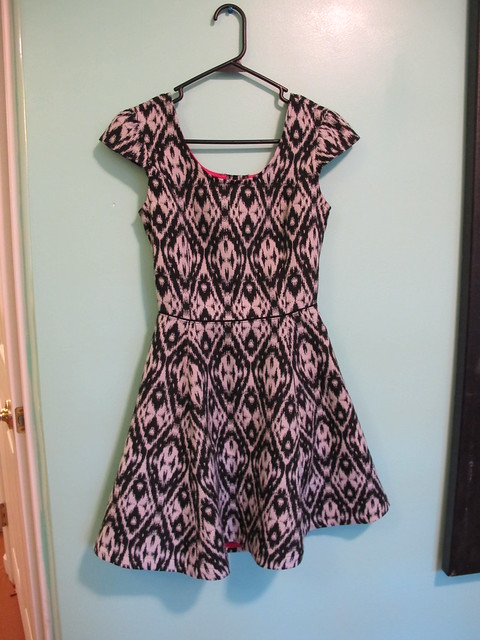
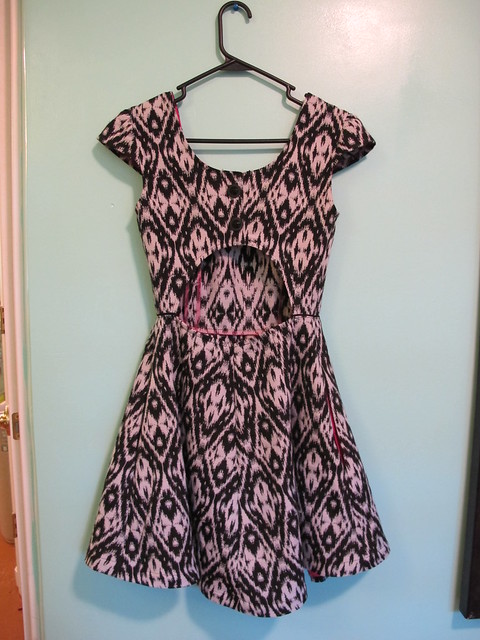
Aaaaand here’s my finished dress:

OAL2015

OAL2015

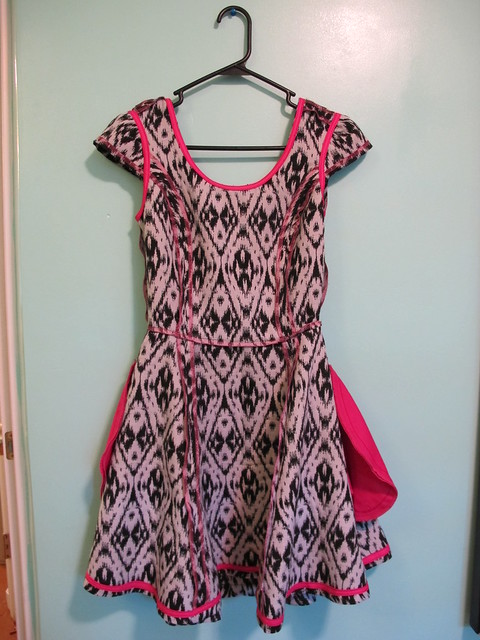
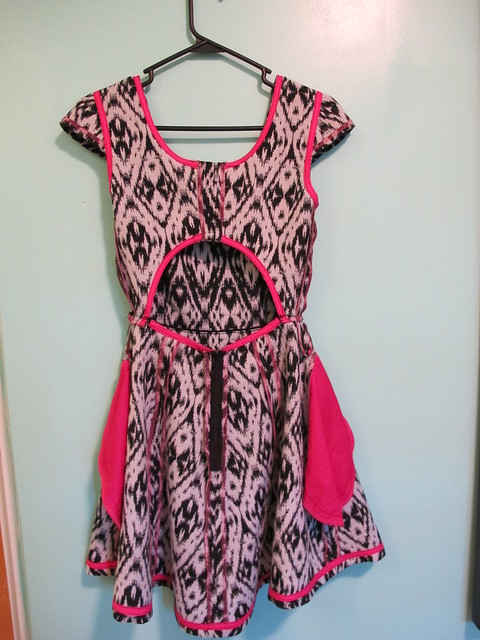
And the inside:

OAL2015

OAL2015

Yeah!!!!

This concludes the sewalong portion of the OAL. Once you’ve finished your garments for the OAL, don’t forget to post them in the OAL 2015 Finished Outfits Thread on Ravelry so we can all have a lurk! The deadline is 7/31/15, so y’all still have a couple of weeks to catch up if you need to! Once I finish my sweater (yeaaah… I’m nearly done with the first sleeve. Getting there!) I will share photos of my finished outfit as well 🙂

Let me know if you have any questions!

Completed: The Mission/Skater Mash-up

10 Jul

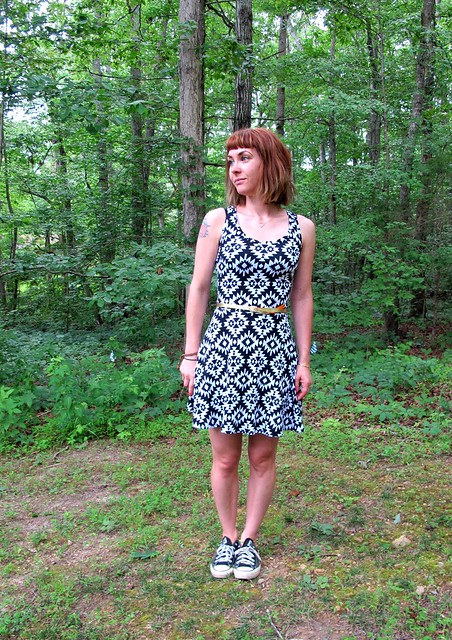
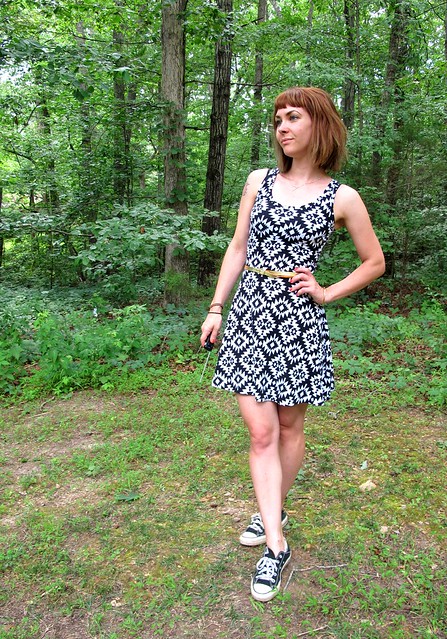
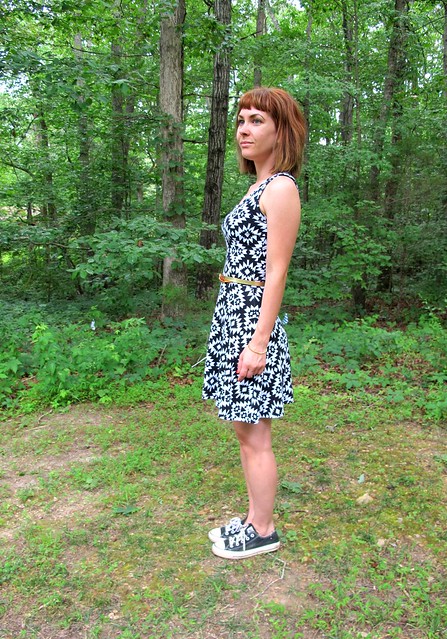
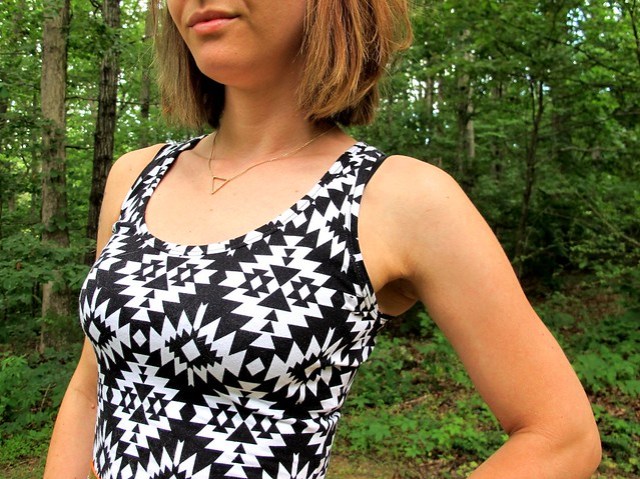
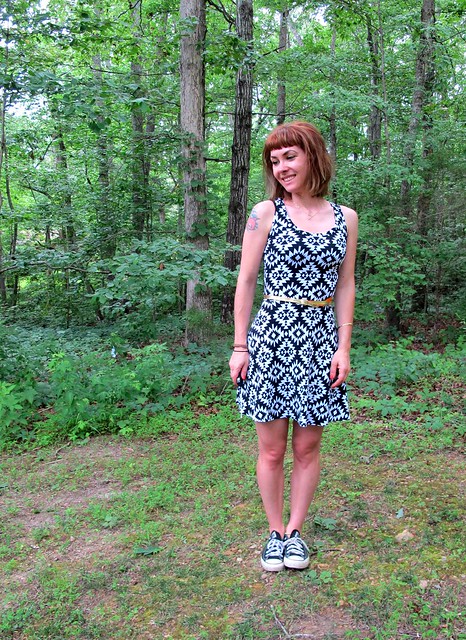
Now HERE’S an obvious gap in my summer wardrobe that’s finally been filled! A knit tank dress!

Knit tank dress

I think we can all agree that wearing knit dresses is the ultimate in comfort/secret pajamas. Especially when it’s nasty hot outside!! I looove my knit dresses in every season, but most of them have sleeves and I don’t like wearing sleeves when it’s more than 95 degrees outside. No way.

Knit tank dress

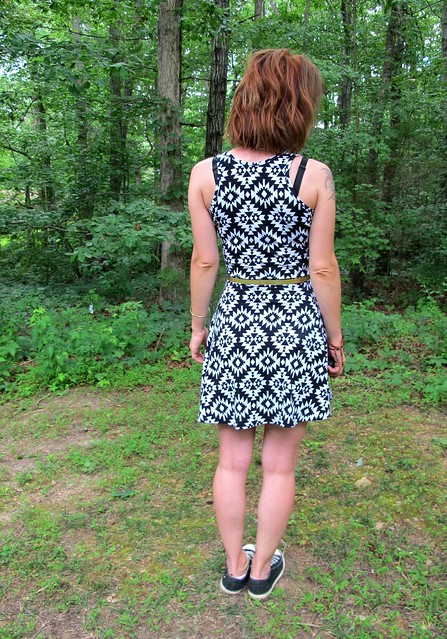
Since I wasn’t seeing a pattern that fit the look I was going for (and I’ll be honest – I didn’t search very hard. I have a LOT of patterns in my stash and I’d rather mash ’em up whenever possible), I used 2 patterns from my stash to create this awesome mash-up Frankenpattern. Most of this pattern – the skirt, the bodice sizing and proportions – were taken from the Lady Skater dress pattern, which is my favorite knit dress pattern ever and is basically the gift that keeps on giving. For the neckline and arm hole finagling, I copied that straight from the Mission Maxi dress pattern. The result you see here is a fitted racerback tank top with a flared skirt attached to it. Which is exactly the look I was going for. Whew.

Knit tank dress

I am all about some Frankenpattern magic, and it’s 1000x easier when you’re working with a knit fabric. Much easier to tweak with the fit, and much more forgiving if you decide to forgo a muslin (like I did. Yay! Consider this my wearable muslin, ha). Plus, if you already have a garment that fits the way you like – in my case, the bodice of this skater dress is ACE – then it’s super easy to change up the neckline/sleeve options/skirt and have a totally different garment that still fits the way you like. I love buying new patterns, but I REALLY love knocking out projects that don’t require too much fit futzing. The only fitting I had to do with this dress was take a little bit out of the underarm side seam – maybe 1/4″ on each side. Since there aren’t sleeves there, the sides need to be a little more fitted so they don’t pooch out.

Knit tank dress

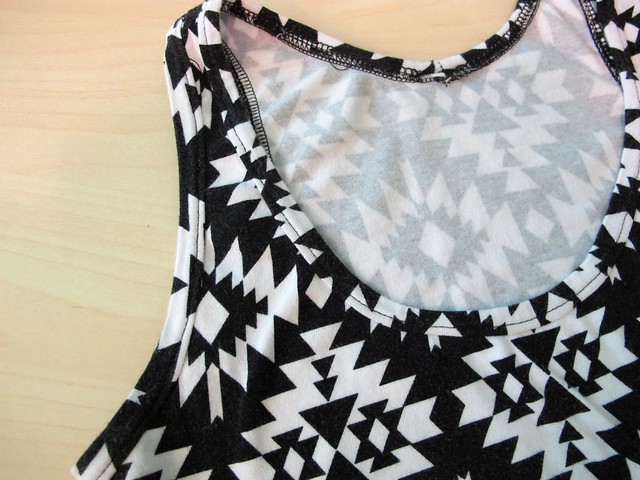
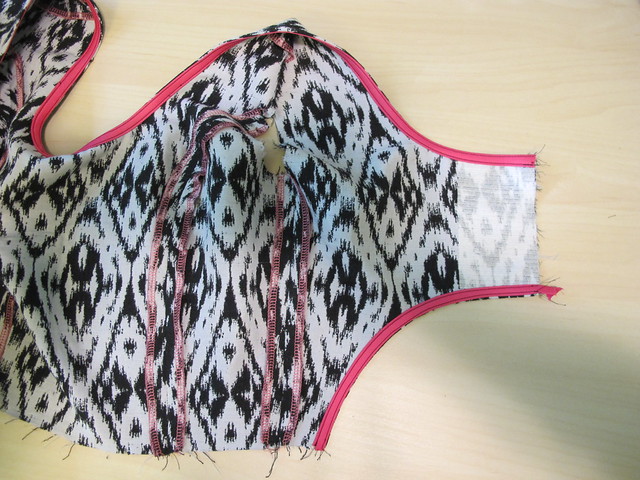
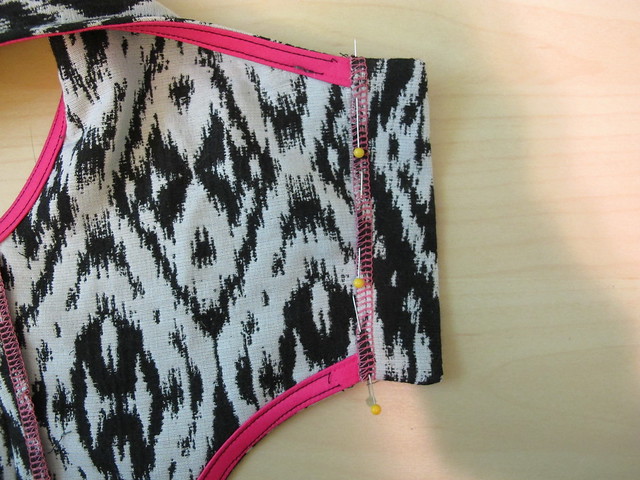
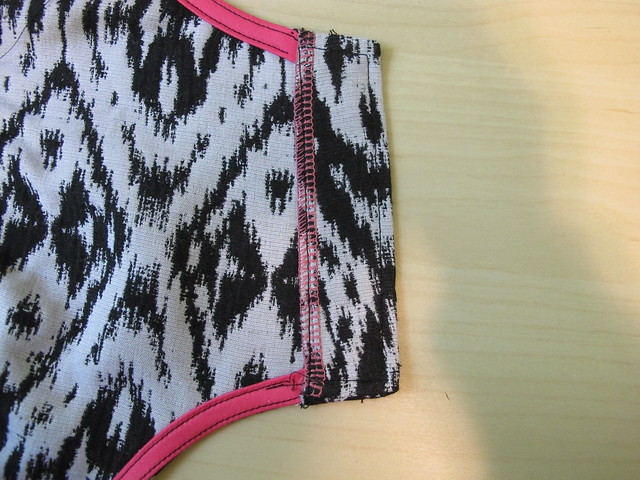
I guess the one downside to this is that you don’t have a set of instructions that are tailored to your garment – but that’s never been a problem for me, as I just kind of pick and choose what techniques to use from which pattern (or I ignore the instructions completely and forge my own method). Again, this dress is a knit, so it’s pretty straight forward. I stabilized the waistline with 1/4″ woven elastic, which keeps it from sagging over the course of the day (truth: these photos were taken on day #2 of wearing this dress. Pretty good recovery there, I’d say!). The neckline and arm holes are finished with the same method outlined in the Mission Maxi instructions – it’s similar to applying bias facing, but you’re not pressing that last 1/4″ under. Instead, you just finish the edge and topstitch it down. Here’s a photo of the guts so you can see –

Knit tank dress

Clear as mud, yeah? 🙂 It resembles a coverstitch, sort of. More like a binding and less like the knit bands that are used on the Lady Skater (and it feels a bit sturdier, which made me feel ok about not stabilizing the shoulder seams). Oh, and I did all my topstitching with a straight stitch/single needle (on my regular sewing machine). A twin needle or zigzag would be fine for this, but I like the way the single needle looks. Since this isn’t an area that gets a lot of stretch, it’s ok to use a stable stitch here. I also did the same with the hem – just sewn with a straight stitch. Again, as long as it doesn’t need to stretch, it’s fine to use a non-stretch stitch!

Knit tank dress

The cotton knit fabric is from Mood Fabrics in NYC, which I bought at the store while I was there in March. I wasn’t sure what I was going to make with it (honestly, I was probably thinking Lady Skater at the time), but I was prettttty happy to use it for this dress! I didn’t bother to match the print – it’s a casual dress, and meh – and I think it looks fine.

Knit tank dress

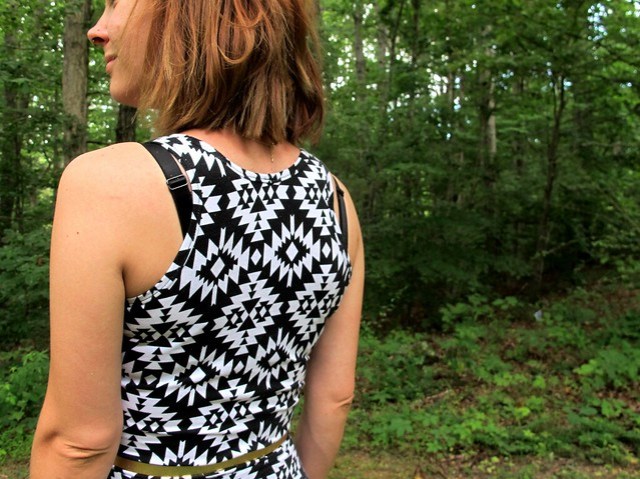
Here’s the back, again! I like the shape of this racerback because it’s a bit more covered than your standard beater tank. Of course, my bra straps still show – again, meh, whatever. I didn’t bother hiding them for this post, mostly because I don’t hide them in real life and I’m just tryin’ to kEeP iT rEaL~

noragrets

Knit tank dress

Conclusion: this dress was easy to make, is comfortable to wear, and SECRET PAJAMAS. Expect to see more of these as I churn them out.

LLadybird_175_175

One last thing! I wanted to direct your attention to my newest sponsor – Wawak Sewing! Unfamiliar with Wawak Sewing? They’re a giant sewing supply company – offering everything you need for your sewing studio, from Gutermann thread (Mara 100 is the jam – 1000+ yards for $2.50, oh yes oh yes) to invisible zippers (24″ for 88¢? Don’t mind if I do) to professional boiler irons (ok, that’s probably waaay too much iron for the average home seamstress, but we use these at the studio – as well as when I worked at Muna Couture – and they are seriously incredible) to hymo canvas (for tailoring! I always get my hymo/horsehair interfacing from here because the price is unreal). A lot of the items can be bought in bulk, and the price is pennies on the dollar for what you’d pay at a brick & mortar store (I’m not just talking about cheaper than Joann’s – some of this stuff is cheaper than places in the Garment District, but you get the same quality). Plus, shipping is less than $5 (and free if you buy more than $100 worth of stuff)! I highly recommend you get a free catalog because it’s really fun to flip through – like the Toys’R’Us catalog, except for grown-ups 🙂 They occasionally have sales and discounts, so it’s worth it to be on their mailing list! International peeps – you can also join this sewing party, but you’ll need to call or email to place your order (and I’m going to assume your shipping might be a little more than $5, ha).

I’ve been a loyal customer/rabid fan of Wawak Sewing for years – I started with them back when they were still Atlanta Thread Company – and I’ve had nothing but great experiences with both the service and the products. So I’m pretty thrilled to have them on board as a sponsor, as well as to join their affiliate program (sooo any purchase you make after clicking these links is gonna net me a small commission, fyi!). And you should be thrilled, too, because right now through 9/30/15, you can get 10% off your order of $50 or more at Wawak Sewing if you use the code WLB915. Can’t beat that with a stick! Thanks, Wawak Sewing! ♥


OAL2015: Attaching the Skirt // Finishing the Cut-Out

7 Jul

Good morning, everyone! My apologies that this post is a day late – I spent one full day of my weekend throwing a 4th of July shindig (complete with a slip-in-slide, food decorated to look like flags, and fireworks at the end of the night. I passed out before the fireworks happened, though, hahahahaha!! I heard they were lovely, anyway!), and then the second full day was much-needed RNR (laying on the couch, coloring and eating leftover party food. I surprisingly was not hungover for this, but I treated it like a hangover day regardless). It was an AWESOME weekend, but I didn’t make the time to write up this post – so you get it on Tuesday! Yay!

ANYWAAAAAY, time to get down to business!

OAL_Banner

Today we are going to attach the skirt to our bodices, as well as finish that back cut-out. The end is so close!!

OAL 2015

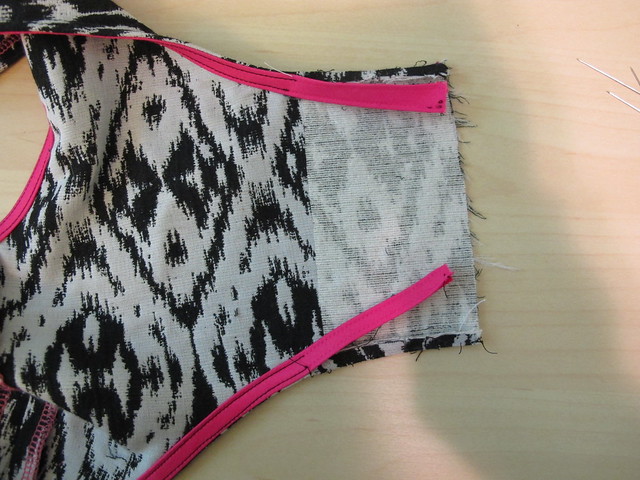
First thing you are going to want to do is finish the edge of the back cut-out, using bias facing and the same method we used for the neckline (here’s a refresher on that tutorial if you need it!). Once you get to the back where the interfacing has been applied, you have two options – you can either leave that part unsewn, or attach the bias facing and then unpick it. I prefer to sew+unpick because I like the guidance of the creased seamline, as well as having the seam allowances already trimmed down, but it’s up to you!

OAL 2015

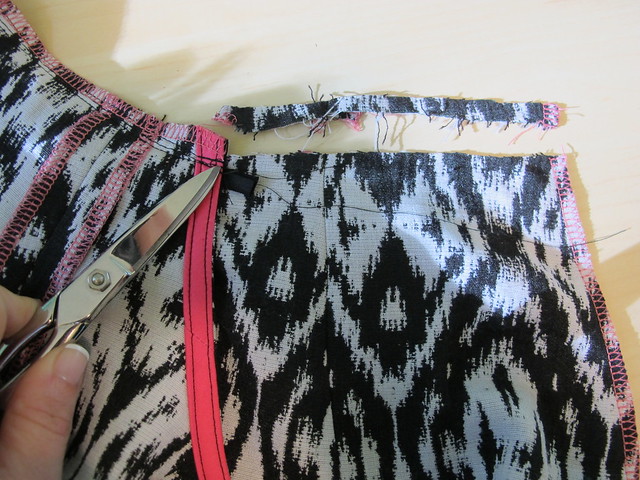
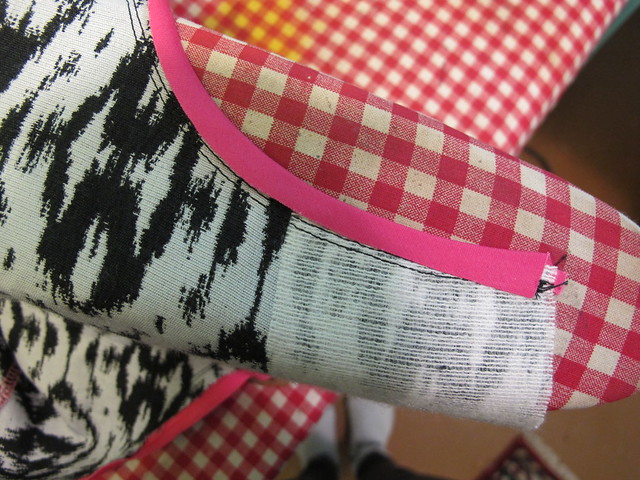
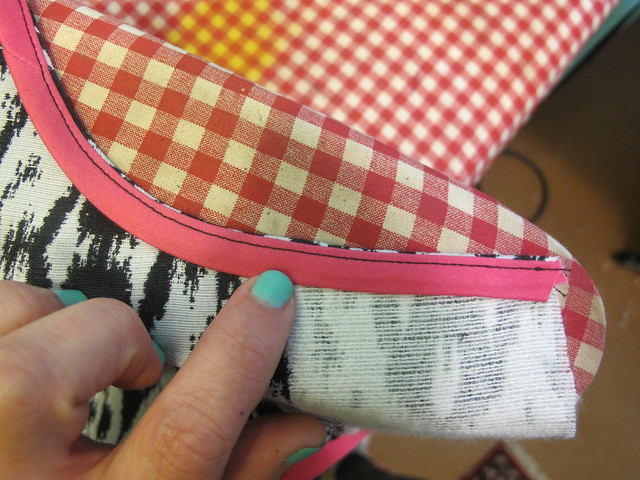
Once you’ve finished that, unpick the facing where the interfacing is, plus a little extra (or pat yourself on the back for saving yourself a little extra work!). You’ll do this at both the top and bottom of the interfaced section.

OAL 2015

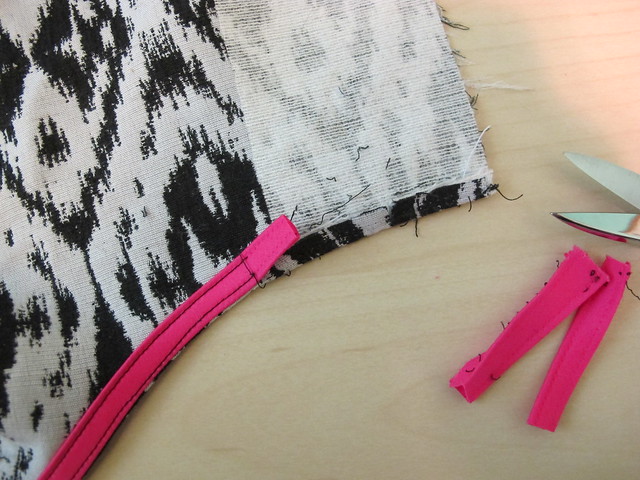
Go ahead and clip off the excess bias facing, leaving at least an inch or so that overlaps where the interfacing starts. Err on the side of longer here – you can always trim off more later if you need to.

OAL 2015

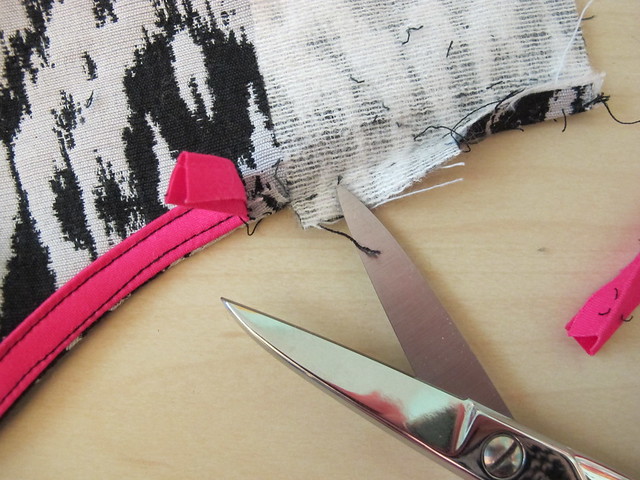
Notch the fabric right where the interfacing starts, going about 1/4″ in, or the depth of your seam allowance.

OAL 2015

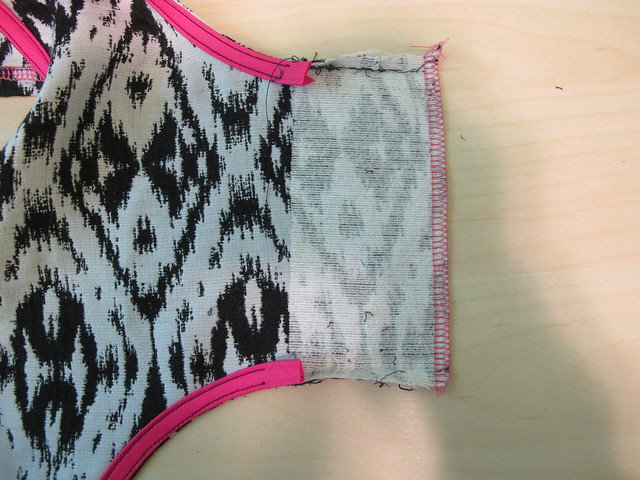
Finish the edge of the interfaced section howeverrrr you want. I just serged mine.

OAL 2015

Now fold the interfaced section back on itself, right sides together, along the center. The edge that you just finished should meet right against the edge where you clipped that notch.

OAL 2015

Sew along both short ends, following your seam allowance (this is where the guidance of an unpicked edge comes in handy). Be careful not to catch the ends of the bias facing just yet.

Ooh, look! New manicure! Haha!

OAL 2015

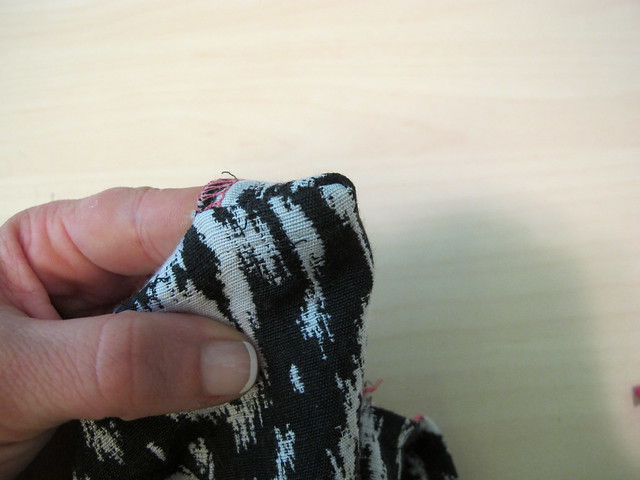
Turn the interfaced section right side out. To get a nice, sharp corner: first off, don’t clip that corner or trim your seam allowances unless they’re bigger than 1/4″. Use your fingers to push the seam allowance in one direction all the way to the point (I’ve found this is easiest when I hold it the way you see in the photo)…

OAL 2015

Keep your fingers holding that seam allowance in place and start turning everything right side out…

OAL 2015

Use your pointer finger for the final little push.

OAL 2015

You should have a pretty good-looking corner at this point, but you can also use a point turner (or a knitting needle, or a chopstick, or a pencil, or whatever you have on hand) to gently coax that corner out a little more. Don’t mash it around, just manipulate the seam allowance over until everything looks good. Repeat for the other corner.

OAL 2015

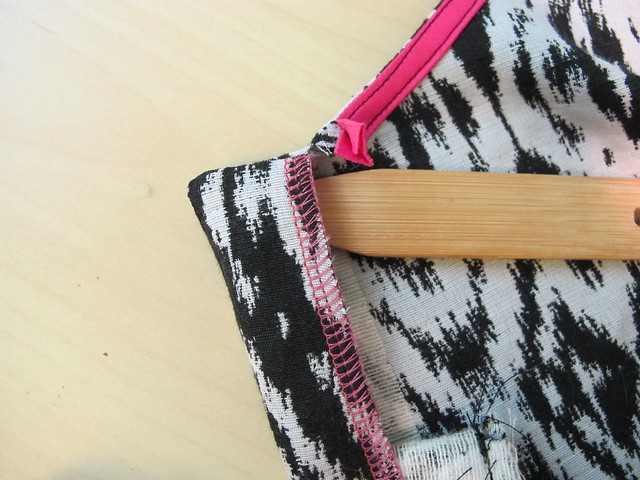
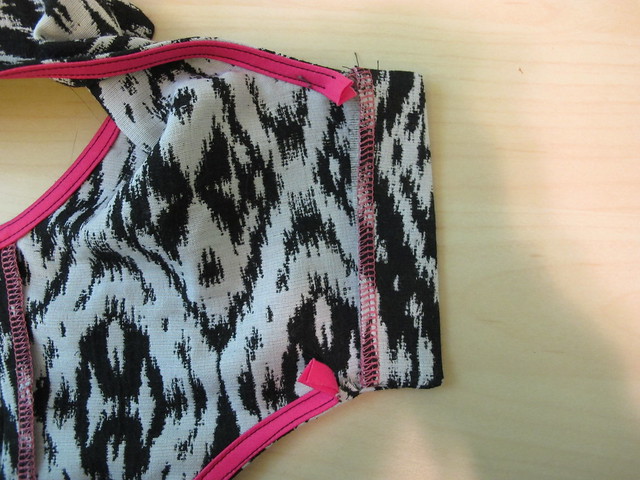
Here’s where we are so far!

OAL 2015

Now take those floppy ends of the bias facing and tuck them into the little pocket you just created.

OAL 2015

OAL 2015

Pin the finished edge into place and sew everything down. I also topstitch 1/4″ around the outside edges, to match the rest of the topstitching on the dress.

OAL 2015

Done! Now do the other side 😛 haha!

Ok, now for attaching the skirt!

OAL 2015

Pin and sew the skirt to the bodice, matching notches and seamlines, and using your normal 5/8″ seam allowance. The bodice will be quite a bit shorter than the skirt – that’s the back cut-out, and we’re gonna deal with that next. If you want to add piping to your waistline seam, now is the time to do it (well, I did it, anyway! ha! It’s easier if the piping does not extend all the way around the waist – end it right where the bodice ends).

OAL 2015

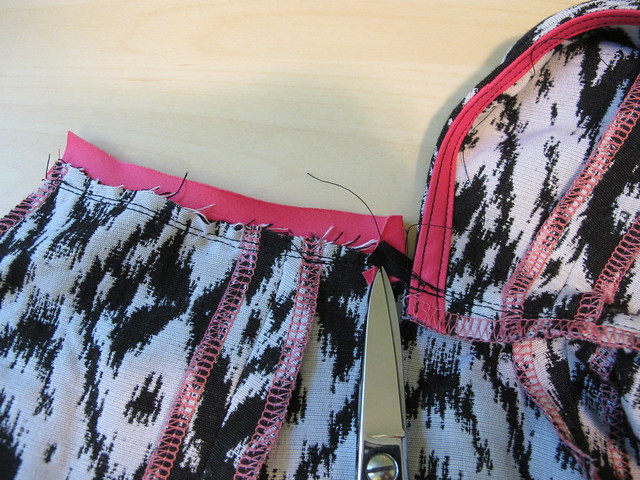
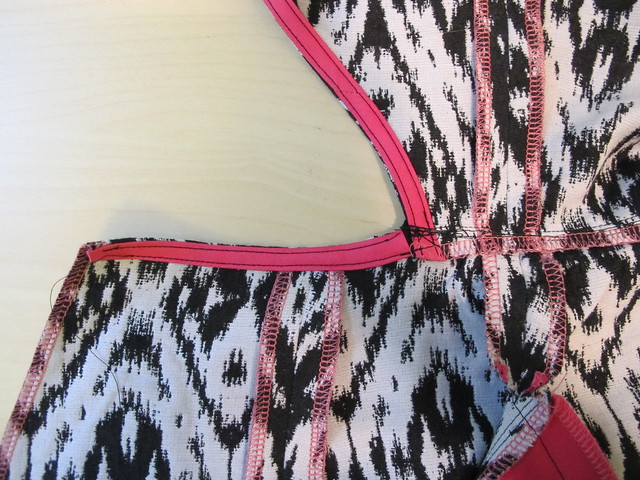
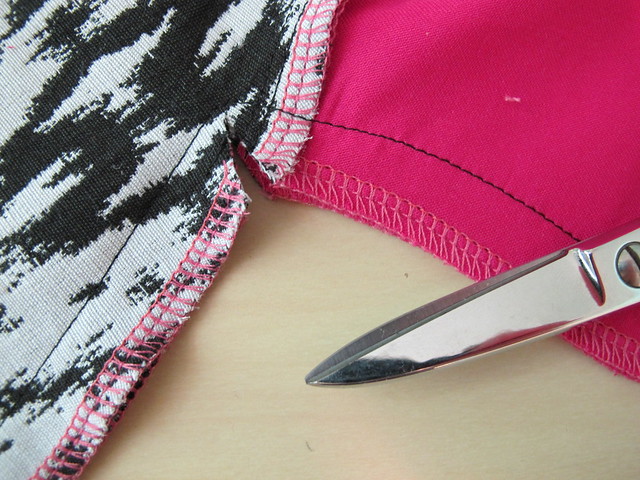
Trim the seam allowance down along the top of the skirt that isn’t attached to the bodice, leaving yourself 1/4″ seam allowance for dealing with the bias facing. Then clip a notch where the bodice stops – this was hard to photograph, so right where my scissors are pointing! You can also see where my piping ends; it’s the little black rectangle below. Don’t clip your notice any deeper than the seam allowance.

OAL 2015

Attach the bias facing along the top edge of the skirt, stopping at the notch you just clipped. Allow about 1/4″ or so of bias excess so you can tuck it under itself.

OAL 2015

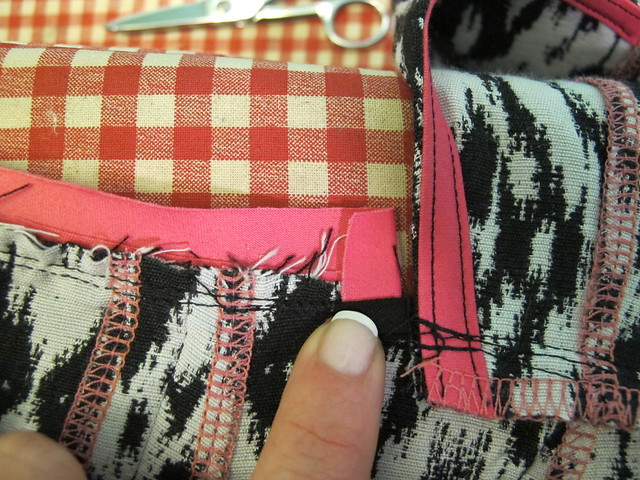
Here’s a closer picture. Once you’ve sewn the first swipe of bias facing (and understitched, if you’re doing that), take everything over to the ironing board and press the seam allowances up, and then the excess over to the wrong side (at the end that’s next to the bodice). If you added piping, the tail end of your piping should also be in this equation.

OAL 2015

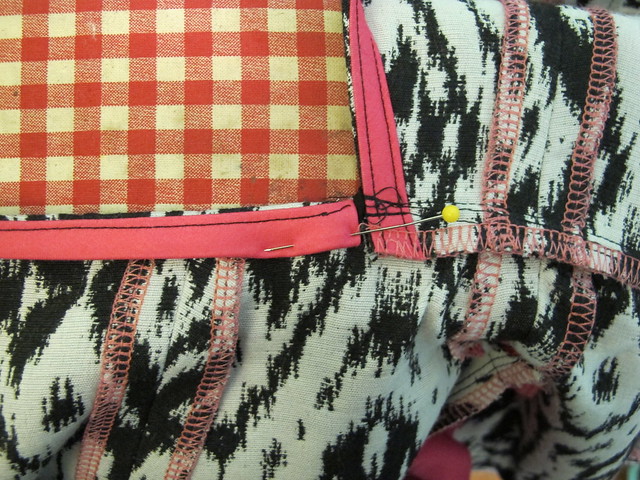
Now fold the bias facing to the wrong side, as normal, and pin in place. All your raw edges should be encased and the corners of the bias facing should be pretty close to one another (if not butted up against each other).

OAL 2015

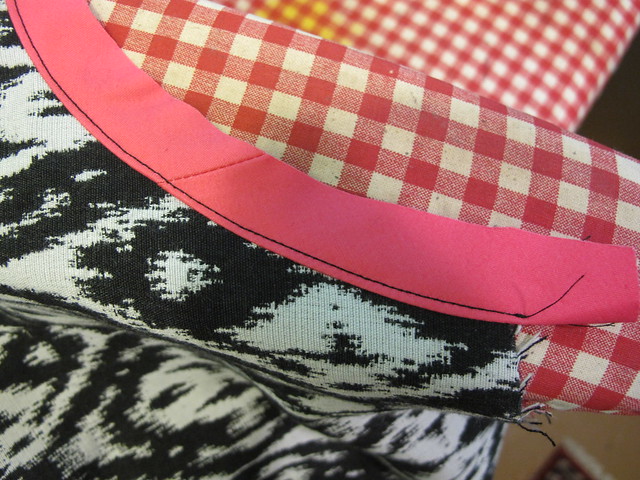
Finally, just stitch the bias facing down. Once you get to the corner where the other section of bias facing is, lower your needle and pivot, stitch along the existing stitching line just a little bit, then backtack. This will reinforce that corner and secure everything.

OAL 2015

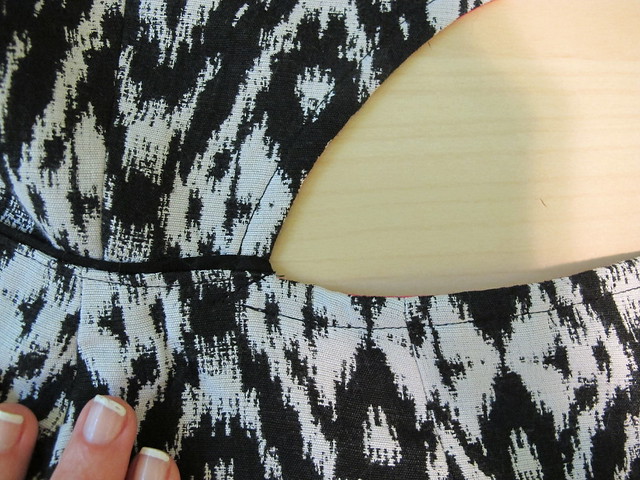
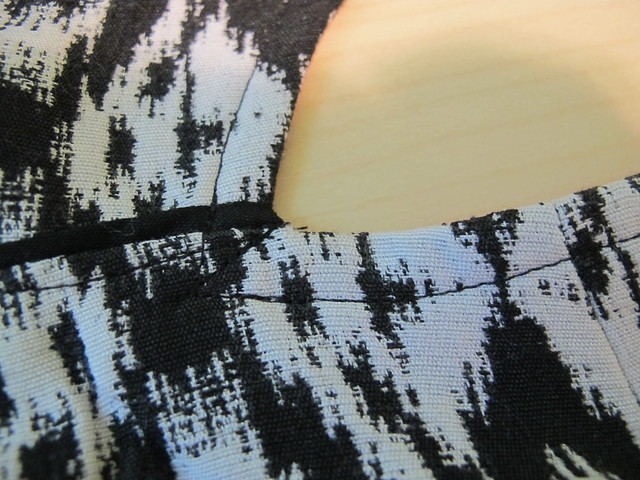
Here it is from the right side. If you want to be extra secure, you can also sew a diagonal line to the point of the intersecting facings.

OAL 2015

I’m not really sure why I took a second picture of this, but here you go.

Ok, that’s all for today! Let me know if any of this needs clarification or if you have any questions 🙂

Completed: Lace Marlborough Bras

1 Jul

Still on a lingerie kick here! Actually, these are old-ish makes – I finished both of these back in May. Whoops, sorry! Haha! I guess at least I can vouch for their wearability, since I’ve been wearing the hell out of these since I finished ’em!

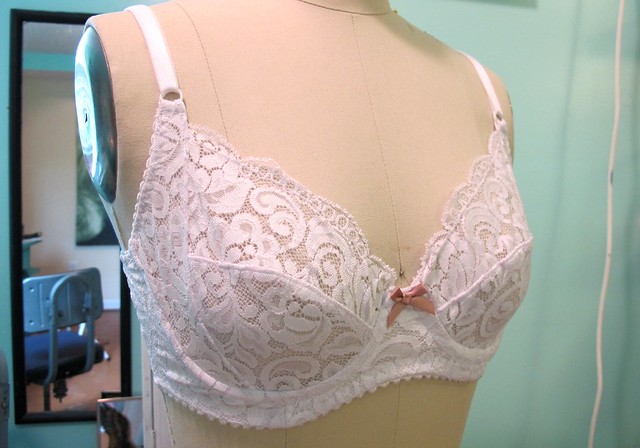
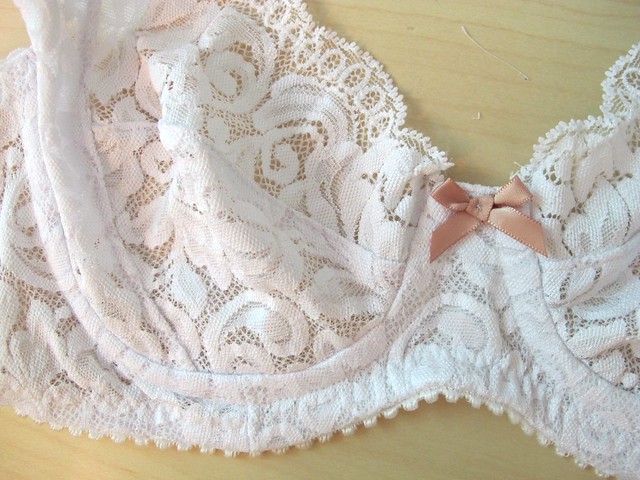
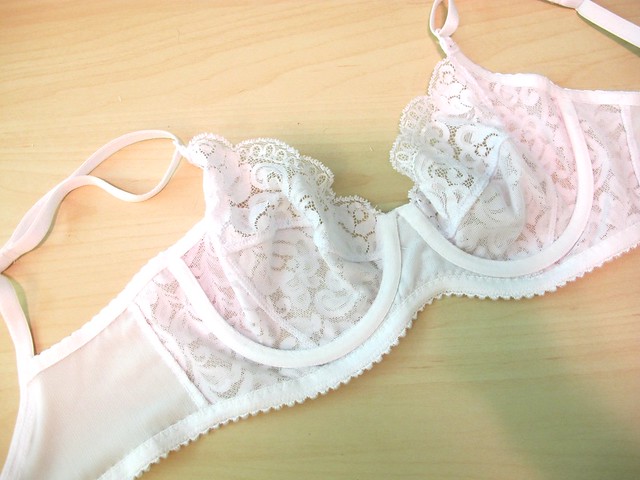
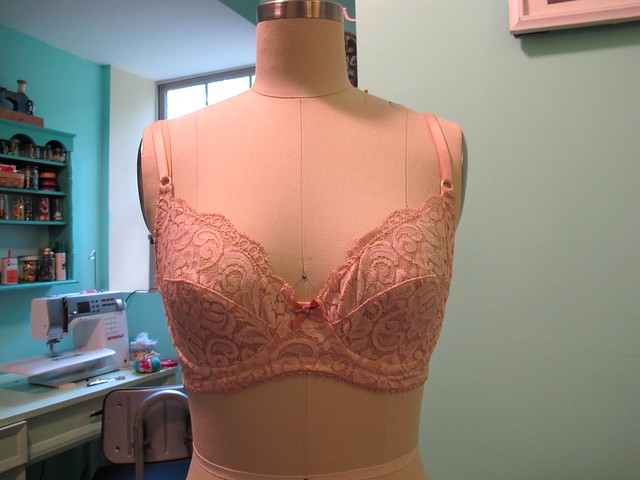
White Lace Marlborough Bra

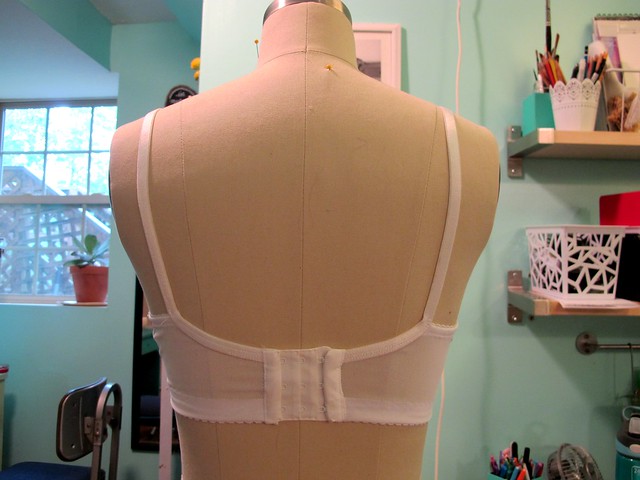
I’ll start with the first one I finished, a white lace underwired bra. This is the Marlborough bra pattern from Orange Lingerie (spoiler: so is the other bra in this post). I’ve made this pattern quite a few times, but what’s different about these two bras here is that this is my first time venturing outside the world of pre-cut bra kits. I already mentioned this in my Starwatch Watson post, so here’s the Marlborough edition!

White Lace Marlborough Bra

The white lace for this bra came from a new-to-me source – I have discovered a random fabric store in a REALLY random shopping center in Franklin, TN. I was actually heading into Aldi, prompted by the sweet siren song of cheap pineapples, when I noticed a sign 2 stores over that said “Fabric.” In the middle of a strip mall, no less. Turns out there actually is a quilting shop right there, called the Stitcher’s Garden (I don’t think they have a website). It’s like a quilting shop mixed with a thrift store – piles everywhere, products dating back to the 70s, and the prices are surprisingly cheap (especially considering the part of town we’re talking about here). The selection of quilting cottons available is staggering. I’m not one for buying (or sewing) quilting cottons, so unfortunately that was lost on me – but they did have a nice little selection of elastics and stretch laces! And several colors of stretch rib knit (which I will be back for, because, unf). This stretch lace was, I think, $1 a yard. It’s beautiful and great quality and it’s A DOLLAR A YARD. I bought 10 yards. I want more.

Anyway, I digress. It’s always exciting to discover a new fabric store, though!

White Lace Marlborough Bra

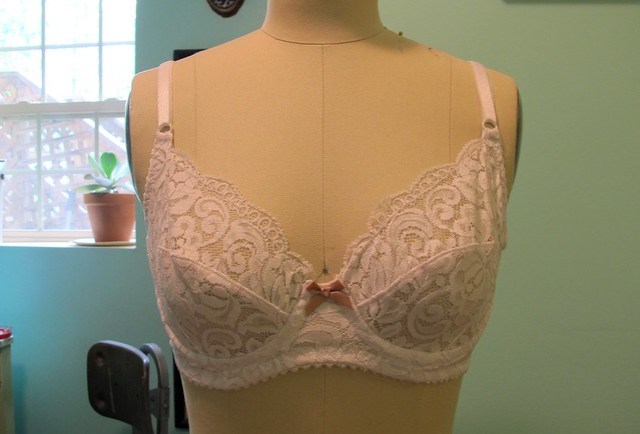
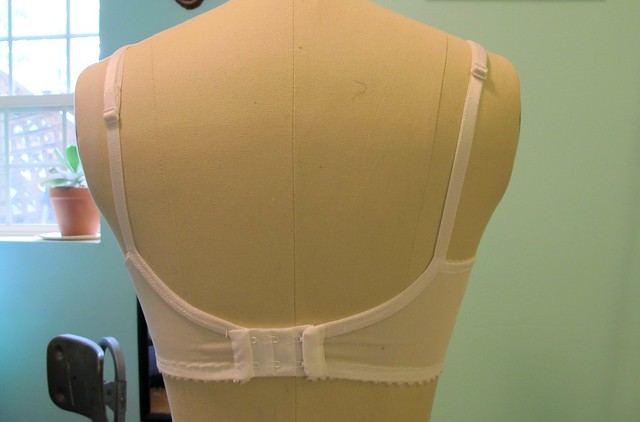
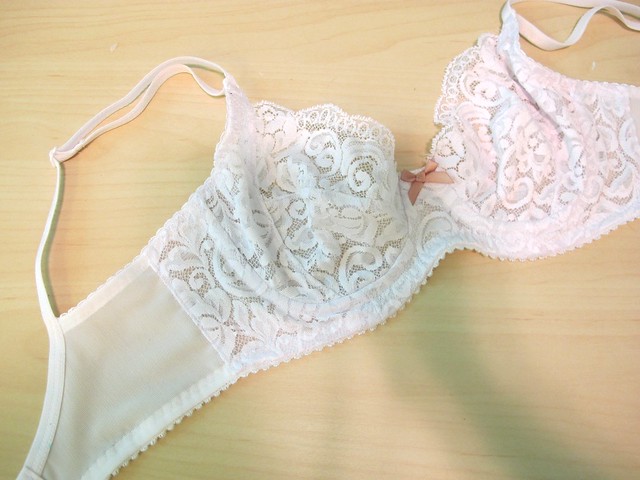
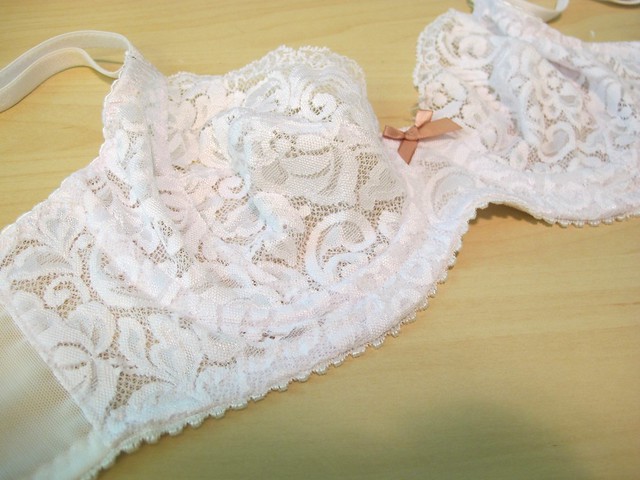
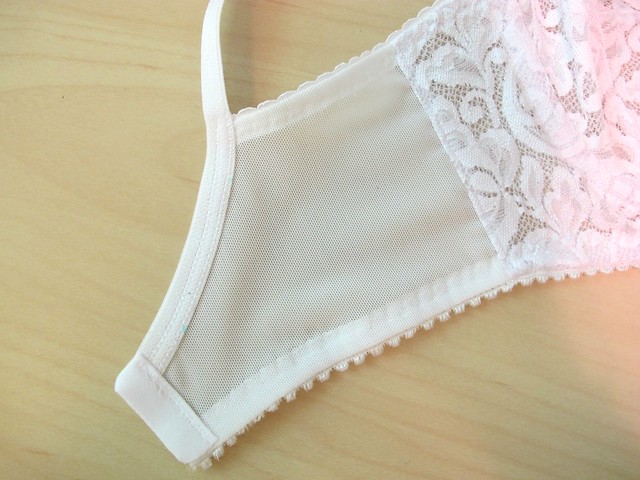
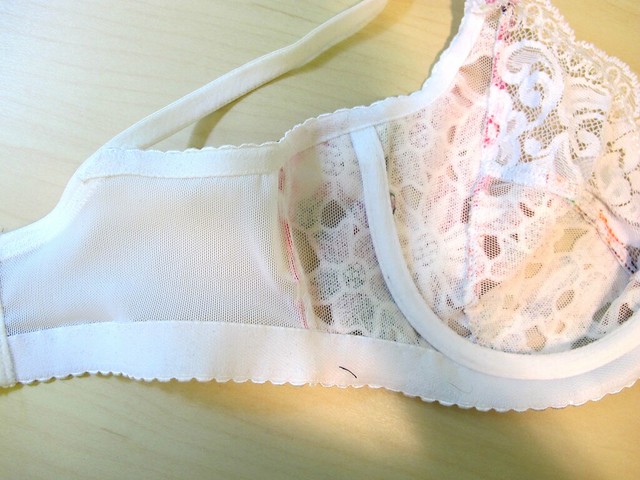
Back to Marlborough. The white lace is way too stretchy to actually use with this pattern – the pattern calls for no more than 10% mechanical stretch, and we’re talking about some spandex shit with the lace here. Taking a cue from my lessons learned during the bra-making class that I took in January, I underlined all the pieces with white power mesh. This worked pretty well, although I think my mesh was still a touch too light (we used a firmer power mesh in the class, with great results), so next time I want to experiment with tricot lining instead (I actually have a package of the stuff that I bought from Bra Maker’s Supply and I haven’t even opened it yet). I did not underline the upper lace cup – I left that with the stretch lace stretchy (I know the pattern calls for rigid lace in the upper cup, but I really like the look/shape I get with stretch), and a bit of 1/4″ clear elastic at the top to stabilize it, as called for in the pattern (I’ve noticed my RTW lace bras don’t have this, so I am thinking about leaving it off for the next bra). The back band is simply one layer of the heavier power mesh.

All notions were procured from my stash. I couldn’t tell you where half of them came from – although I do know that the underwire channeling was from Pacific Trimming in NYC. They have giant rolls of that stuff for super cheap, and the quality is excellent. They only have white and black, but the white can be dyed. I didn’t have any white ribbon, so the bow is nude.

White Lace Marlborough Bra

White Lace Marlborough Bra

White Lace Marlborough Bra

White Lace Marlborough Bra

White Lace Marlborough Bra

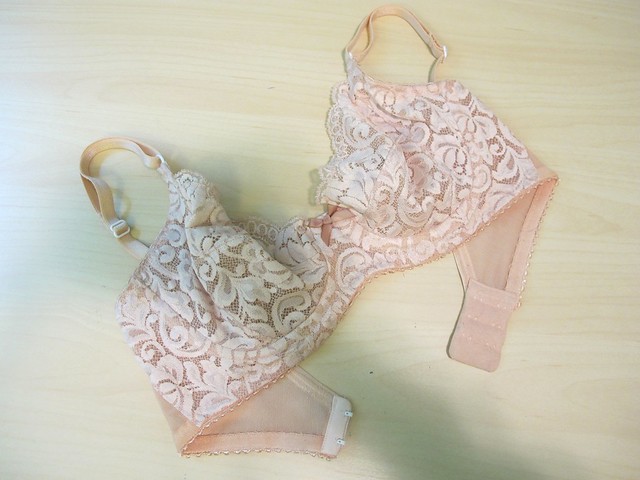
I made this bra because I wanted something to wear under my white/sheer clothing without show-through. I know that nude is actually a better color for that, but white was what I had on hand and I didn’t want to experiment with dying just yet. Of course, once I started trying to wear the bra – of course it showed through like CRAZY. Duh! I realized that it wasn’t going to get worn at all the way it was (if I’m gonna wear something that doesn’t require a nude bra, then I’m gonna wear a bra that’s a fun color because come on), so I knew it needed a good dye. I’d received a good tip on Instagram to dye the bra with tea for a nice beige-y color – brilliant! I steeped some very strong black tea (English Breakfast, if you must know), let it cool a bit and then dumped the whole bra in to soak for about 30 minutes.

White Lace Marlborough Bra - dyed with tea

Floral Lace Marlborough Bra

The final color is something much closer to that of my skin. I know I’m pale, but I’m not literally white 😉 I was curious to see how well the tea-dye would hold up with a wash – and it’s actually stuck around! I wash my lingerie with Soak, which is nice and gentle and also doesn’t require rinsing (yay!). I figured if the color faded that I’d just re-dye it (I mean, it is just tea after all), but it’s actually not faded at all. Sweet!

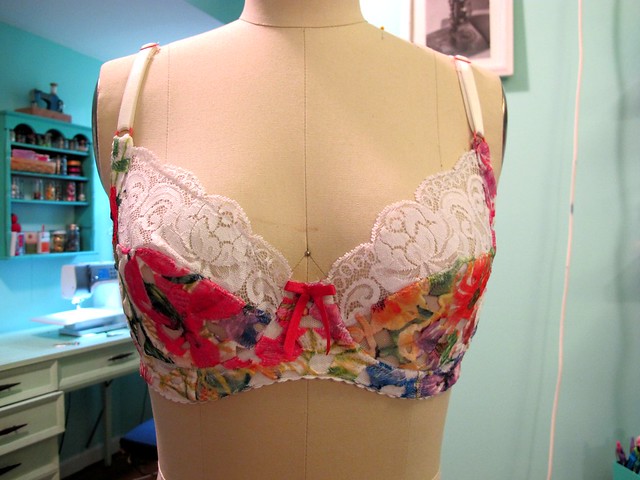
The second bra for this post is my floral wild-card and Mood Sewing Network project for the month of June…

Floral Lace Marlborough Bra

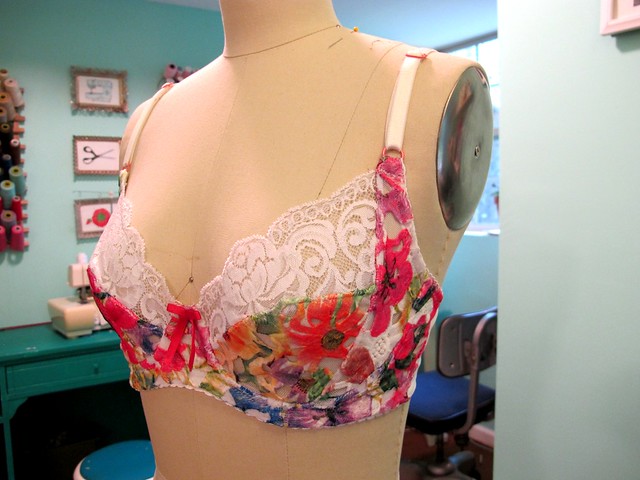
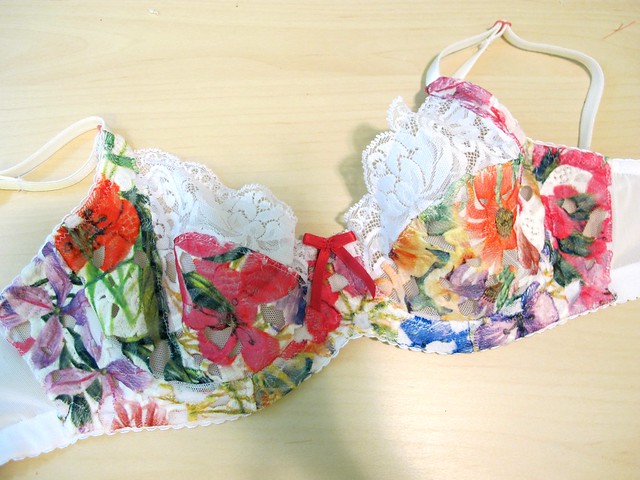
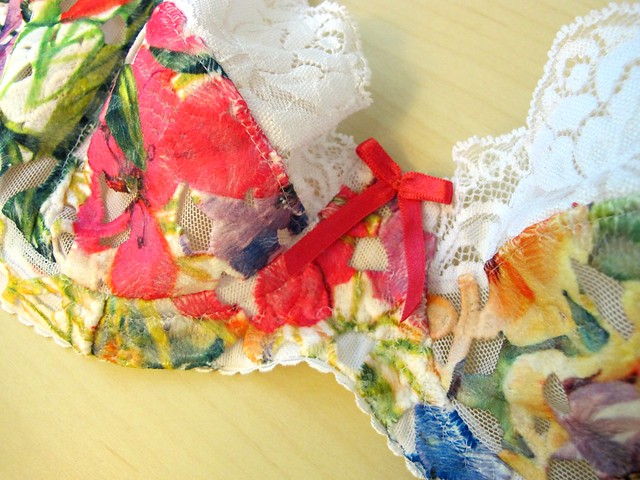
Oh yeah! I found this awesome Multicolored Tropical Lace fabric at Mood Fabrics and immediately knew it needed to be a bra. Isn’t it beautiful? It’s a nylon embroidered lace with a bright all-over floral pattern printed right on top. It also has a cool finished edge (unfortunately they were too abstract for me to include in this project, but it’s there!). There are a few different colorways of the lace, which meant I spent about a week agonizing over which one to get – blue/purple, red/green, blue/beige, and beige – but I settled on this multicolor as I liked the pink repeats with the white background.

Floral Lace Marlborough Bra

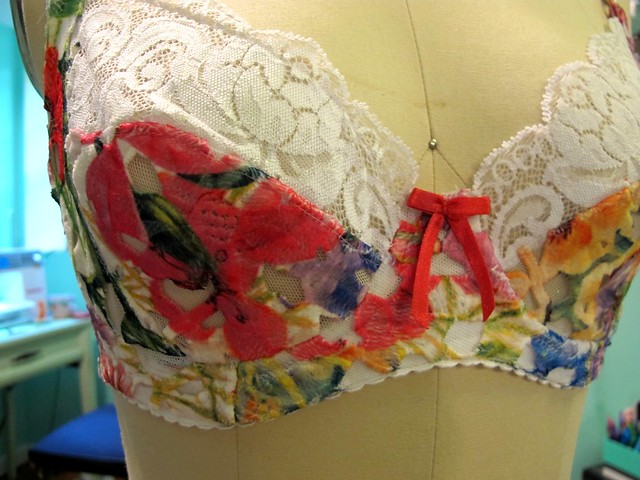
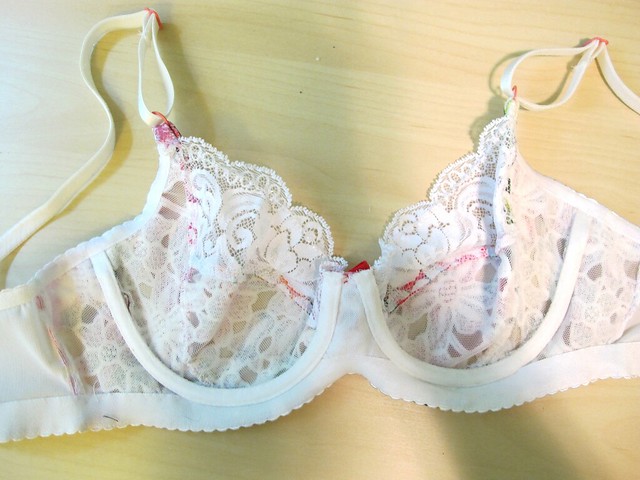
I’ll be honest – I wasn’t sure how this was going to pan out until the very end (yeah, that was a bit agonizing!), but I think it worked out all right! I used the aforementioned multi colored floral lace for the body of the bra, and cut it according to the grainline on the pattern pieces (as I’ve mentioned, this pattern requires about 10% stretch in the fabric, which usually means cutting it on the bias for firm wovens. This lace had just enough mechanical stretch so that I could cut it according to the pattern grain). Since the lace has giant open holes throughout it, I underlined each piece with a layer of power mesh to add a little bit of opacity. The back band is cut on one layer of firm power mesh. The white lace upper cup is cut using the same stretch lace as from the first bra in this post, stabilized again with 1/4″ clear elastic along the top.

Floral Lace Marlborough Bra

For the notions, I decided to go with all white so that the colors in the fabric would really sing. All notions were pulled from my giant stash – I think (think) the bottom scallop elastic came from Madalynne. I’ve been hoarding that stuff for ages because I think it’s really pretty, and this bra seemed like the perfect excuse to finally use it. Oh, and the rings/sliders and pink bow are rescued from an old bra destined for the trash 🙂

Floral Lace Marlborough Bra

Sewing this bra was pretty easy, but dealing with the lace was harder than I thought it would be. Because there are such large open holes in the lace pattern, that meant that topstitching the tiny seams took some finesse. I don’t want to say it was necessarily hard, because it wasn’t, but it also wasn’t a walk in the park like my white lace bra was. There were always tiny little pieces of lace that wanted to stick up and poke out and make weird lumpy shapes. And you have to topstitch the seams, because they can’t be pressed (this is a poly lace). I actually wondered if I’d even be able to wear this bra under a fitted shirt, because the topstitched seams look preeeetty lumpy, but it looks fine. Of course, it’s WAY too bright to wear under a white shirt, but whatever. That’s what the nude bra is for, ha 🙂

Floral Lace Marlborough Bra

Floral Lace Marlborough Bra

Floral Lace Marlborough Bra

Floral Lace Marlborough Bra

Anyway, bra worked out all right in the end and I’m a happy camper 🙂 I really love the shape and the colors in the lace are sooo pretty! Yeah, that lace was $40/yard, but something like this only requires maybe 1/4 yard, so it’s a good excuse to splurge on the nicer fabric 🙂 Seeing this bra actually work out makes me excited to find more cool non-kit fabrics to make more Marlboroughs out of 😀

Floral Lace Marlborough Bra

Speaking of cool fabrics for Orange Lingerie patterns – have y’all seen her newest pattern, the Boylston balconette? OH MAN. I saw sneakies of this when I met with Norma in Paris back in November, and I’ve been soo excited about it ever since. I just bought a copy over the weekend, as well as some lingerie foam, and I can’t wait to start playing around with it! Eep!

* Note: The multi-colored floral lace fabric was provided to me by Mood Fabrics in exchange for my contribution to the Mood Sewing Network. All other fabrics and notions were purchased by me. As always, all opinions are my own!

OAL2015: Adding Pockets // Assembling the Skirt

29 Jun

Good morning, everyone! Time for another dose of OAL goodness!

OAL_Banner

Today is pretty simple – we’ll just be adding (optional) pockets and assembling the skirt pieces. If you don’t want to add pockets, just skip this post and follow the instructions that came with the pattern. Let’s get to it!

OAL 2015
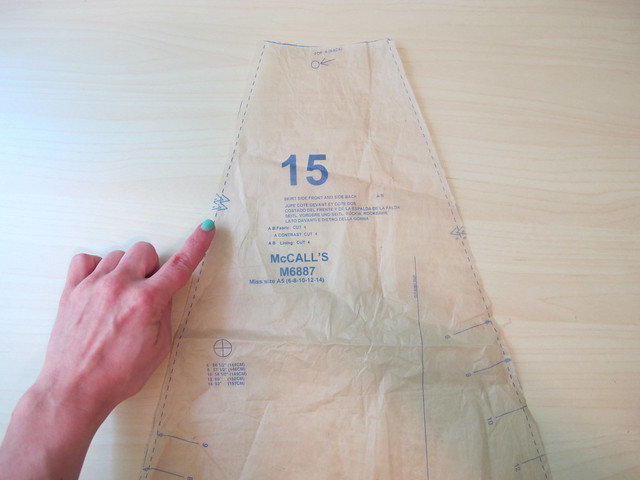
For now, the only skirt piece we will be dealing with is piece #15, the side front. You should have 4 of these pieces cut in total. The side that I’m pointing to – with the double notches – is the side that we will be focusing on for these next steps. Finish the edges of all 4 side front pieces (only on the side with the double notches).

OAL 2015
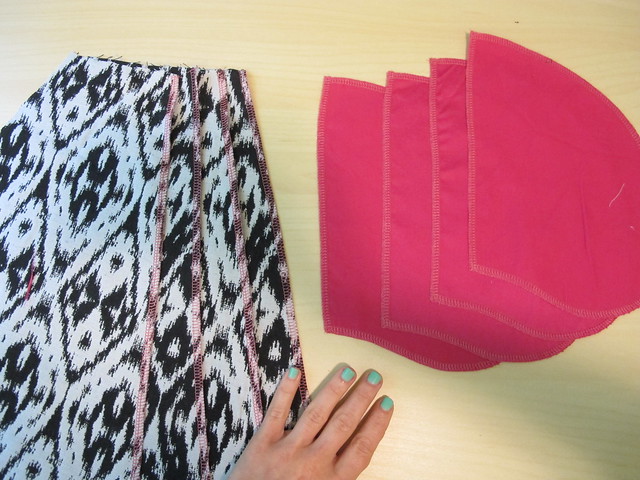
If you haven’t already done so, you’ll need to cut out 4 pocket pieces from your fabric (you can use self-fabric, but I was on a pink kick so mine are contrasty!). The pattern doesn’t come with a pocket pattern piece, so feel free to swipe one from another pattern you own – mine is from the Saltspring Dress. Finish all edges of the pocket pieces.

OAL 2015
On the finished edge of each side front piece, measure 3″ down from the top and mark with a pin. This is where we will be attaching the pockets.

Note: Depending on your height and proportions, you may want to sew your pockets more or less than 3″ from the waist. I looked at several patterns with pockets – as well as a few of my dresses that have pockets in a good spot – and the average seems to be somewhere between 2.5″-3.5″, with 3″ being a comfortable distance for me. However, if you’re unsure – I recommend checking some of your patterns, or measuring a couple existing garments, to see what works for *you*.

OAL 2015
Pin 1 pocket piece to 1 skirt side front (4x), with the top of the pocket 3″ away from the top of the skirt and right sides facing.

OAL 2015
Sew the pocket to the skirt piece at 3/8″ and understitch the seam allowances toward the pocket. Using a smaller seam allowance and understitching will help with keeping that pocket inside the skirt and hidden.

OAL 2015
Now you can pin 2 skirt/pocket pieces, right sides together, starting at the top of the skirt and going all the way around the pocket and to the bottom of the skirt. Repeat for the other pocket.

OAL 2015
Stitch at 5/8″, lowering your needle and pivoting where the pocket meets the skirt at the top and bottom (I can’t seem to explain this very clearly so just look at the photo!).

OAL 2015
At the top & bottom of each pocket bag, clip diagonally in the corner just to the stitching (but not through the stitching). This will enable you to press the seams above and below the pocket open, as well as make your pocket bag lay better inside the skirt.

OAL 2015
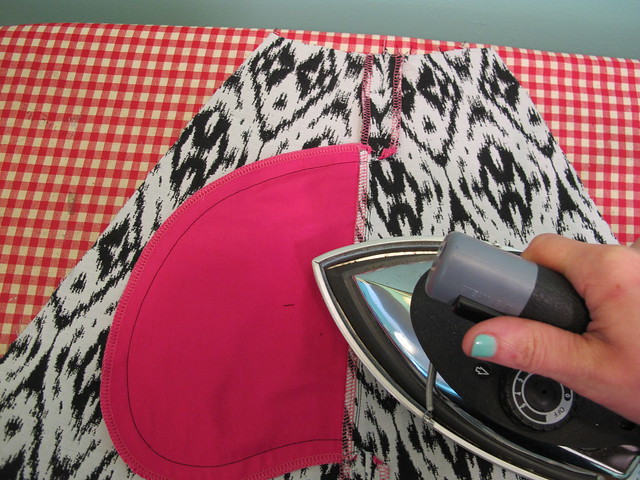
Press the seams open above and below the pocket bag, and press the pocket to one side (it should go toward the center front, so press in opposite directions for each of your two assembled skirt pieces).

OAL 2015
OAL 2015
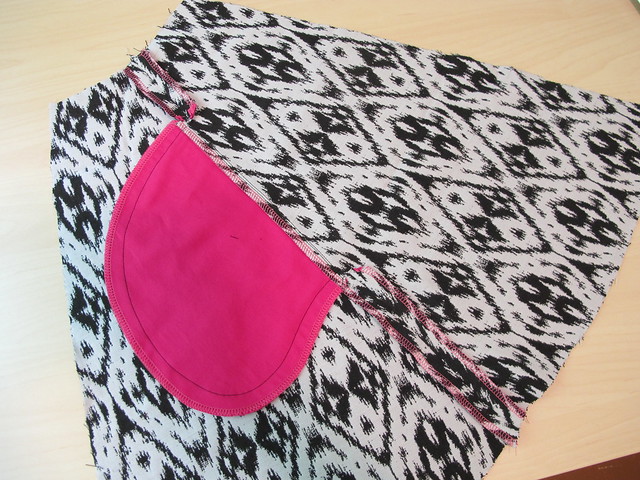
Here it is finished! Yay, sneaky pink pocket 😀

OAL 2015
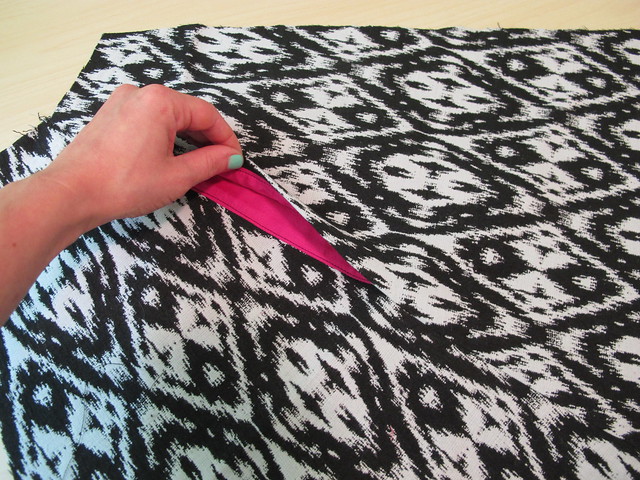
And here is how it looks on the inside 🙂

Once you’ve finished adding the pocket bags, you can attach the front to the side fronts (one on each side of the front) and the two back pieces to the opposite side of the side fronts. Finish your seams as desired and press. Finally, finish the center back seams (again, I just serged mine).

That’s it! Next week, we’ll attach the skirt to the bodice and deal with that back cut-out. Making progress! 🙂

Let me know if you have any questions about anything I covered in this post! How are we doing this week, OAL-gers? 🙂

Completed: Starwatch Watson Lingerie Set

24 Jun

I pretty much never name my makes (if I did that, I would have looooong run out of clever names at the rate I sew haha), but every now and then, I get a hankerin’ to christen something with a silly name. Which is why this new lingerie set is called Starwatch.

Because, like, I’m gonna watch the stars and shit while I wear this. Don’t call it Stargaze, that makes way too much sense.

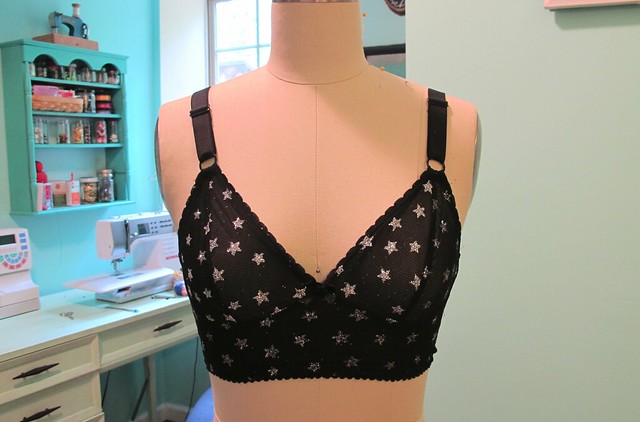
Starwatch Watson Bra & Bikini

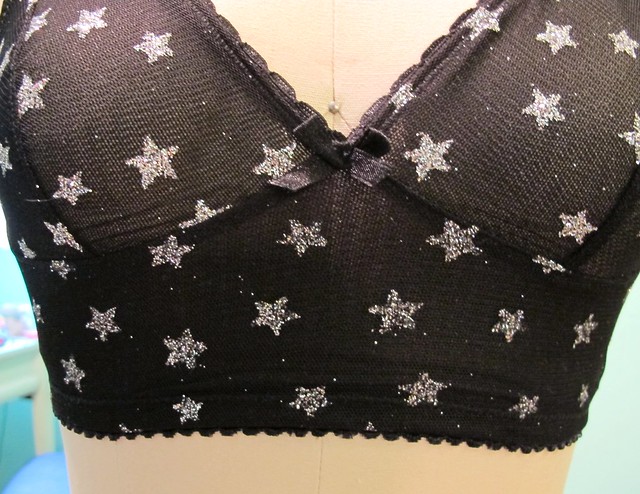
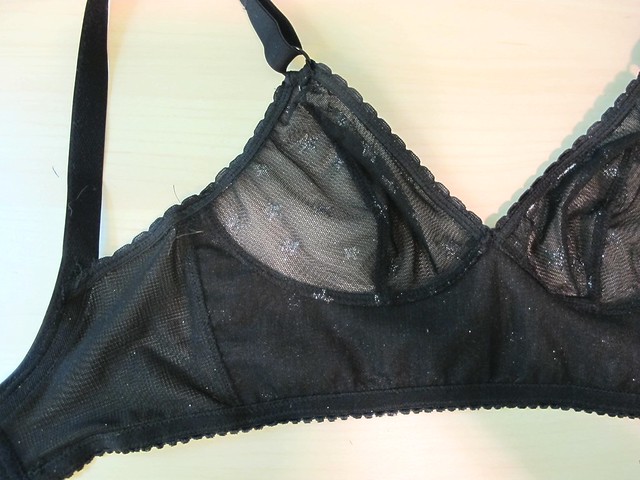
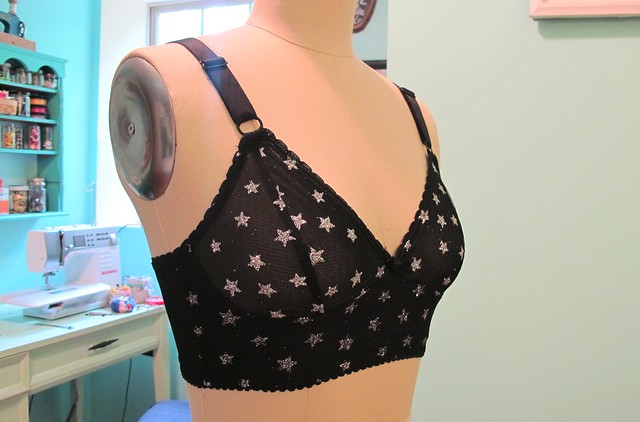
Starwatch is made using the Watson & Bikini brief pattern from Cloth Habit. Every time I make or wear this pattern, I immediately start thinking of more versions to create. I know some people like a little (or a lot) of variety in their lingerie, but I feel pretty content with the two patterns I’m churning out these days – Watson for comfy happy lounge days (or starwatching lololol) and Marlborough for slightly-nicer-rack-but-still-pretty-comfy days. Actually, I’d love to throw a (non foam cup) strapless bra pattern in that arsenal. Any suggestions, my wise lingerie readers?

Starwatch Watson Bra & Bikini

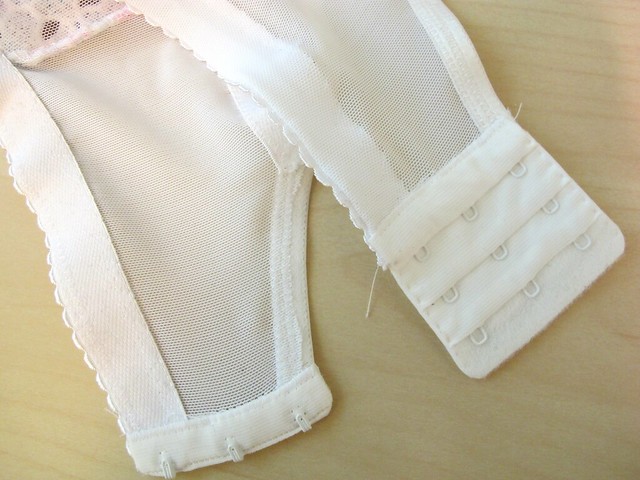
This is my third iteration of this pattern, so no changes to the sizing or fit. This was also my FIRST time making Watson where I didn’t have the hand-holding to comes with buying a pre-cut kit. Eep! I love those damn kits (the two I’ve used – both with great success – are from Blackbird Fabrics and Grey’s Fabrics) and I highly recommend them if you are just getting into lingerie sewing and don’t know where to start with sourcing your fabric or supplies. It’s really nice to have someone else take the guesswork out of all that, so you can focus on the actual sewing part. I also just really love having something packaged up in a box, it just makes me so happy! That being said, you are paying a finder’s fee for someone to source those supplies – and while I don’t think the kits are necessarily expensive (depending on where you buy your bras, the kits might be cheaper. They are for me, anyway!), I also have a huuuuge ol’ stash of lingerie notions that I’ve been hoarding collecting for a few months now, and it was time to woman up and start actually using it.

Starwatch Watson & Bikini

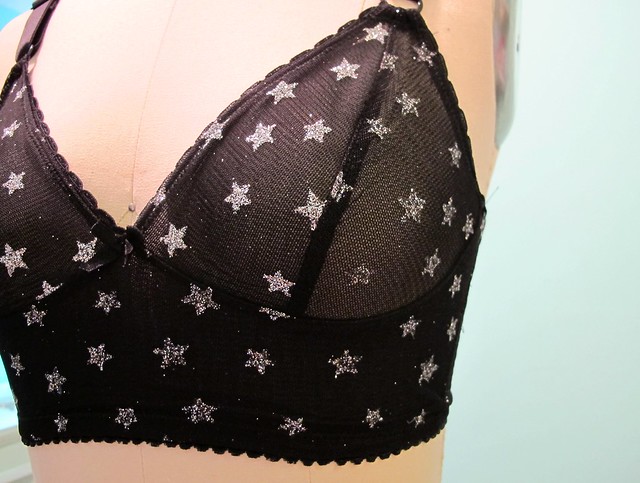
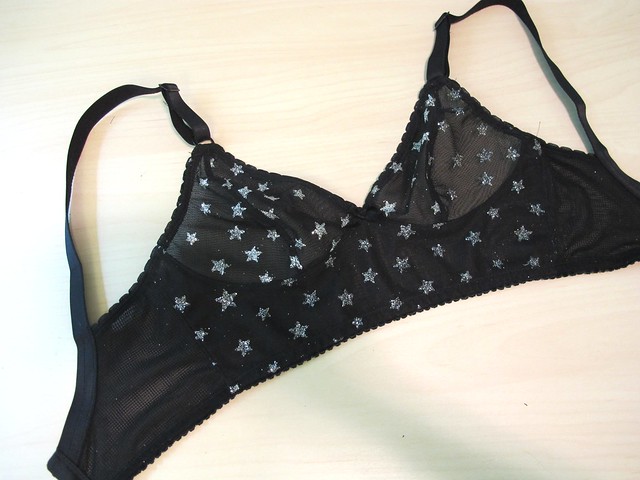
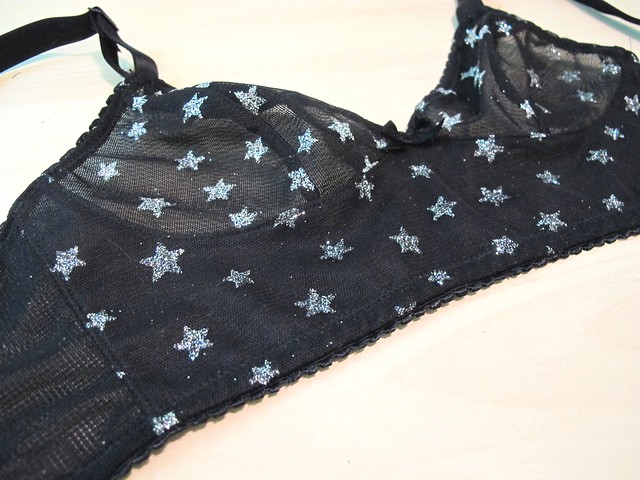
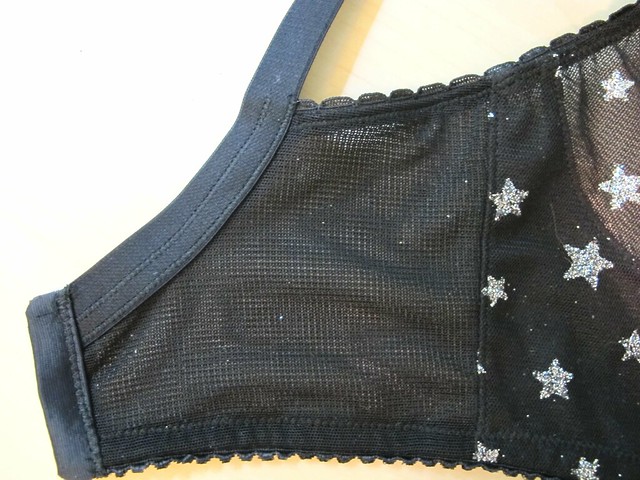
Obviously the fabric is the ~star~ of this ensemble (u see what I did there?). That amazing sparkly goodness was a gift from my beautiful and sassy girl Lola, who brought it from me all the way from the Garment District when she was with me in Philly for Maddie’s Bra-Making class. It’s a gorgeous stretch mesh with glittery stars all over it – and yes, in case you were wondering, I have washed this thing several times and I still get glitter everywhere when I wear it. Yay, party in my pants! It has a fantastic 2 way stretch – which was a bit of a gamble with Watson, as that requires a 4 way stretch, but it thankfully worked out ok.

Starwatch Watson Bra & Bikini

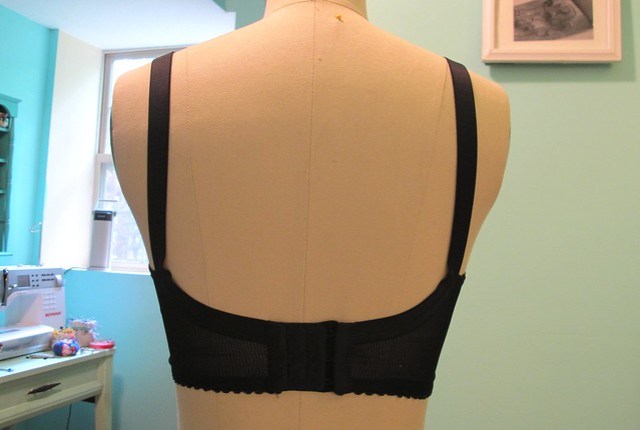
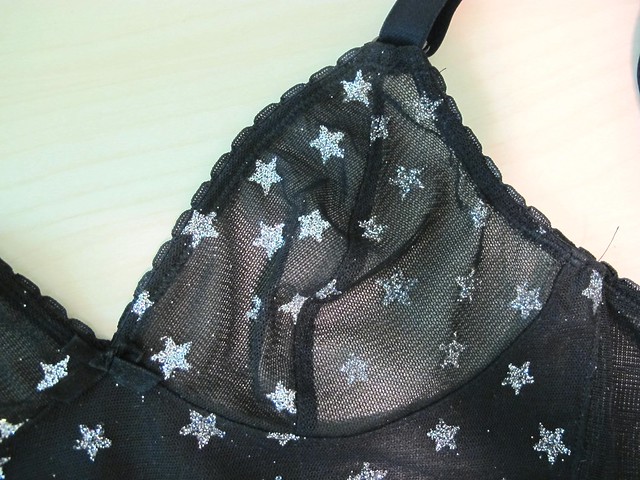
Since the fabric is pretty sheer, I underlined all the pieces with a soft black power mesh, to give a little extra support and a layer of opacity. The cradle is also lined with tricot lining fabric (left over from my Blackbird kit, woohoo!). The back band is 2 layers of power mesh running in opposite directions (normally, I like one layer of power mesh – but this stuff is really lightweight and SUPER stretchy and I was concerned about the fit, so I doubled up). Everything was sewn on my regular sewing machine and the seams were finished with a 3 thread overlock.

All the notions are from my stash – I didn’t have to buy anything new to finish this bra. Yay! I honestly couldn’t tell you where any of this stuff came from – I look for lingerie elastics every time I go fabric shopping, especially in the Garment District, so there’s a good chance that most of this is from NY. I really love the tiny scalloped elastic around the bra cups, I wish I could remember where that came from because I’d totally buy more!

Starwatch Watson Bra & Bikini

Starwatch Watson Bra & Bikini

Starwatch Watson Bra & Bikini

Starwatch Watson Bra & Bikini

Starwatch Watson Bra & Bikini

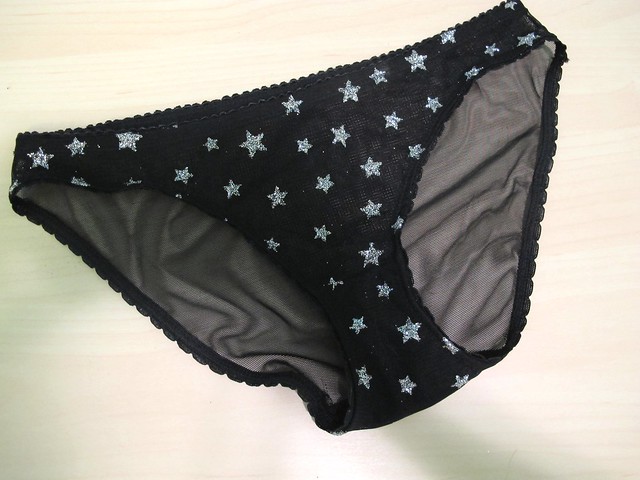
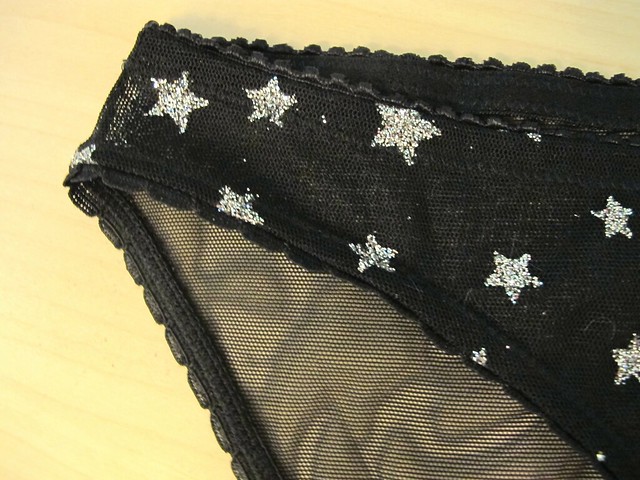
To complete my Starwatch set, I also made matching panties. Not much to say about these – I underlined the star mesh at the front (again, with power net) and used a single layer of power net for the back. The cotton crotch lining came from my stash.

Starwatch Watson Bra & Bikini

Starwatch Watson Bra & Bikini

Really happy with this set, and glad I was able to put that beautiful glittery star mesh to AWESOME use! (and I still have loooots more, so maybe more glittery underwear is in my future 😉 heh)

Starwatch Watson Bra & Bikini

OAL2015: Assembling the Bodice // Adding Sleeves

22 Jun

Hey hey everybody! I’m finally back from my 2 weeks of traveling Peru with my best friend, and it was amazing. I spent a week in Lima (first half in the Miraflores District, which is absolutely beautiful, and the second half in the San Borja District), where we stayed with the family of a friend and basically ate our weight in ceviche. The second week, we flew up to Iquitos and spent a couple of days in the city, as well as a week deep in the jungle off the Amazon (and before you ask, yes, I was there for the ayahuasca). We did not visit Machu Picchu (I guess this is the main reason why people visit Peru, because EVERYONE asked us if we were planning on going!) – we considered it, but it was too expensive and we had to choose because Cusco and Iquitos… Iquitos won out, and I’ve no regrets 😛  It was an incredible 2 weeks, although I’m pretty happy to be home where I can throw my TP in the toilet and drink straight from the faucet 😉 hahaha

Anyway, it’s back to the real world for me! Which means it’s time to jump straight into business mode and kick this OAL off once and for all! Yay!
OAL_Banner

Today, we’ll be assembling the bodice of our dresses. This part is pretty easy and straightforward (well, honestly, the whole dress is pretty easy and straightforward!), although this post is quite a bit picture-heavy. Sorry in advance, ha. This method of bias facing is for those of y’all who are making their dress without a lining. If you plan on adding a lining, ignore these sewalong posts and use the instructions included in the pattern 🙂

OAL 2015
First things first – if you haven’t already done so, go ahead and fuse your little rectangles of interfacing to the back bodice where indicated. This will give that area a bit of stability for adding buttons later (or, if you’re like me – mock buttons. Either way, don’t skip the interfacing!).

OAL 2015
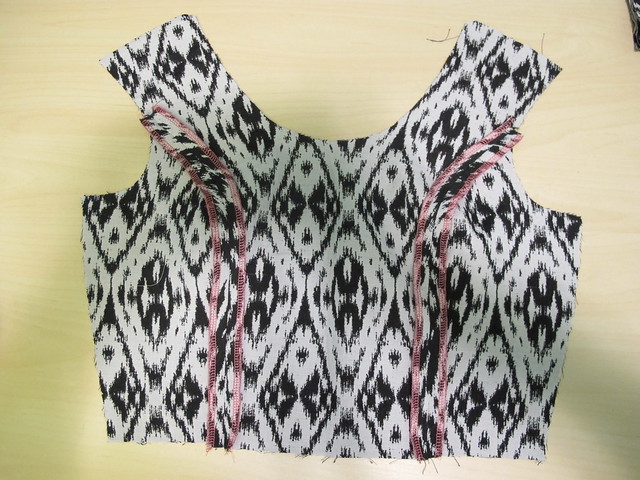
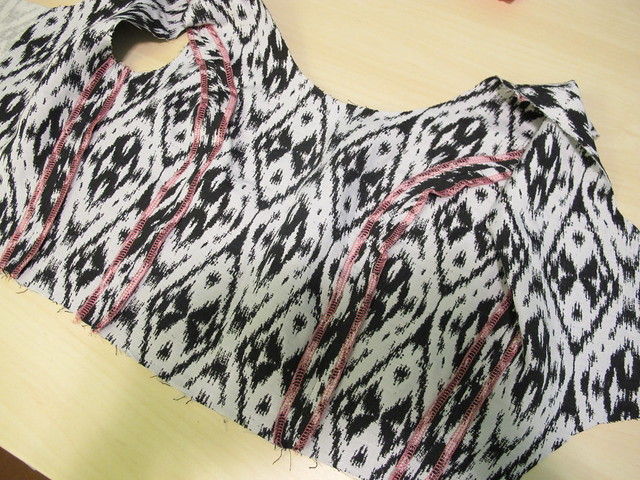
Sew the bodice front to the bodice side front princess seams (need a refresher on sewing princess seams? I got ya!) and finish the seams as desired. Since my fabric is a bit bulky, I chose to serge mine separately (with hot pink serger thread because, obvs) and press them open. You can certainly finish the seams as one and press them to one side, though.

OAL 2015
Next, attach the front bodice to the back bodice pieces, at both the shoulders and the side seams. Again, finish the seams as desired and press.

OAL 2015
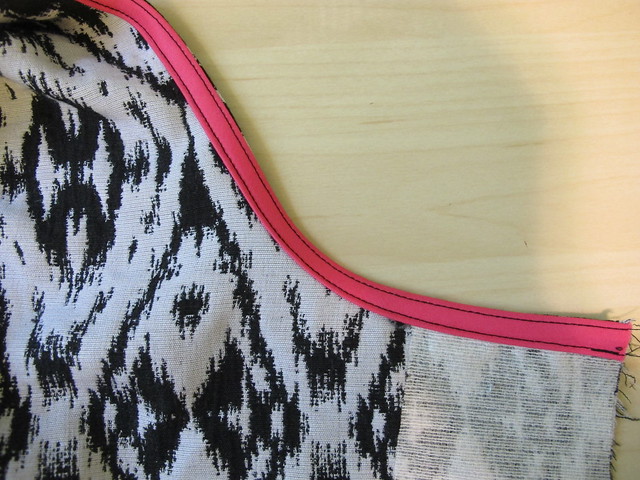
Next, we are going to finish the entire neckline (all the way around) with a bias facing. Measure your neckline, starting at the interfacing of one of the back pieces and continuing all the way around the front to the opposite back piece. There are a few ways to do this – you can use a flexible measuring tape, you can measure with the bias tape itself, or you can use a Curve Runner (am I the last person on earth to find out about this little tool? HOLY SHIT that thing is so cool!). Cut your bias tape the length of your measurement and pin around the neckline, right sides facing.

Note: For this particular method of finishing, you will want bias strips that are 1″ wide. You can certainly buy the pre-made packages if you’d like, but I personally like to make my own – it handles and sits better than the pre-made stuff, plus, you have a much better selection of colors and prints (and it’s a GREAT way to use little scraps that are too awesome to throw away). If you haven’t made your own bias strips, it’s super easy! There are tons of methods all over the internet on how to do it; the one I personally use is the continuous bias method since it means you don’t get stuck doing a lot of piecing.
OAL 2015
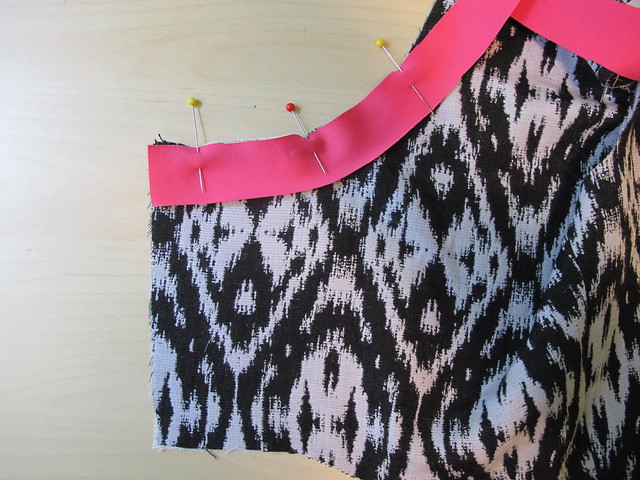
Sew the bias all the way around the neckline – again, starting at one back and continuing across the front all the way around to the opposite back – right sides together, with a 1/4″ seam allowance. Stretch the bias tape *slightly* as you sew, which will help snug up the neckline so it doesn’t gape open.

Note: The pattern is drafted with 5/8″ seam allowances, so you may want to trim 3/8″ off all around the neckline before adding your bias facing. I did not do this and the fit is fine. Just an fyi, though!

OAL 2015
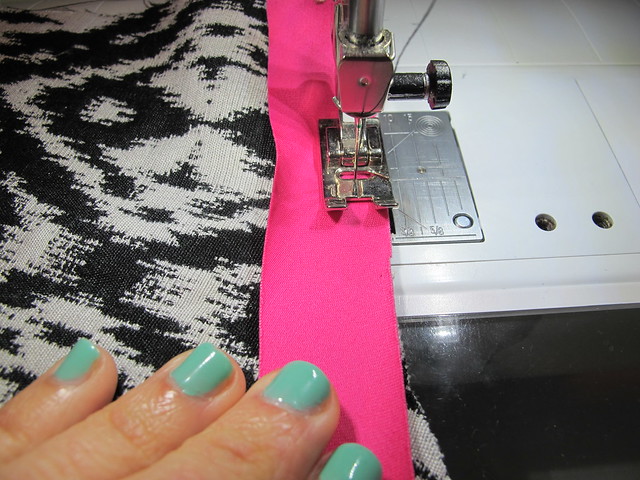
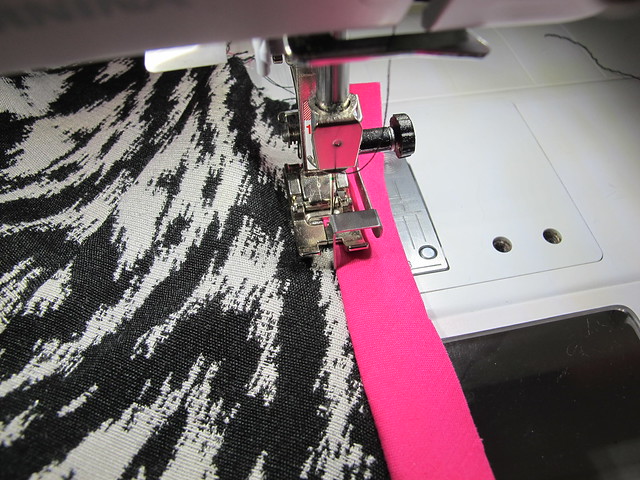
If your fabric is on the bulky side, or your bias is a crazy contrast (like my hot pink), you may want to understitch the facing so it stays in place and doesn’t peek out from the right side. Push all the seam allowances toward the bias and stitch through all the layers 1/8″ from the seamline. I use an edgestitch foot for accuracy, but you can also eyeball it. If your fabric is lightweight and responds well to pressing, you can skip this step.

OAL 2015
OAL 2015
Here is the bias attached and understitched. Take it over to the ironing board; we’re going to press the hell out of this shit now.

OAL 2015
Fold the bias over to the wrong side of the bodice, so that the edge meets the stitching line where it is attached. (yes, it should actually line up with the stitching – my fabric is a little bulky, so the turn of the cloth means that it doesn’t quite meet up. That’s ok, though!

OAL 2015
Now fold the entire thing one more time to the inside, so all of the bias is on the inside of the bodice. Press.

OAL 2015
Topstitch 1/8″ away from the folded edge.

OAL 2015
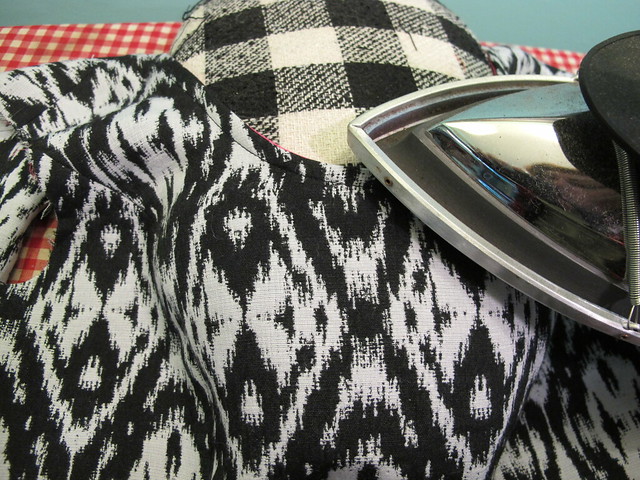
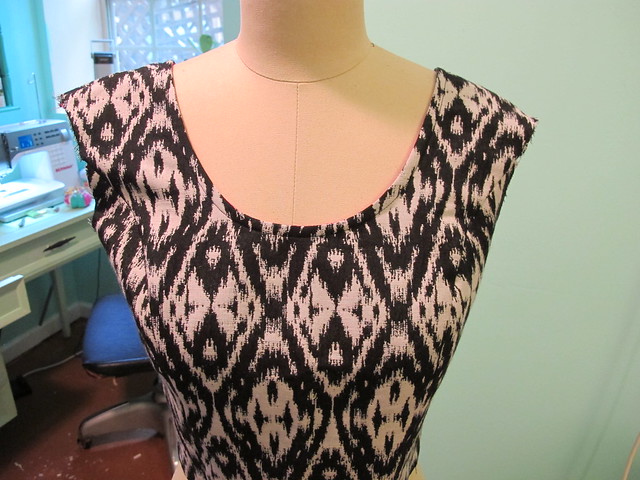
Take the bodice back to the ironing board and give the neckline a good press, preferably over a tailor’s ham if you have one (and if you don’t have one, might I suggest this lovely tutorial for making your own? har har), to smooth out the curves and make sure that all the bias is pressed to the inside of the garment.

OAL 2015
OAL 2015

Et voilà!

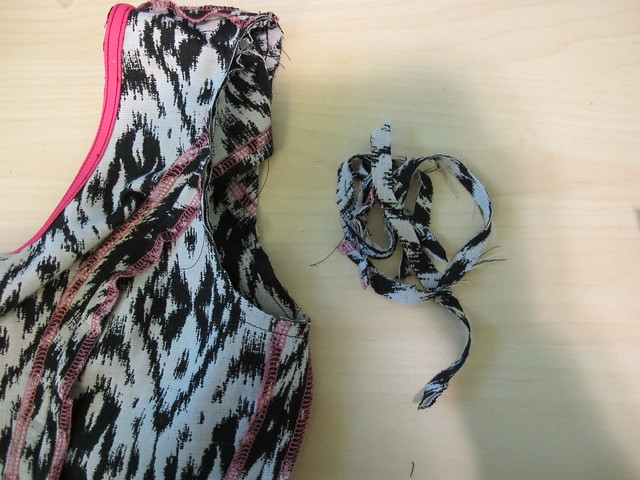
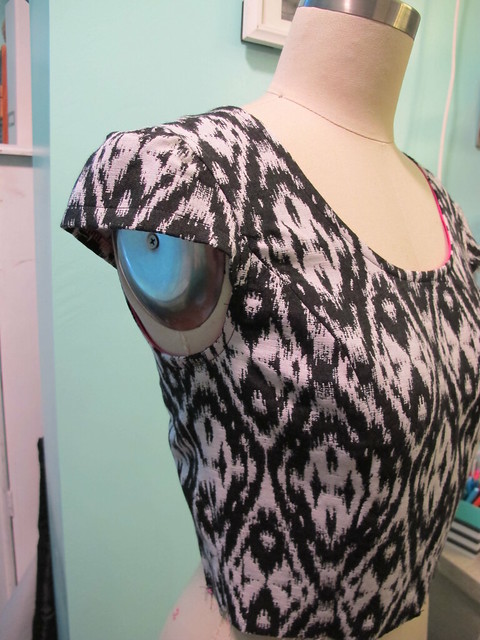
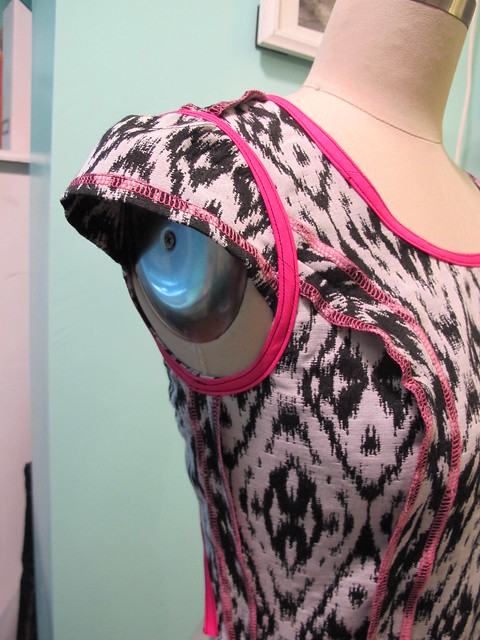
Next, you are gonna want to tackle those arm holes. For those of you leaving your dress sleeveless, you will want to finish the arm holes the same way that you finished your neckline – i.e., with the bias facing (here’s a tutorial on adding bias facing to armholes if ya need it!). For those of you who are adding the standard short sleeves (view B), you will want to follow the instructions to set in the sleeves (or you can follow this tutorial on setting in sleeves, which I find a bit more clear). Don’t forget to finish the seam and press. For the cute little cap sleeves (view D), you will not only set in the sleeve but also need to deal with the underarm finishing (since the sleeve doesn’t go all the way around the arm hole). Normally this is finished with the lining, but since we are little rebels who aren’t playing by the rules, we are gonna finish that with bias facing.

OAL 2015
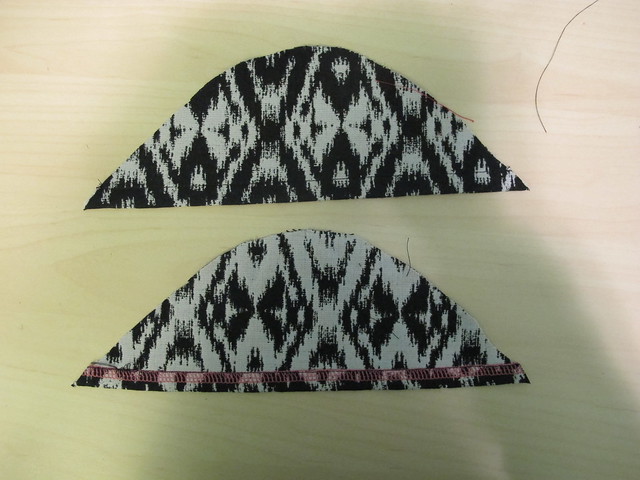
Start by finishing/hemming the bottom of your cap sleeves, in whatever way you prefer. I just serged, turned the hem to the wrong side, and topstitched.

OAL 2015
Attach the sleeve to the armscye the same way you set in a standard sleeve – sew a line of basting stitching at 5/8″ all around the curve of the sleeve cap (in a standard sleeve, there are dots to indicate where the basting goes – but for this little cap sleeve, you’ll baste from tip to tip), pin the sleeve into the armscye and pull the gathers so that it fits smoothly inside with no puckers. Sew at 5/8″. (if you need more tutorial help with setting in a sleeve, see the link above 🙂 ). I continued my stitching line all the way around the entire armscye to help with trimming in the next step, although this is not necessary and you can totally eyeball it.

OAL 2015
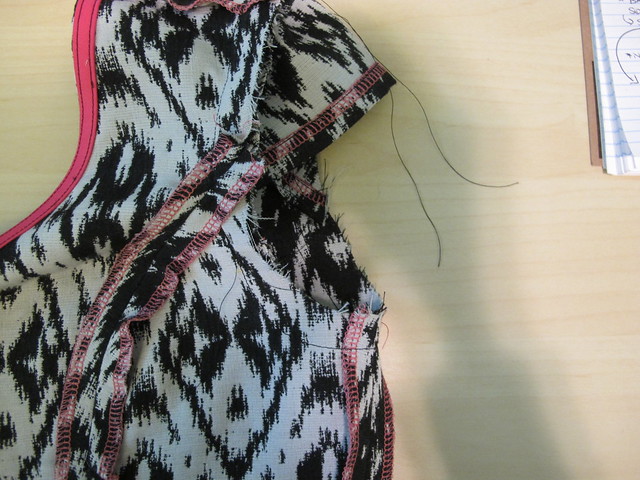
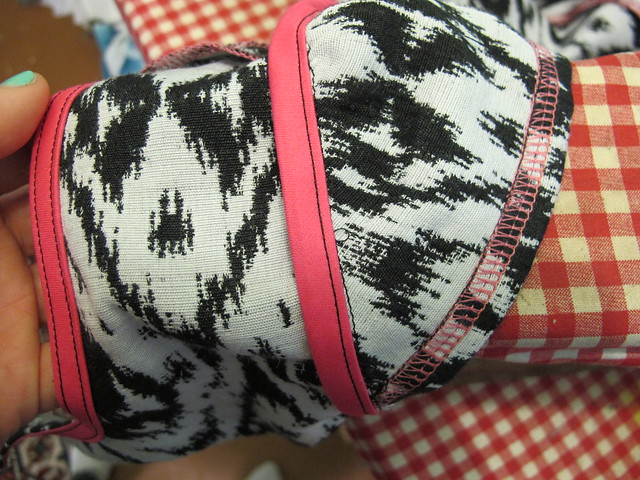
Trim all your seam allowances down – all the way around the entire armscye, including the bottom part that hasn’t been attached to anything yet – to 1/4″. Measure the armscye (this is where one of those Curve Runners would come in super handy, argh. Or you can measure the trimmings that you cut off, ha) and cut your bias strips to length, minus 1″ (to account for stretching the bis as you sew it on). Sew the ends of the bias together to make a circle, and attach to the entire seam/unfinished edge of the arm hole at 1″, again, stretching *slightly* as you sew. Understitch and press as previously directed.

OAL 2015
Before you make the final press to pull the facing all the way to the inside of the arm hole, be sure to pull the sleeve out so that you don’t accidentally tack the sleeve to the bodice. Been there, done that, and it sucks.

OAL 2015
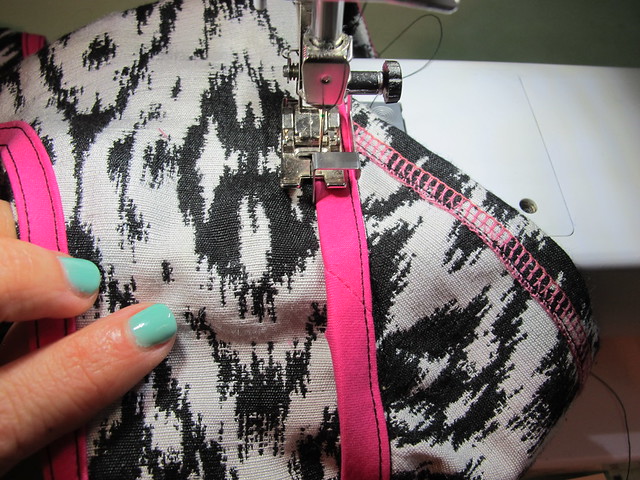
Stitch the bias facing all the way around the arm hole 1/8″ from the edge, being sure that the sleeve is out of the way and you are *only* sewing through the bodice and the bias facing. Press over a tailor’s ham, to set the curves and get everything to lay nicely.

OAL 2015
OAL 2015
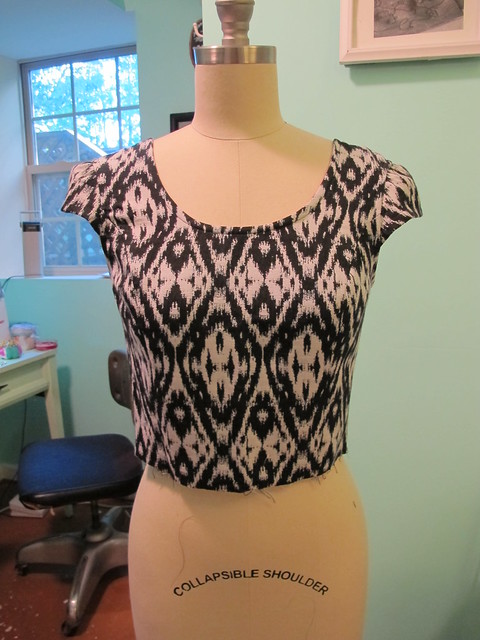
Finished cap sleeves! I really like this method because the extra stitching really strengthens where the sleeve attaches to the arm hole – since it doesn’t go all the way around, sometimes they can start to tear off if there’s too much strain on them (I had a dress like that in my early days of sewing that would NOT keep the cap sleeves attached. Every time I moved, they would rip out. I eventually dumped the dress, too bad I didn’t know how to fix that problem!). And by “strain,” that usually happens from hugging people.  Shitty way to ruin a dress if you ask me hahaha. Anyway, once I started sewing them in this way, my cap sleeves tend to be a lot stronger and I don’t have problems with busted seams. You do have to be ok with visible topstitching – but in a dress like this, there’s already a bunch of topstitching, so it works.

OAL 2015
Here’s the inside of the bodice 🙂 Fun!

Ok, whew, I think that’s enough for today! Do let me know if you have any questions about any of these steps 🙂

How’s your sewing coming along for the OAL?