Tag Archives: Mood Fabrics

In Progress: Butterick 6019

13 Apr

Hey guys, guess what.

I’M GOING TO PROM.

This is 100% not a joke. I am going to a literal high school prom.
Butterick 6019

Before anyone starts thinking that I’m dating someone WAY too young for me, I should probably use this opportunity to point out that my date is my BFF, who happens to be a high school English teacher and gets 2 free tickets to prom every year 🙂 I will take any excuse I can get when it comes to dressing up, though – especially if it means I get to make a party dress! The bulk of my sewing used to involve a lot more frosting than cake, and while I’ve reverted to making a lot of useful basics, I still get starry-eyed when I think about ridiculous party dresses. Prom is the *perfect* excuse to get some fancy sewing out of my system!

My pattern of choice is Butterick 6019, which I have been wanting to make for ages. I’m going with view A, which includes removable halter straps and a circle skirt. The fabric is a black solid silk faille from Mood Fabrics. I ain’t gonna lie – I originally tried to buy something with actual color, red being my first choice. But it being prom season and all, Mood ended up selling out before my order was fulfilled and I had to choose a different color on the spot. Since I didn’t have time to get swatches for color comparison (and I didn’t want to end up with a bad color, considering this silk is $50/yard and non-returnable!), and the selection was super limited at that point, I ended up getting basic black. This means I probably am sewing the most practical formal dress ever. Oh well! 🙂 At least I’m ready for my next black tie wedding, ha!

One more thing I want to point out about silk faille – it’s pronounced “FILE.” Not fail or foll (both of which I have tried and been laughed at for. Ok, y’all, it’s been like 10 years since I studied French and I wasn’t very good at it to begin with! Give me a break). I already made an ass out of myself, so now you don’t have to! ♥
Butterick 6019 - In progress

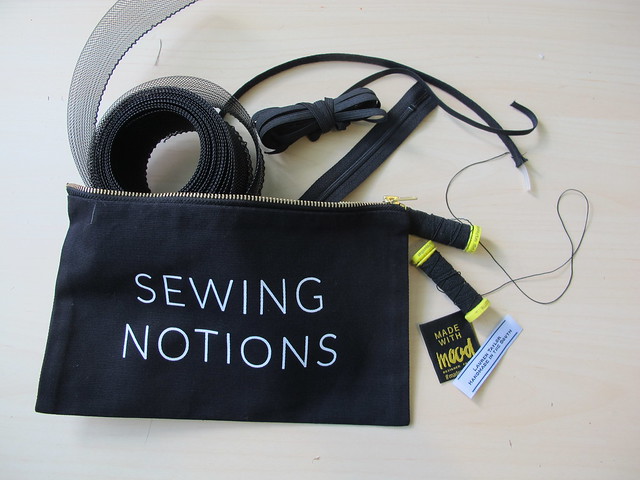
This project is definitely a labor of love – there’s a lot of work (and notions!) that go into a dress like this. The bodice is lined with self fabric, and features boning, shirring, a lapped zipper, bust padding, and that beautiful bias-cut crossover piece. For the skirt, I decided to add horsehair braid to give it some extra body and really make it flare out. Whenever I start a project that includes a lot of notions, I like to corral them into one place so they are easy to find. In the past, it’s been Ziploc bags – which are super useful, but not really that pretty! I recently received this sewing notions pouch from Tailor Made Shop and it’s perfect for this use! The pouch is roomy enough to hold everything I need (it even fits a pair of 8″ Gingher scissors – not really necessary for this particular use, but GREAT for when I’m teaching and I need to take some tools with me!) and it zips securely so nothing spills out. And it’s way prettier than a Ziploc bag 🙂
Butterick 6019 - In progress

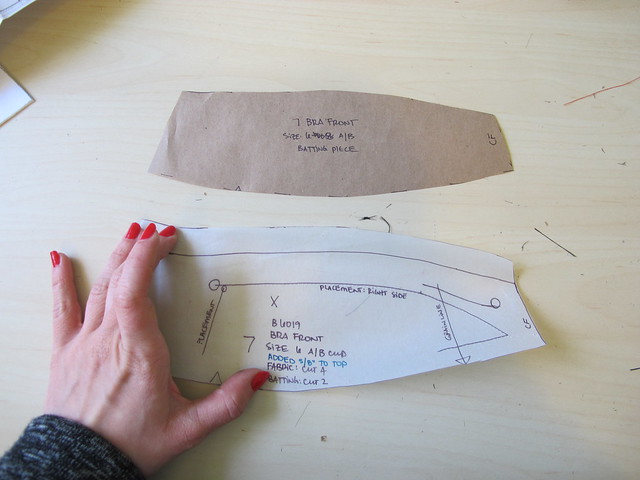
I don’t want to freak anyone out here – but I actually TRACED my pattern pieces for this project. lolwut right!? I had a hard time determining my size (even with the finished measurements and cup sizing – the sizing on this pattern just doesn’t make sense to me at all), and so I needed to keep the sizes intact in case I cut the wrong one. Fortunately, the bodice of this pattern involves a lot of small pieces, so it wasn’t a huge time suck. I ended up going with a size 6 A/B cup at the bust (FWIW, I wear a D/DD bra so yeah, um, the cup sizing is a bit skewed here!) and graded out to an 8 at the waist. Since the skirt is just a giant circle, I didn’t trace those pieces.

I made a muslin of the bodice – shirring included, but no boning. The shirring is extremely necessary if you’re muslining this dress, as it drastically affects the fit. The sizes I traced and cut ended up being perfect, albeit the top of the dress itself is quite low (which I had read about in reviews, so no surprise there!). The pattern changes I made were to add 5/8″ to the top of the bodice all the way around, and then shorten every piece by 1/2″ at the lengthen/shorten line so the skirt seam would hit my waist. I also traced the cup pieces a second time and removed the seam allowances all the way around. These pieces ended up making the bust padding, which is constructed the same way a foam cup bra is made (with the pieces butted up together and zigzagged across the seam). Rather than cut my pieces and then remove the seam allowance – which is wasteful as hell, sorry – I did this instead. Look at the difference in their size!
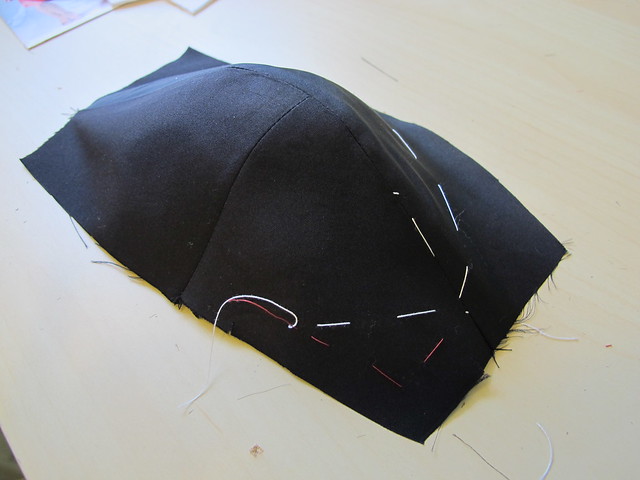
Butterick 6019 - In progress

The pattern has a lot of markings for placement – boning placement, the bias strip, and just basic construction seam allowances. Since I didn’t want to risk a permanent stain on my dress, I marked the wrong side and then thread traced the markings with silk thread. The silk thread allows the markings to be seen from both sides, and can easily be removed. I used a different color for the type of markings – tan for the strip, white for boning, red for construction. This was MASSIVELY helpful when putting together the puzzle that is this dress.
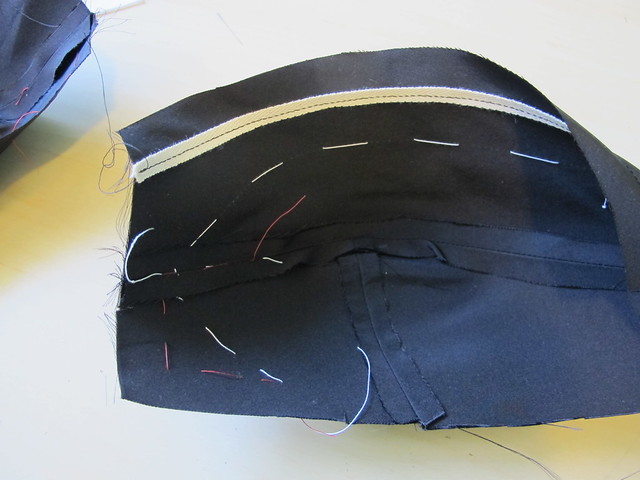
Butterick 6019 - In progress

To keep the cups curved against my body and to prevent them from stretching out, I added twill tape to the seam allowance. This isn’t instructed in the pattern, but it’s good practice for anything that runs the risk of gaping (such as bustier tops like this, or woven wrap dresses). You basically just cut 1/4″ twill tape the length of the neckline minus 1/4″, then place it inside the seam allowance, up against the seam line. Since the tape is shorter than the neckline, the neckline gets eased into the length of the tape. The easing means the neckline curves with your body, and the twill tape provides some stability to an area that would otherwise stretch out over time.
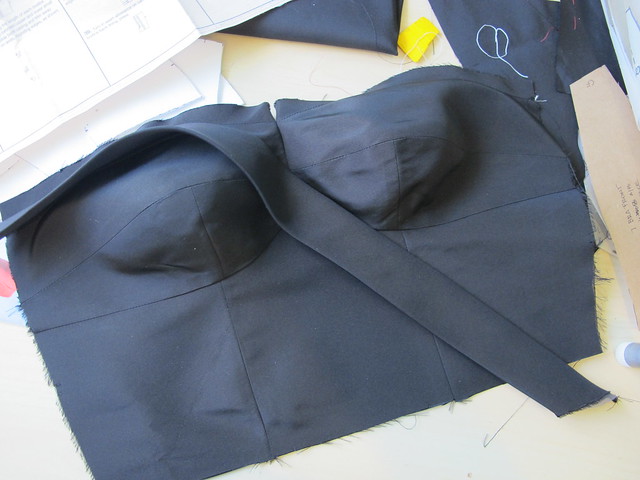
Butterick 6019 - In progress

Assembling the bodice is pretty easy and straightforward. I trimmed down, clipped, and graded my seam allowances pretty aggressively to prevent a bunch of bulk (silk faille is quite stiff), and pressed the life out of everything. #1 reason why I went with silk faille instead of cheaper polyester faille – it’s just easier to work with. I really shudder at the thought of trying to make this dress with something that doesn’t press well.

And now it’s time to shirr! I STRONGLY recommend testing this out on a scrap of your fabric first, as you might need to tweak your machine settings a bit.
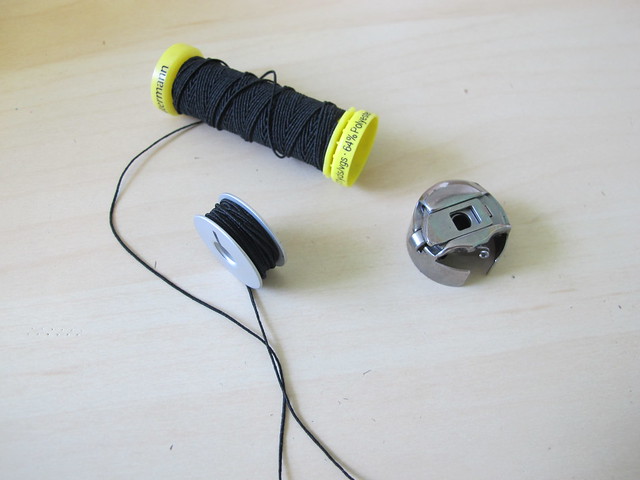
Butterick 6019 - In progress

For shirring, you need elastic thread. Be *very* aware of the yardage amounts that your spool contains, by the way – I didn’t realize this brand only has like 11 yards, which is not enough for this project and I unfortunately ran out and had to stop and buy more (also, black elastic thread is harder to find than white, ugh). I used 2 spools, even though the pattern has you only buy one. Just FYI! Anyway, the elastic thread goes in the bobbin, and it is wound by hand with only a slight tension in the thread. The upper thread is your basic all purpose polyester.
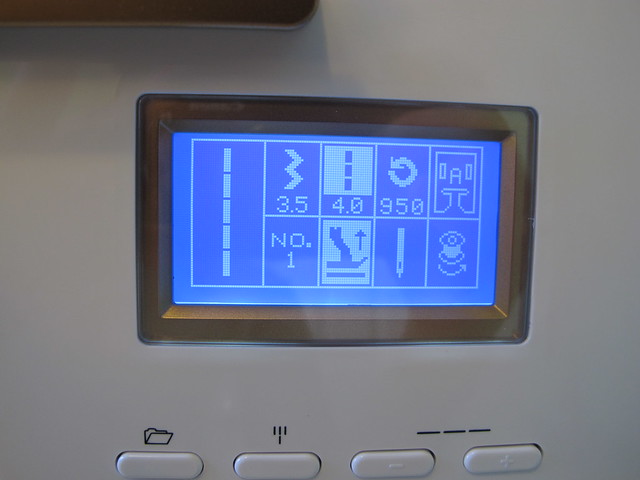
Butterick 6019 - In progress

Set your machine with a longer stitch length. For the Spiegel 60609, I used a 4.0 length.
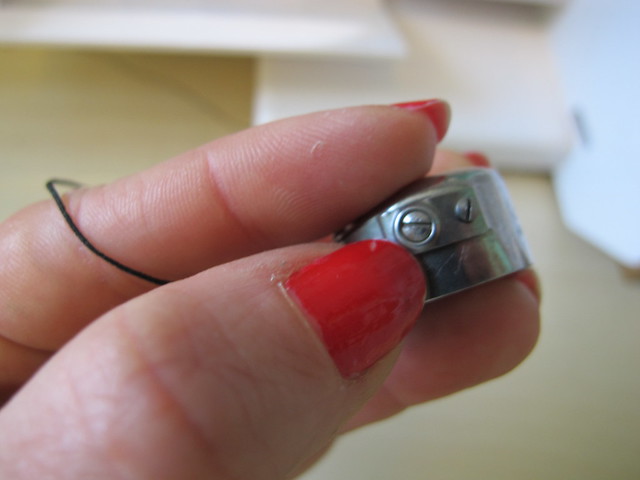
Butterick 6019 - In progress

At this point, you’ll want to test the stitches and make sure the tension is good. If it’s not, you can adjust the tension in the bobbin (the little screws you see here). The needle tension (the numbered dial at the top of the machine) can also be used. If you mess with the bobbin tension, its a good idea to mark the location of the screws before you start twisting them around – just use a really fine point marker and draw directly on the bobbin. Otherwise, you might have trouble getting the tension balanced again when you’re done shirring – and you’ll need to take the machine in for a service to set things back to default (and this question has come up a few times – you can get a Spiegel machine serviced at pretty much any sewing machine dealer, regardless of the brand that they sell. *Most* dealers will service all machine brands, even if they sell something different). My Spiegel 60609 did not require any tension adjustments for shirring, so yay!
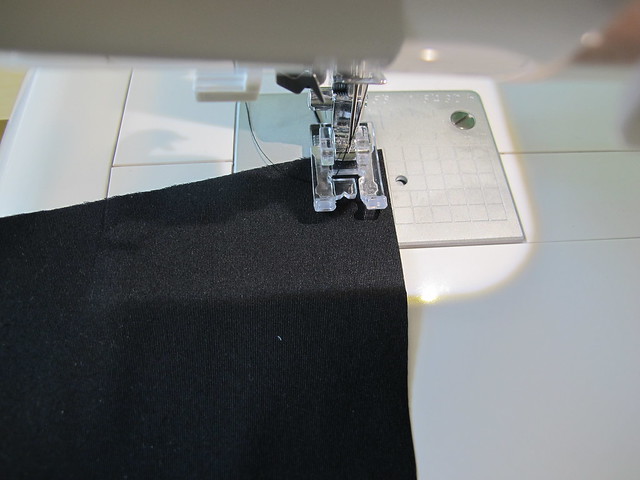
Butterick 6019 - In progress

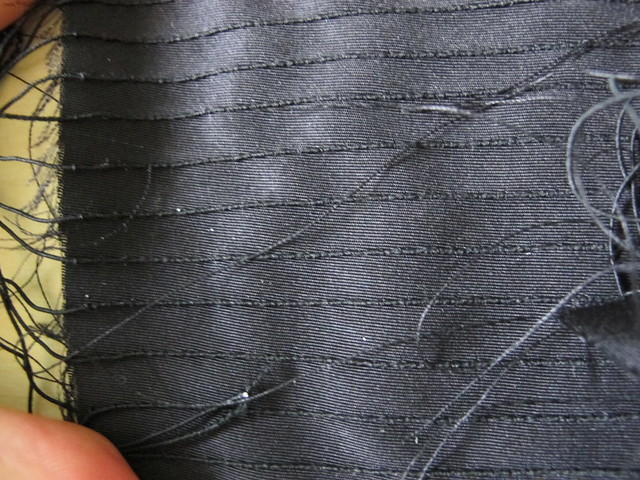
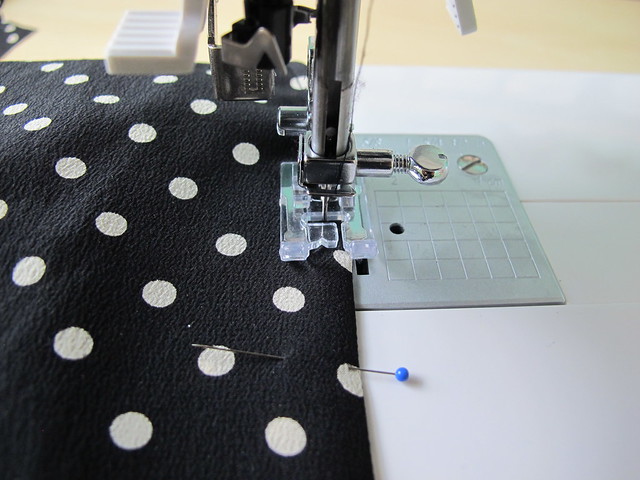
To shirr, you’ll sew long lines of parallel stitching 1/4″ apart. Some people draw guidelines for this, but I just use the edge of my presser foot as a guide. The foot on the Spiegel 60609 is the perfect width for this. Start your first line of stitching a little outside of the seam allowance, and continue sewing parallel lines until the whole piece is covered. Leave long thread tails at the beginning and end of each line, otherwise your shirring will come undone.

Here are what my shirred pieces look like after stitching. Also, I know my nail color keeps changing. I told you, I had to go out and buy more elastic thread! Sewing came to a stall for a few days! blech!
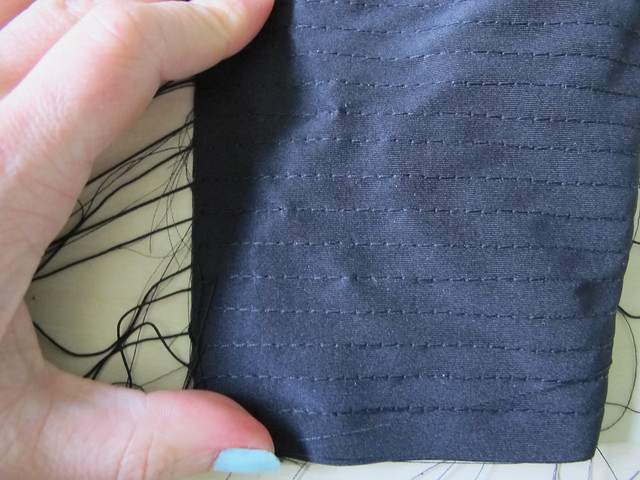
Butterick 6019 - In progress
Right side

Butterick 6019 - In progress
Wrong side

After you’ve finishing sewing all those lines, you’ll have a really hairy looking piece of fabric that still doesn’t stretch. The real magic happens with you steam the crap out of it, which shrinks up the elastic thread and makes the whole piece really stretchy and awesome. It’s fun to watch it shrink up! However, I recommend skipping this step for now and waiting until the bodice is constructed first. It is a lot easier to sew those pieces when they are flat and non-stretchy. You’ll see the shirred pieces in all their glory at the end of this post 🙂

Ok, back to the bodice construction!
Butterick 6019 - In progress

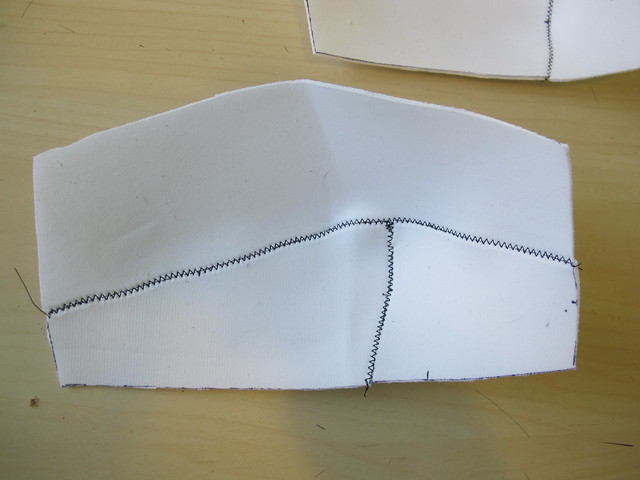
As I mentioned at the beginning of this post, the bust cups are slightly padded (to give that area some structure and also for modesty reasons, if you’re wearing this dress without a bra). The pattern calls for cotton batting, which I did not have on hand. Instead, I used foam padding that is used for bras. The pieces have the seam allowances removed, and then the edges are butted up next to each other and sewn across the split with a zigzag stitch.
Butterick 6019 - In progress

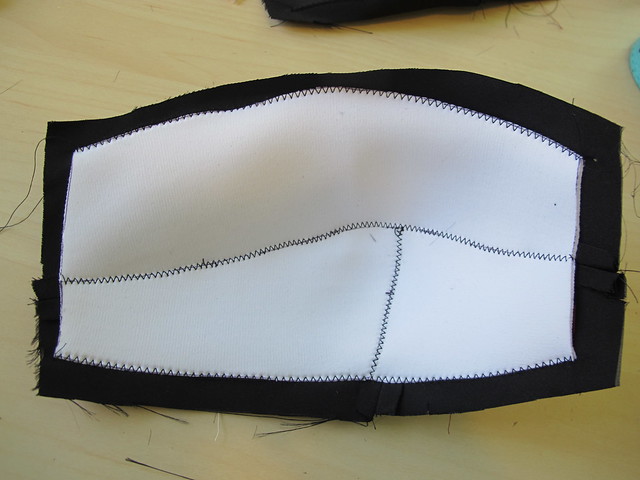
Then the little padded cups are nested in the cups of the bodice lining, and sewn in. The pattern has you catchstitch this part, but I don’t particularly care if you see stitching inside my lining so I zigzagged those pieces in. YOLO, y’all.
Butterick 6019 - In progress

Butterick 6019 - In progress

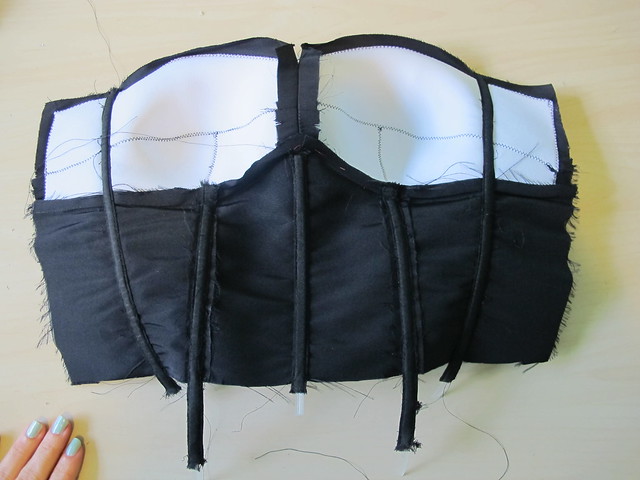
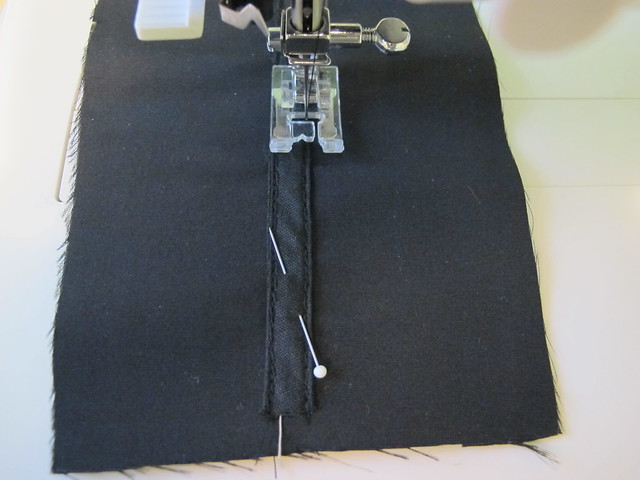
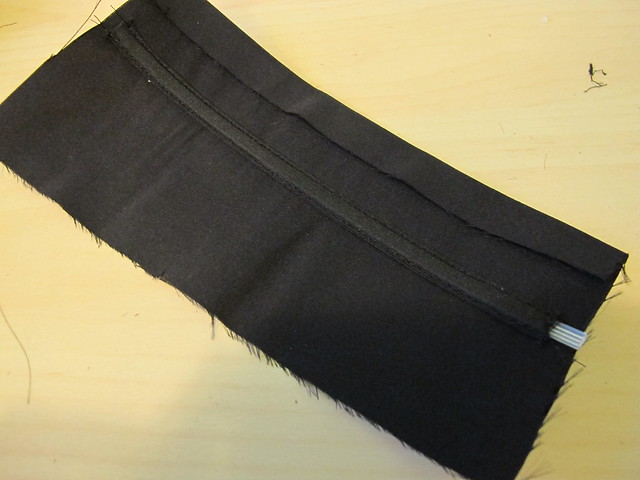
I used plastic sew-in boning for this dress – the kind that comes pre-covered (purchased at Mood Fabrics, if you’re curious!). Spiral steel boning is nice, but a pain to work with (it has to be cut *exactly* to size and capped, and no). This stuff is much easier to use. I straightened out the pieces by blasting them with steam while they were still in their fabric casing (you can also dunk them in hot water to relax the plastic), and then removed the boning and sewed the empty casing to the bodice lining. Like I said, the boning can be sewn through – but it’s easier to get a consistent straight line if the casing is completely flat. After the casing is sewn down, you can just slide the boning in. I trimmed off the sharp corners at the top of the boning so it won’t tear through my dress fabric, and left the ends long (those will be trimmed when I attach the skirt).

Here is the bodice lining once assembled:
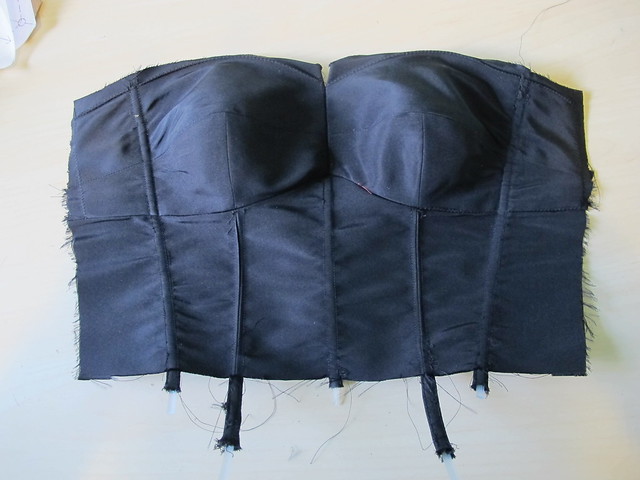
Butterick 6019 - In progress

Butterick 6019 - In progress

I added a couple extra pieces of boning for additional support – the center front was especially necessary to keep things smooth. Looking good so far!
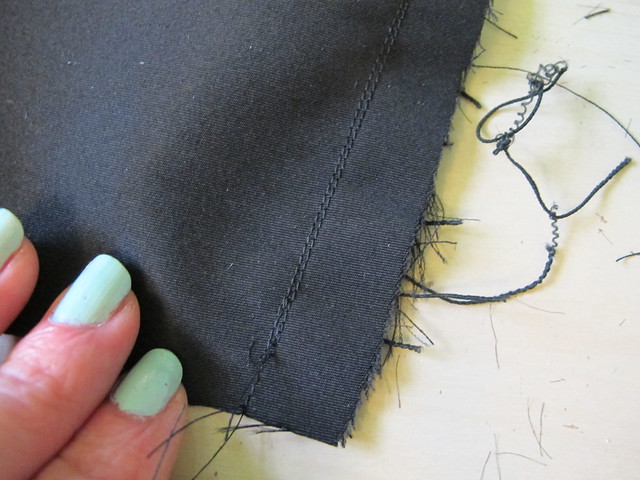
Butterick 6019 - In progress

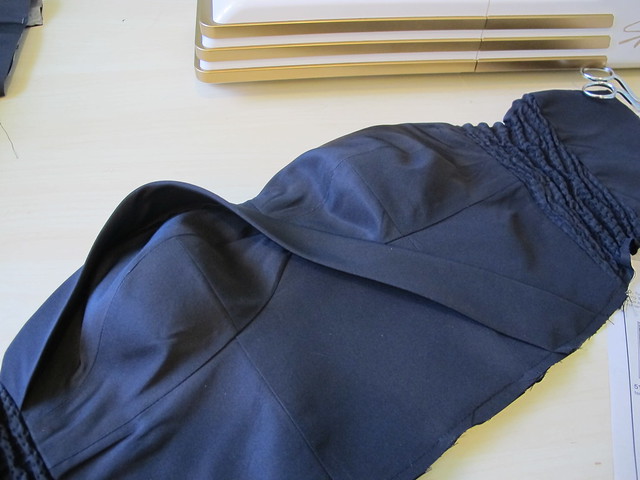
Finally, time to attach those shirred pieces and cut off the thread tails! The pattern has you tie off each individual line of shirring… I don’t know about y’all, but pretty sure ain’t nobody got time for that. Instead, I shortened my stitch length and sewed two lines of stitching when attaching the shirred panels to the rest of the bodice. Once those were secure, I gave all those thread tails a haircut and then steamed the elastic.
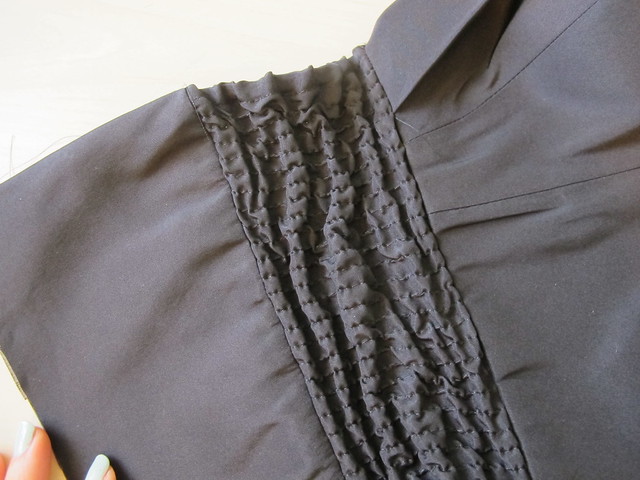
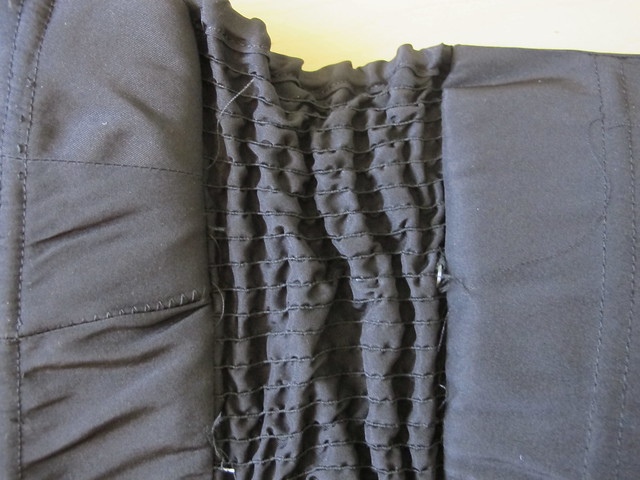
Butterick 6019 - In progress

Butterick 6019 - In progress

It shrunk up quite nicely!

Butterick 6019 - In progress

Here is the finished bodice flat.

Butterick 6019 - In progress

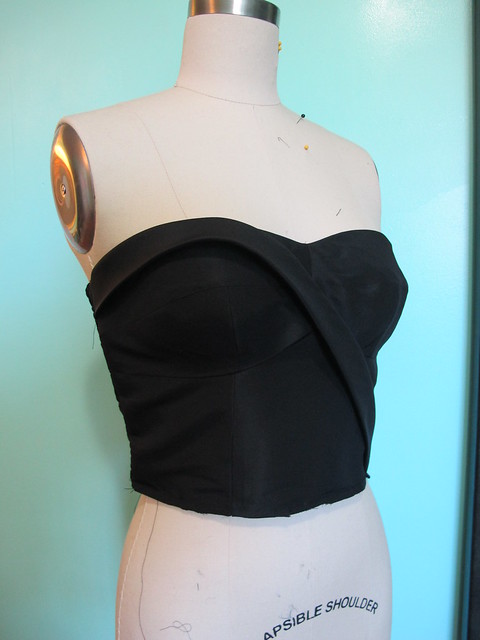
And here it is on my dressform! 🙂

WHEW that was a lot of post! Next week, I’ll go over the rest of the construction. Can’t wait for prom! Yay for fancy dress making! 😀

Completed: Silk Polka Dot Blouse + Corduroy Skirt

29 Mar

Its time for the ~big reveal~ – my first completed outfit, sewn entirely on my new Spiegel 60609 sewing machine 😀

IMG_2438

I love that this machine is pretty enough to make even a subpar photo look great 🙂 Ha!

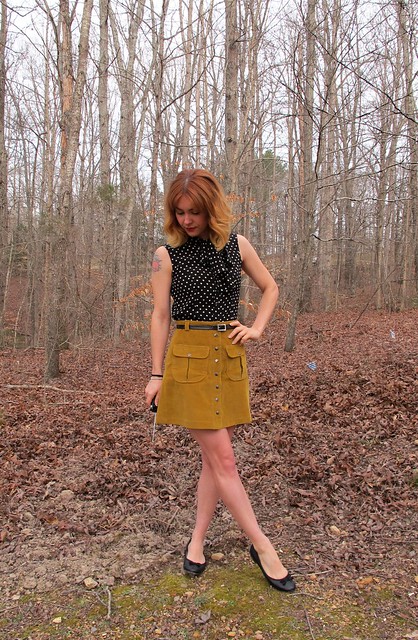
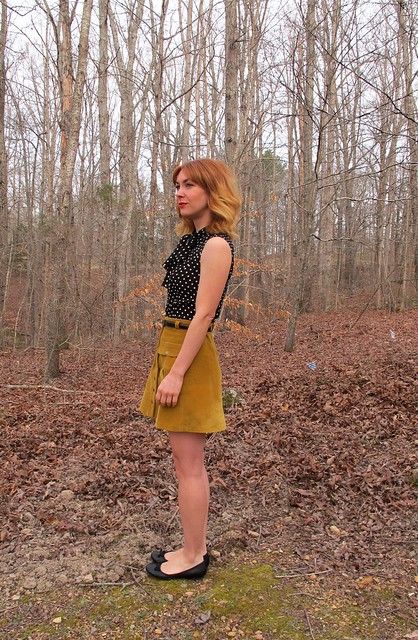
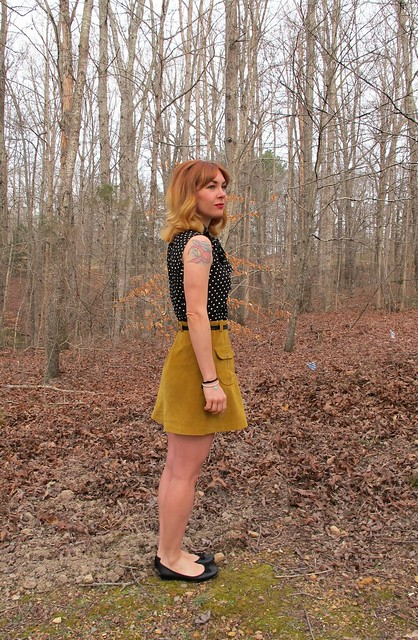
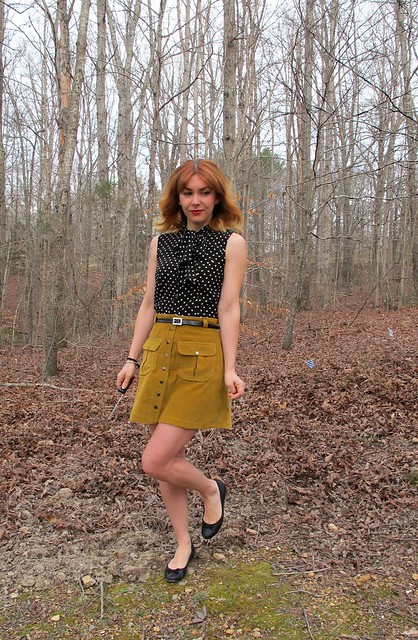
Silk Top & Corduroy Mini Skirt

I covered a lot of ground about the making of these garments in my previous posts, however, I’ll include some notes and highlights in this post in case you missed/skimmed/didn’t care then but suddenly care now 🙂

Silk Top & Corduroy Mini Skirt

The silk top was made using silk crepe from Mood Fabrics (purchased at the NYC store last year) and a combination of Butterick 5526 (my TNT button-up shirt pattern) for the body of the blouse, and vintage Simplicity 4676 for the tie neck. I used Sullivan’s Spray Stabilizer to wrangle the drapey silk into submission for ease of cutting and sewing, which worked great! The shirt is finished with French seams and self-bias facing at the arm holes and hem.

Full details on the silk top can be found in this blog post 🙂

Silk Top & Corduroy Mini Skirt

Silk Top & Corduroy Mini Skirt

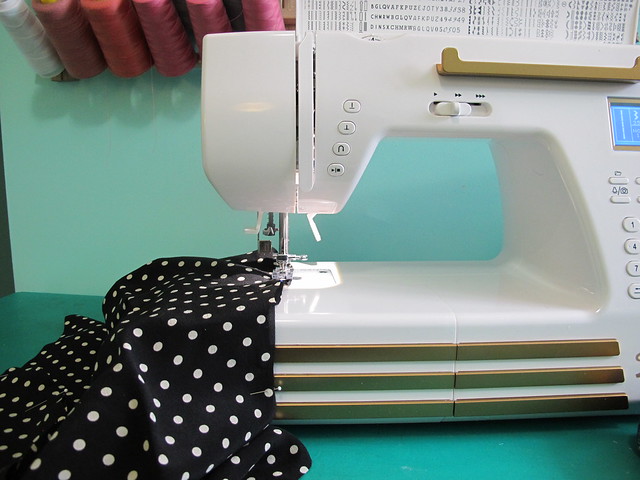
I wanted my first project on the Spiegel 60609 to be something silk, because, honestly – I wanted to see how it could handle working with a notoriously difficult fabric. Of course, stabilizing the whole yardage first definitely helped, but that doesn’t solve all issues (such as when your sewing machine tries to eat delicate fabrics – not a problem with this one, I will add!). I’m really impressed with how the machine sewed through this fabric with absolutely no issues – it even did a great job on the button holes! I do wish that the measurements on the throat plate were marked differently, as it’s hard to get a narrow seam with what’s standard on this machine, but that’s a relative non-issue (I just use post-it notes to mark my seam allowance lines and it works fine). So yeah, Spiegel 60609 + silk gets a thumbs up from me!

Silk Top & Corduroy Mini Skirt

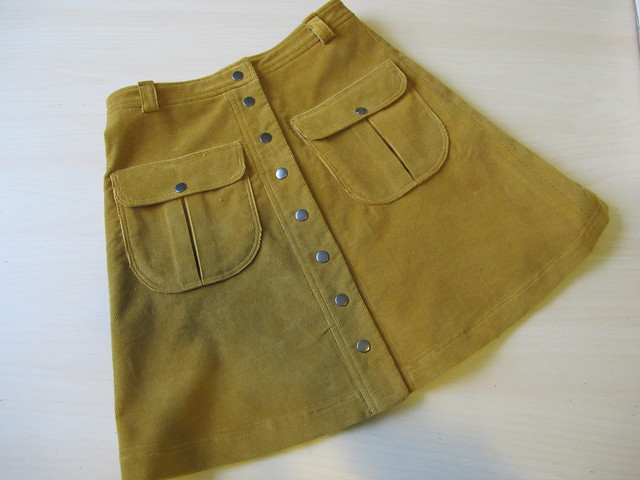
The mini skirt was made also on my Spiegel 60609! I used the Rosari skirt from Pauline Alice Patterns and some lightweight/stretch corduroy from Mood Fabrics. The skirt includes pockets, bound seams on the inside (for a bit of extra pretty cos why not?) and professionally set snaps down the front.

Full details on the corduroy mini can be found in this blog post!

Silk Top & Corduroy Mini Skirt//embedr.flickr.com/assets/client-code.js

I don’t necessarily find corduroy difficult to sew – most of the problem lies in making sure everything is cut and pressed correctly, as not to mess too much with the nap. Sometimes, depending on what machine I’m using, it’s a good idea to use a walking foot to help keep all layers feeding evenly, but I didn’t have any of these problems with the Spiegel 60609. The feed dogs were good enough on their own without any extra help. Always a plus! 🙂

Silk Top & Corduroy Mini Skirt

Silk Top & Corduroy Mini Skirt

Silk Top & Corduroy Mini Skirt

Corduroy Mini Skirt

Corduroy Mini Skirt

That’s all for this outfit! Stay tuned next month for that project – all I can say is, it’s gonna be FANCY 😀

Silk Top & Corduroy Mini Skirt

Note: The fabric used is part of my monthly allowance from Mood Fabrics, as part of my involvement with the Mood Sewing Network. The Spiegel 60609 was given to me by Spiegel, and it’s awesome!

In Progress: Polka Dot Silk Crepe Blouse

15 Mar

Hey everyone! A little different sort of post for today – instead of showing you a finished project, I want to share some progress pictures and tips. I used to do these kinds of posts in the past, and I’ve missed nerding out on construction talk. Since this is my blog and I do what I want, that’s what you get today 🙂

Silk Tie Blouse

Plus, I’m gonna make it on my new Spiegel 60609 sewing machine! Woohooo! 😀
This is *also* part of my Mood Sewing Network project for March, so you’ll have to wait a couple weeks until the Big Reveal 🙂

Anyway, I bought this fabulous black with white polka dot silk crepe while I was in Mood Fabrics flagship NYC store last November. I decided to make a silk button up shirt with it, although originally I planned to do a shirt with the standard collar (as I tend to do). Right before cutting into it, I thought it might be cool to give the shirt a big floppy bow at the neck instead, just to mix things up a little bit. I have vintage Simplicity 4676 in my stash, which I’ve made before. While I love the way the bow looks, I’m not as big a fan for the shape of the actual shirt – so I just put the bow on my beloved TNT Butterick 5526 and it worked out perfectly! As long as the neck measurements on the two patterns are similar (which for these, they are), then it’s easy to sub one neckline for another.

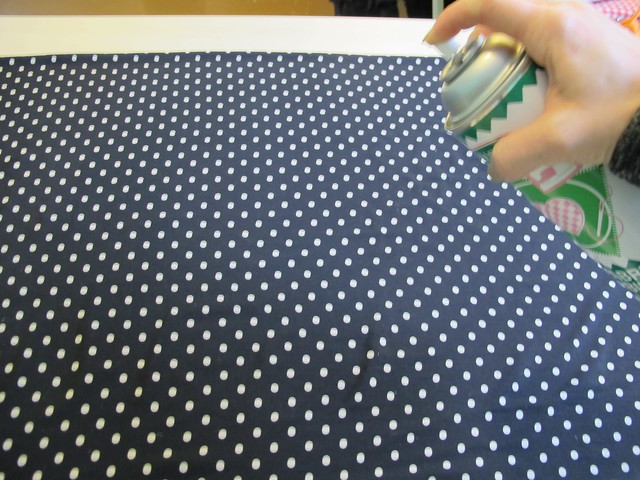
Silk crepe is one of the easier silks to work with, as the texture gives the fabric some grip, but it can still be quite shifty. It doesn’t have to be a nightmare, though, if you know how to work it! And, honestly, I think the hardest part about dealing with shifty fabrics (this isn’t necessarily limited to only silk, btw!) is getting an accurate cut without the piece morphing into a map of the United States once you move it around. There are tons of ways to accomplish this, but my personal new absolute favorite method is to use a stabilizer to make the fabric crisp, which gives it less chance to shift around. I use Sullivan’s Spray Stabilizer, as I like that I can direct that ~stable flow~ to whatever part of the fabric I need it to (sometimes you don’t need to cut your entire yardage, you know?), and it dries very fast. I have received some really good tips on other things to use for stabilizing fabric, such as gelatin, which I will eventually try! But spray stabilizer is also the bomb.

Silk Tie Blouse - cutting silk fabric

I spray it on evenly, then lay my fabric flat and straight on the table and allow it to dry (I guess you could do this on the floor if you don’t have a table, but my cat thinks that things laid on the floor are a special running obstacle course I have created just for her, so I personally try to avoid that route!). Since the fabric dries into whatever shape you leave it in, it helps to fold it in half and pin along the selvedges. Once the fabric is dry, it will feel like a silk organza – MUCH easier to handle. For pieces that really need to be accurate, such as a collar, it’s easy to reapply a second layer after you’ve cut, just to make sure there’s not shifting happening. Once your garment is completely assembled, you simply wash it out and it softens right back up. I always prewash my silks on cold water, so I don’t have to worry about water spots or shrinkage when I wash the garment.

Silk Tie Blouse - mirroring fronts

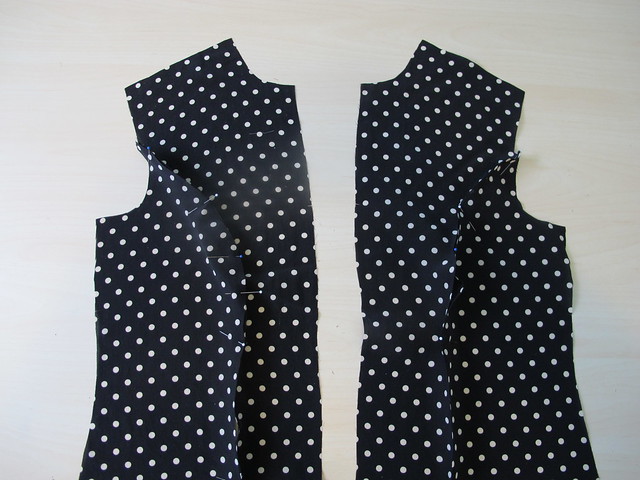
When I’m sewing a fabric that doesn’t have a definite right or wrong side, I try to be extra careful that I don’t sew two of the same piece. Unpicking sucks, and it’s even worse on a delicate fabric (that has been French seamed, no less!). To prevent this, I lay my pieces out so they mirror each other, and pin them like so before I take them to the machine. That way, I don’t accidentally sew two right fronts or whatever.

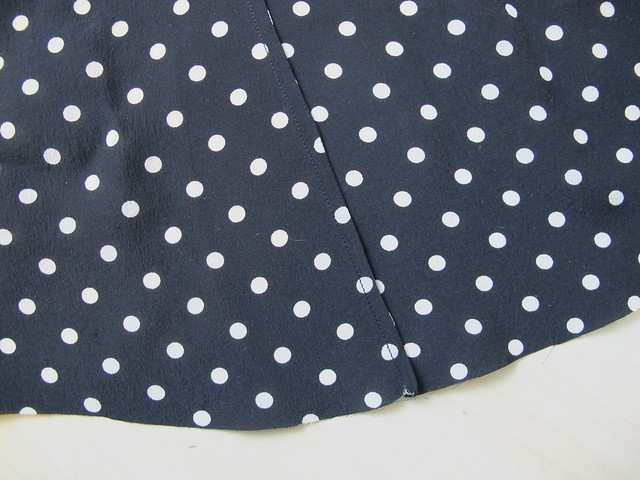
Speaking of French seams, the entire blouse is constructed using them. I love French seams because they are a beautiful finish, and they work really well with delicate fabrics. They do take some extra time because you are essentially sewing the same seam twice, but I think it’s totally worth the effort.

Silk Tie Blouse - sewing French seams

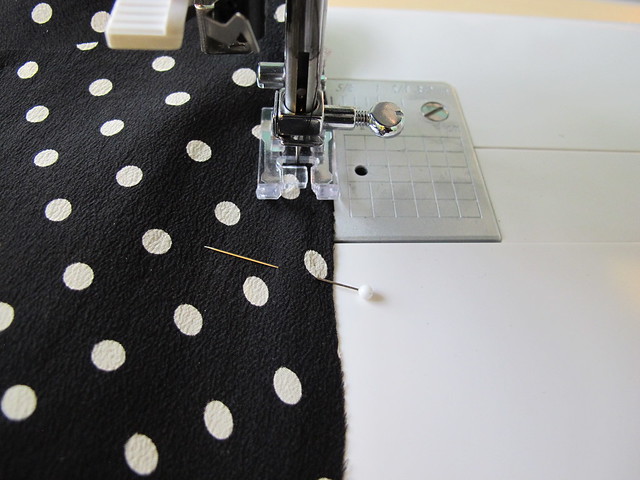
With WRONG SIDES TOGETHER, sew the first line at 3/8″ (this is assuming a 5/8″ seam allowance, which otherwise you’ll want to adjust accordingly). I know, sewing wrong sides together sounds totally backwards and all kinds of wrong, but trust.

Silk Tie Blouse - sewing French seams

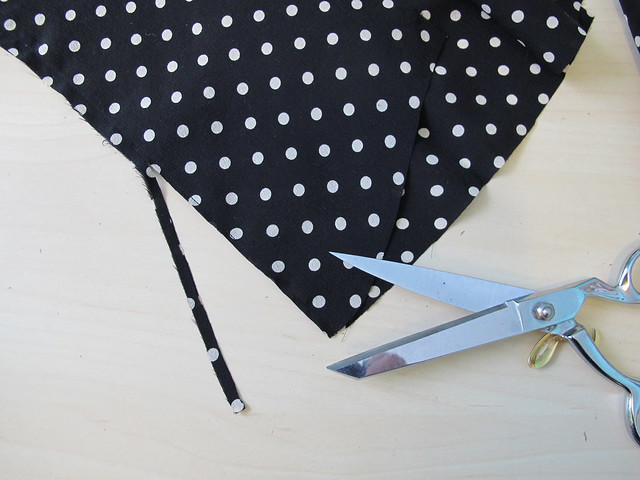
Trim the seam allowance down to about 1/8″.

Silk Tie Blouse - sewing French seams

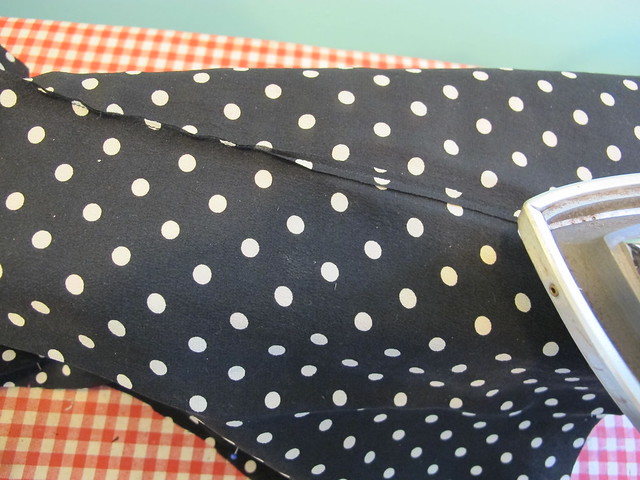
Press the seam allowances open. This can be kind of difficult if your seam allowances are super tiny, so do the best you can. I have a really hot iron and that helps a lot 🙂 Otherwise, you can press both seam allowances to one side – but I think pressing open gives a better end result.

Silk Tie Blouse - sewing French seams

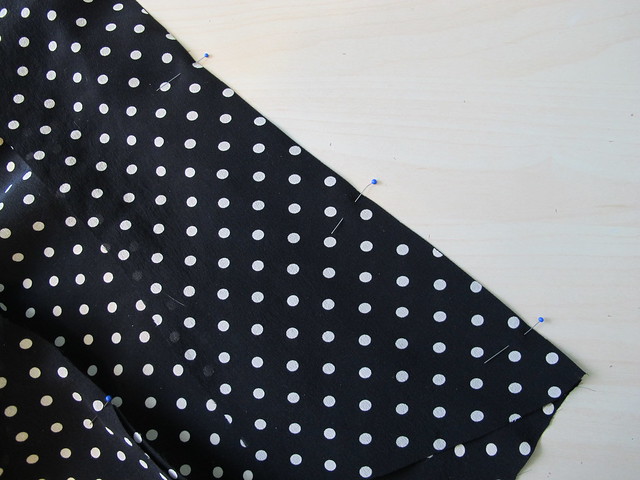
Fold the fabric so the right sides are facing and all the seam allowances are encased on the inside, and press.

Silk Tie Blouse - sewing French seams

Sew again at 1/4″, then press one more time.

Silk Tie Blouse - sewing French seams

You should end up with something that looks like this – the seam allowances beautifully encased 😀
Silk Tie Blouse - bias faced hem

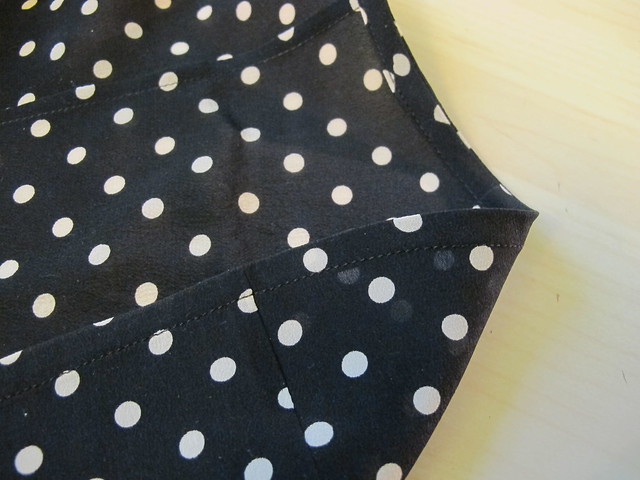
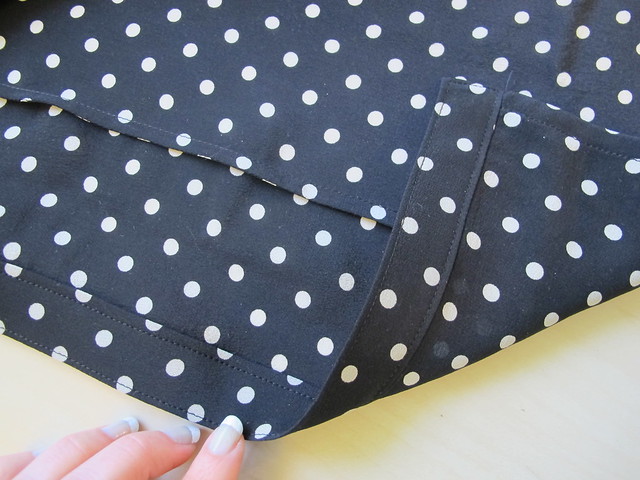
For hemming shirts – silk or otherwise! – I like to finish the hem with a self bias facing. Since the hem of shirts is usually curved, I find this gives me a MUCH easier way to get a MUCH cleaner finish. Contrasting bias is also fun, for a little flash of color! Here’s my tutorial for sewing bias facing. I like this method because you don’t have to pre-press the bias pieces – you press them after they are sewn, and it’s much faster and more accurate. I also used this method to finish the arm holes of my (obviously sleeveless, ha) blouse.

Silk Tie Blouse - button placket

After hemming the shirt, I added the button placket. Since this is one of those areas where you want to be really accurate and careful, I fused lightweight interfacing (I use this stuff from Fashion Sewing Supply, it’s a little pricey but it is 100% worth it in my opinion!) to my pattern pieces and then re-applied the spray stabilizer just so everything was really easy to handle. Honestly, attaching that silk crepe placket was no more difficult than if it were made out of cotton. YES!

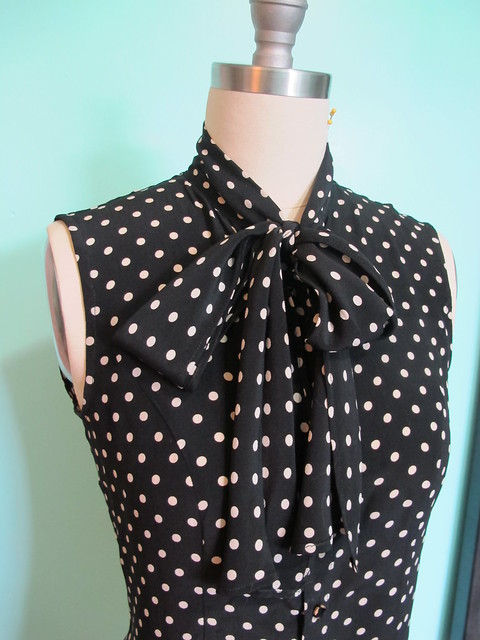
I seem to have lost the pieces of me adding the neck tie – whoops! But that was pretty easy. It is cut on the straight grain, and the edges are rolled up to where the tie is attached to the neckline. It’s doubled over *only* at the neckline, and the ends are twice as wide so you can make a nice fat bow. In silk crepe, it’s super floaty and awesome. Love.

Silk Tie Blouse - button hole

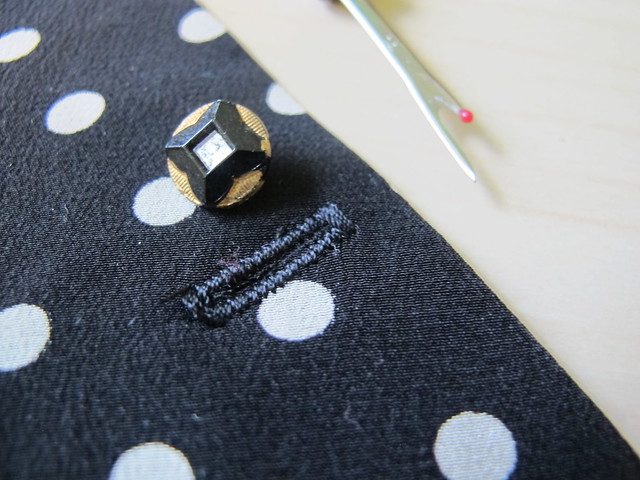
The last step was adding all those button holes! I wasn’t sure if the Spiegel 60609 machine was going to come through on this one – button holes can easily look really terrible, really fast – but it did not let me down! The stitches are nice and tight, and the button hole foot calculates the correct size using the actual button. Also, how about those buttons? I found them at the flea market years ago and I’ve been hoarding them ever since for the ~perfect~ project, ha.

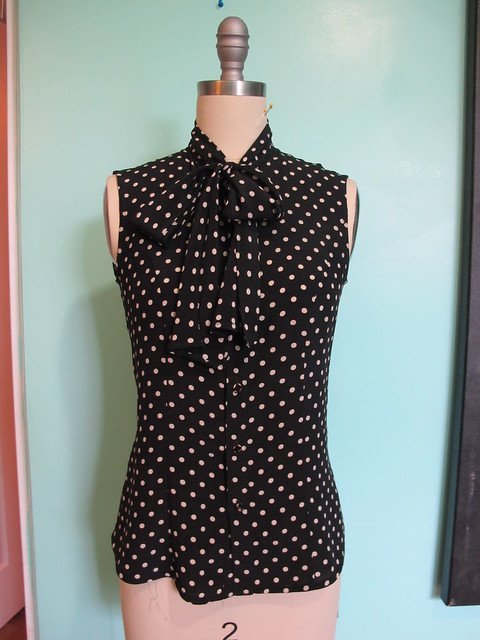
The finished blouse:

Silk Tie Blouse - finished!

Silk Tie Blouse - finished!

I am REALLY happy with how it turned out! I think the silk crepe is the perfect fabric for this type of blouse – it skims over the body, and the bow has a beautiful drape. Even with the polka dots and that big neck bow, it’s still not super incredibly sweet looking, which I like. And it feels SO GOOD to wear! I will never tire of wearing silk 🙂

~Big Reveal~ outfit photos to come soon! Next up – the bottom half of this outfit 🙂

As a side note, I’m headed back to NYC for the weekend to teach another Pants Making Intensive at Workroom Social! Just a head’s up that I’ll be a bit delayed in email/comment responses, as I tend to take off from the computer when I go out of town 🙂 I’m excited to go back to the city and get people making some pants, though! This particular workshop is sold out, however, there are still a couple spots open at my Garment Sewing Weekend at A Gathering of Stitches in Portland, Maine! Yay sewing! :DDD

Completed: Vintage Simplicity 1799

29 Feb

Raise your hands if you’re ready for spring!

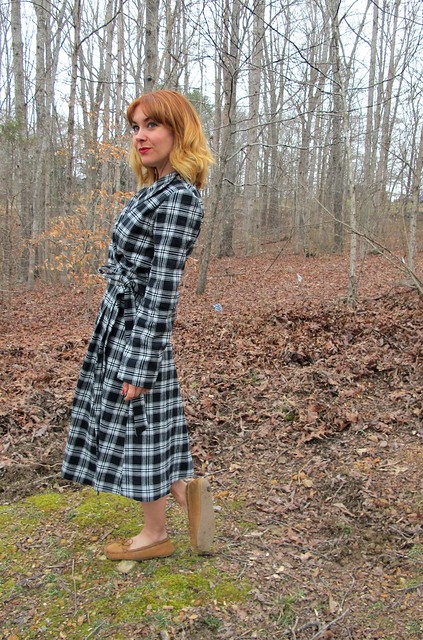
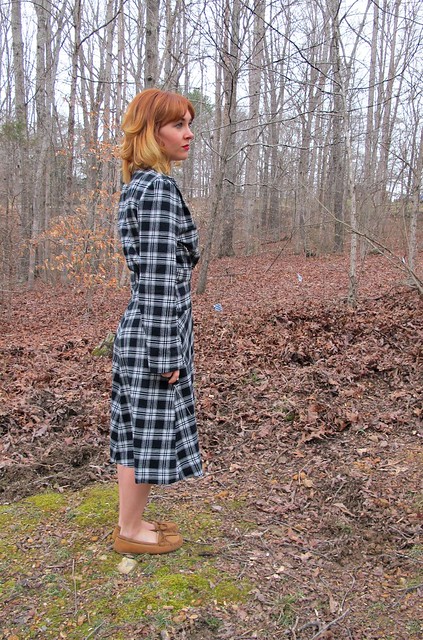
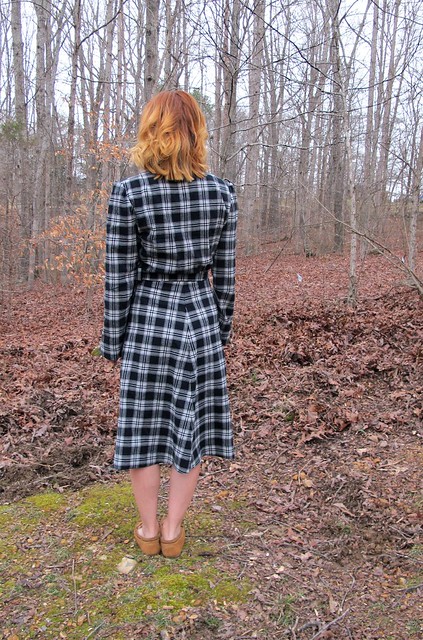
Simplicity 1799 robe

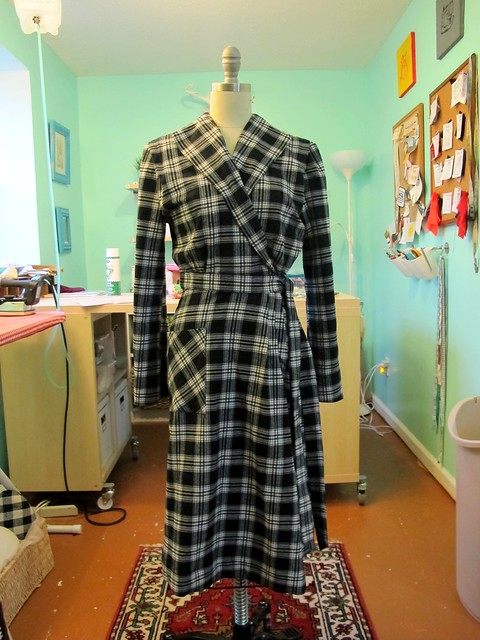
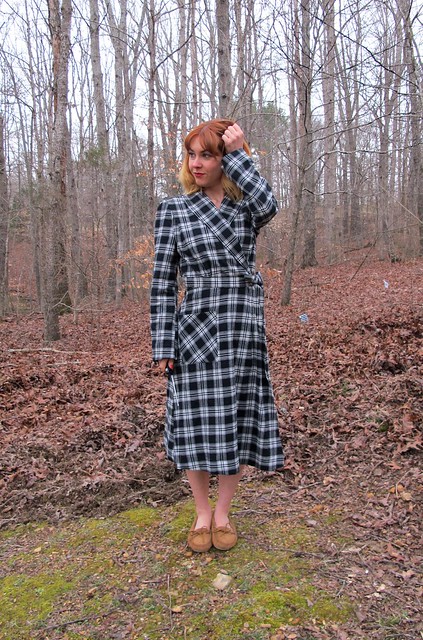
This is the time of year that I spend the majority of my day wrapped up in a robe, at least those days when I’m hanging around the house. My old fleece robe has truly served me well during these trying times, but its really starting to look its age (nearly a decade, I have recently realized!). I wanted to upgrade to something that was a little classier than the ugly fleece – something that wouldn’t make me feel quite so embarrassed to run to the mailbox in. I know, I live in the middle of nowhere – but the moment you run to the mailbox in your robe, that’s the moment someone you know decides to cruise on by.

Simplicity 1799 robe

Simplicity 1799 robe

Simplicity 1799 robe

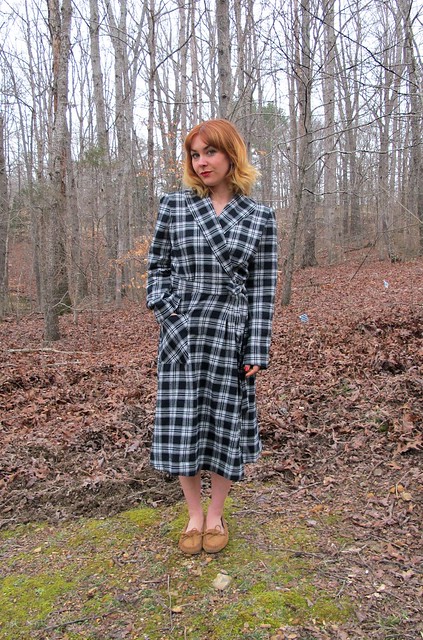
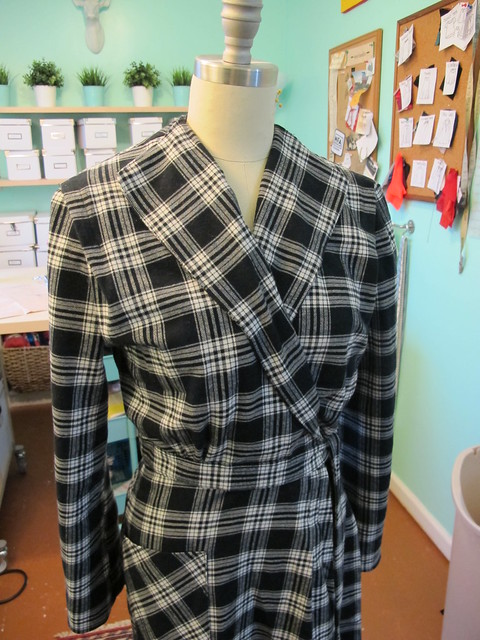
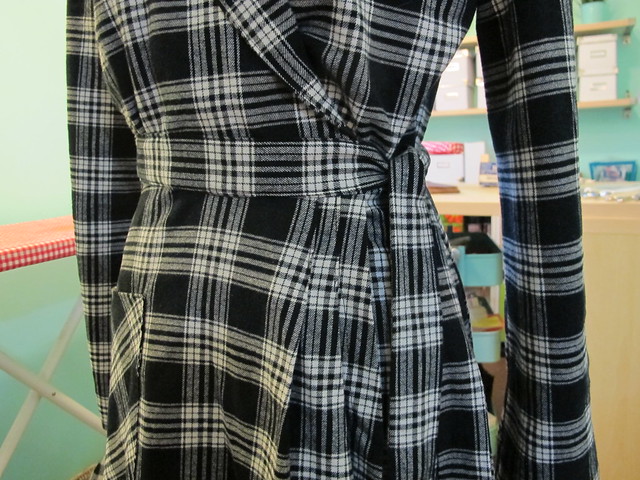
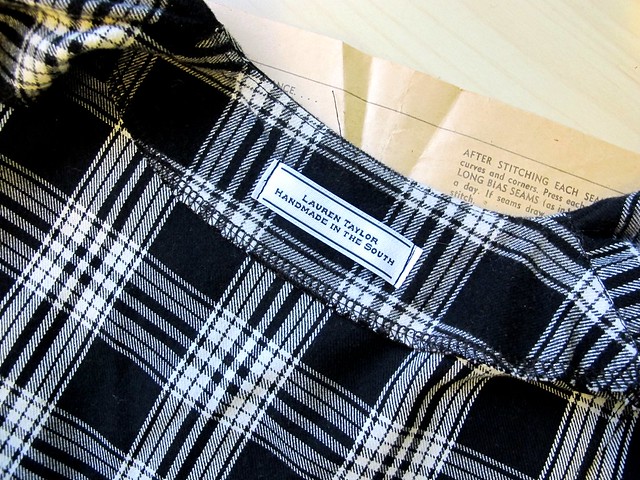
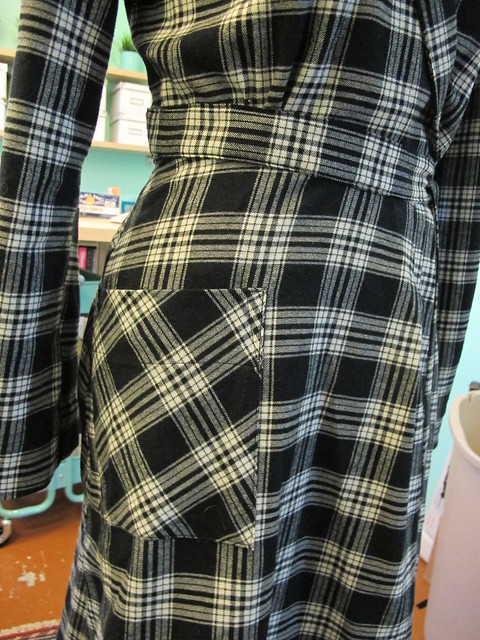
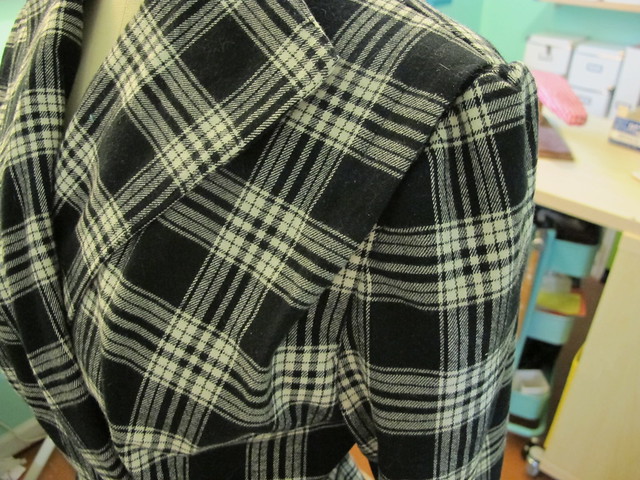
Since more fleece was out of the question, I went with a soft cotton plaid flannel from Mood Fabrics. Mood has tons of great cotton flannels on their site, but I picked this particular one because it kind of matches my plaid flannel Carolyn pajamas. It’s a thinner plaid, with one brushed side (the other side is smooth, which I used on the inside of the robe). My only complaint is that it’s quite a bit off-grain – which, combined with using a pattern that was decidedly NOT plaid-matching-friendly, meant that I really fucked up the plaid matching on this garment. Or, rather, just threw my hands in the air and gave up about halfway through cutting. I did manage to get the center back and sleeves to have a nice continuous line, but those side seams are all kinds of wrecked. Whatever. Sometimes in sewing, we have to pick our battles. I’m not going to argue with a garment that will get the majority of it’s judgement from my cat.

Simplicity 1799 robe

Simplicity 1799 robe

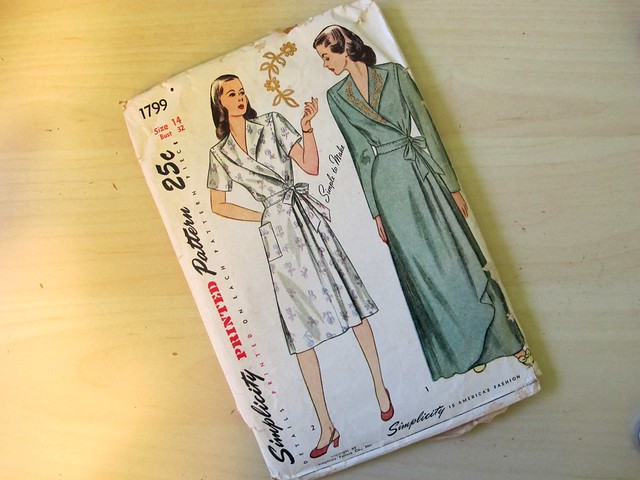
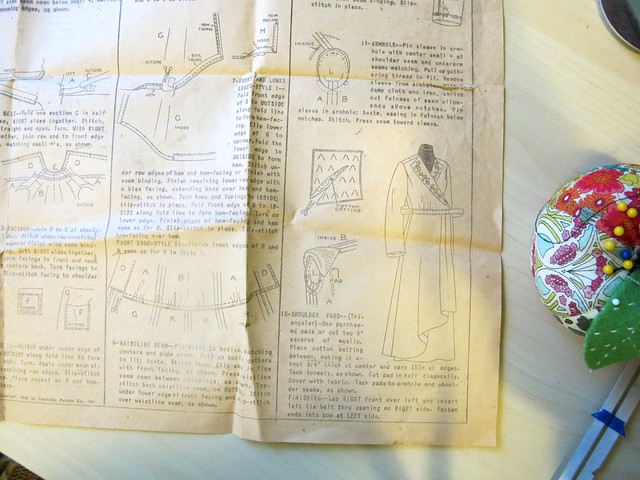
The pattern I used is Simplicity 1799, a 1940s vintage pattern I’ve had my stash for quite some time. I don’t really sew much with vintage patterns these days – I find the styles to be a little too cutesy and/or dated for how I roll with my clothes lately – but I still collect and appreciate them. And sometimes, you need a little cutesy glamour to make your day prettier, especially when we’re talking about an otherwise ugly robe. Look at how classy those ladies are!

One thing I really love about vintage patterns are all the beautiful details that they include in the design. This pattern has tucks and gathers all over the places, elbow darts, and a boxy 1940s upper silhouette paired with strong shoulders. The instructions are pretty sparse as you can see, but anyone with common sewing sense can easily figure them out. I mostly went my own way – finished all the seams with my serger, left out the shoulder pads, and gave nice 2″ hems on the sleeves and bottom.

It’s really hard to see the pretty details in this, thanks to the plaid clusterfuck I’ve got going on, but I’ll try to show you some highlights:

Simplicity 1799 robe

Simplicity 1799 robe

Simplicity 1799 robe

Simplicity 1799 robe

Simplicity 1799 robe

Simplicity 1799 robe

Not much else to say about this one! Keepin’ it simple and cozy this month!

Simplicity 1799 robe

Note: This fabric was provided to me as part of my participation in the Mood Sewing Network. All declarations and opinions are my own!

Completed: Fancy Silk Georgette + Brocade

2 Feb

Here’s something a little different than my normal meat-and-potatoes (mmm… meat and potatoes) sort of dressing – FANCY GARB. YAY!!

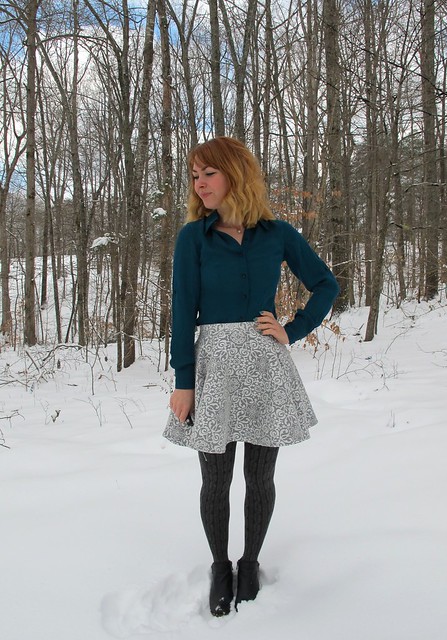
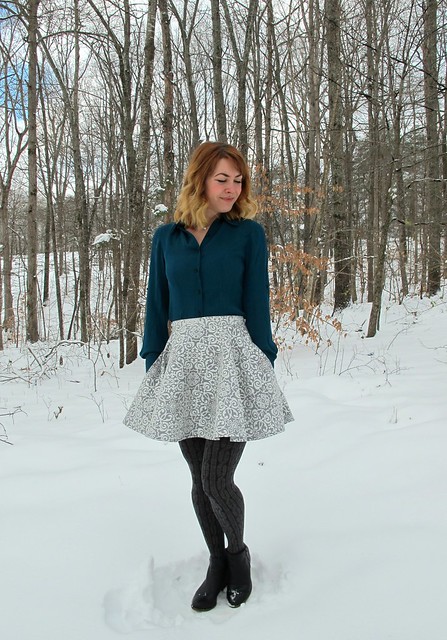
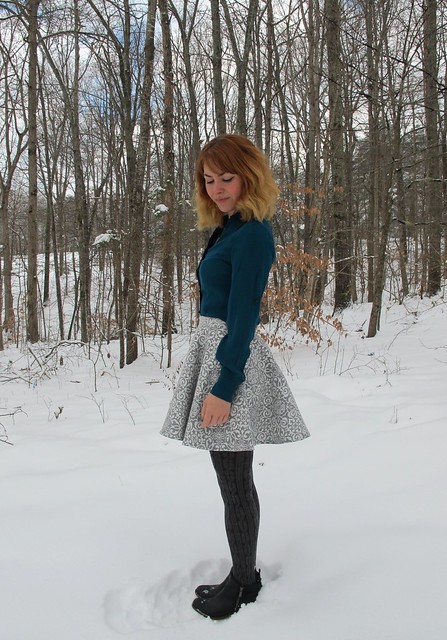
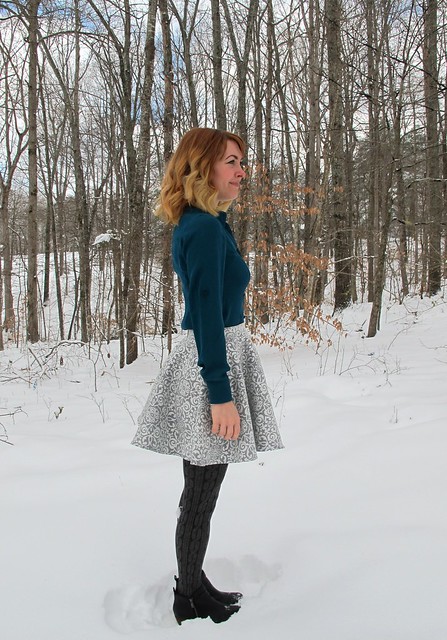
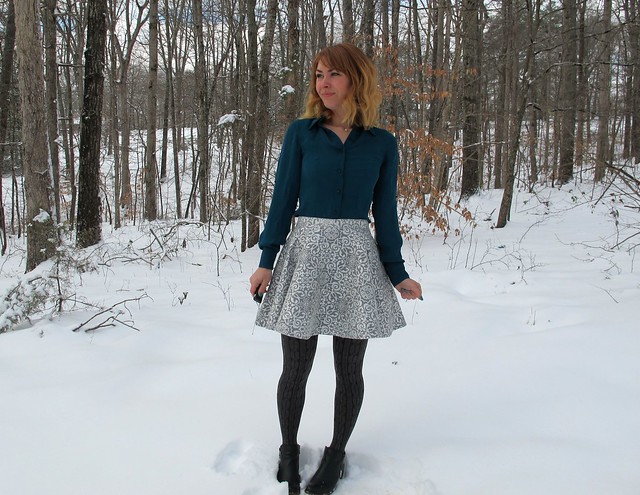
Silk Georgette B5526 + Stretch Brocade Circle Skirt

Also: SNOW! Like, holy shit it snowed soooo much last weekend! I had a nice snow-in for a few days (it’s true that Tennessee all but shuts down when the snow comes in – but, before you make fun: we don’t have snow tires, we don’t know how to drive in it, and the roads are not properly salted or cleared so they’re actually pretty dangerous. Also, come and deal with our 100* heat in August ffs. Ok, soapbox off haha), which was even better considering that I basically was in a Winter Wonderland. We ended up with a little over 6″ – y’all, I can’t even remember the last time I saw that much snow. Shit was crazy. Also, it all melted within like 3 days, and then the temps went back up to 65*. Yay I love Tennessee and it’s fickle weather haha.

Anyway, I wasn’t planning on taking snow pictures – it was obviously very very cold outside, and so bright that I could barely keep my eyes open (sorry in advance for all the squinty haha). But the indoor lighting was just terrible, so I took one for the team and tromped outside. You are welcome.

Ok, back to the real subject of this post!

Silk Georgette B5526 + Stretch Brocade Circle Skirt

I made these two pieces about a month apart, so I didn’t actually wear them together for NYE – although I definitely wanted to. Considering I didn’t start sewing for the party until a few days before the end of the year, I knew that shirt would not turn out nice if it was rushed. So I focused on the fancy skirt, and wore it with a fuzzy black sweater knit Renfrew (you can see a photo of the outfit on Instagram). It was the perfect New Year’s Eve outfit for my plans – reasonably warm, yet stylish, and had these big pockets so I could carry my phone, wallet and flask without worrying about a purse. Which, by the way, my phone ended up leaving my pocket at some point that night (I think it was more that it didn’t *make* it to the pocket, rather than leapt out on it’s own accord). Here’s the New Year’s Miracle, though – someone found it – in a pile of trash on Lower Broadway, apparently – and then returned it to me the next day. How awesome is that?! 2016, you’re off to a promising start! ♥

Silk Georgette B5526 + Stretch Brocade Circle Skirt

Silk Georgette B5526 + Stretch Brocade Circle Skirt

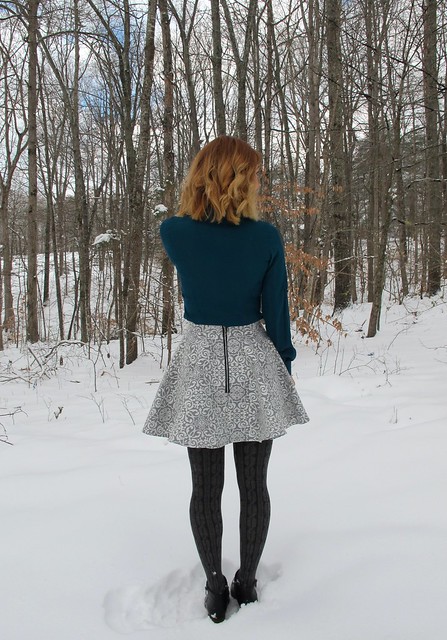
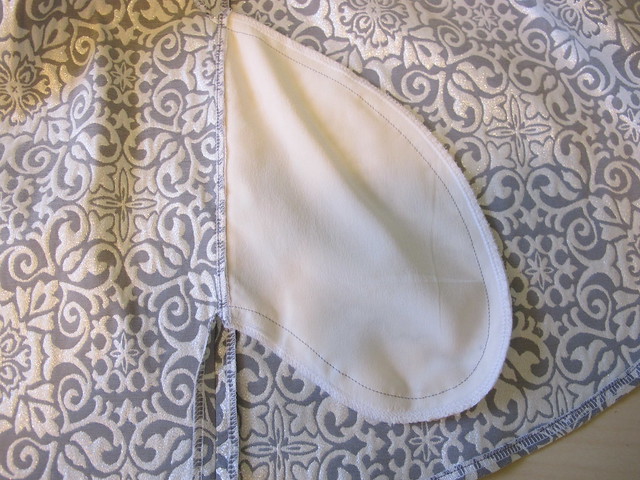
The metallic stretch brocade that I used for this skirt has been in my stash for a long time – over a year, at least (if not longer). I never knew what to do with it – it’s kind of thick, it has a really heavy stretch, and it’s pretty freaking fancy. I figured a pencil skirt or bodycon dress would be suitable, but I rarely wear stuff like that. When I was planning my NYE outfit, I decided to find a use for this stuff. I’ve been on a circle skirt kick lately, so that’s what I went with. I used my self-drafted circle skirt pattern (I used Casey’s circle skirt tutorial aaages ago, which I can’t seem to get a valid link to now 😦 There’s also the By Hand London circle skirt app, which does the maths for you!), pieced to include side seams and a center back seam. This was mainly due to fabric restrictions – I had only a yard of this fabric. It’s super wide, though, so I was just barely able to squeeze it out. I also knew I wanted an exposed zipper and side seam pockets, which mean seams were necessary. The waistband was cut so the greatest amount of stretch ran along the length; I stabilized it with a piece of stretch interfacing to retain that comfy-ass stretch. Yeah man, it’s comfy.

Silk Georgette B5526 + Stretch Brocade Circle Skirt

Sewing was easy, and relatively straightforward. My only complaints are that this fabric frays like a MOTHER, and it’s basically all polyester so it’s a nightmare to get a good press. For the fraying, I serged each seam separately to minimize the fuzz potential. For the pressing, I just used my super awesome, super hot gravity feed iron and then just held the seams in place with my clapper until they cooled. One thing I will note is that my iron has a shoe (basically a cover that acts as a press cloth), which keeps things from melting. If your iron does not have a shoe, you’ll want to use a press cloth on poly fabrics + high heat. Otherwise, melting will happen!

Silk Georgette B5526 + Stretch Brocade Circle Skirt

Silk Georgette B5526 + Stretch Brocade Circle Skirt

Silk Georgette B5526 + Stretch Brocade Circle Skirt

Silk Georgette B5526 + Stretch Brocade Circle Skirt

I thought an exposed metal zipper would look cool next to the fancy brocade, so I pulled a metal zip from my stash and used Megan Nielsen’s method to insert it (these are the same instructions that are included with the Brumby pattern, fyi). The pockets are silk crepe, also pulled from my stash. Nothing like using silk pockets to stow your whiskey amirite 🙂

Silk Georgette B5526 + Stretch Brocade Circle Skirt

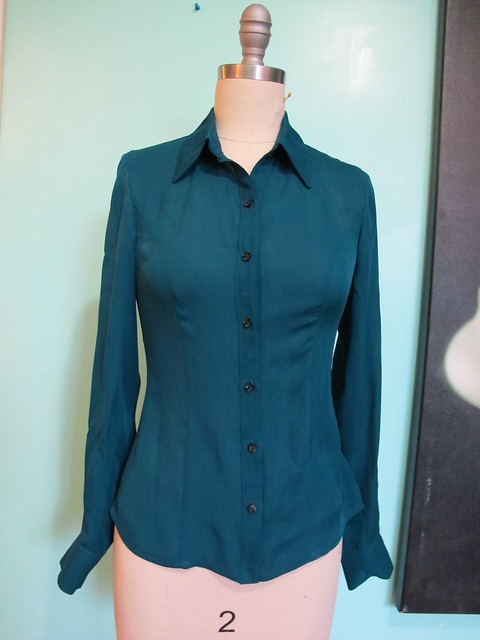
This past month, I finally gathered up all my cojones and made the intended matching shirt. Remember when I made Butterick 5526 in silk Georgette? I want to hate that shirt so bad – it’s pretty poorly constructed, I mean, that fabric was EVIL – but every time I put it on, I can’t deny that I like the way it looks. I want more floaty button-ups in my closet. I figured enough time had passed to forget the trauma, and I tried again, this time with much more success.

Silk Georgette B5526 + Stretch Brocade Circle Skirt

There are two major factors that contributed to the success of this version of B5526 in silk Georgette. First of all, I chose the fabric in-person, rather than blindly ordering online. Which means I don’t have a link for the exact fabric I used – I bought it at the Mood Fabrics in NYC when I was there in November. I have since ordered some swatches from the website, and it’s definitely not the same fabric as what I have here. Mine is more like a double Georgette – it’s much thicker, and less see-through (I’m not wearing anything under this top, except a bra. I think it’s a nude bra, but I’ve worn a black one underneath too and no one has noticed, HA!). That alone made a world of difference in handling the fabric. I also prewashed it in the washing machine/dryer (just a cold wash, ma’am!), which helped beef it up a little more. The second factor is that I used a spray stabilizer on my fabric before cutting or sewing. I’ve heard of people using a spray stabilizer – and allegedly, you can also soak your fabric in unflavored gelatin for the same effect, although I haven’t personally tried this yet – but I never cared to try it myself because I wanted to be able to tackle the fabric without any outside help. Also, a can of that shit is like $12, which is way too rich for my blood (says the girl who is currently looking at $45/yard silk faille lolwut). It just seemed silly and unnecessary. I always felt like using outside tools like that almost negated my skills as a seamstress, but you know what? That’s not true. It’s not any different than using a special presser foot to get good edgestitching. Whatever works… it just works. And that’s ok.

I am not going to go into too much talk about using spray stabilizer because this was my first experience with it – and I want to try it a few more times before I give it a big write-up (aka I don’t want to eat my words later haha). But I will say that it REALLY changed how the fabric handled, in a good way. Instead of it slipping around like butterfly wings, it held more like a silk organza. It made cutting things straight much more easy, and the shirt fits better as a result. I think my topstitching looks really good, and all those fiddly pieces weren’t quite as fiddly. Spray stabilizer isn’t going to turn your silk into quilting cotton – you still need some finesse with those fine layers – but it helps tremendously. It won’t work for anything that you can’t wash it out of – such as a coat lining (unless, I guess, you assembled the lining separately and then wash/dry it before putting it in the coat?) – but it’s perfect for this sort of project. These photos are post-washing, so it has the proper drape, fyi. I soaked it in the sink with some lingerie wash, hung it to dry, and then re-pressed. I have since worn the shirt and washed it in the normal wash, and it’s held up fine.

Silk Georgette B5526 + Stretch Brocade Circle Skirt

Silk Georgette B5526 + Stretch Brocade Circle Skirt

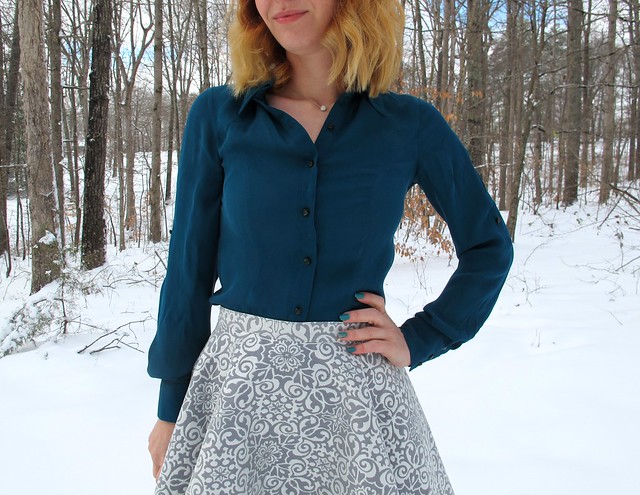
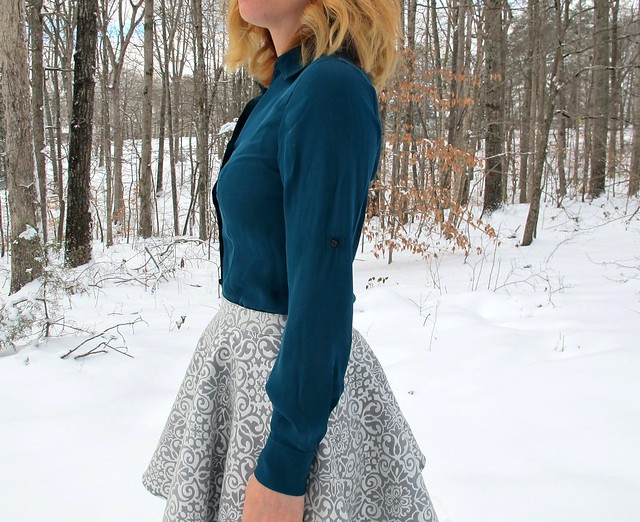
All that being said, I don’t think there’s much else to say about the sewing of this shirt. I’ve made it like a dozen times at this point, so there’s nothing new for B5526. The shirt is constructed with French seams and I used a very lightweight interfacing to stabilize while retaining that beautiful drape. I added buttons and button tabs to the sleeves, so I can wear this shit into the warmer weather. Yay!

Silk Georgette B5526 + Stretch Brocade Circle Skirt

Silk Georgette B5526 + Stretch Brocade Circle Skirt

Silk Georgette B5526 + Stretch Brocade Circle Skirt

Silk Georgette B5526 + Stretch Brocade Circle Skirt

Silk Georgette B5526 + Stretch Brocade Circle Skirt

Silk Georgette B5526 + Stretch Brocade Circle Skirt

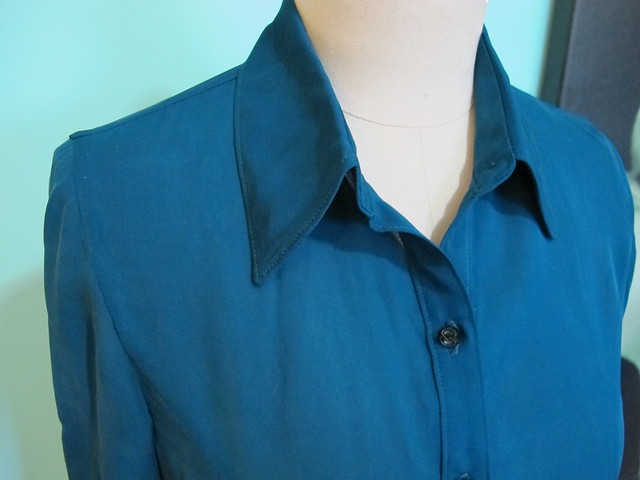
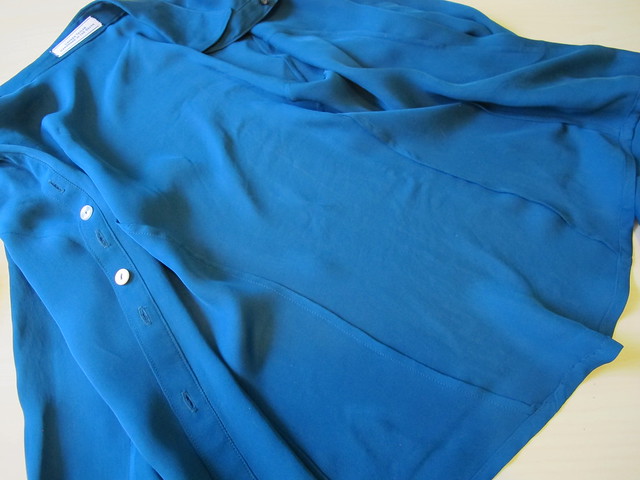
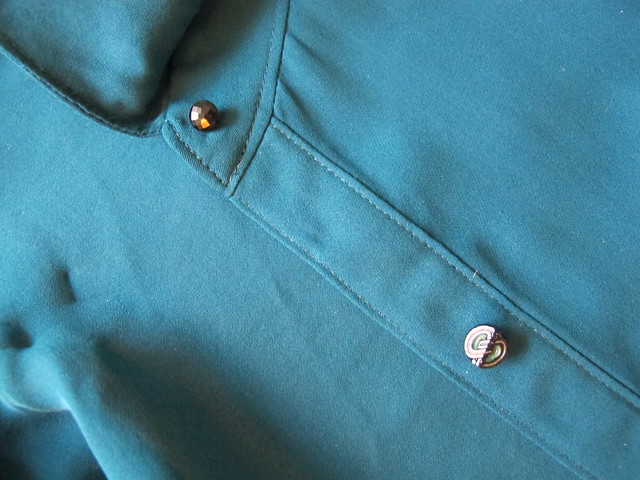
I finally go to use some of my fancy vintage glass buttons for this top – yay! I didn’t have quite enough, so I had to mix them. There are beautiful black/green/gold Art Deco buttons for the front placket and sleeve tabs, and then solid black faceted buttons for the cuffs and collar. The white buttons you see on the inside of the placket prevent gaping at the boobs (I can’t take credit for this tip – I got it from Emmie and Jane). Speaking of which, if I’m getting boob gape… that probably means I need to start doing a FBA to my pattern. Sigh. Or else just keep adding hidden buttons hahaha.

Silk Georgette B5526 + Stretch Brocade Circle Skirt

I think I’ve run out of things to talk about with this outfit, so I’ll wrap up. What’s your best tip for sewing the slinky? Have you tried spray stabilizer? Hey, how was your New Year’s Eve, anyway?

Note: Fabrics were purchased with my monthly allowance for the Mood Sewing Network. Also, there are affiliate links in this post FYI. Click at yo’ own risk.

Completed: A Cozy Wren Dress

17 Nov

I really love summer, but man, I LOVE winter clothes. I think most people in general just look a lot classier with some added layers, and I really embrace the opportunity to dress in head-to-toe black and pretend like I look chic and not at all like an angsty 15 year old wandering into Hot Topic circa 2001. I can and do look like a total slob in the summer time, but add a little windchill into the mix and I’ll dress like I’m heading straight into the office.

Colette Wren dress - front

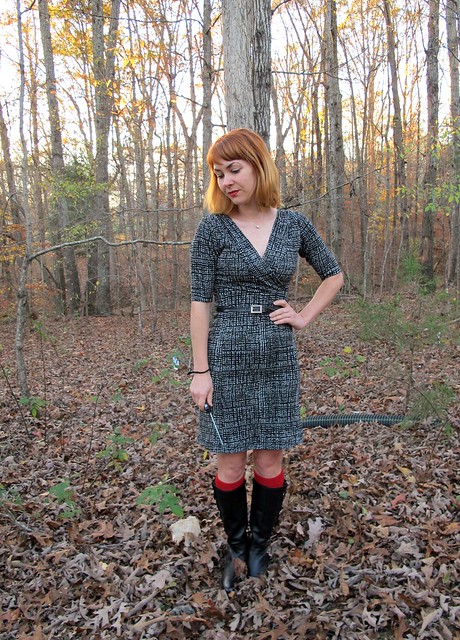
So, today, I give you Wren. A pretty little transitional dress that works SO WELL with a heavy knit and sleeves. If I still worked in an office, I’d rock this shit every day.

Colette Wren dress - front

This dress is a story of fabric + pattern both acquired without any pairings in mind. I was actually sent an advance copy of Wren from the team at Colette Patterns – no strings attached, just as a gift. They made it very clear that they weren’t expecting a review post in exchange for the pattern. I thought it was a pretty pattern and I knew I wanted to make it up at some point, but I wasn’t sure what fabric. I love the solid colors they use for the promotional shots, but I rarely feel compelled to sew solid colors (which is something I’m working on, because lord knows I like to wear solid colors!).

In the meantime, I’d been eyeballing this black cozy knit fabric from Mood Fabrics (their description, not mine. But it is a black cozy knit. It’s also super sold out, and I can’t find a link to it. Sorry! I’m pretty sure I bought the last yardage. Not sorry about that!). I had my swatch and I knew I wanted it for… what? No matter, I bought 2 yards of it and figured I’d figure that shit out later.

It wasn’t until I saw Deepika’s classy black and white Wren dress that I had my aha moment of fabric and pattern marriage. As in, I totally copied Deepika’s dress. Thanks for the inspo, Deepika! I hope you are ok with being my twinsie 🙂

Colette Wren dress - side

Colette Wren dress - side

These pictures are borderline awful, by the way. I was waiting for the golden hour, and I think things got a little too golden. Oh well!

Colette Wren dress - back

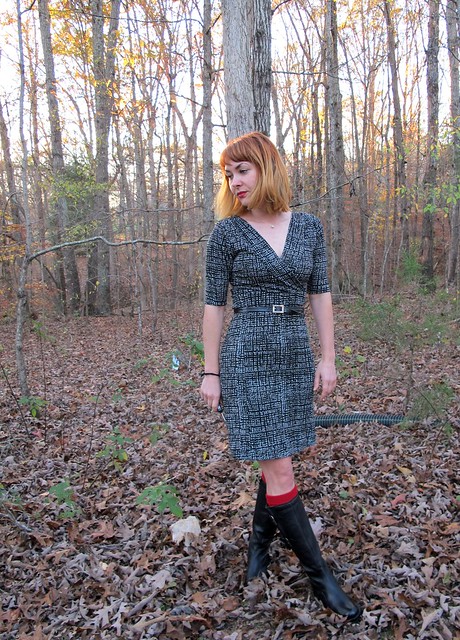
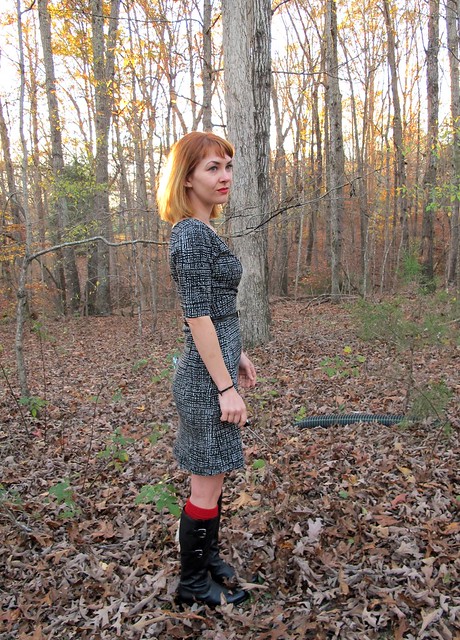
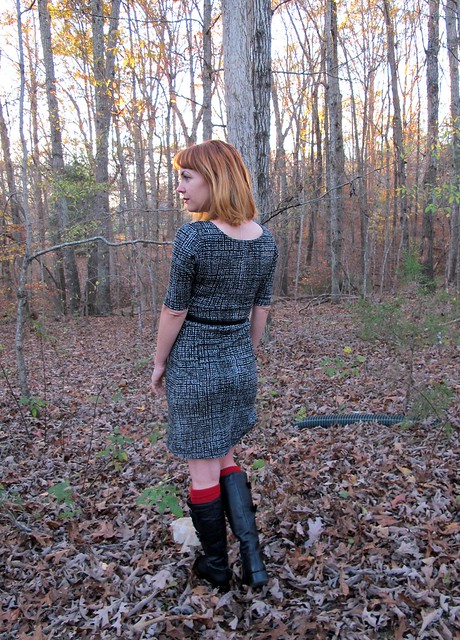
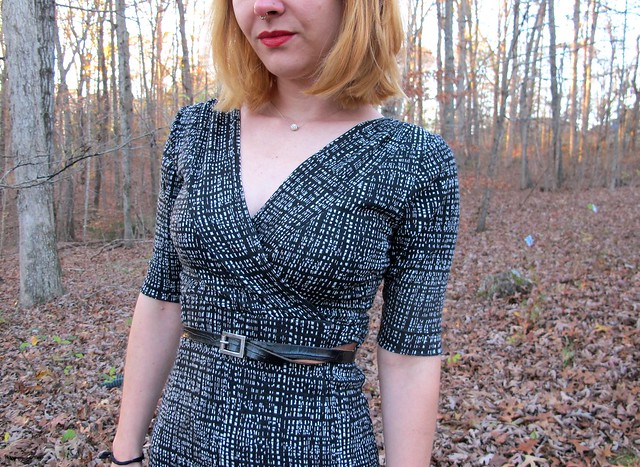
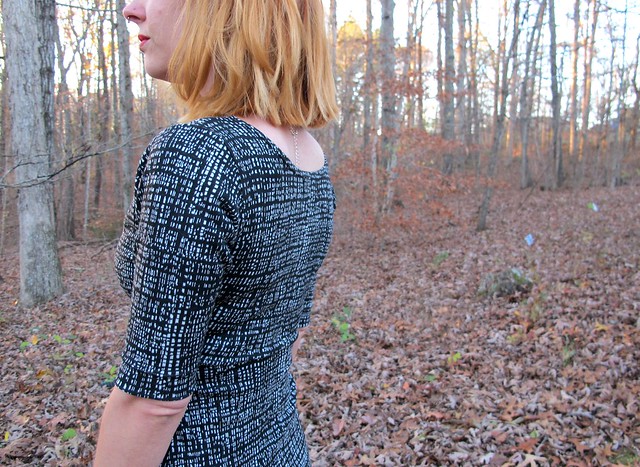
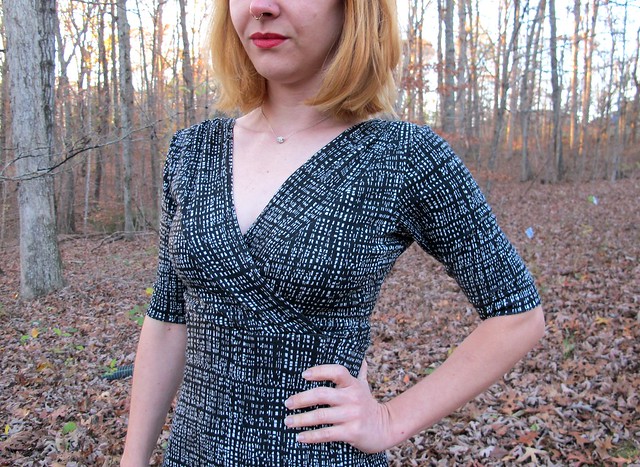
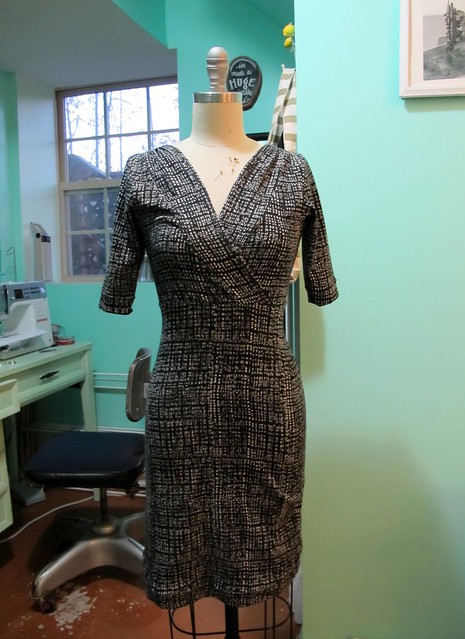
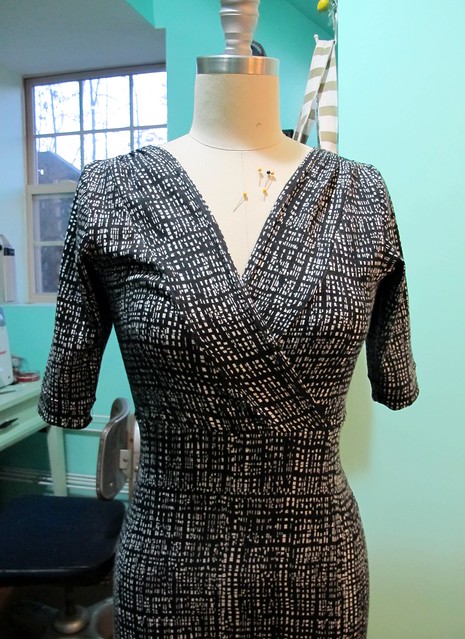
The Wren dress is a lovely knit dress that features a surplice/wrap-style bodice, set into a closed skirt (aka, it’s not a true wrap dress). You have the option of adding either a gathered or a fitted, 6 gored skirt, and the bodice can be sewn with or without sleeves. My favorite part of the dress are the soft gathers along the neckband, which are so feminine and pretty (and you can barely see them for this print that I used haha oh well). The sleeves included in the pattern are just for short sleeves, but it’s pretty easy to lengthen those to whatever suits your needs. Colette patterns did offer a sleeve download when the pattern was first released – for both a long sleeve and a 3/4 sleeve – which is what I used here. I actually cut the long sleeves, but they were weirdly tight below the elbow. Hence, my elbow-length sleeves. All good here, though, because those long sleeves looked a little overwhelming with this print!

Making the dress was super super easy. Since it’s a knit, I whipped everything through my serger to piece it together, and used my twin needle to hem the neckline and sleeves and hem. I was a little concerned about the top gaping since it’s only hemmed (and not finished with a knit band, which is my preferred method), but I figured I’d give it a try and I have not experienced any gaping. The only thing I’d change in the future is to deepen the hem on the neckband – at 3/8″, it’s a little shallow, and I just think it would look better and the stitching would lie more flat if it was closer to 5/8″.

For size, I cut an XS based on my measurements. I’m really pleased with the fit – and this is straight out of the envelope, no additional shaving off side seams or anything like that. I will mention that the waistline is pretty high on me – and I’m of average torso length – so that’s just something to be aware of. It’s definitely higher on me than it is on the model or in the illustration, but my knit does have only a 2 way stretch so that’s likely the case.

Colette Wren dress - front

Colette Wren dress - back

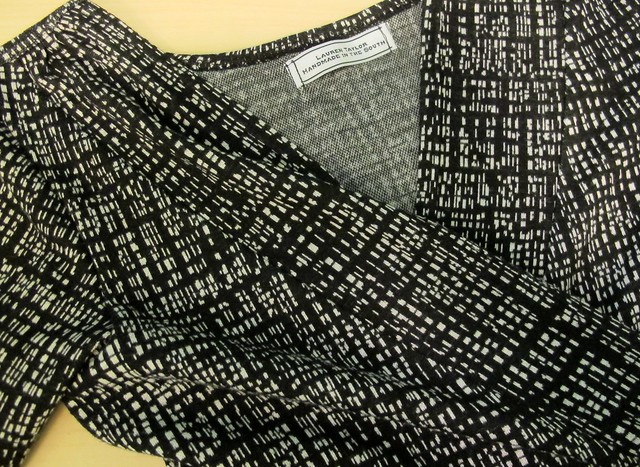
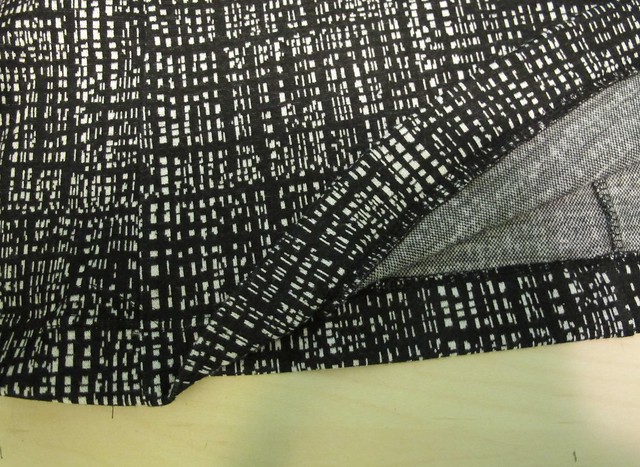
The ~black cozy knit~ is pretty awesome! It’s a poly knit, which I’d normally stay far far away from in the summer months – but I’m ok with poly in the winter. It sewed and pressed fine, and it’s just a really nice fabric. It feels a bit like lightweight ponte, with a nice heft and weight to it. The design is woven, so the wrong side is pretty cool too. My favorite part is that the right side is a little fuzzy and feels like a cozy sweater. My other favorite part is the print- up close, I think the white design looks like a city skyline 🙂

Colette Wren dress - front

Here it is without the belt!

I don’t think there’s much else to say about this simple dress, so have some more photos:

Colette Wren dress - flat

Colette Wren dress - flat

Colette Wren dress - on dressform

Colette Wren dress - on dressform

Colette Wren dress - front

I think the dress looks pretty classy – it would be awesome for all those fancy dinners and evening concerts that I don’t attend. HA! Or maybe just wallowing around on the couch, I dunno. Actually, my roommate and I are going to see Neil deGrasse Tyson this week and I’m TOTALLY wearing this shit for that. I am going to be so comfy while I simultaneously have my mind blown about the universe, wheee!

* Note: This fabric was given to me in exchange for my participation in the Mood Sewing Network. The pattern was also given to me from Colette Patterns, as a gift and with no strings attached. Per usual, all the opinions you are reading here are my own!

Completed: The Sway Dress

3 Sep

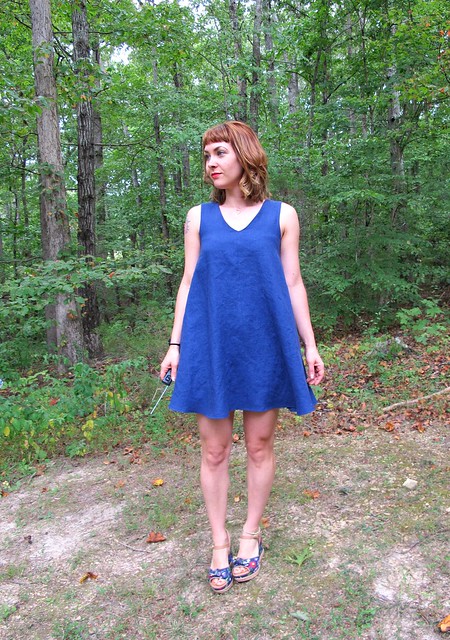
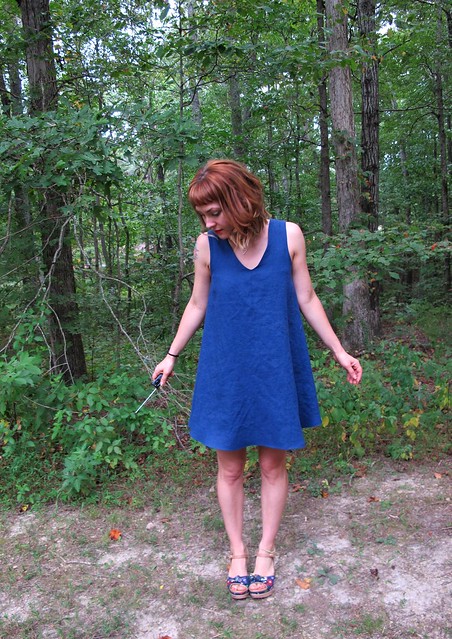
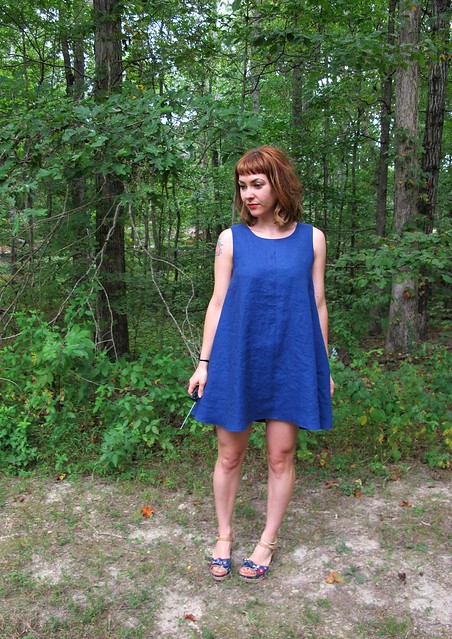
Y’all, this heat is making me do crazy things this year. As in, I made a tent dress. Out of LINEN. I’ll just let that one soak in for a minute.

Papercut Patterns Sway dress - front

I doubt it’s the most flattering thing I could be putting on my body, but you know what? Fuck it. This shit is BEYOND COMFY.

Papercut Patterns Sway dress - front

Papercut Patterns Sway dress - front

Katie sent me this pattern, the Sway dress, right after the launch of her most recent collection, Chameleon. While I loooove the way it’s styled on the envelope (especially that winter version with the turtleneck! Ahhh it looks so chic and cozy!), I was pretty sure there was no way in hell I’d be putting this kind of tent shape over my body. My waist, the world has to know that I have a waist!!!1!

Then I turned 30, then it got really hot, and then Katie is basically like my mom because she knew better before I even realized it for myself.

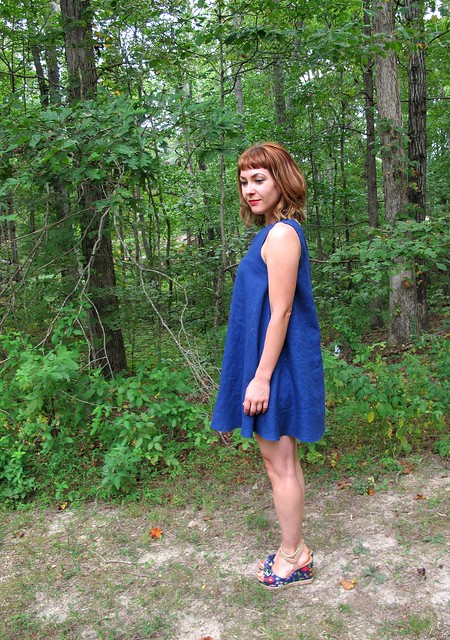
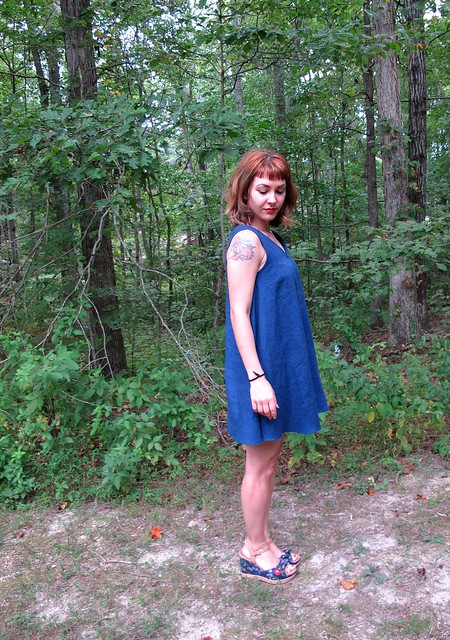
Papercut Patterns Sway dress - side

Papercut Patterns Sway dress - side

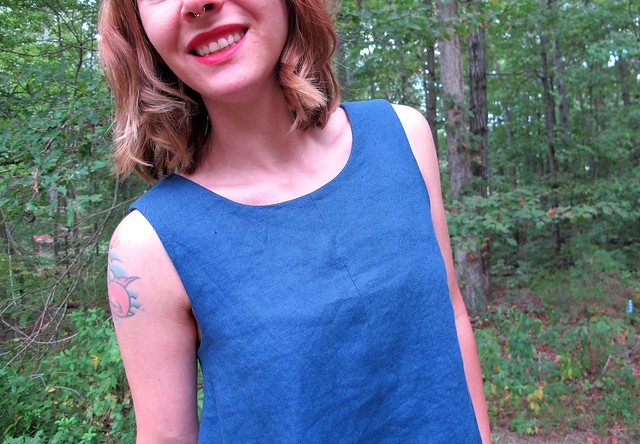
If this dress looks like it took 2 hours to put together, that’s because it did. It was super fast, super easy, and a really satisfying project to work on. The pattern is extremely simple – front, back, facings, and then pockets. That’s it! No darts, no tricky seamlines, no closures. I cut the size XXS with no alterations, and made this up in an afternoon. The directions are clear and straightforward, and I really like that the facings are all-in-one, so that the arm holes and neckline are all encased at the same time and everything stays in place really well. it’s a nice, clean finish, and it looks really good from both the outside and the inside. Letting the dress hang for 24 hours to stretch out the bias was the most time-consuming part of the whole sewing process, but even leveling the hem wasn’t that bad.

Papercut Patterns Sway dress - front

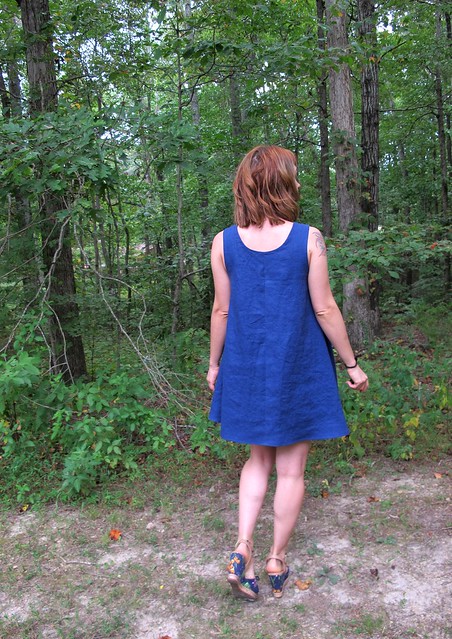
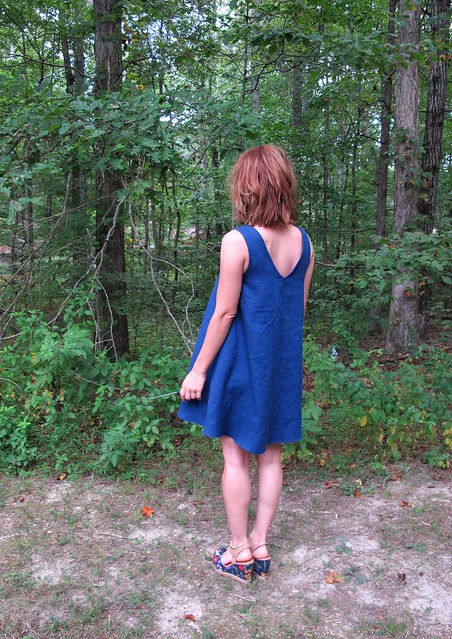
Papercut Patterns Sway dress - back

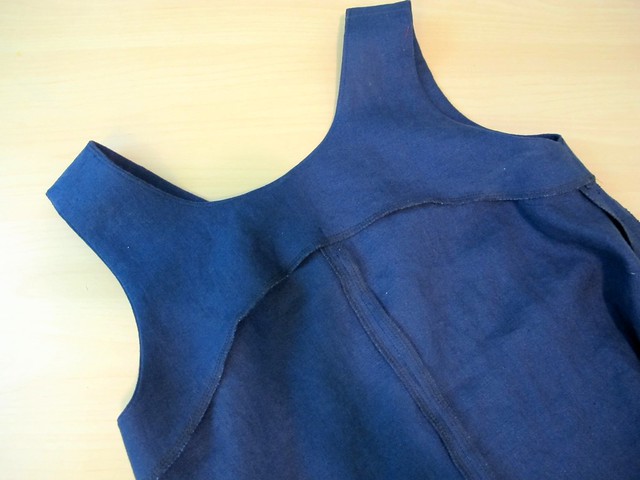
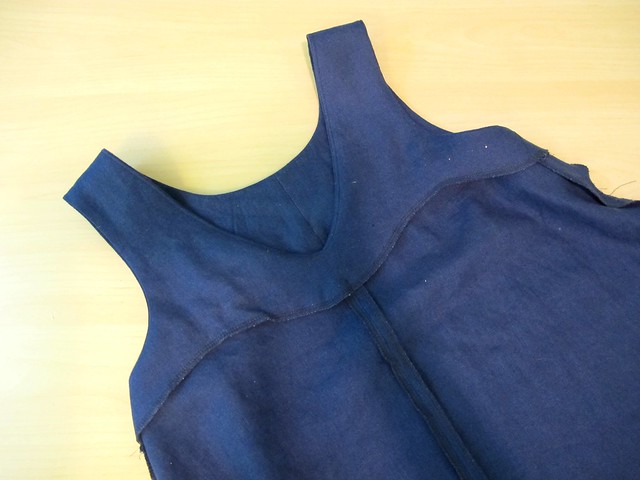
AND, because the dress only really fits at the shoulders and falls loose everywhere else – it’s totally reversible! You can wear the front to the back, or vice versa. Say what now?! I was originally Team V-neck, but after wearing the dress around a bit, I actually like the v in the back.

Papercut Patterns Sway dress - pockets

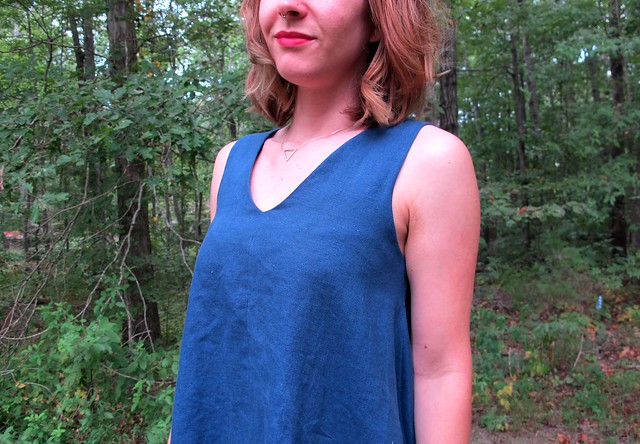
Since the dress is already totes appropriate for hot weather, I went the extra mile and made it out of some dark blue heavyweight linen to keep things extra cool and breezy. I really did not know what to expect with this linen – I’ve bitched and moaned before about how much I don’t like linen for it’s shifty nature and constant wrinkles – but this particular linen is a lot more tame than most of the ones I’ve sewn with. Because it’s so heavy, it’s not as prone to shifting around or wrinkling (while I did take these photos before wearing it around, I have since worn it for a full day and even with a couple hours of driving involved, it barely wrinkled at all). It does still fray like mad, so I made sure to finish all my seams with the serger and that solved that problem. This is the kind of linen that would get me sewing with the fiber on the regular – and now that I’m looking at the Mood Fabrics website, it looks like they added more colors! Yay!

Papercut Patterns Sway dress - neckline

Papercut Patterns Sway dress - necklineThe only part where I deviated from the pattern was to cut the pockets out of a lightweight china silk, instead of the heavy linen. I’m sure the linen would have been fine, but I like how light and not-bulky the silk pockets are. Plus, they feel gooood on my hands!

One thing I will change for future makes of this pattern is to raise the arm holes, because they are pretty low on me! It might just be because I’m petite, but I was showing a little bit of bra when I first tried on the dress. I took in the underarm seam just a bit, which helped a lot, but I do need to be careful of which bra I wear with this dress because it definitely can and will still show at my underarms. I think raising the underarm about 1/2″ will take care of that. Also, if you plan on making this pattern – watch the length! I did not adjust the length whatsoever and it’s preeeeeeetty short on me (I’m 5’2″). Like, if I raise my arms too high… y’all are gonna see some cheeks. No, seriously, I tested that shit in front of a mirror. The struggle is real.

That being said, I love the micro-mini length combined with the exaggerated tent shape. I especially want to put this into action in a cozy black wool, and wear it with black tights.

Papercut Patterns Sway dress - detail

Papercut Patterns Sway dress - detail

Inside guts. It’s a simple dress, so really not much to see here!

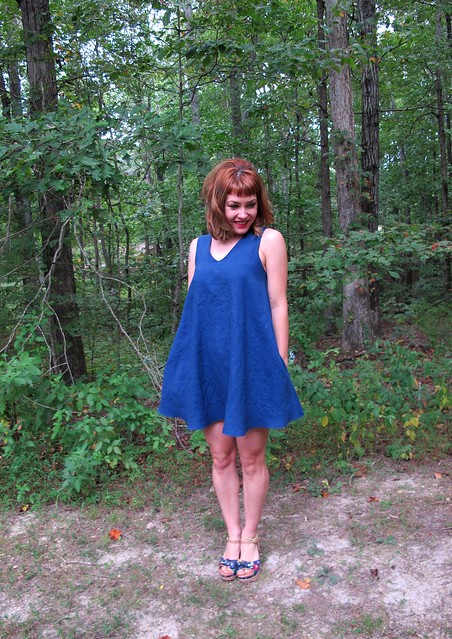
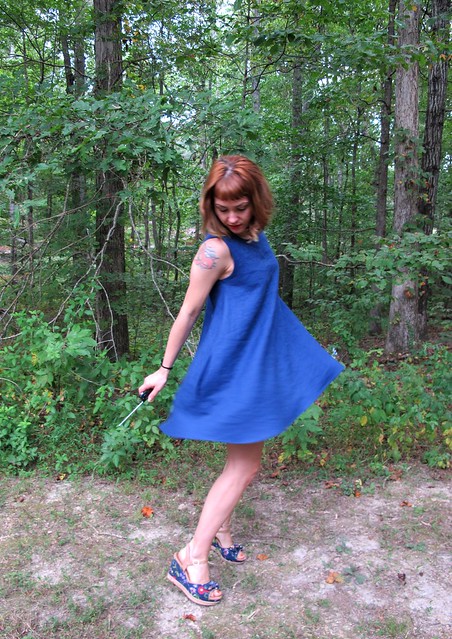
Papercut Patterns Sway dress - twirl

I’m still not 100% that this is the best look for my body (I’m sure there is someone out there who thinks I’m trying to hide a pregnancy), but I am 100% in that this dress is SUPER comfortable and perfect for the summer heat!

As a side note – I’m off to Cancun, Mexico this weekend! Gonna lay poolside with my bae and drink something with an umbrella sticking out of it (wearing my new Made Up bikini, naturally! Yay for finishing by my self-imposed deadline!). Cannot even wait. Suffice to say, this blog will be pretty quiet for the next few days. This girl needs a vacation!

Note: The fabric for this dress was purchased with my allowance for the Mood Sewing Network. Pattern was given to me as a gift. All comments on this blog post are just, like, my opinion, man.

Completed: The Summer DVF Wrap Dress

17 Aug

What? Did you think I was going to make it an entire year without busting out this pattern? Ha ha! Forget about it!

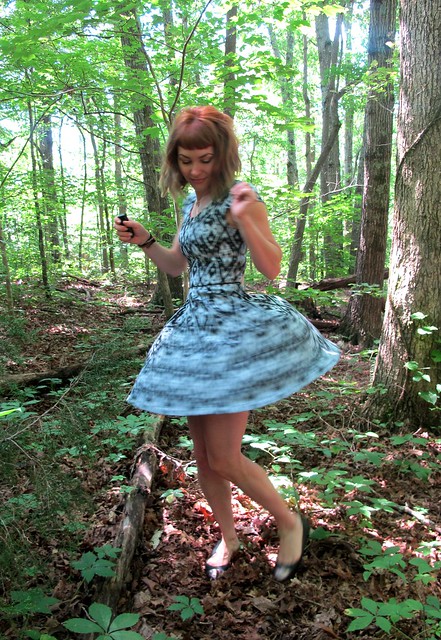
Vogue 1610 // DVF(No idea why I’m standing pigeon-toed in this photo, eh.)

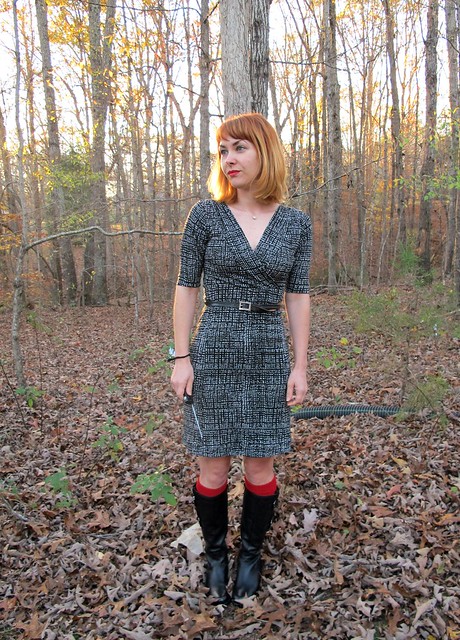
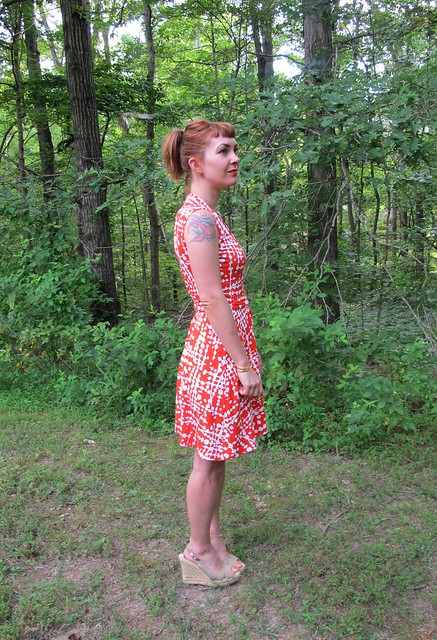
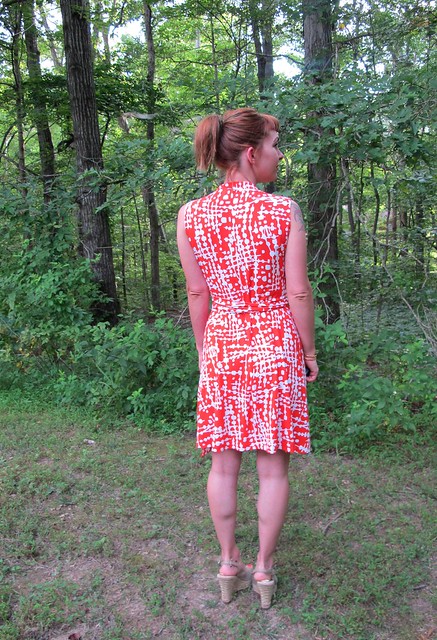
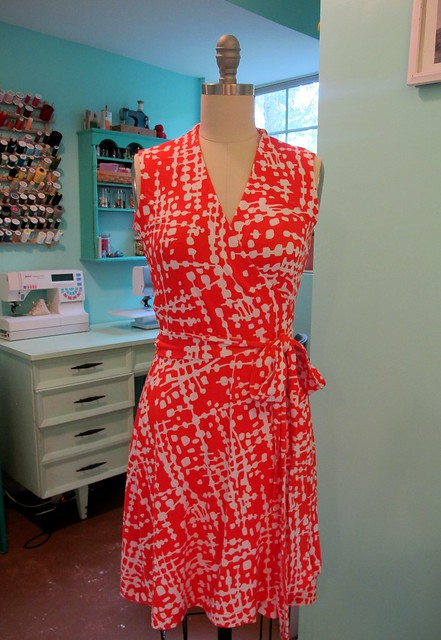
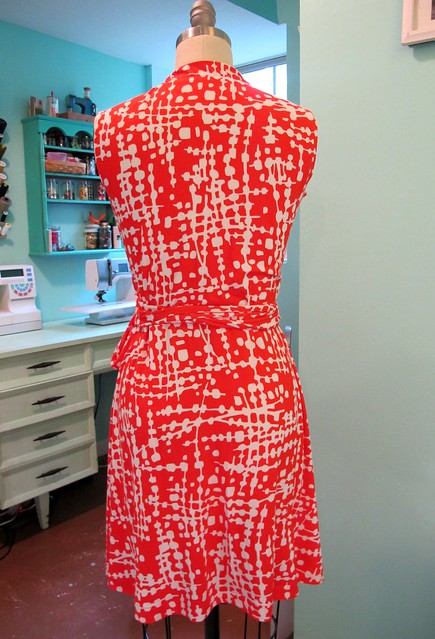
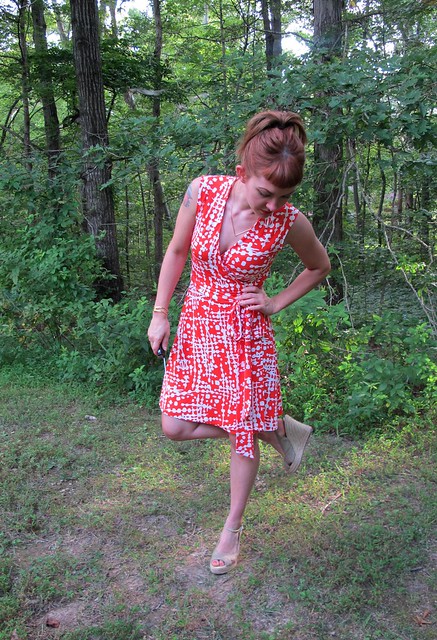
ANYWAY. If you’ve been following my blog for a while now, you’ll know that I loveeeee me some knit wrap dress action. Specifically, some Diane Von Fürstenberg knit wrap dress action. I just think she makes the prettiest dresses and I can’t get enough of them (and by “them,” I mean “knock-offs”) in my closet! I have a few that I made last year – The Wearable Muslin, The Silk Jersey and The Chic Black Wool. And now, here’s #4: The Bold Graphic Print. Just in time for the last few weeks of summer! Vogue 1610 // DVF

I have an original copy of Vogue 1610, which is a (vintage) Vogue American Designer pattern (this one featuring Diane Von Fürstenberg, obviously). I found it – in my size, no less – at an estate sale for around $1 a few years ago. It’s a beautiful pattern that really lends itself well to all the hacking and modifying I’ve put it through. It’s certainly a bummer that Vogue won’t re-release this pattern for the modern sewist – and before you start pointing fingers, this has nothing to do with Vogue and everything to do with DVF not renewing the license. I’m pretty sure the McCall Pattern Company wants to re-release some DVF love just as much as you want to buy it (I mean, can you imagine how much $$ they’d make? Who can say no to that?), but it’s not really up to them to decide. Seems like the designer just doesn’t want her name on sewing patterns anymore 😦 DIANE, WHYYYY.

Anyway, back to my dress!

Vogue 1610 // DVFVogue 1610 // DVF

Taking a cue from the black wool version, I kept the original bodice from the pattern and changed out the skirt for a simple wrap skirt (specifically, I used Tilly’s Miette skirt and just made it so the wrap is in the front). I added 1″ to the overlap, so I’d have a little bit of fabric to fold back and topstitch. I like the gathered skirt that the pattern is drafted for, but I wanted this version to be a little more sleek. I originally planned this dress to include small cap sleeves – I was going to take them off my Lady Skater dress pattern – but when I tried the dress on sans sleeves, I really liked the way it looked so I kept it as-is.

Vogue 1610 // DVFI also kept a slightly longer skirt length (I know, I know… nothing about “practically knee-length” qualifies as “long,” but considering I’ve basically been exposing ass cheeks all summer, this is long for me), again, something I liked when I tried it on during construction. Vogue 1610 // DVF

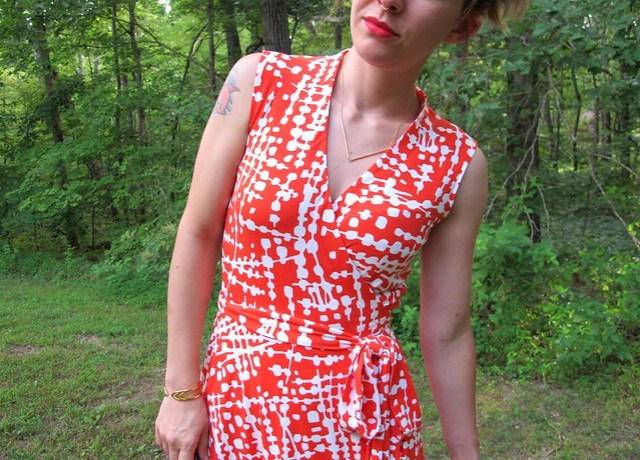
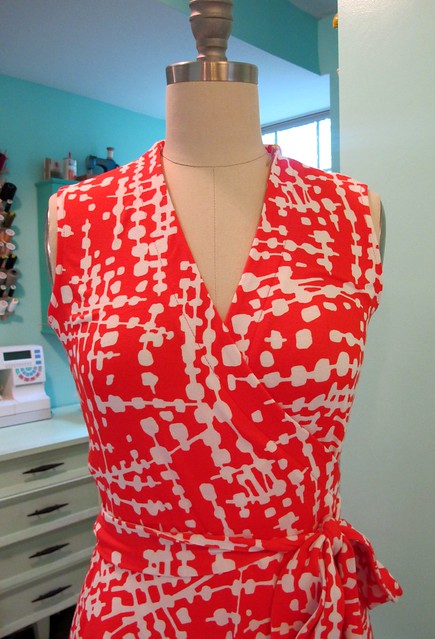
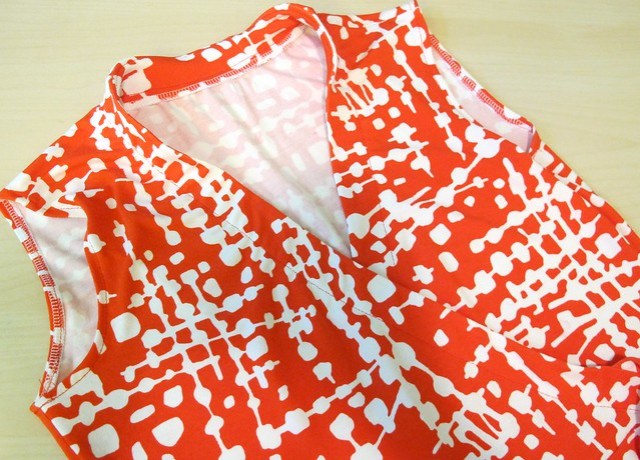
Vogue 1610 // DVFI also tried something different with the front band. Normally, I sew it on like how you finish the neckline of a tshirt – stretching the band so that it fits snugly against the bust when worn. However, I lurked in on some actual DVF wrap dresses while I was in Harrod’s last year in London, and noticed that they finish their necklines a little differently. No knit bands to be found anywhere – most of them use a binding or a facing. I was keen to try this myself, so that’s what I did. I cut the band as usual and interfaced it with a lightweight knit fusible (so it has a little bit of structure, but it’s still quite stretchy). I finished one edge, sewed the facing to the outside of the garment, flipped it to the inside and understitched, and then topstitched 1″ away from the edge on the outside. I was 100% certain that I’d fucked up the dress beyond repair at that point – the back had some puckers and everything just looked kind of strange – but it all sorted itself out once I put it on and my body stretched it into shape. The addition of the interfacing gives the neckline a little bit of height, almost – especially around the neck itself. The facing is much smoother and sleeker than any band. And I can pull the dress apart a little and show some 1970s ~natural cleavage~ if I feel so inclined. Yeehaw! Vogue 1610 // DVF

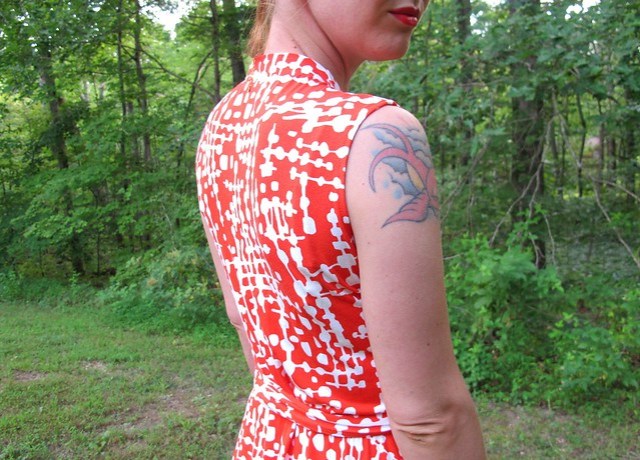
Vogue 1610 // DVFNot really much else to report on construction – much of the same old, same old. I used my serger to construct, my Bernina (+ walking foot // ballpoint needle) to topstitch. For the arm holes, I just serged them and turned the hem under and topstitched with a straight stitch. So easy! I think I finished this whole thing in less than 3 hours. Vogue 1610 // DVF

Isn’t the fabric so good? When I saw it on Mood Fabrics recently, it immediately screamed WRAP DRESS and it knew it had to be mine. Sometimes, I find buying knit fabric online to be a bit of a gamble – you can’t really tell weight/hand/stretch recovery (not to mention color) from a photo and description, and occasionally I end up with stuff that wasn’t at all what I was expecting. This fabric definitely exceeded my expectations – it’s so beautiful! Very dense with a good stretch (and an awesome recovery; I wore this all day last week and it didn’t bag out at all), and the color is super saturated. It’s a little on the heavy side – but not bulky. It feels very fluid and luxurious. I wish all knits were like this. This stuff is awesome! Also, the color is “poppy” which I kept seeing as “poppy,” so, like, there’s that.

Vogue 1610 // DVFHere’s a shot of the inside. Super clean finish, yay! Vogue 1610 // DVFI think the color and style of this dress will be good for transitioning into the fall months here – where we want to pretend like it’s tall boot and wool hat weather, but it’s actually still 90+ degrees. Which means I can wear this and look cool, but still be cool. Also, I am not ready for summer to end just yet – I have a few more projects left to finish!

Note: The fabric for this dress was purchased with my allowance for the Mood Sewing Network. All comments on this blog post are just, like, my opinion, man.

Completed: OAL2015 (M6887 dress + Vianne sweater)

31 Jul

MY GOD, you guys. I am so happy I got this finished in time for the OAL deadline! I’ve had the dress finished for a couple of weeks now, but I worried about that sweater as the time drew closer! I ended up needing to take a couple marathon days in order to finish, but I did finish! And now I’ve got an outfit to show y’all!

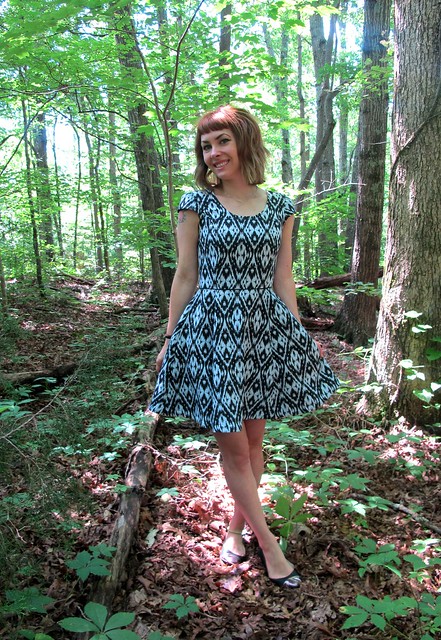
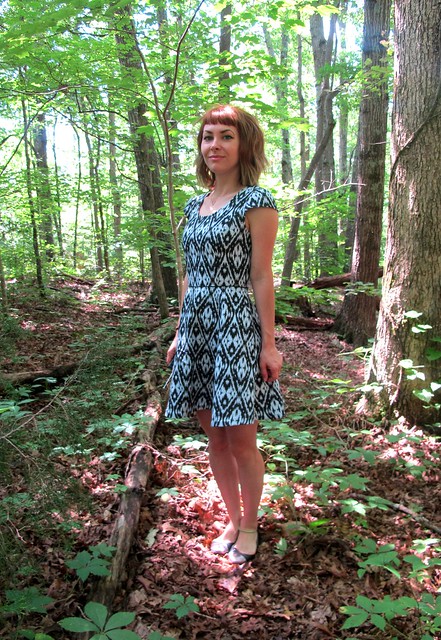
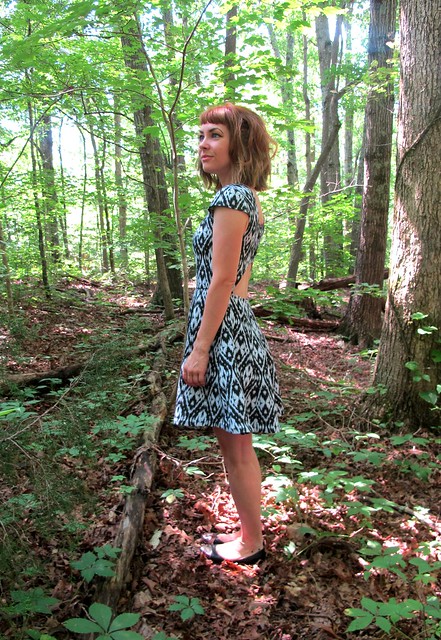
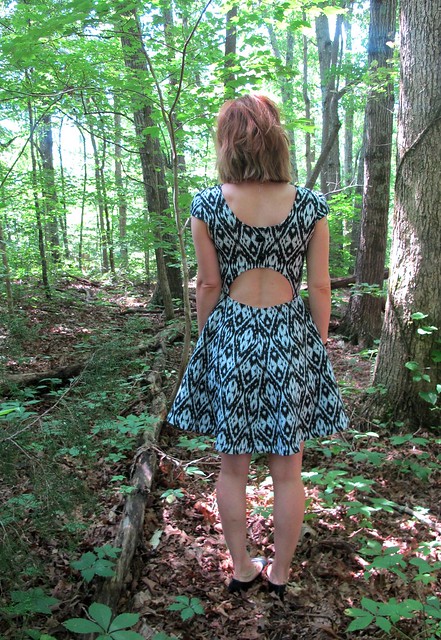
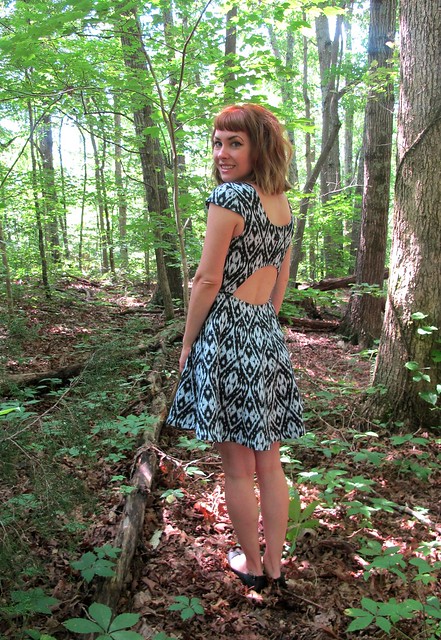
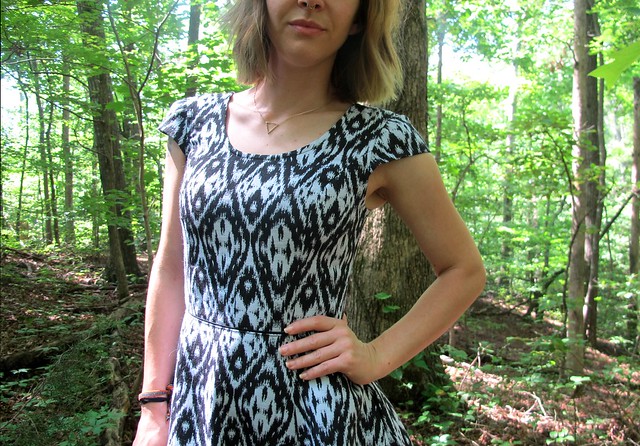
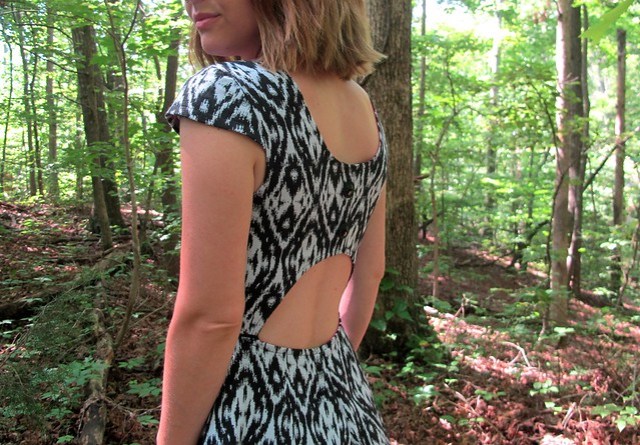
OAL2015 - M6887I’ll start with the dress. Again, this is McCall’s 6887, which I used cotton ikat fabric from Mood Fabrics to make it up with (this isn’t a Mood Fabrics allowances fabric; I bought this on my own dime while I was in NY last year). I used the version with the back cut-out, as well as the cap sleeves, omitted the lining in favor of bias facing, and added pockets. I’m not going to go into detail about the construction, since there’s a whole series of blog posts on the making of this dress! You can see them all here:

We are just gonna look at pictures instead. Btw, I walked through a lot of spiderwebs to take these. Appreciate me, dammit. OAL2015 - M6887

OAL2015 - M6887OAL2015 - M6887

OAL2015 - M6887OAL2015 - M6887

OAL2015 - M6887Now for the sweater part! OAL2015 - Vianne

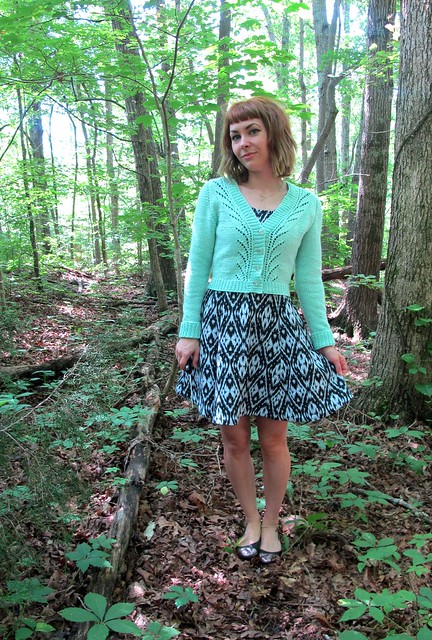
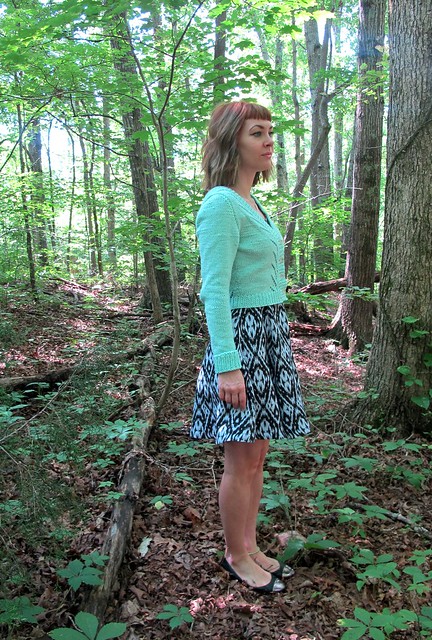
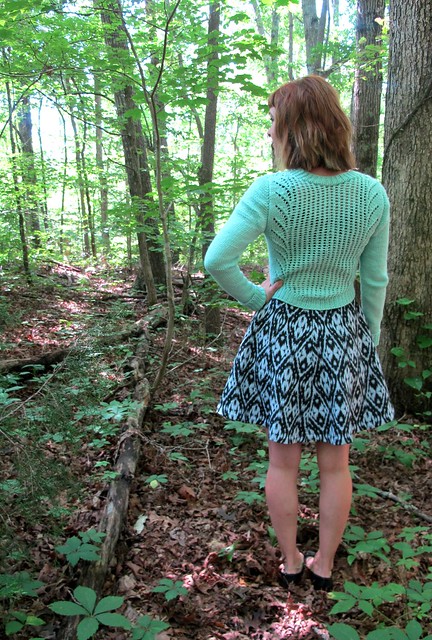
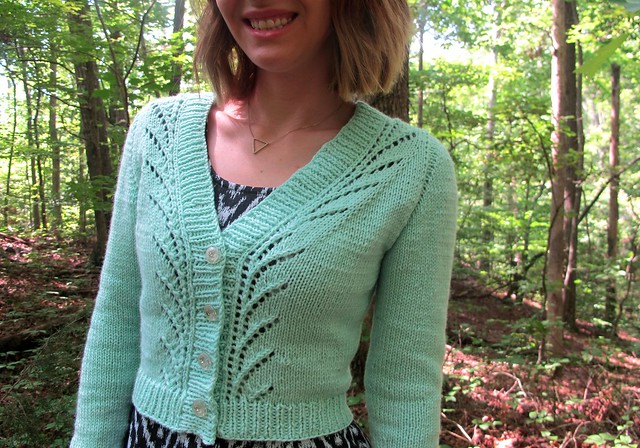
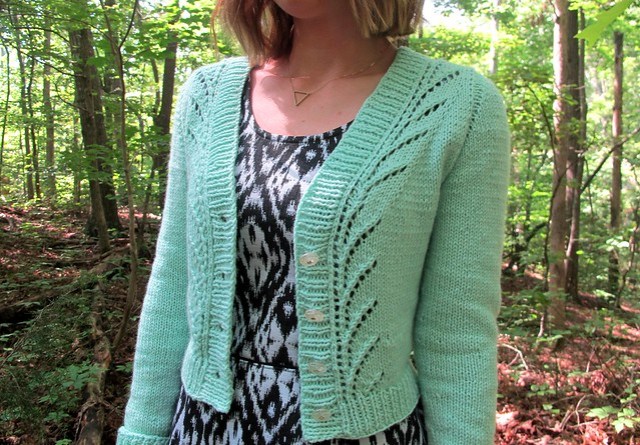
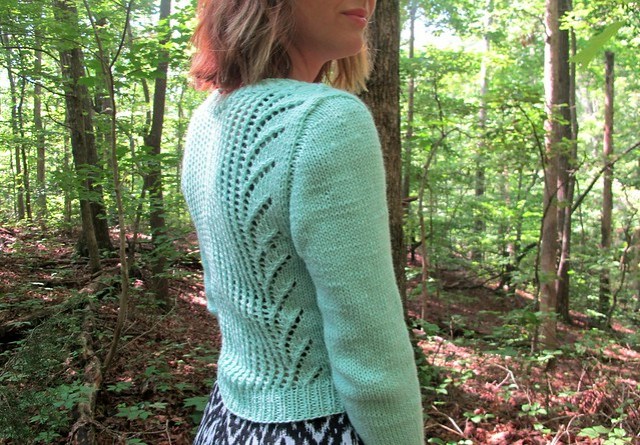
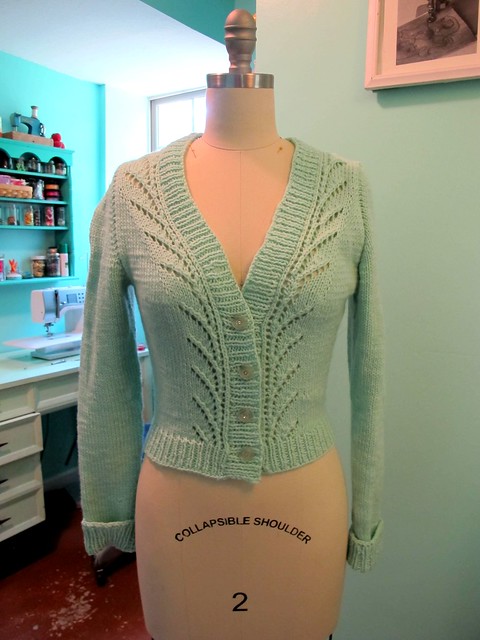
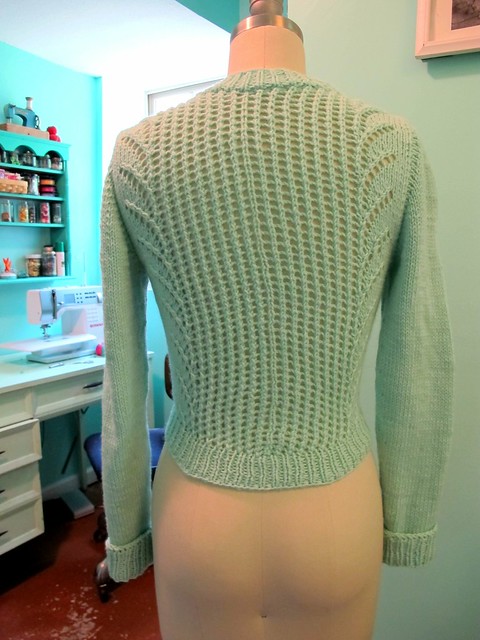
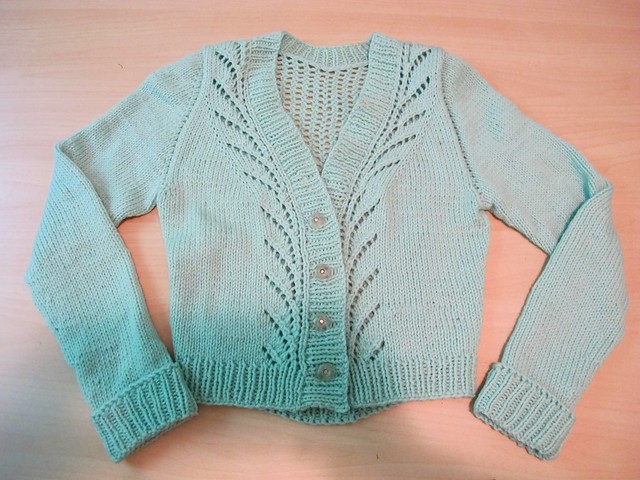
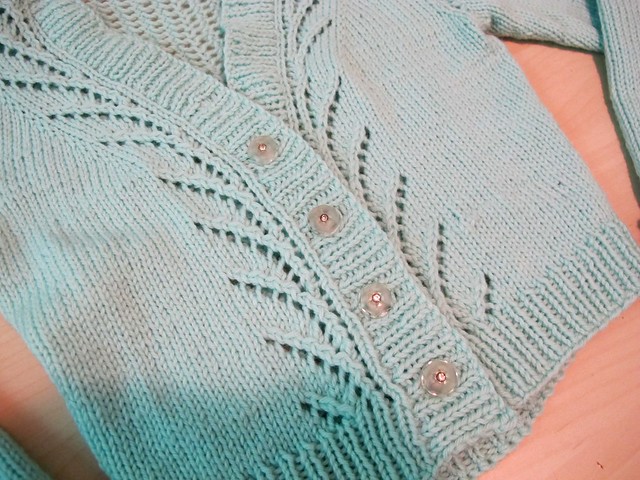
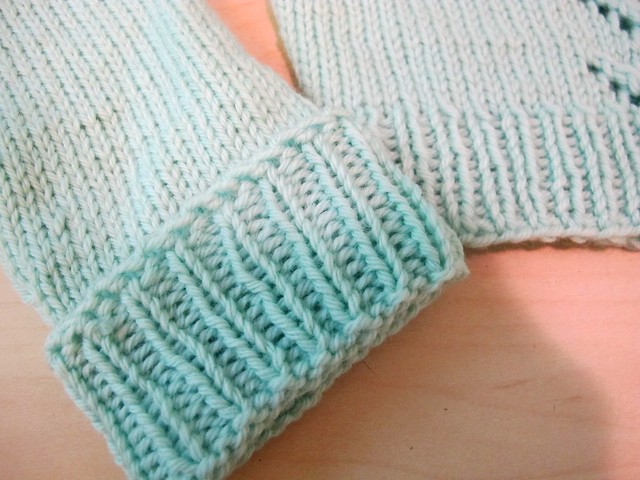
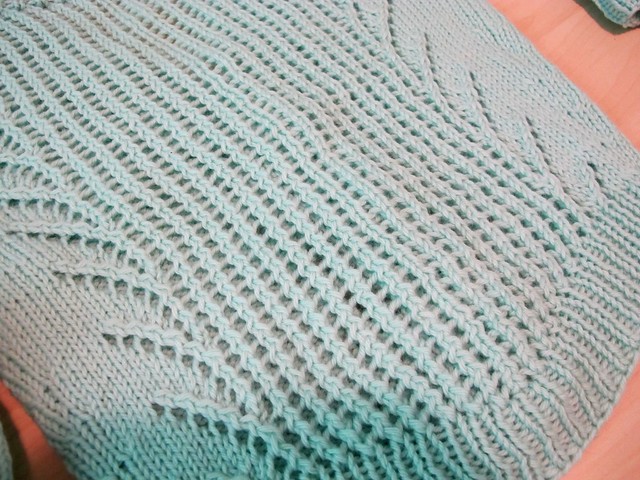
Vianne is a sweet little top-down cardigan with lace details and a open mesh back. It’s supposed to be knitted up in DK weight yarn, but I used Cascade 220 worsted weight and was able to get gauge using size 6 needles. I knit the size XS, and the only modification I made to the pattern was to knit full-length sleeves. As in, I followed the sleeve directions and just kept knitting/decreasing until they were long enough. I’ve found that I don’t have much need for 3/4 sleeves – if I’m cold enough to wear a sweater, I am cold enough to need the full sleeve – so I went with long sleeves. I did keep the mesh back, though. The mesh back is awesome. I found the mesh+lace a little confusing to follow, so I used a bunch of stitch markers to stay on track and that helped a lot.

While I normally finish my buttonbands with a strip of petersham ribbon for stability, I did not do that with this cardigan. Vianne is a looser fit on me, and the button bands are so wide that they don’t really stretch when they are buttoned. So I left off the petersham and just sewed the buttons directly on the ribbing. One thing I will say about using a stabilizer with your button band – it makes sewing on the buttons a helluva a lot easier! Oh well! Anyway, the buttons are vintage glass from my stash – I’ve had them for YEARS and been hoarding them for a special project, which I’m happy to have finally found! I only had 4 buttons, so I left off one of the button holes. And by “left off,” I mean I originally knit it and then later closed it up with a slipstitch haha.

OAL2015 - VianneOAL2015 - Vianne

OAL2015 - VianneOAL2015 - Vianne

OAL2015 - VianneOAL2015 - Vianne

OAL2015 - VianneOAL2015 - Vianne

OAL2015 - VianneOAL2015 - Vianne

OAL2015 - VianneAs with all of Andi’s patterns, I REALLY enjoyed knitting this sweater! The yarn was so nice to work with (after a long Cascade 220 hiatus, I’m happy to be home! And I’m really happy to find a local source that is still selling it – Ewe & Company, who happen to be located here in Kingston Springs! What are the odds?) and the color is my favorite. The only thing I didn’t like was feeling rushed at the end, but that’s my own damn fault for not pacing myself earlier during the OAL. I’m glad I got it finished in time, at any rate!

As a side note, wrangling the last sleeve of the sweater got me really wanting to start doing seamed knitting. I’ve always been a fan of in-the-round, because it’s so easy, but I’m starting to feel a little comfortable and I’m kind of craving a bit of a challenge. It would be fun to learn how to properly seam a sweater. Not to mention all the pattern possibilities that open up when you’re not hung up on just one particular construction style!OAL2015 - M6887

Anyway, that’s it! Here is Vianne on Ravelry (spoiler: not any more info than what you see here!). Don’t forget to post your finished outfit in the OAL 2015 FO Thread on Ravelry for a chance to win prizes! We have prize donations from Indie Stitches and The McCall Pattern Company, as well as from Andi Satterlund herself (winner’s choice with all of these, so you won’t get stuck with something you don’t want!), and there will be 4 winners. Also, if you have blog posts to share with your FO, post them here so I can see! I need to get my lurk on 😉

Completed: McCall’s 7119

22 Jul

Allow me to introduce you to my ridiculous summer sundress for 2015.

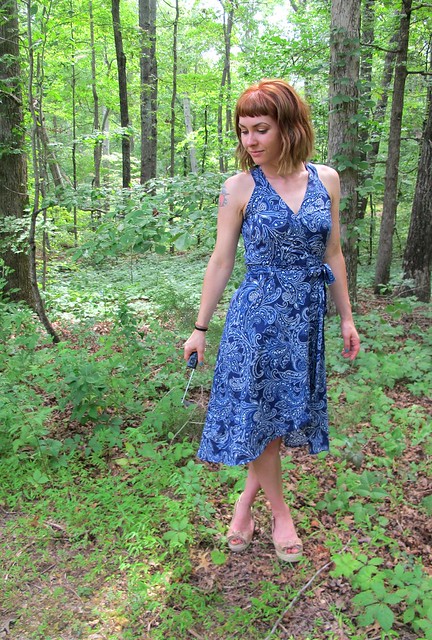
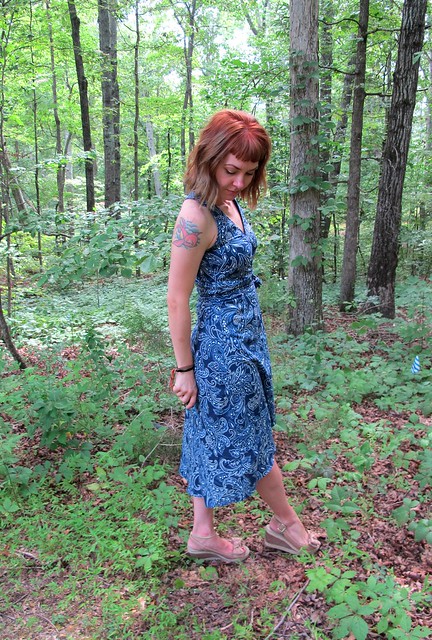
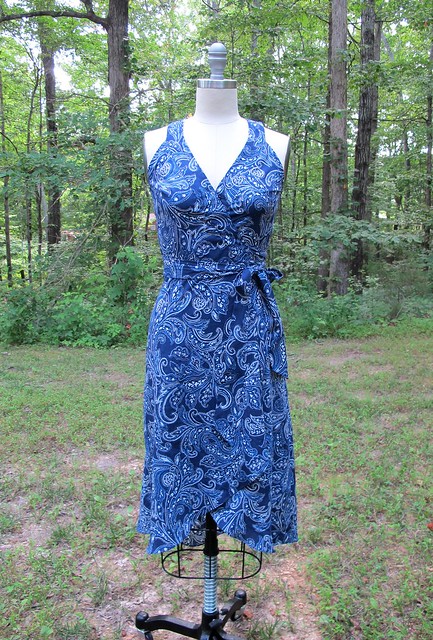
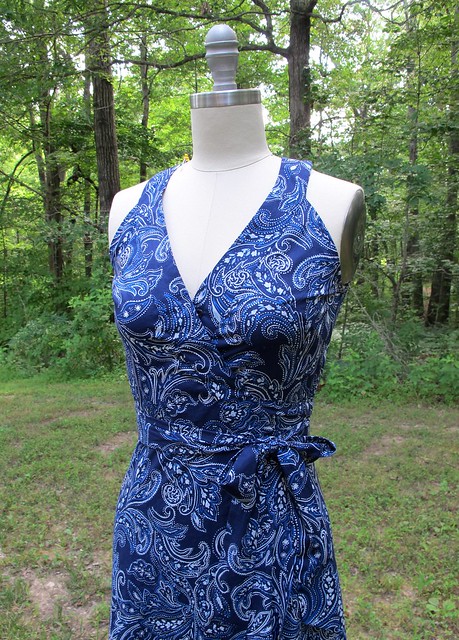
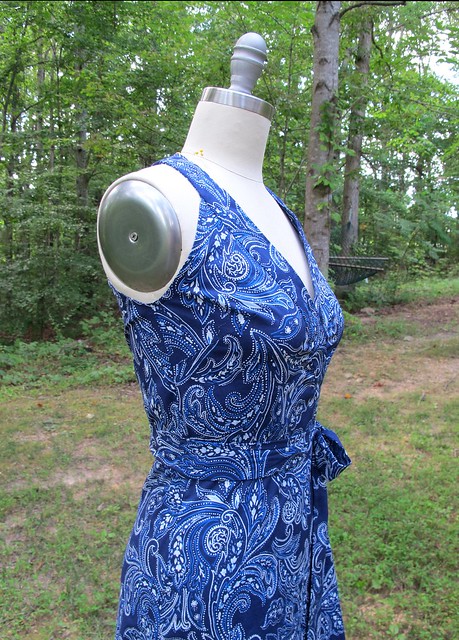
McCall's 7119I guess it’s not really that ridiculous, but it feels a little over-the-top (for me, that’s a good thing haha). This is totally the time of year for getting away with this sort of loud dressing, but I haven’t really taken advantage of it until now! McCall's 7119

McCall's 7119I used McCall’s 7119 to make this, which was originally sent to me by the McCall Pattern Company (contrary to popular belief, I usually buy my Big 4 patterns because I live in the mystical land of $1 Joann sales, but I’ll take free, too haha). I really love the photo on the envelope and was dying to make my own. I was not, however, dying to plunk down $$ for the 3 yards of fabric necessary to make this sucker up. Damn wrap dresses and long maxi-lengths! As if! McCall's 7119

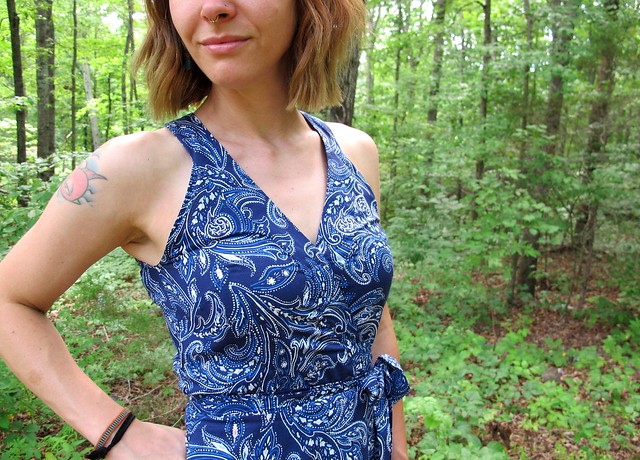
Anyway, I noticed that this blue cotton poplin paisley went on massive sale at Mood Fabrics for all of $4.99 a yard, and I realized that it was perfect – both in weight and cost – for the dress I was wanting to make. I’ve never been a huge fan of paisley – I’ve made a couple garments in the past with beautiful pieces of paisley fabric, yes (and I have a couple more pieces in my stash as of this writing), but for the most part, I’ve always considered it to be kind of an ugly print. Mostly because it reminds me of the horrible ties that my dad used to work to work in the early 90s haha. Sorry, dad! This paisley, though, is definitely much prettier (or that could be the $5 price tag talking to me, I dunno!). I think it’s due to the monochromatic color scheme, which tones down the tack and lets you focus on the pretty design. Or, again, could be that $5 price tag. Whatever.

McCall's 7119Despite this fabric being inexpensive, it’s not cheap. It has a really nice hand and drape, the colors are beautiful and saturated, and it’s opaque enough to not warrant a lining. The right and wrong side are almost identical, which is good for this sort of dress – as you can see the wrong side through the back hem dip. The fabric cut & sewed like a dream, and it is fairly good at resisting wrinkling (see: these photos after a day of wearing). It also feels reeeeeal nice in this heat, a bonus! McCall's 7119

McCall's 7119The pattern was easy enough to make up – I finished it over a long marathon sewing weekend. I started with a size 6 at the bust and an 8 at the waist/hip, based on the finished measurements. I did make a quick little muslin mock-up of just the bodice, to see how the fit was before I cut into my fabric. The bodice fit well enough, except that the center front gaped like crazy! Surprisingly, the easiest fix was also the most efficient fix – I raised the shoulders by 3/8″, and then took 1/4″ off the side seams starting at the underarm and tapering into the existing seamline below the bust dart. I do think the bust darts are a little high – I should have lowered them after raising the shoulders – but the fit is pretty nice as-is, and the print is busy enough to where you can’t see it. Also, I don’t know what the horizontal fold/wrinkle is doing over my boob. I think it’s from how I’m standing, because it’s normally not there. Except, of course, in these pictures, and it’s making my eye twitch. Argh!

The last fitting alteration I made was right at the end – where I took off a massive amount of skirt length. I don’t even know how much, because I kept chopping and chopping. I started with about 4″ off the pattern tissue itself – because the measurements on the back showed that the back dip would drag the floor on me (I’m 5’2″, so, yeah). Upon finishing the dress – well, apart from the hem and closing up the facings – I realized it was still waaaay too long and the whole thing – print+style combo – was totally overwhelming on me. I just kept cutting that hem, and curving into the front wrap (definitely don’t cut too much off the front wrap or you’ll end up with something very indecent!) until the length looked good. McCall's 7119

To sew this up, I used a brand new 70/10 Microtex needle and navy thread. The seams are all French seams – except where the hole is in the side seam (to feed the waist tie through), that one is just turned under and topstitched. I finished the neckline facing with tiny little invisible hand stitches, and the bottom hem is machine rolled. I think that’s it? Pretty straightforward pattern if you ask me!

McCall's 7119McCall's 7119

McCall's 7119McCall's 7119

McCall's 7119I don’t know what possessed me to drag the dressform outside for these photos. I mean, they look really nice, but holy hell that thing is heavy! Never doing that again lolol McCall's 7119

McCall's 7119Here’s the inside – look where my fingers are pointing, you can see the hole for the waist tie. There is also a tiny snap right at the bust where the wrap crosses over, to prevent any northern wardrobe malfunctions. Due to the  wrap, a big gust of wind will definitely show some leg at the skirt. I’m ok with this, though. Legggsssssss. Also, see how similar the right and wrong side look? Because of my finishing, it’s actually hard to tell when the dress is inside-out! I have to look for the French seams 🙂 haha! McCall's 7119

Overall, I enjoyed working with this pattern and I’m definitely not opposed to making it up again – although probably a different view, because this particular one is a little fancy for my daily use. I’d like to try the shorter, mullet-less skirt with some contrast on the facings. Maybe in a silk? Fancy without really being fancy, yeah?

Note: Every month, Mood Fabrics gives me an allowance to purchase fabric with, in exchange for writing a post on the Mood Sewing Network. This fabric was purchased with that allowance. The pattern was also given to me by the McCall Pattern Company. I like to think it’s because they love me, because I am forever an optimist 🙂