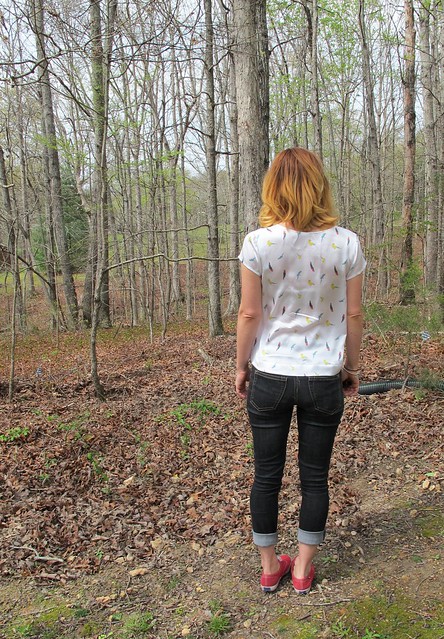
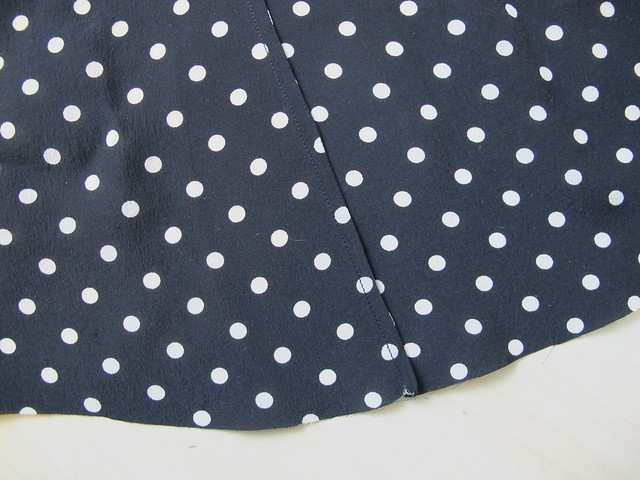
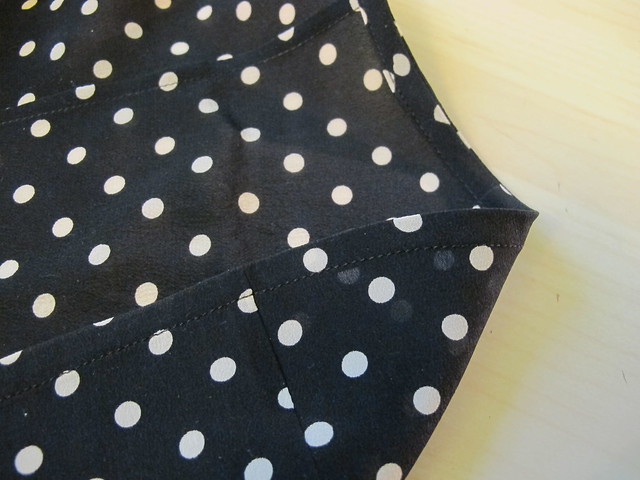
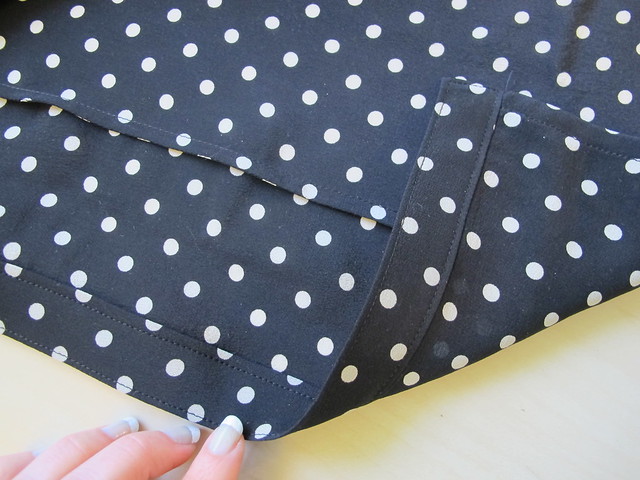
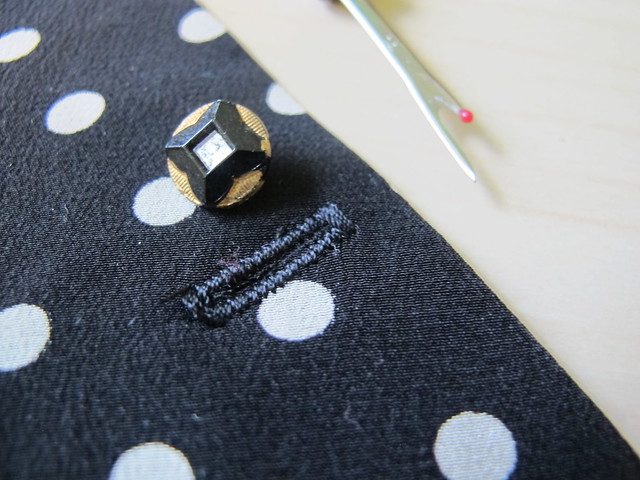
Completed: The Lil’ Bird Scout Tee + A Giveaway!

3 May

I’m not really sure what prompted this, but lately I’ve REALLY been loving these boxy loose shapes on me. Made in a super drapey fabric and cropped just so, I find them really flattering and even more comfortable. It’s funny – the older I get (ya know, this RIPE OLD AGE of 30 lol amirite), the more I find myself comfortable with my body – and the more I’m ok with nto wearing things that are incredibly skintight. Both of those statements seem to contradict each other, but, it is what it is!
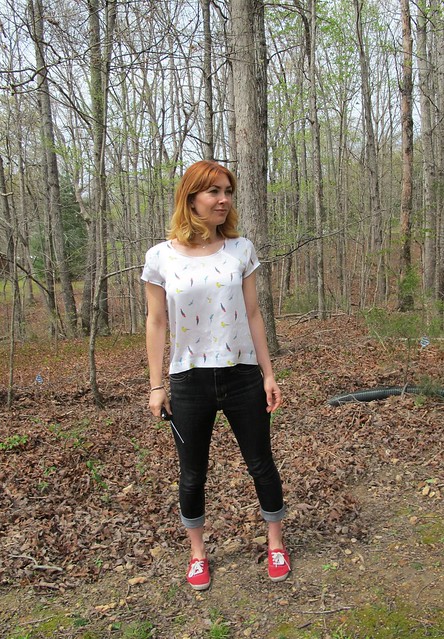
Silk Bird Scout Tee

The Scout Tee is certainly not a new pattern – not even in my personal arsenal (I made a really fun one last year with some beautiful handwoven fabric, in case you missed it!). But hell, I have loved wearing it! My first version was made with a fabric that made it really boxy, which I liked a lot – but I wanted to see how it would feel in a drapey fabric. Spoiler alert: This is love. This is true love. I already have the next one planned.

Silk Bird Scout Tee

Silk Bird Scout Tee

Silk Bird Scout Tee

This tee is pretty similar to my last one, in terms of construction. I sewed the size 0, and the only modification I made was to deepen the hem to about 2″, which is a good slightly cropped length for me. All the seams are French seams, and the neckline is finished with self bias facing. Overall, this was really fast and easy to put together. Since there are so few pieces – just front, back, sleeve, and that bias piece – it was even quick to cut. Yay!

I love the subtle high-low hem and I think it really benefits from some extra fabric down there to give it more weight. Especially with a fabric this lightweight and floaty!
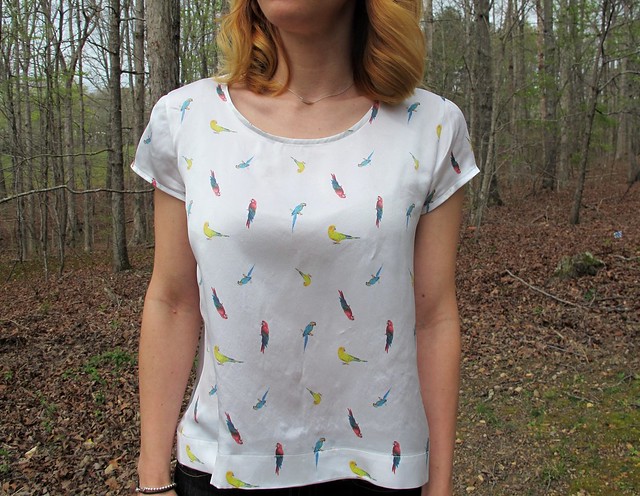
Silk Bird Scout Tee

Anyway, this post is less about the pattern and really about the fabric! What do you think of my AWESOME TROPICAL BIRD PRINTED SILK, huh?! 😀
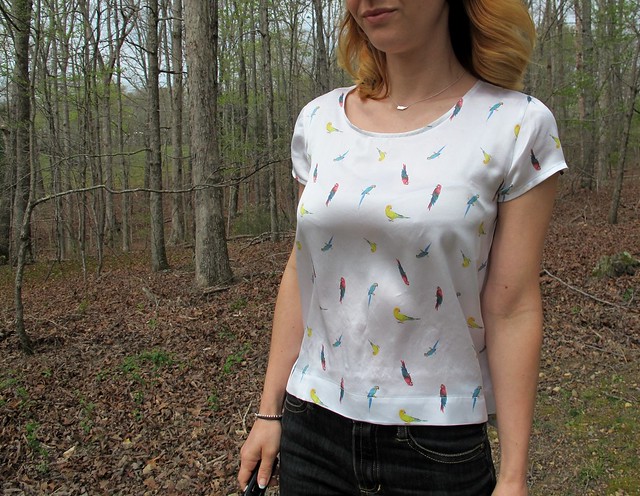
Silk Bird Scout Tee

The fabric is from Contrado, which is a company in the UK that specializes in custom printing – including on fabric! They reached out to me several months ago about trying out some fabric design, and I’ve finally had a chance to make that happen! It was the designing part that tripped me up and slowed me down so much – I’m not much of a designer, and most of my “art” involves direct copies. Tell me that I can design literally any print that I want, and watch the fear fill my eyes haha.

It seriously took me a couple of months to even think of what kind of design to do, but I had seen a few tropical bird prints floating around on RTW stuff and I immediately knew that’s the direction I wanted to take it. I googled around for some images that I liked and played around with them in my image editing software (it’s not anything fancy like Photoshop, just so we’re clear here haha. You could probably use pickmonkey.com to do your edits) until the design looked right. Then it was a matter of uploading the file to the website, making a few more minor tweaks – and that’s it! It was actually really really easy. The hard part is definitely choosing the design.

Narrowing down a fabric choice was also difficult! Contrado offers a massive array of fabric choices – over 75, in fact. From basics (such as cottons, polys, and knits) to fancier stuff (like cashmere !!!). They sent me a swatch pack so I could see all the printed samples, which made things both easier and harder 🙂
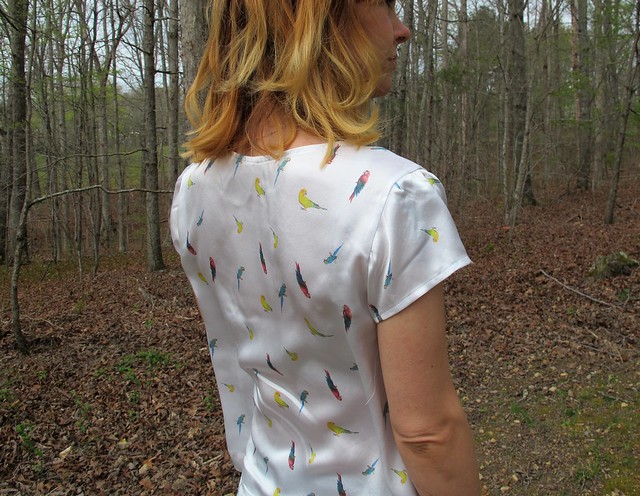
Silk Bird Scout Tee

The fabric I chose to print on is a beautiful silk satin. It practically drapes like a liquid and it feels really incredible against the skin. I was initially a little worried about it being SO shiny – I generally use the “wrong” side of my silks, as I don’t like really shiny stuff. But since this fabric was printed, the wrong side looked.. well, wrong. I think the nature of this design works with a shiny fabric, although now I am wondering how practical it is to make a summery sleeved top out of white silk… I sweat a lot! Ha! Well I guess I can always yank the sleeves off if it comes down to it 😉

I will admit that this was not the easiest fabric to work with – the silk is quite slippery on the satin side, and there’s not much of a “grab” to the wrong side either (by “grab,” I mean like what you’d feel with a silk crepe). I chose a very simple pattern for this reason, which definitely worked in my favor. I didn’t do any sort of prepping before cutting – no stabilizers or using a rotary cutter or anything like that – and while cutting took a bit longer than it normally does, it wasn’t too terrible. I think when it comes to dealing with silks and other slippery fabrics, cutting is the worst part. Once you get past that point (assuming you cut everything correctly and on-grain), actually sewing the pieces together is relatively painless.

Silk Bird Scout Tee

Silk Bird Scout Tee

Silk Bird Scout Tee

I actually took these photos after wearing and washing the shirt, and you can see how well the colors have held up (as well as the back wrinkles – sorry about that!). Speaking of washing, I get this question ALL the time, so it bears repeating – I wash all my silk on cold in the washing machine, and hang it to dry (it’s safe in the drier as I pre-wash and use the drier, but I hate ironing so hanging to dry is the way to go!). As long as you pre-wash your silk before cutting into it, it’s safe to wash it in the machine!

One last thing – in case you were curious 🙂

Silk Bird Scout Tee

GIVEAWAY IS CLOSED.

Time to talk giveaway! The folks at Contrado are offering a whopping £100 voucher to use on their site, to print whateverrrrr your desires on your dream yardage! Further, this giveaway is open WORLDWIDE, so you don’t need to be a UK resident to enter! (My US folks – as of today’s currency exchange rates, that comes out to approximately $146.29, fyi!)

To enter the giveaway:
1. You need to LIKE the Contrado Facebook page. Show them your love and support!
2. Comment on this post and tell me what you’d design, and what you’d make out of said fabric.

As I said, this giveaway is open WORLDWIDE and the winner will be chosen by a random number generator. I will close the comments one week from today, on TUESDAY, MAY 10, 2016 8AM CST.

GIVEAWAY IS CLOSED.

Silk Bird Scout Tee

Good luck, everyone! ♥

Note: This fabric was provided to me by Contrado, in exchange for this giveaway post! Who’s gonna be the lucky winner? 😉

Completed: Butterick 6019

27 Apr

Butterick 6019

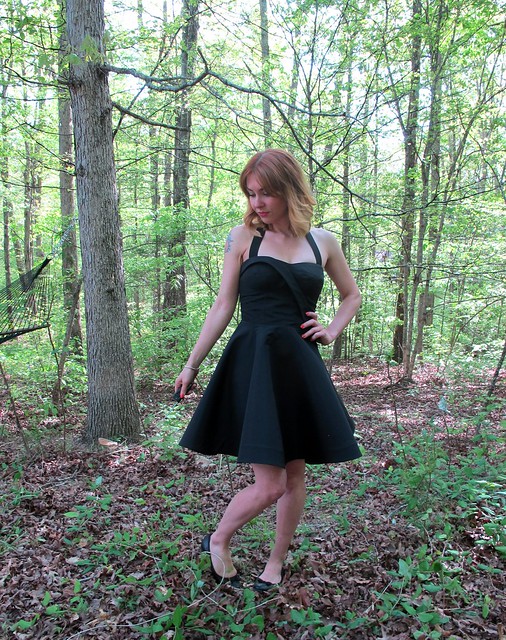
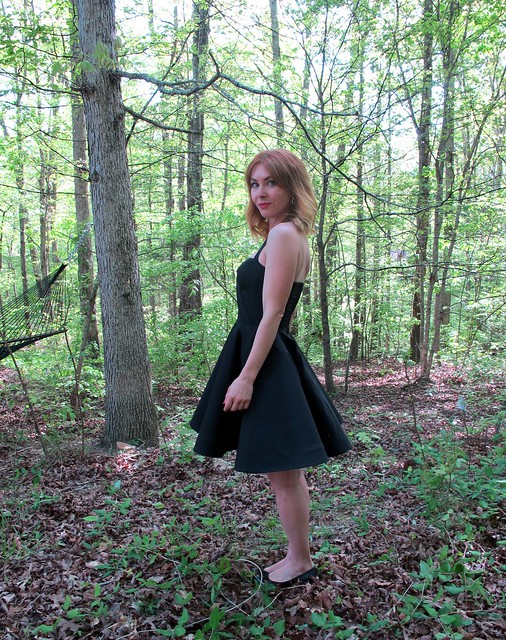
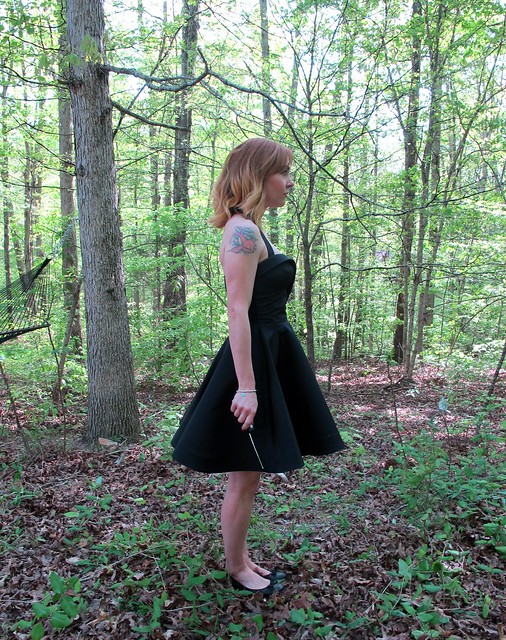
DRESS IS DONE, Y’ALL.

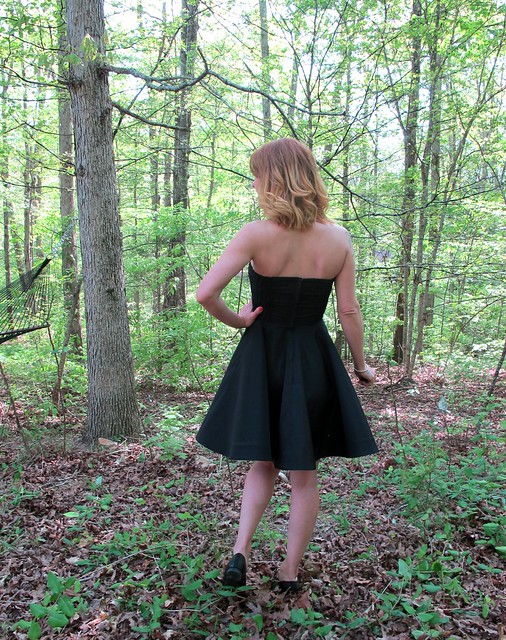
Butterick 6019 - complete!

As much as I *truly* enjoyed all the work and care that went into the making of this dress – it sure feels good to be finished with it!

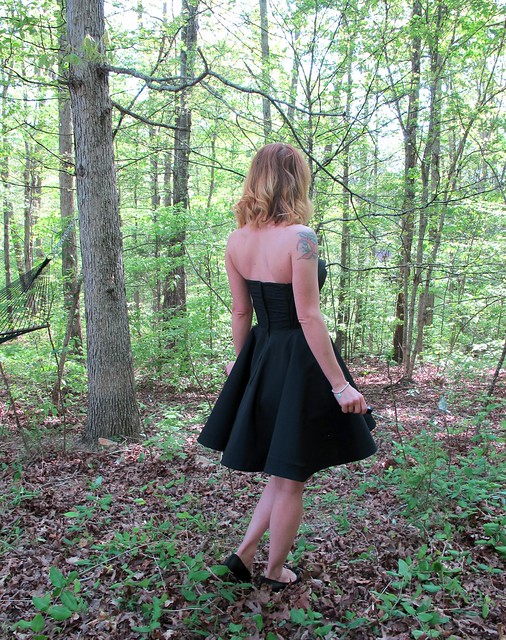
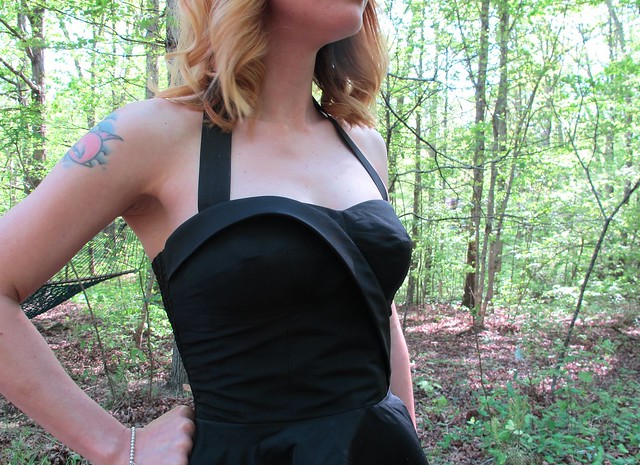
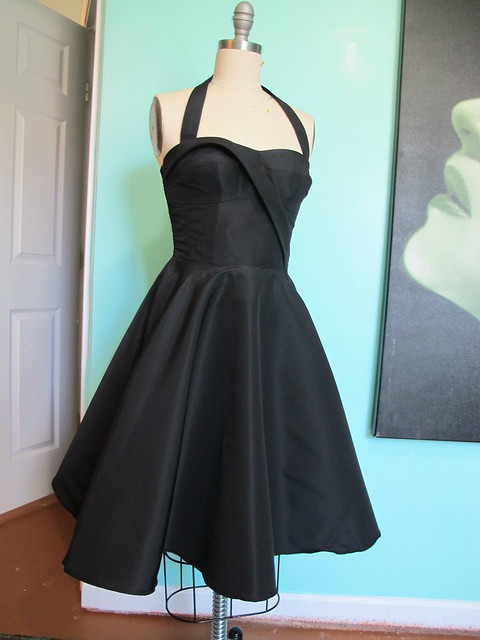
A brief overview, before we go into a major picture dump – the pattern is Butterick 6019, and I made the view with the circle skirt and the halter strap. I sewed a size 6 at the bust, grading to an 8 at the waist. I also shortened the bodice 1/2″ and raised the neckline by 5/8″.

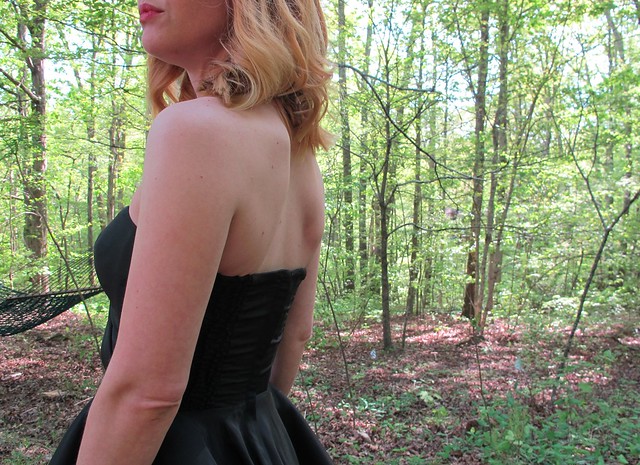
My fabric is solid black silk Faille from Mood Fabrics, which is used for the entire outside of the dress as well as the partial self-lining of the bodice. The bust cups are padded with bra foam (from my stash), the side back pieces are shirred with black elastic thread, the bodice includes lots of fabric covered boning, and the hem has 2″ wide soft black horsehair braid to give it that lovely fullness (that’s right – no petticoat or crinoline was worn for these photos!).

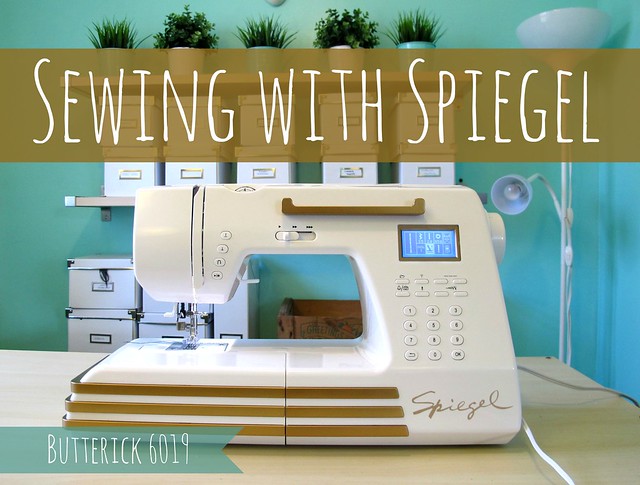
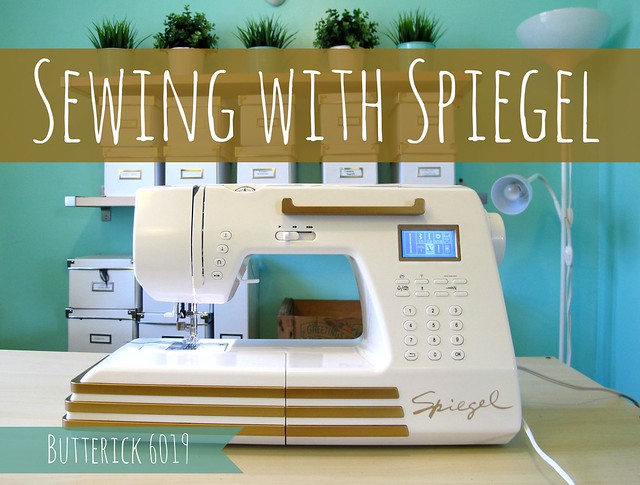
This dress was made entirely on my Spiegel 60609 sewing machine! It handled all those Faille layers like a champ, and even pleasantly surprised me with how well it shirred the back panels. In case you missed them, here are the posts I wrote detailing the making of this dress: Part 1 & Part 2.

There’s not much else to discuss since I went into a lot of detail already, so have some pictures!

Butterick 6019 - complete!

Butterick 6019 - complete!

Butterick 6019 - complete!

Butterick 6019 - complete!

Butterick 6019 - complete!

Butterick 6019 - complete!

Butterick 6019 - complete!

Butterick 6019 - complete!

So did I actually wear it to prom? You bet I did! Pretty much exactly as you see here (yeeeeah I ain’t about to spend $$ getting my hair or make-up done for some high school event lolz) – I ended up wearing simple black flats, instead of my Converse, because they seemed like a nice compromise of comfy and still a little fancy. Although my Converse would not have been out of place there – I saw lots of sneakers! Except mine are pretty dirty in comparison 🙂 Speaking of high school fashions, everything is quite… sparkly these days. I definitely had THE plainest dress out of everyone there, due to my lack of beading and rhinestones. Not complaining! And it seems like long dresses – especially ones with cut outs, or two pieces that show a little midriff – are still the majority rule, at least for the school that I was at.

Here’s a picture of me + my bestie on prom night! Sorry for the grainy quality – it was dark. Hopefully we’ll have some good professional photos to share once those are developed 😀

Butterick 6019 - complete!

That’s all for now! Thanks for indulging my fancy dress dreams, y’all! And thanks to Mood Fabrics and Spiegel for letting this lil’ former homeschooler finally make it to prom! 🙂

Note: The materials for this dress were provided to me from Mood Fabrics as part of my participation in the Mood Sewing Network.

In Progress: Butterick 6019 (Continued!)

20 Apr

Butterick 6019

I’m back for round two of this prom dress in-the-making extravaganza! Let’s get right to it!

After finishing the construction of the bodice, I assembled the skirt. Since I chose the option with the circle skirt, this was incredibly easy (especially compared to engineering that dang bodice!). Three pieces, three seams. I serged all the edges and pressed them open (I normally French seam my silk, but silk faille is a bit thick so it’s not really suitable for that), and also serged the edges of where the zipper will go. I don’t have a photo of all this, but, I reckon y’all know what a circle skirt looks like 🙂

Butterick 6019 - progress//embedr.flickr.com/assets/client-code.js

After that, I attached the bodice to the skirt and finished the raw edges (again, with my serger). Because the center back pieces include a lining, I made sure to not stitch those down (they will be slip-stitched to the zipper later).

Butterick 6019 - progress

My dress will have a lapped zipper, so I prepared the back bodice by folding back and pressing – 5/8″ on the left side, and 1/2″ on the right side. The lining pieces were already folded back and pressed 5/8″, as per the instructions.

Butterick 6019 - progress

Butterick 6019 - progress

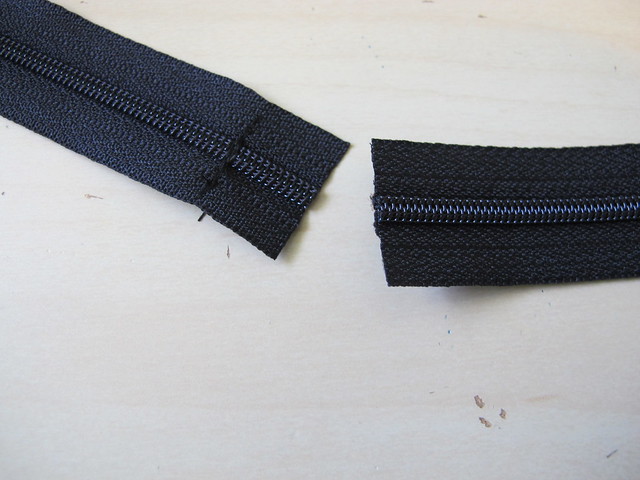
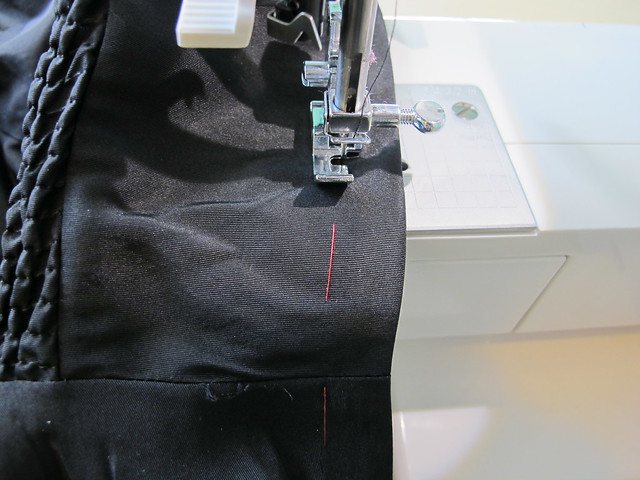
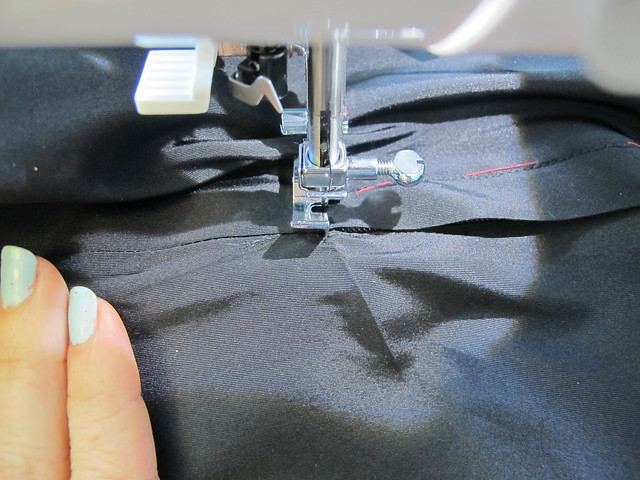
My zipper was quite a bit too long, but it’s easy to shorten! I just use the machine – no hand-stitching required! Mark where the zipper should end, and sew back and forth over that marking a few times with a straight stitch, then cut off the remaining zipper end about 1″ below the stitching. Easy! 🙂

Butterick 6019 - progress

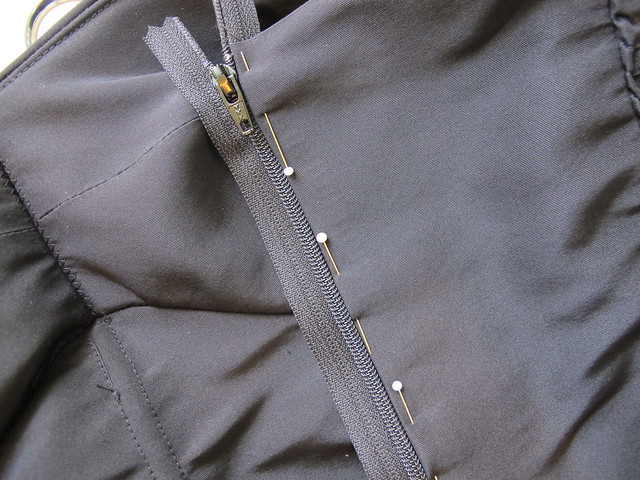
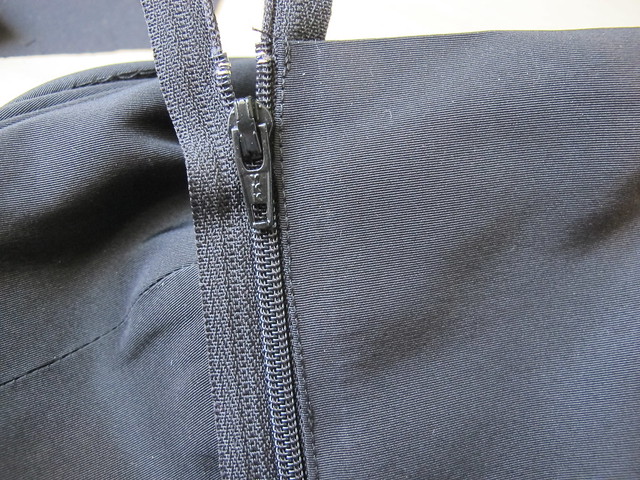
On the right side (the side folded under 1/2″), the zipper is sewn with the teeth up against the fold, like so. At this point, I don’t worry about the top of the zipper past the pull – you can push that under the lining and deal with it when everything is getting slip-stitched down. But you do want to be sure that the teeth of the zipper are riiiiight up in that fold’s business.

Butterick 6019 - progress

Butterick 6019 - progress

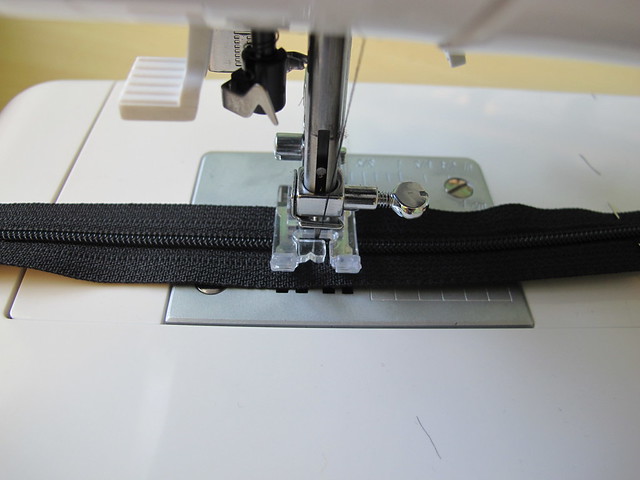
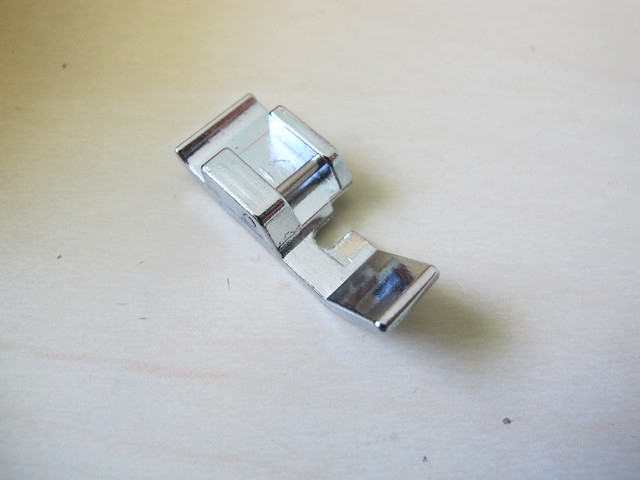
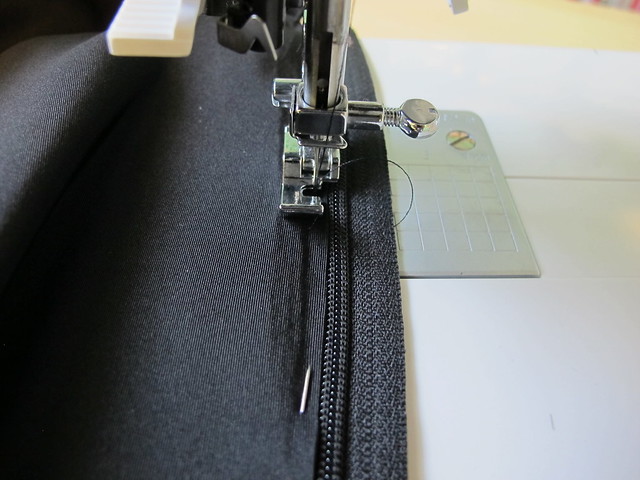
This is where the humble zipper foot comes into play. Most machines come standard with this foot. On the Spiegel 60609, it looks like this. The side is notched out to let you get really close to the zipper, like so.

Butterick 6019 - progress

Side one done, now to the second side!

Butterick 6019 - progress

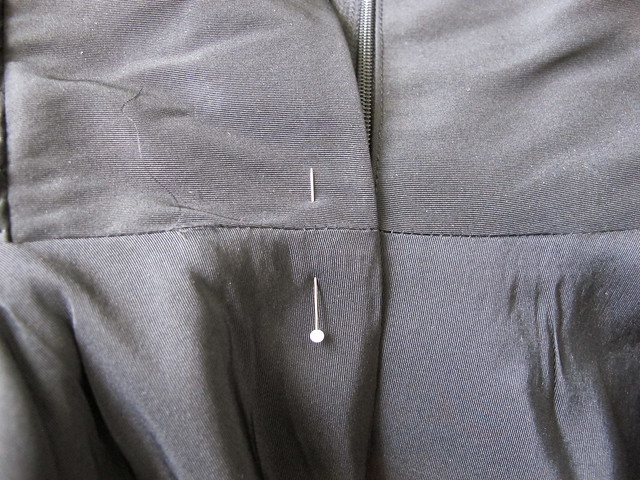
The left side (the side folded under 5/8″) will be placed along the zipper tape with the folded edge right on top of the stitching you just did (on the right side), thus creating a lap. I start by matching at the waistline seam, so I can be sure the seamline is uninterrupted.

Butterick 6019 - progress

When I pull the left side open, I can see where the zipper tape needs to lay along the fold to create that overlap. I find this much easier than trying to overlap and pin while the zipper is closed.

Butterick 6019 - progress

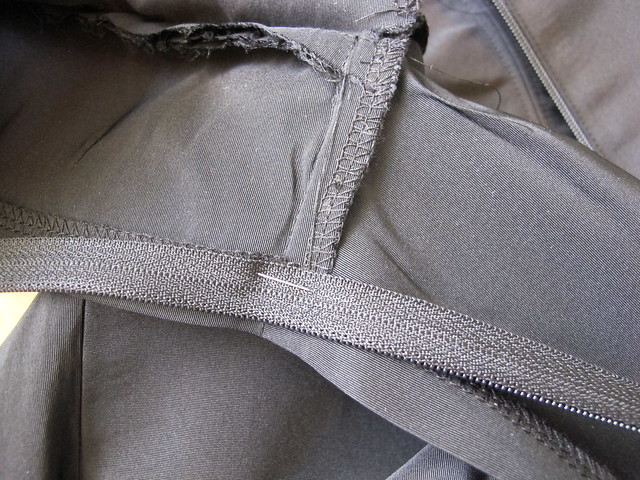
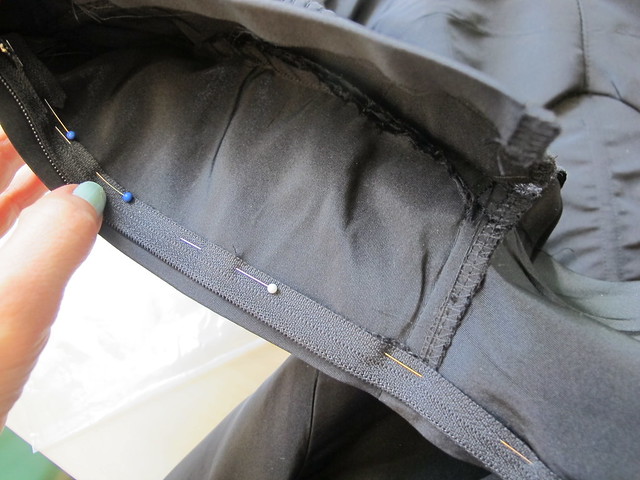
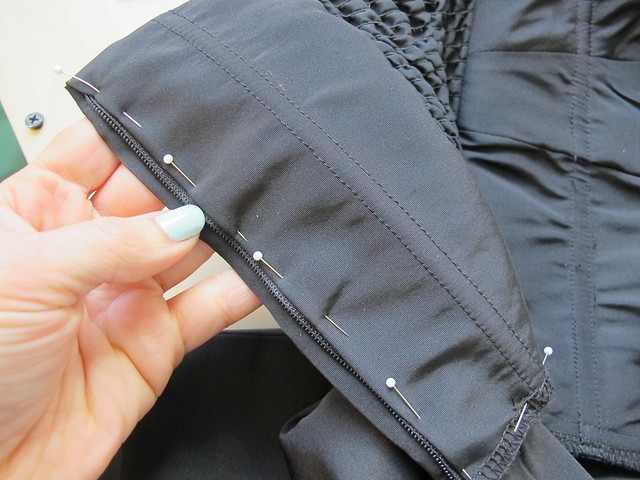
Then you just pin all the way up (to the bodice *only*, the lining should remain free). Once you get to the top, you can tuck the remaining zipper tape down and inside where the lining will cover.

Butterick 6019 - progress

Here it is pinned front the outside. One thing I highly recommend (which I didn’t take a photo of, hm) is to hand baste the zipper into place before stitching. This ensures that everything is in the right place and won’t shift when it gets under the needle (and that you’re actually catching the zipper tape!). The topstitching step of this process is not difficult, but it can be tricky to see what you are doing! Definitely take the extra couple minutes and baste that sucker into place with some long basting stitches.

Butterick 6019 - progress

Once basted, open up the zipper and topstitch from the right side, again, keeping the lining free.

Butterick 6019 - progress

When you get to the bottom, lower your needle, lift the presser foot and pivot the fabric, then sew across the bottom of the zipper back and forth a couple times to secure everything.

Butterick 6019 - progress

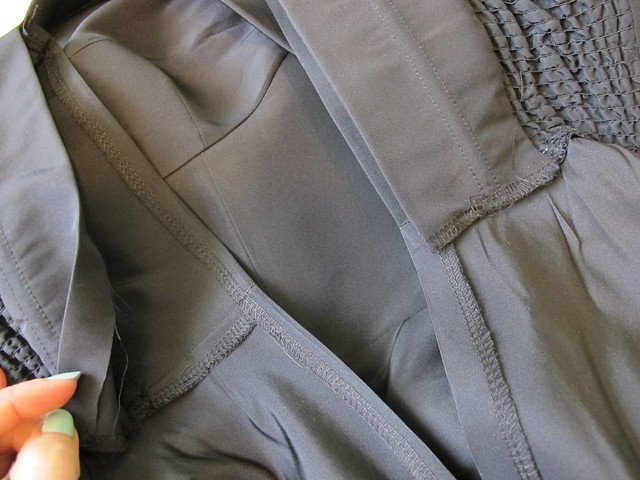
Finally, pin the lining to the zipper tape and slip-stitch everything down.

Butterick 6019 - progress

Beautiful, right? 🙂

Butterick 6019 - progress

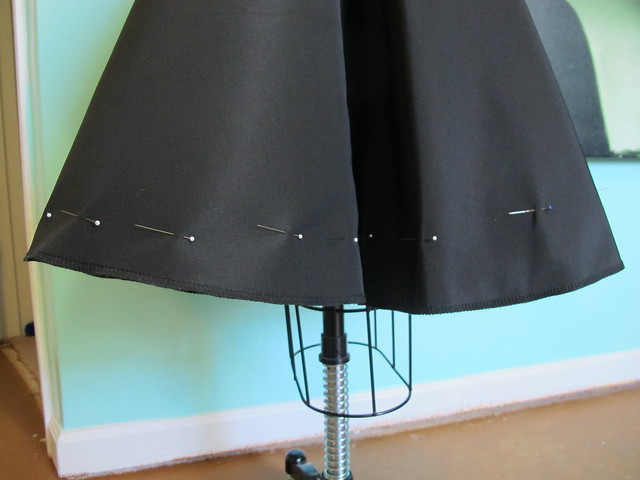
Next step is hemming! Since this dress has a circle skirt, that means the bias needs to settle before hemming (otherwise, the hem will end up being super uneven!). I have a dressform for this purpose – both for hanging and hemming (if you don’t have a dressform, you can hang bias stuff on a hanger, but you’ll probably need a second person to help you with the actual hemming. There are also doodads you can use for solo-hem jobs, but I don’t have any experience with those). Bias garments need to hang for a minimum of 24 hours to get their stretch out. Being paranoid, I let this one chill for like 5 days lolol.

Butterick 6019 - progress

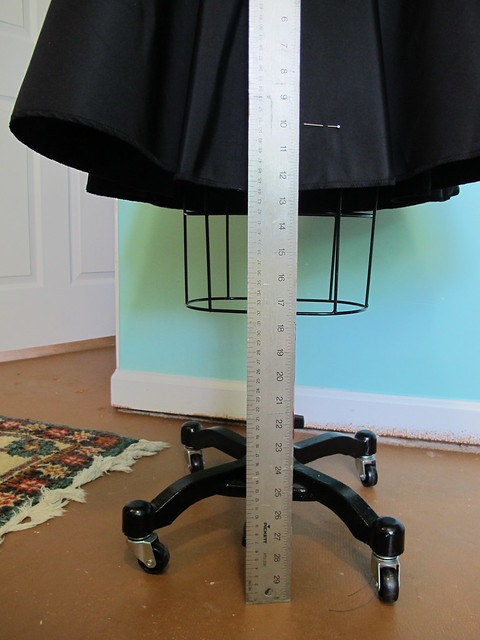
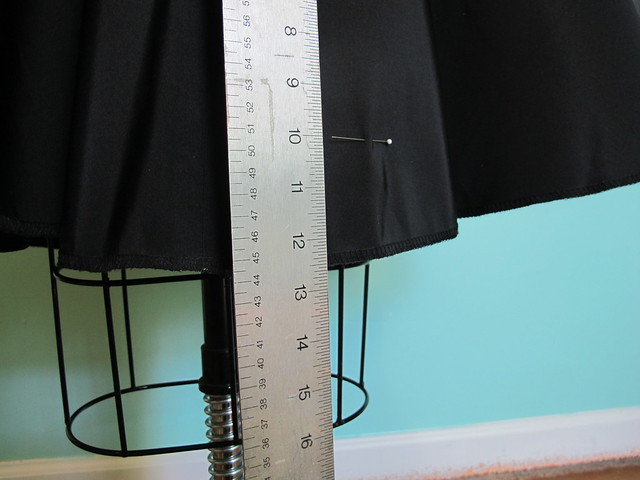
Once that’s done, you hold a yardstick (or in my case, a T Square) at the floor and measure the same point all the way around the hem.

Butterick 6019 - progress

I mark every couple includes or so with a pin. Look at how uneven my skirt was!

Butterick 6019 - progress

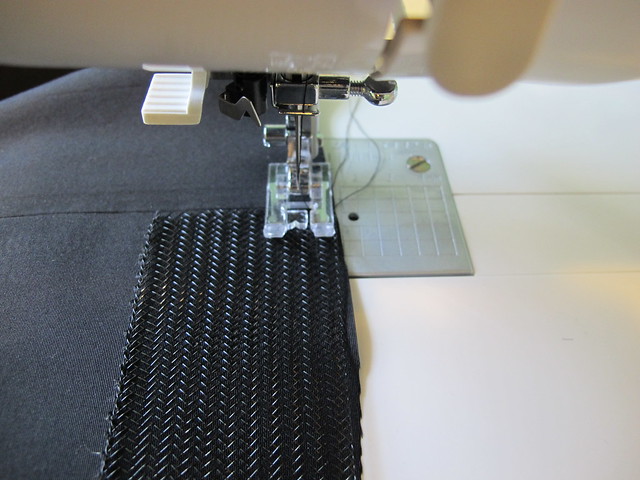
After trimming the skirt, I added 2″ wide black horsehair braid to the hem. Mostly, to give it some extra body – but also because it makes hemming easier, as the braid kind of acts like bias tape (as in it’s very flexible and curves along with the curve of the circle skirt). I started by sewing it to the right side of the side, using the width of the Spiegel 60609 presser foot as my seam allowance guide.

Butterick 6019 - progress

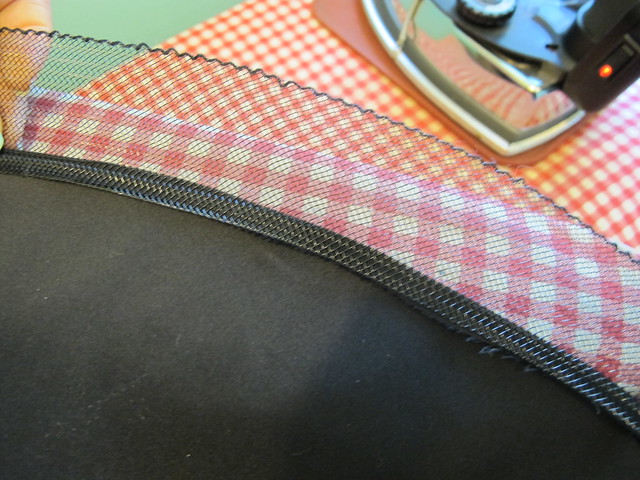
First press pushes the horsehair braid down and the seam allowances up.

Butterick 6019 - progress

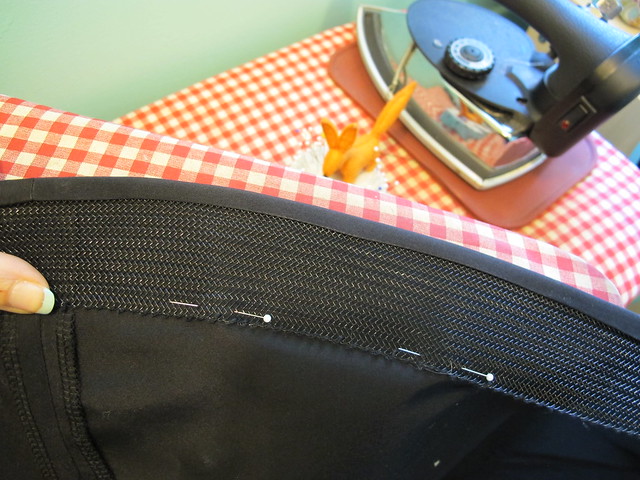
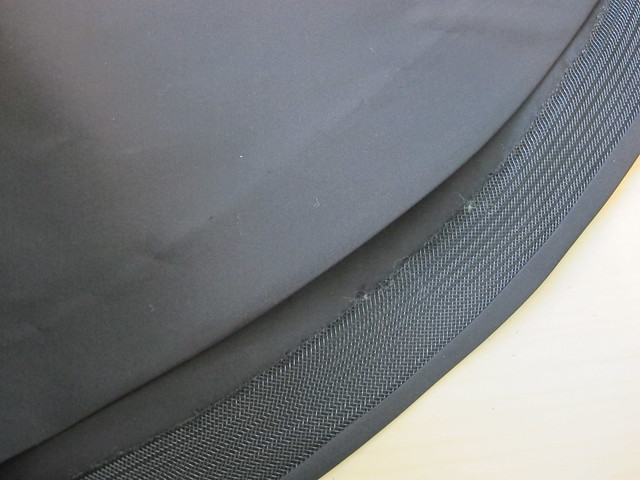
Then second press folds everything to the inside nice and flat.

Butterick 6019 - progress

From there, it’s just endless slip stitching (well, not *too* endless – I think this took me about an episode and a half of Mad Men haha). You can topstitch at this step, but I feel like a fancy prom dress needs an invisible hem! It just looks so nice!

Butterick 6019 - progress

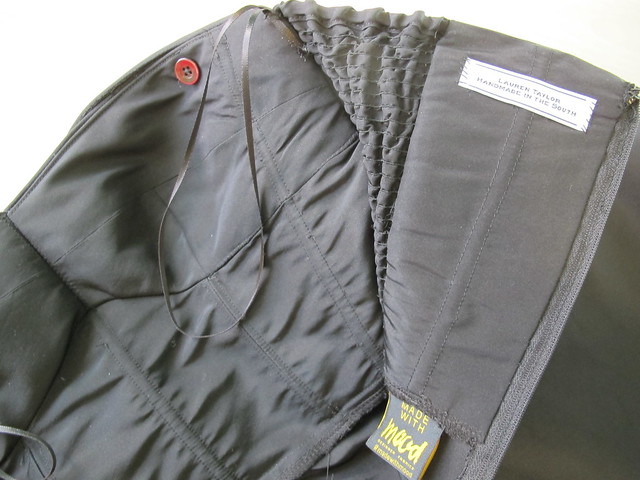
Here is some of the inside finishing – I added buttons for the strap, as well as ribbon loops for hanging (literally a piece of ribbon lopped and handstitched in). And my tags! I need a tag that says ♥Made with My Spiegel 60609♥ hahaha

And some full shots on the form – these were taken before hemming or adding the hook & eye, but you get the idea 😉
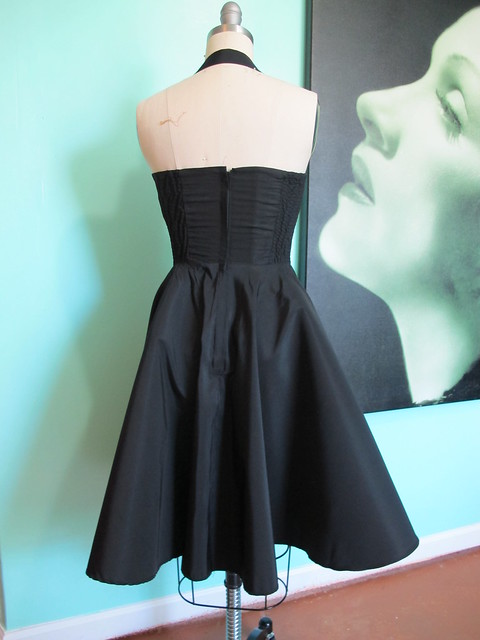
Butterick 6019 - progress

Butterick 6019 - progress

Let me know if you have any questions about any part of this process – I tried to explain as clearly as I could, but I have a cold right now so I’m pretty medicated haha. And the fact that I’m sewing with black fabric doesn’t help!

Super pumped for prom next week!! 😀 Is it bad that I want to wear my converse with this dress? I don’t think I’ve worn heels since I quit my office job 3 years ago! :B

In Progress: Butterick 6019

13 Apr

Hey guys, guess what.

I’M GOING TO PROM.

This is 100% not a joke. I am going to a literal high school prom.

Butterick 6019

Before anyone starts thinking that I’m dating someone WAY too young for me, I should probably use this opportunity to point out that my date is my BFF, who happens to be a high school English teacher and gets 2 free tickets to prom every year 🙂 I will take any excuse I can get when it comes to dressing up, though – especially if it means I get to make a party dress! The bulk of my sewing used to involve a lot more frosting than cake, and while I’ve reverted to making a lot of useful basics, I still get starry-eyed when I think about ridiculous party dresses. Prom is the *perfect* excuse to get some fancy sewing out of my system!

My pattern of choice is Butterick 6019, which I have been wanting to make for ages. I’m going with view A, which includes removable halter straps and a circle skirt. The fabric is a black solid silk faille from Mood Fabrics. I ain’t gonna lie – I originally tried to buy something with actual color, red being my first choice. But it being prom season and all, Mood ended up selling out before my order was fulfilled and I had to choose a different color on the spot. Since I didn’t have time to get swatches for color comparison (and I didn’t want to end up with a bad color, considering this silk is $50/yard and non-returnable!), and the selection was super limited at that point, I ended up getting basic black. This means I probably am sewing the most practical formal dress ever. Oh well! 🙂 At least I’m ready for my next black tie wedding, ha!

One more thing I want to point out about silk faille – it’s pronounced “FILE.” Not fail or foll (both of which I have tried and been laughed at for. Ok, y’all, it’s been like 10 years since I studied French and I wasn’t very good at it to begin with! Give me a break). I already made an ass out of myself, so now you don’t have to! ♥

Butterick 6019 - In progress

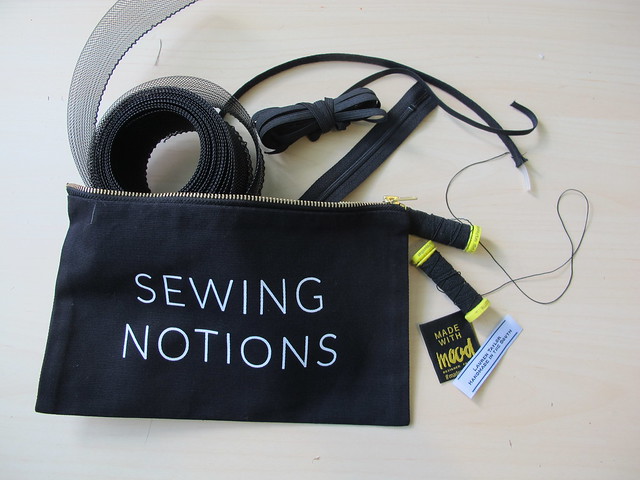
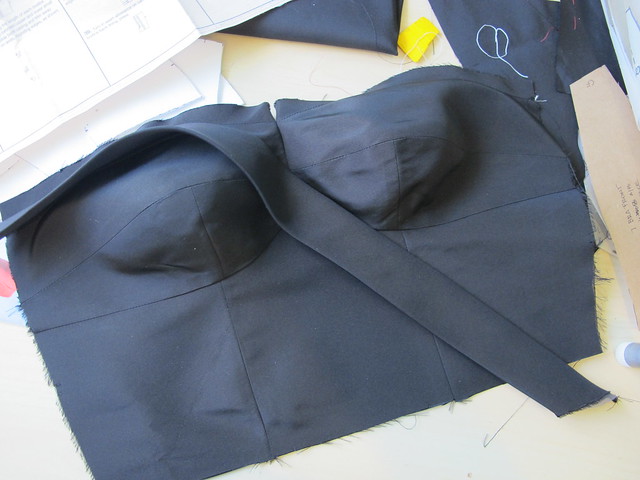
This project is definitely a labor of love – there’s a lot of work (and notions!) that go into a dress like this. The bodice is lined with self fabric, and features boning, shirring, a lapped zipper, bust padding, and that beautiful bias-cut crossover piece. For the skirt, I decided to add horsehair braid to give it some extra body and really make it flare out. Whenever I start a project that includes a lot of notions, I like to corral them into one place so they are easy to find. In the past, it’s been Ziploc bags – which are super useful, but not really that pretty! I recently received this sewing notions pouch from Tailor Made Shop and it’s perfect for this use! The pouch is roomy enough to hold everything I need (it even fits a pair of 8″ Gingher scissors – not really necessary for this particular use, but GREAT for when I’m teaching and I need to take some tools with me!) and it zips securely so nothing spills out. And it’s way prettier than a Ziploc bag 🙂

Butterick 6019 - In progress

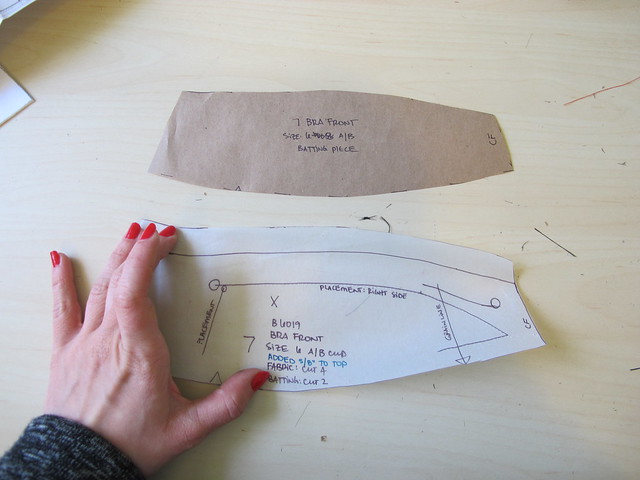
I don’t want to freak anyone out here – but I actually TRACED my pattern pieces for this project. lolwut right!? I had a hard time determining my size (even with the finished measurements and cup sizing – the sizing on this pattern just doesn’t make sense to me at all), and so I needed to keep the sizes intact in case I cut the wrong one. Fortunately, the bodice of this pattern involves a lot of small pieces, so it wasn’t a huge time suck. I ended up going with a size 6 A/B cup at the bust (FWIW, I wear a D/DD bra so yeah, um, the cup sizing is a bit skewed here!) and graded out to an 8 at the waist. Since the skirt is just a giant circle, I didn’t trace those pieces.

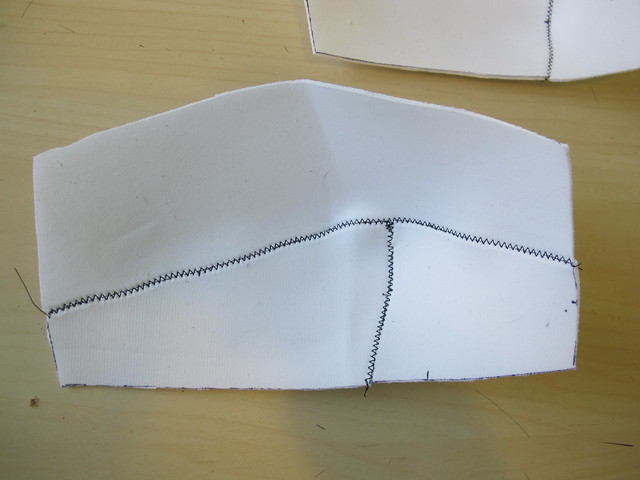
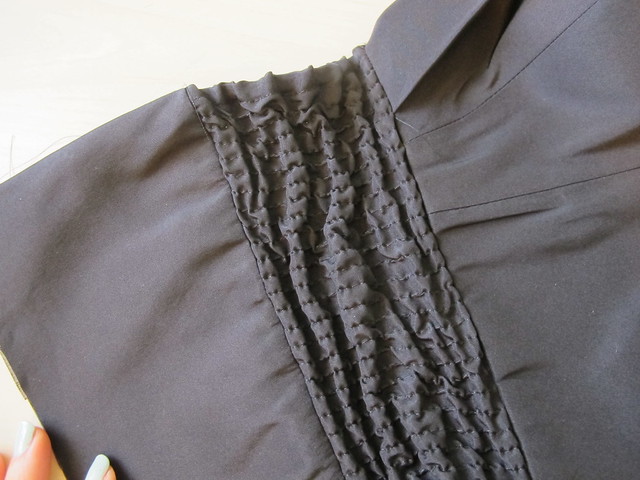
I made a muslin of the bodice – shirring included, but no boning. The shirring is extremely necessary if you’re muslining this dress, as it drastically affects the fit. The sizes I traced and cut ended up being perfect, albeit the top of the dress itself is quite low (which I had read about in reviews, so no surprise there!). The pattern changes I made were to add 5/8″ to the top of the bodice all the way around, and then shorten every piece by 1/2″ at the lengthen/shorten line so the skirt seam would hit my waist. I also traced the cup pieces a second time and removed the seam allowances all the way around. These pieces ended up making the bust padding, which is constructed the same way a foam cup bra is made (with the pieces butted up together and zigzagged across the seam). Rather than cut my pieces and then remove the seam allowance – which is wasteful as hell, sorry – I did this instead. Look at the difference in their size!

Butterick 6019 - In progress

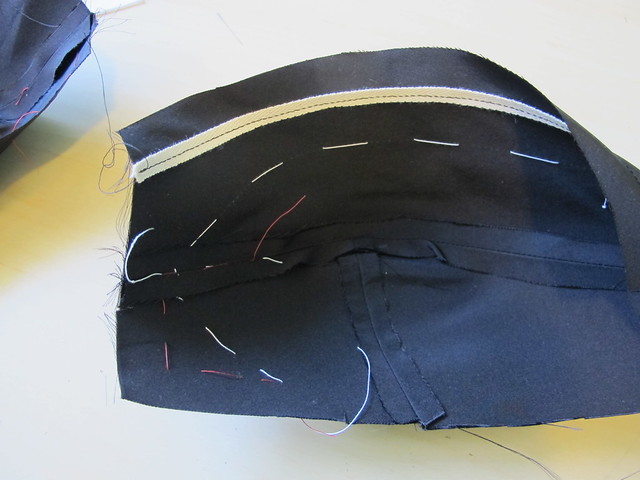
The pattern has a lot of markings for placement – boning placement, the bias strip, and just basic construction seam allowances. Since I didn’t want to risk a permanent stain on my dress, I marked the wrong side and then thread traced the markings with silk thread. The silk thread allows the markings to be seen from both sides, and can easily be removed. I used a different color for the type of markings – tan for the strip, white for boning, red for construction. This was MASSIVELY helpful when putting together the puzzle that is this dress.

Butterick 6019 - In progress

To keep the cups curved against my body and to prevent them from stretching out, I added twill tape to the seam allowance. This isn’t instructed in the pattern, but it’s good practice for anything that runs the risk of gaping (such as bustier tops like this, or woven wrap dresses). You basically just cut 1/4″ twill tape the length of the neckline minus 1/4″, then place it inside the seam allowance, up against the seam line. Since the tape is shorter than the neckline, the neckline gets eased into the length of the tape. The easing means the neckline curves with your body, and the twill tape provides some stability to an area that would otherwise stretch out over time.

Butterick 6019 - In progress

Assembling the bodice is pretty easy and straightforward. I trimmed down, clipped, and graded my seam allowances pretty aggressively to prevent a bunch of bulk (silk faille is quite stiff), and pressed the life out of everything. #1 reason why I went with silk faille instead of cheaper polyester faille – it’s just easier to work with. I really shudder at the thought of trying to make this dress with something that doesn’t press well.

And now it’s time to shirr! I STRONGLY recommend testing this out on a scrap of your fabric first, as you might need to tweak your machine settings a bit.

Butterick 6019 - In progress

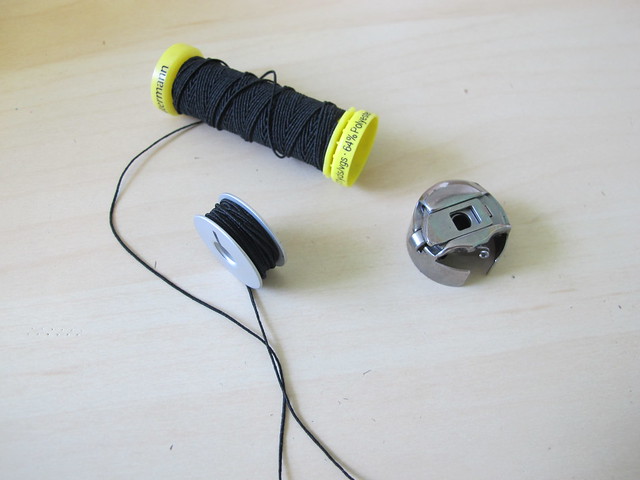
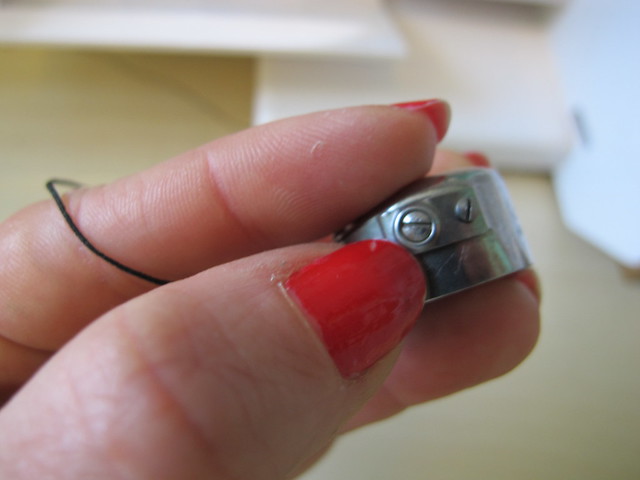
For shirring, you need elastic thread. Be *very* aware of the yardage amounts that your spool contains, by the way – I didn’t realize this brand only has like 11 yards, which is not enough for this project and I unfortunately ran out and had to stop and buy more (also, black elastic thread is harder to find than white, ugh). I used 2 spools, even though the pattern has you only buy one. Just FYI! Anyway, the elastic thread goes in the bobbin, and it is wound by hand with only a slight tension in the thread. The upper thread is your basic all purpose polyester.

Butterick 6019 - In progress

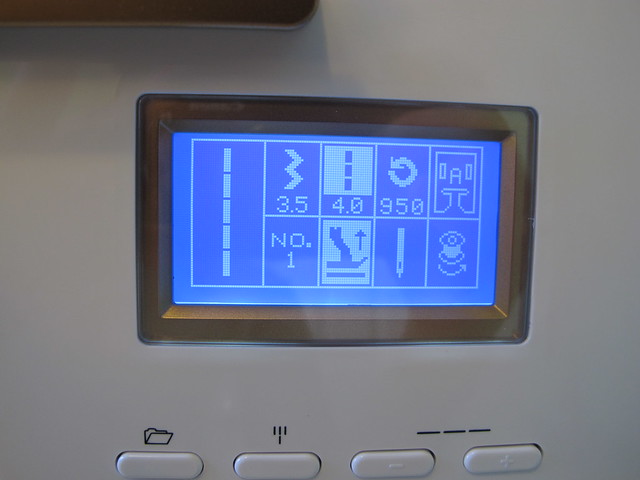
Set your machine with a longer stitch length. For the Spiegel 60609, I used a 4.0 length.

Butterick 6019 - In progress

At this point, you’ll want to test the stitches and make sure the tension is good. If it’s not, you can adjust the tension in the bobbin (the little screws you see here). The needle tension (the numbered dial at the top of the machine) can also be used. If you mess with the bobbin tension, its a good idea to mark the location of the screws before you start twisting them around – just use a really fine point marker and draw directly on the bobbin. Otherwise, you might have trouble getting the tension balanced again when you’re done shirring – and you’ll need to take the machine in for a service to set things back to default (and this question has come up a few times – you can get a Spiegel machine serviced at pretty much any sewing machine dealer, regardless of the brand that they sell. *Most* dealers will service all machine brands, even if they sell something different). My Spiegel 60609 did not require any tension adjustments for shirring, so yay!

Butterick 6019 - In progress

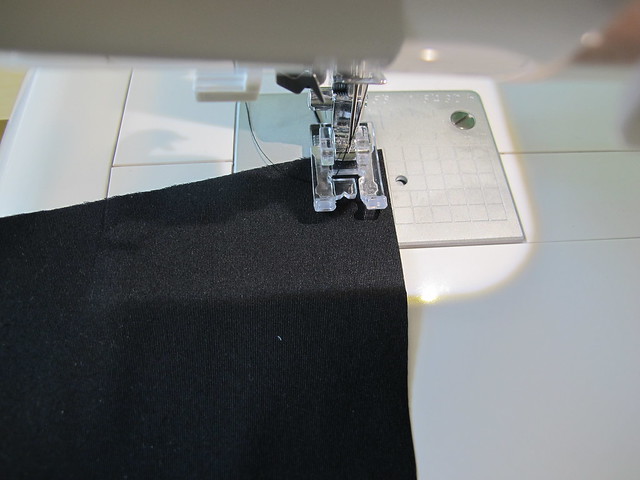
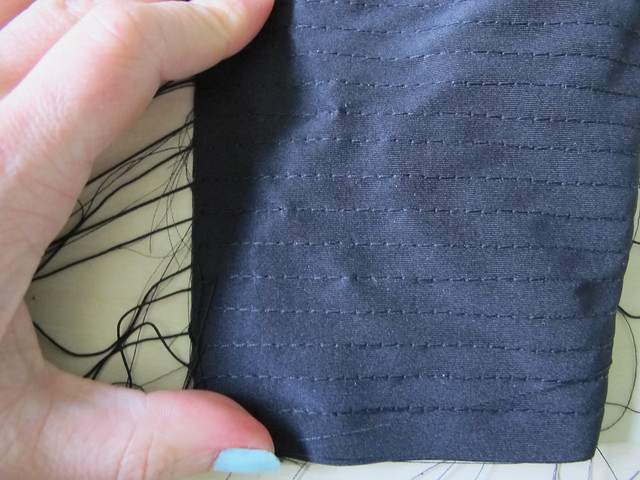
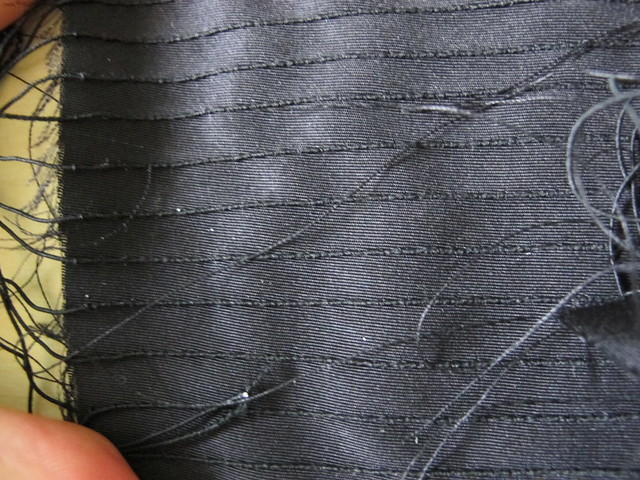
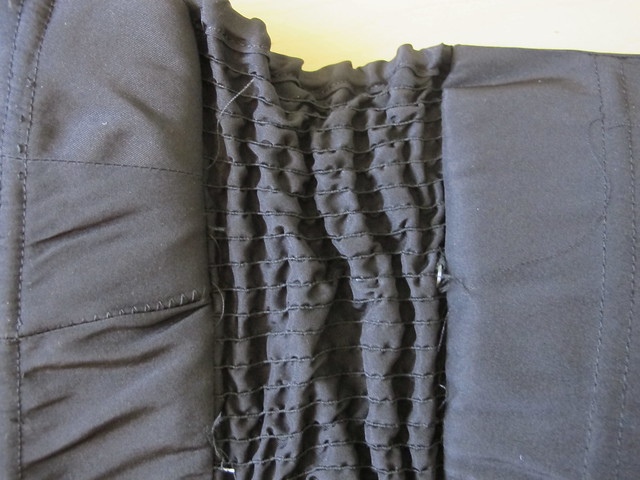
To shirr, you’ll sew long lines of parallel stitching 1/4″ apart. Some people draw guidelines for this, but I just use the edge of my presser foot as a guide. The foot on the Spiegel 60609 is the perfect width for this. Start your first line of stitching a little outside of the seam allowance, and continue sewing parallel lines until the whole piece is covered. Leave long thread tails at the beginning and end of each line, otherwise your shirring will come undone.

Here are what my shirred pieces look like after stitching. Also, I know my nail color keeps changing. I told you, I had to go out and buy more elastic thread! Sewing came to a stall for a few days! blech!

Butterick 6019 - In progress
Right side

Butterick 6019 - In progress
Wrong side

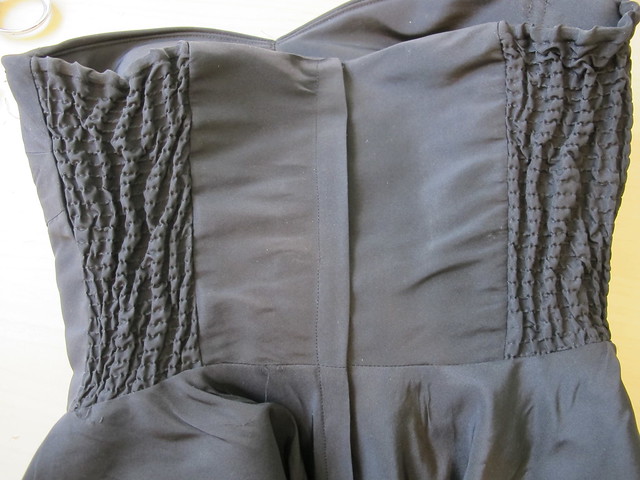
After you’ve finishing sewing all those lines, you’ll have a really hairy looking piece of fabric that still doesn’t stretch. The real magic happens with you steam the crap out of it, which shrinks up the elastic thread and makes the whole piece really stretchy and awesome. It’s fun to watch it shrink up! However, I recommend skipping this step for now and waiting until the bodice is constructed first. It is a lot easier to sew those pieces when they are flat and non-stretchy. You’ll see the shirred pieces in all their glory at the end of this post 🙂

Ok, back to the bodice construction!

Butterick 6019 - In progress

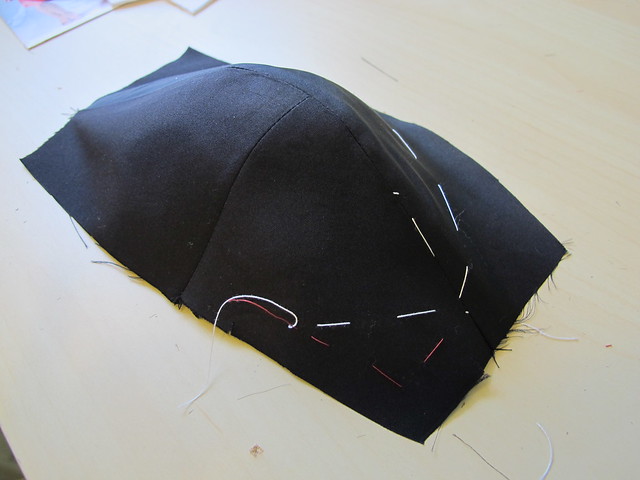
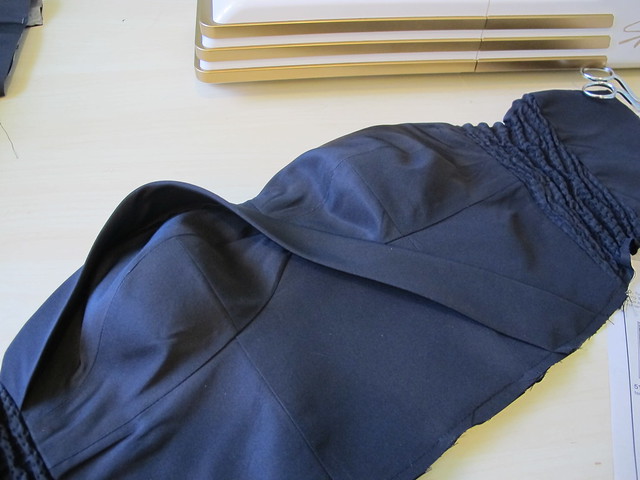
As I mentioned at the beginning of this post, the bust cups are slightly padded (to give that area some structure and also for modesty reasons, if you’re wearing this dress without a bra). The pattern calls for cotton batting, which I did not have on hand. Instead, I used foam padding that is used for bras. The pieces have the seam allowances removed, and then the edges are butted up next to each other and sewn across the split with a zigzag stitch.

Butterick 6019 - In progress

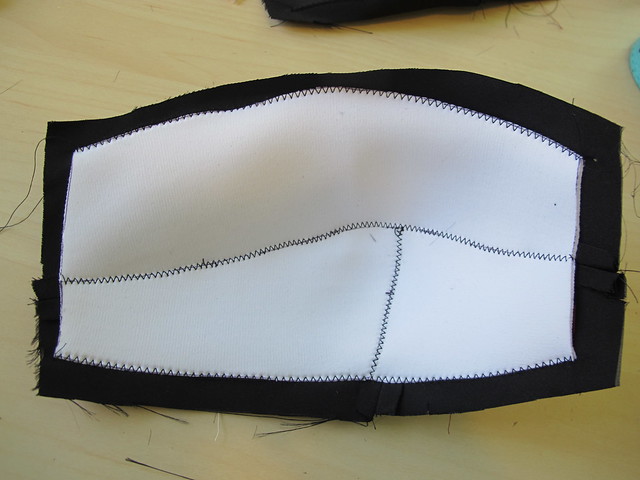
Then the little padded cups are nested in the cups of the bodice lining, and sewn in. The pattern has you catchstitch this part, but I don’t particularly care if you see stitching inside my lining so I zigzagged those pieces in. YOLO, y’all.

Butterick 6019 - In progress

Butterick 6019 - In progress

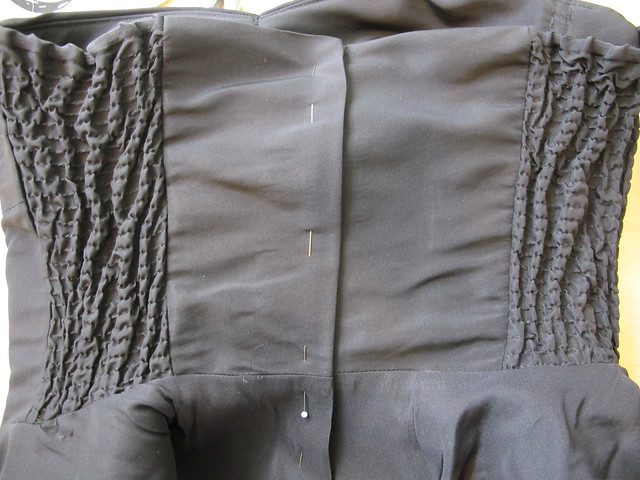
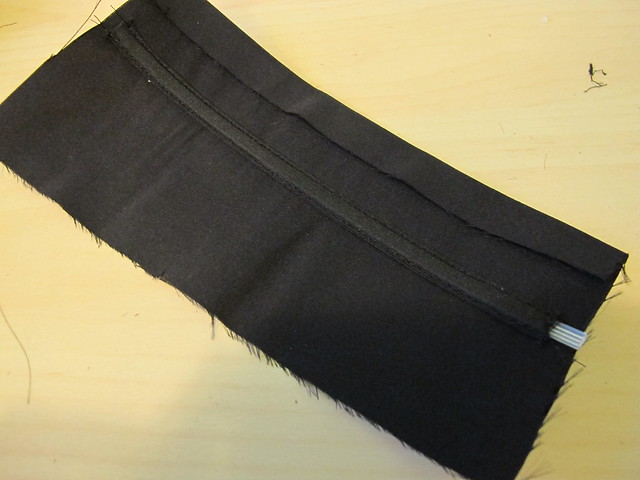
I used plastic sew-in boning for this dress – the kind that comes pre-covered (purchased at Mood Fabrics, if you’re curious!). Spiral steel boning is nice, but a pain to work with (it has to be cut *exactly* to size and capped, and no). This stuff is much easier to use. I straightened out the pieces by blasting them with steam while they were still in their fabric casing (you can also dunk them in hot water to relax the plastic), and then removed the boning and sewed the empty casing to the bodice lining. Like I said, the boning can be sewn through – but it’s easier to get a consistent straight line if the casing is completely flat. After the casing is sewn down, you can just slide the boning in. I trimmed off the sharp corners at the top of the boning so it won’t tear through my dress fabric, and left the ends long (those will be trimmed when I attach the skirt).

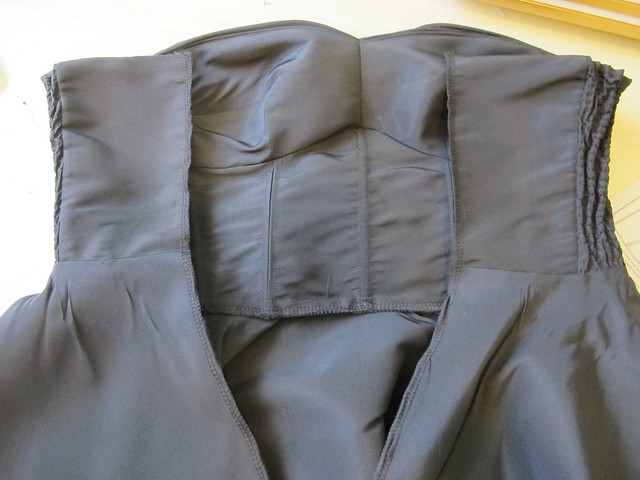
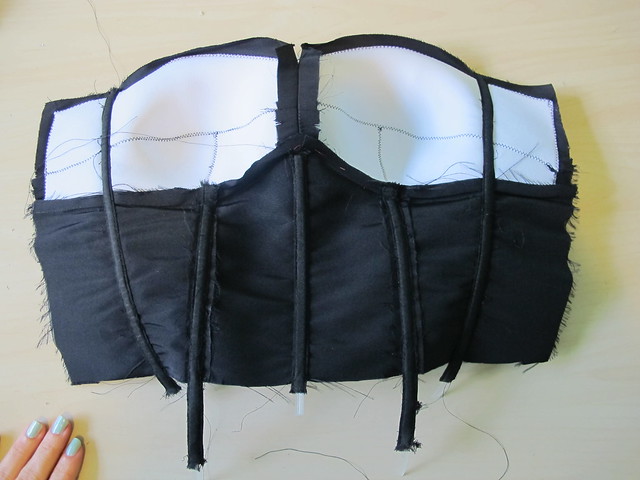
Here is the bodice lining once assembled:

Butterick 6019 - In progress

Butterick 6019 - In progress

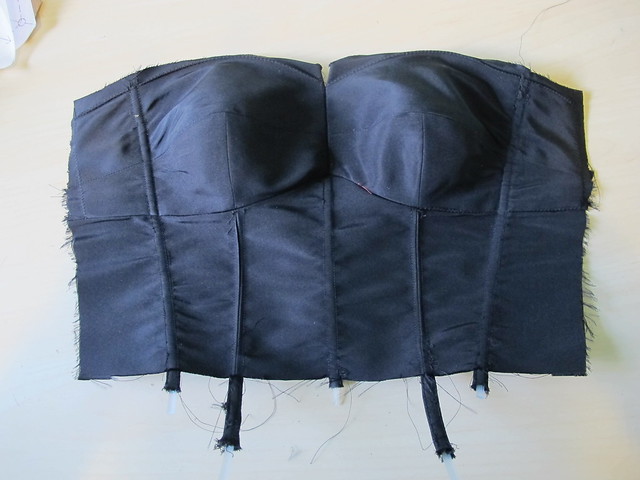
I added a couple extra pieces of boning for additional support – the center front was especially necessary to keep things smooth. Looking good so far!

Butterick 6019 - In progress

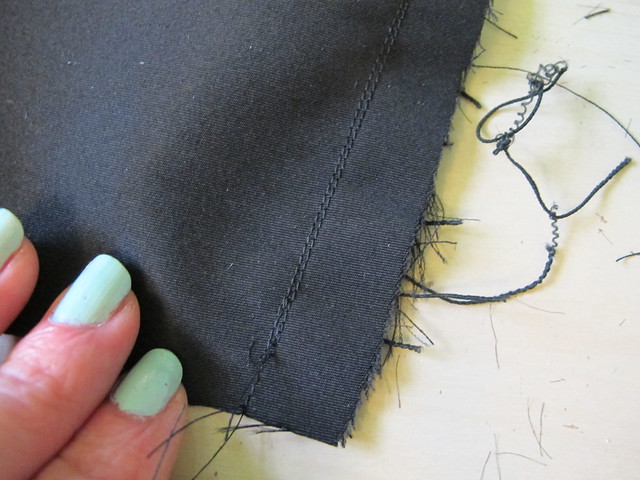
Finally, time to attach those shirred pieces and cut off the thread tails! The pattern has you tie off each individual line of shirring… I don’t know about y’all, but pretty sure ain’t nobody got time for that. Instead, I shortened my stitch length and sewed two lines of stitching when attaching the shirred panels to the rest of the bodice. Once those were secure, I gave all those thread tails a haircut and then steamed the elastic.

Butterick 6019 - In progress

Butterick 6019 - In progress

It shrunk up quite nicely!

Butterick 6019 - In progress

Here is the finished bodice flat.

Butterick 6019 - In progress

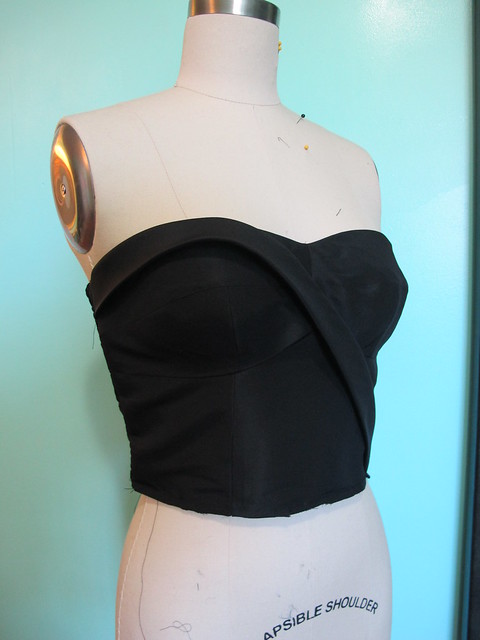
And here it is on my dressform! 🙂

WHEW that was a lot of post! Next week, I’ll go over the rest of the construction. Can’t wait for prom! Yay for fancy dress making! 😀

Completed: McCall’s 7351 // Style Maker Fabrics Spring Canvas Blog Tour

1 Apr

Hey guys! I’m excited to be the final wrap-up stop for the Spring Canvas Blog Tour with Style Maker Fabrics!

McCall's 7351

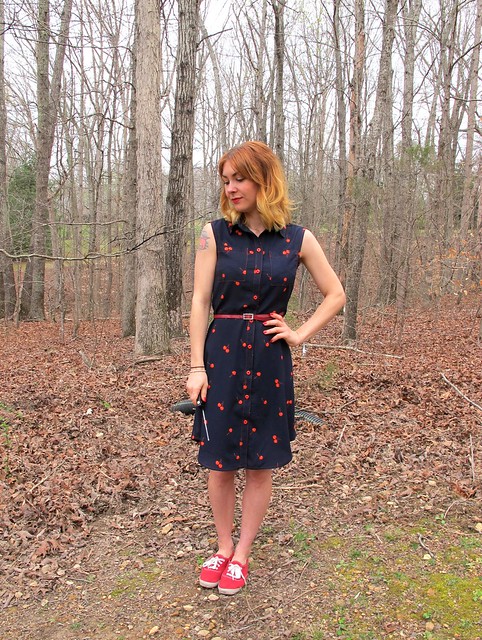
It’s always really flattering to get asked to participate in a blog tour – although I typically send my regrets, as I think they can be a little exhausting if you’ve got a dozen people talking about, say, the same book or whatever. Kind of boring and personally I skip right over those posts! I found the idea of this particular blog tour a little more intriguing, though, as it is all about spring fabrics and spring fashions and all the fun stuff that comes with that! I’ll be the first to admit that I’m not a necessarily fashionable person – I like the way I dress, of course, but I don’t exactly go out of my way to follow trends as they come into fashion. So this might not be a very “on-trend” outfit for me to make, but it is something that I will wear! So there’s that!

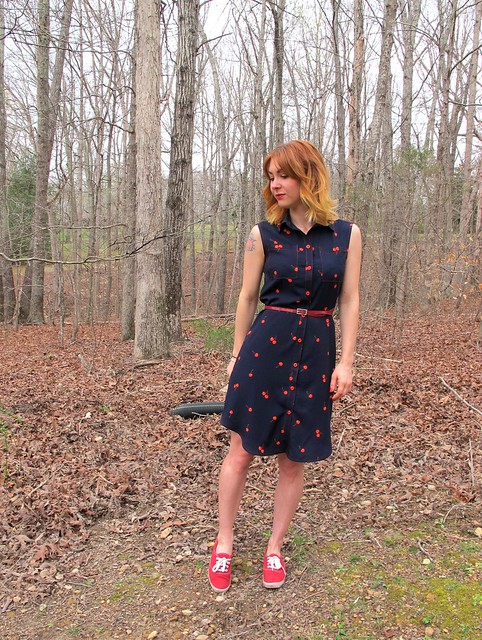
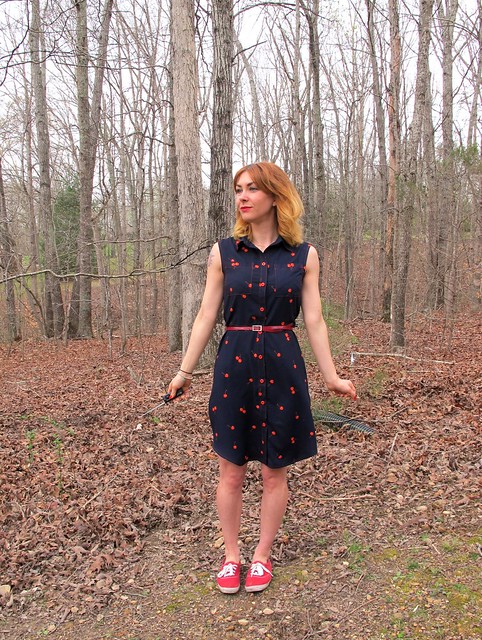
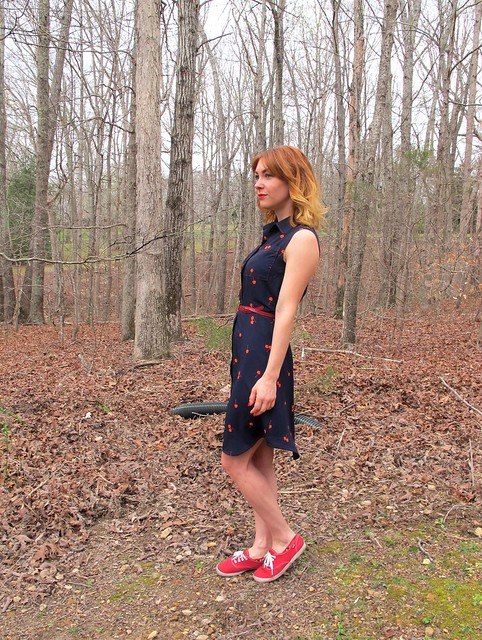
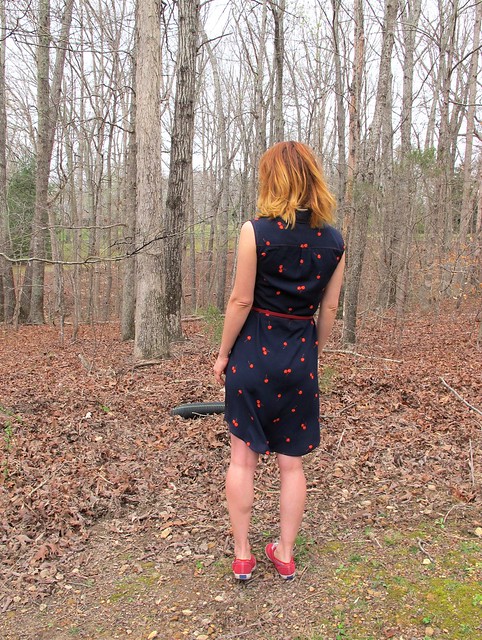
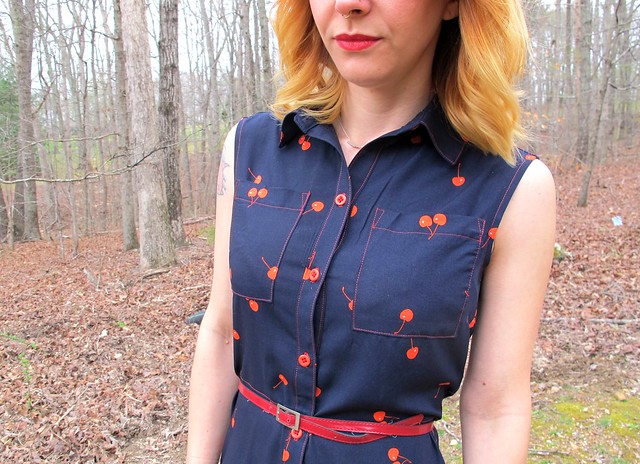
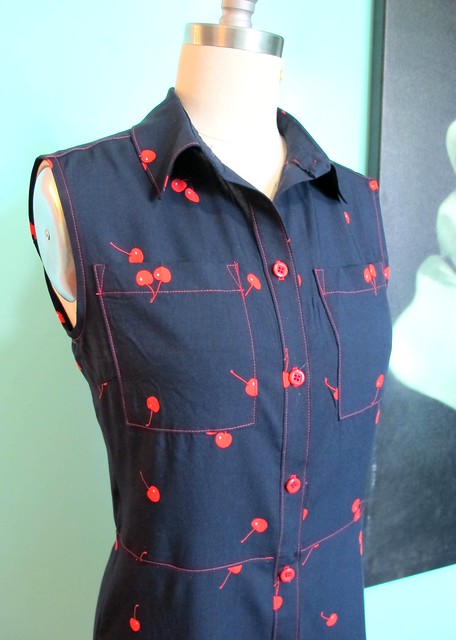
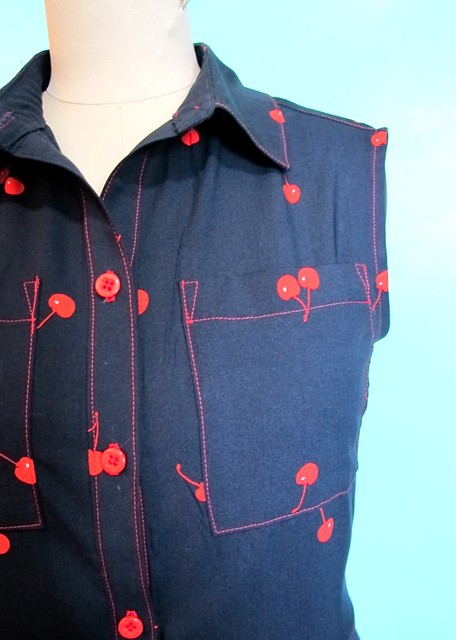
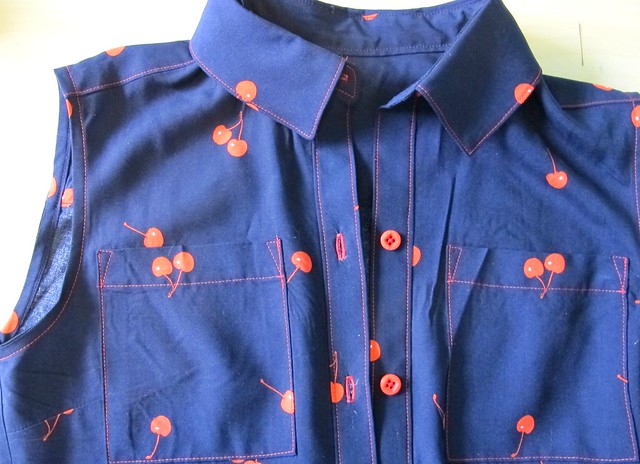
For this tour, I was given free range to choose whatever fabric I wanted from the new spring arrivals available at Style Maker Fabrics. Surprise surprise – I went with this navy rayon challis printed with cherries from Cotton + Steel, because I am nothing if I’m not predictable (I don’t even like cherries, but this is my third cherry print dress. See one and two. Hey, at least this one isn’t black hahaha!). It was a bit of a crunch to get this finished in time for my ~tour date~ – what’s with being out of town, getting sick, and then playing mad catch-up at work. But, spoiler, I finished it just in time to wear for Easter Sunday! Yay!

McCall's 7351

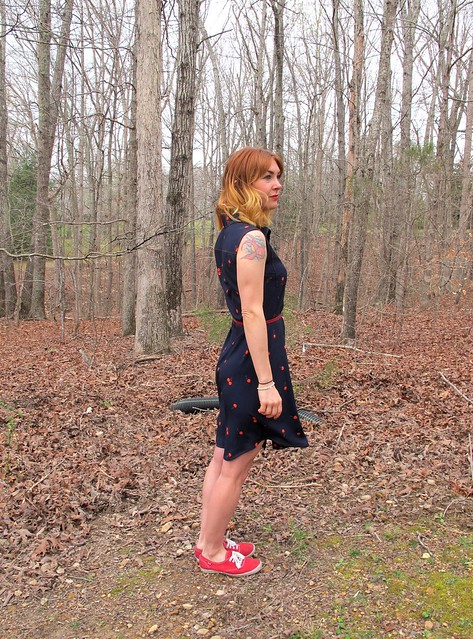
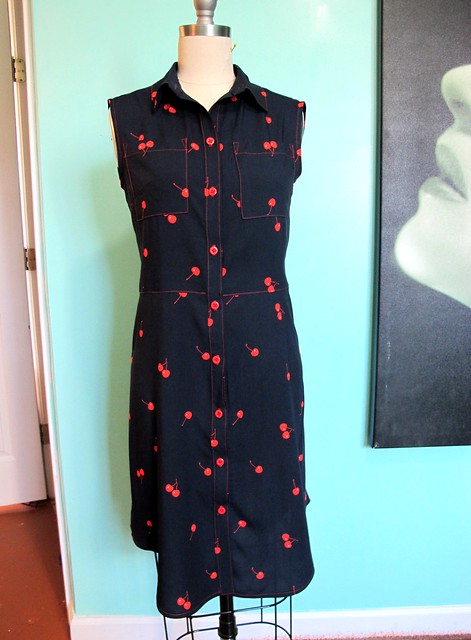
I used McCall’s 7351 to make my cherry dream dress, which is a new pattern from the McCall’s spring collection. It’s a classic shirt dress with a few extra options. I liked the idea of the straight skirt with the curved hemline that looks like, well, a shirttail, so I went with that option. Originally, I considered adding sleeves – but upon making my muslin, they were weirdly restrictive and I didn’t feel like going through the drama of figuring out how to fix it. Sleeveless dress it is! I actually prefer it this way; I think it’ll be more comfortable in the summer without sleeves.

McCall's 7351

McCall's 7351

McCall's 7351

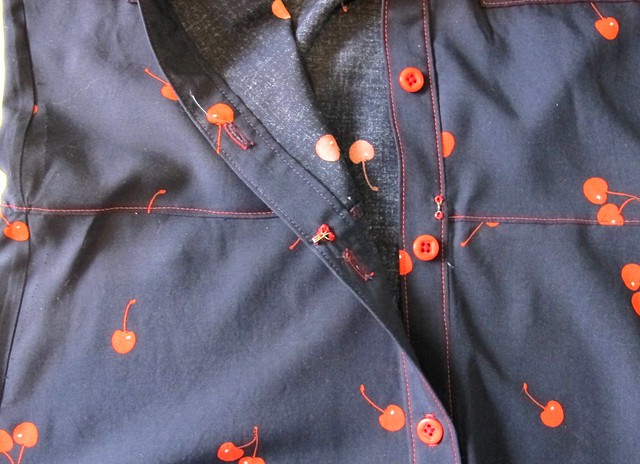
I cut the size 6, based on the finished measurements, and didn’t make any pattern adjustments except the shorten the hem quite a bit at the end. The waist is a bit bigger than what I’m used to wearing – hence the belt – but I’m going to leave it like this for now because I suspect I will looove that loose waist come 95* weather 😉 I experimented with moving the placement of the buttons at the apex of my chest to eliminate button placket gap – but as you can see in the photos below, there’s still a tiny bit of pulling as it’s not *quite* in the right place. Whatever, I’ll figure it out with the next dress haha 🙂
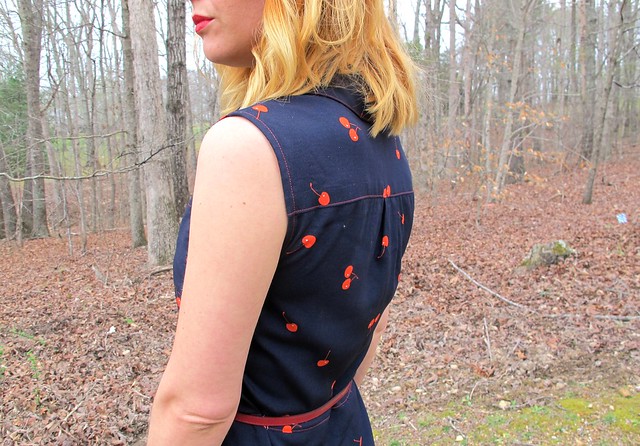
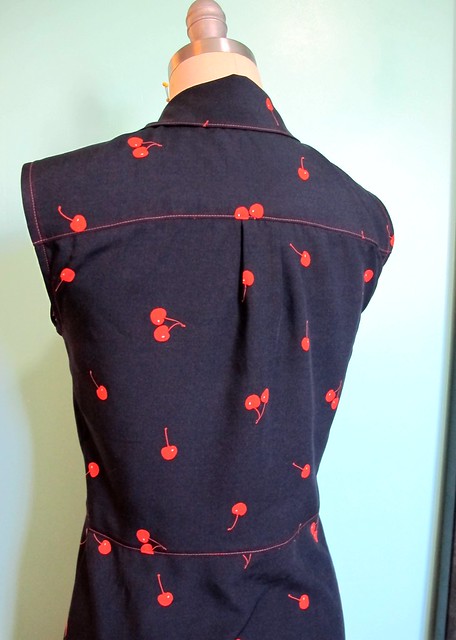
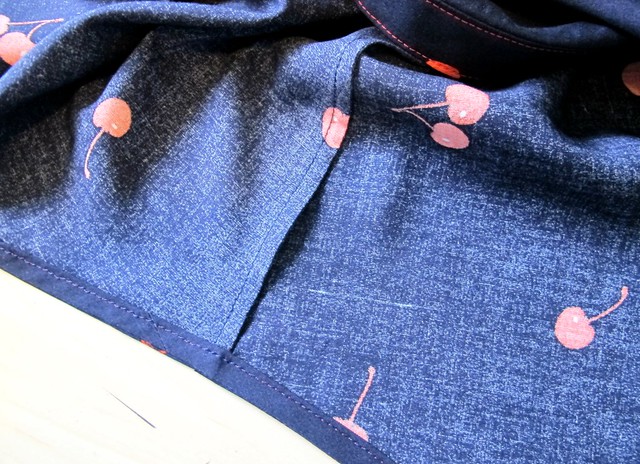
Construction-wise, this is a really easy pattern. It has all the pieces of a proper button-up – separate button placket, collar stand, self-lined yoke – and I’ve made so many of those, I could do that in my sleep at this point. I used a very lightweight interfacing as not to interfere with the drape of the fabric, and finished all the seams with French seams and bias facing for the arm holes and hem. I used navy thread for the construction, and red thread for the topstitching and button holes. The buttons are from Mood Fabrics in NYC. I had to bring a swatch of fabric with me to get a good match – the cherries are more of an orange red than a true red – but this looks pretty good to me!

McCall's 7351

McCall's 7351

I LOVED working with this fabric! Rayon challis is one of my favorite things to wear – not necessarily to sew, as it’s pretty shifty and hard to wrangle (honesty, I’d rather sew silk crepe – I think it’s easier to work with!), but it’s worth the effort because it feels SO GOOD in hot weather. This rayon is a little heavier than most of the challis (challises? challis’? challi?) that I’ve worked with in the past. It’s almost the same weight of a poplin, so it’s not sheer at all and has a nice heft to it. It’s also easier to work with and not as shifty (but still feels really good!). This was my first experience using fabric from Cotton + Steel and I get why people love this stuff so much. It’s really luxurious feeling, wears and washes well. And cherries! 🙂 I still can’t get behind their quilting cotton (well, not as garment fabric. Sorry. Old habits die hard), but they can continue to make this rayon and I will continue to sew it 😀

McCall's 7351

Here it is on the form. I prefer it with the belt – I definitely need the waist definition (and the fact that the waist is already too big is also a factor here).

McCall's 7351

McCall's 7351

McCall's 7351

McCall's 7351

McCall's 7351

I always put a hook and eye at the waistline of dresses like this – it keeps things from gaping, but still allows me to wear a belt (buttons are too bulky under a belt, ew).

McCall's 7351

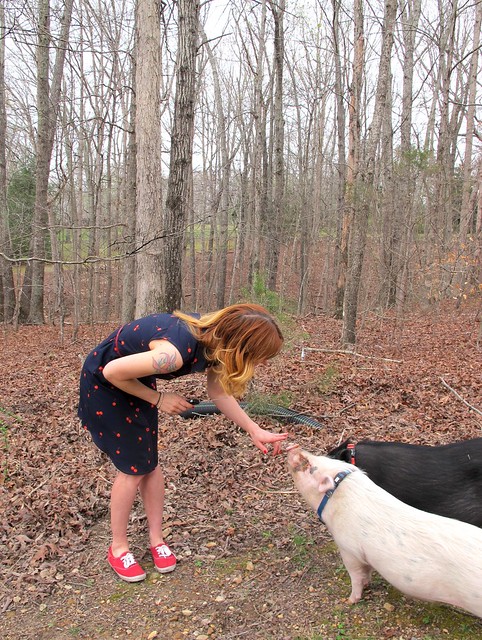
I know my photos don’t look very springy! It’s all green and flowering here in Tennessee, but not in my yard apparently haha. And while my neighbor has a beautiful cherry blossom tree that is in FULL GORGEOUS BLOOM right now, I do not have those kinds of guts to stand under it for photos! This is who was watching me take these photos – which is nerve-wracking enough:

McCall's 7351

Kevin & Wilbur! Did I mention that my roommate bought a second pig as a companion for Kevin? Well. Kevin has a boyfriend now. Also, we are pretty sure she’s pregnant now with his babies. Her stomach is massive – like about to drag on the ground because it hangs so low. Hopefully there will be piglet pictures in a future post! 🙂

blog tour

Hey, so that’s all for this part of the Spring Canvas blog tour – but be sure to check out all the other participants if you haven’t done so already! Lots of really amazing stuff to see 🙂 ALSO, just an FYI – but all domestic orders, regardless of size, ship for $5 from Style Maker Fabrics (and discounted international shipping, yo!). Cheap shipping is good through 4/3/16, so you’ve still got a couple days 🙂

Thanks again to Style Maker Fabrics for letting me be a part of this blog tour! 😀

McCall's 7351

Note: The fabric was provided to me by Style Maker Fabrics so that I could participate in their blog tour!

Completed: Silk Polka Dot Blouse + Corduroy Skirt

29 Mar

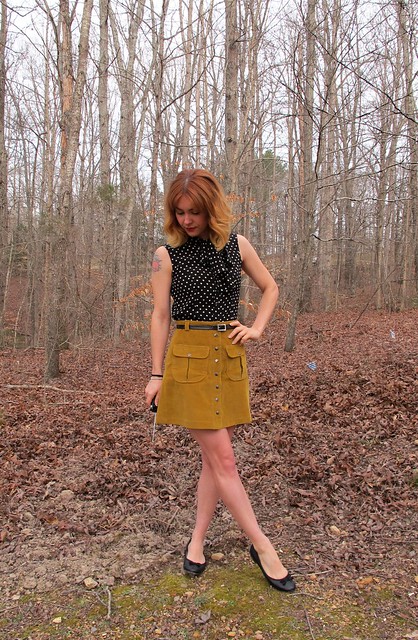
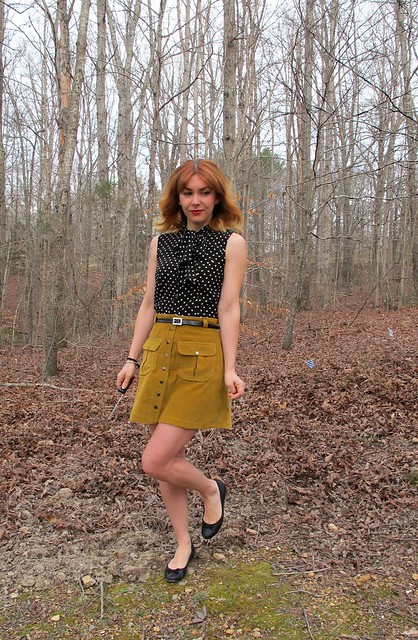
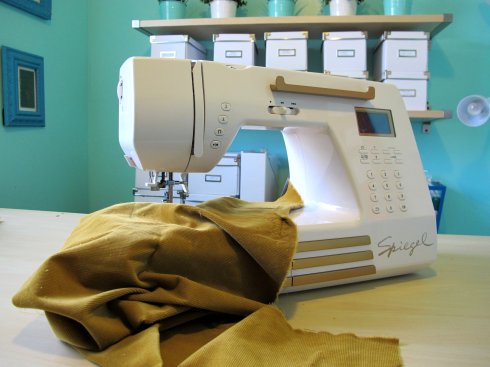
Its time for the ~big reveal~ – my first completed outfit, sewn entirely on my new Spiegel 60609 sewing machine 😀

IMG_2438

I love that this machine is pretty enough to make even a subpar photo look great 🙂 Ha!

Silk Top & Corduroy Mini Skirt

I covered a lot of ground about the making of these garments in my previous posts, however, I’ll include some notes and highlights in this post in case you missed/skimmed/didn’t care then but suddenly care now 🙂

Silk Top & Corduroy Mini Skirt

The silk top was made using silk crepe from Mood Fabrics (purchased at the NYC store last year) and a combination of Butterick 5526 (my TNT button-up shirt pattern) for the body of the blouse, and vintage Simplicity 4676 for the tie neck. I used Sullivan’s Spray Stabilizer to wrangle the drapey silk into submission for ease of cutting and sewing, which worked great! The shirt is finished with French seams and self-bias facing at the arm holes and hem.

Full details on the silk top can be found in this blog post 🙂

Silk Top & Corduroy Mini Skirt

Silk Top & Corduroy Mini Skirt

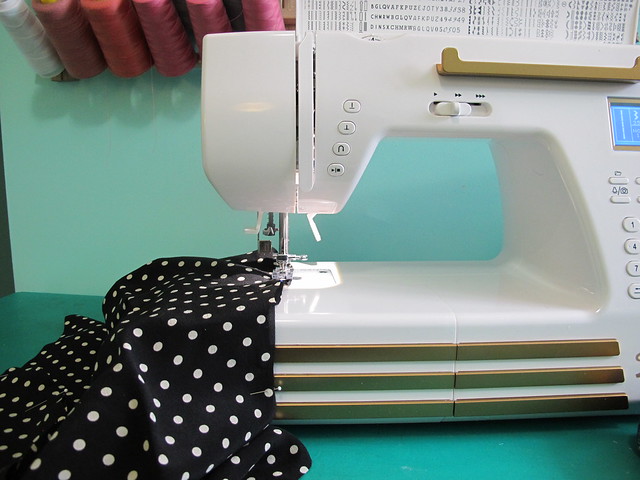
I wanted my first project on the Spiegel 60609 to be something silk, because, honestly – I wanted to see how it could handle working with a notoriously difficult fabric. Of course, stabilizing the whole yardage first definitely helped, but that doesn’t solve all issues (such as when your sewing machine tries to eat delicate fabrics – not a problem with this one, I will add!). I’m really impressed with how the machine sewed through this fabric with absolutely no issues – it even did a great job on the button holes! I do wish that the measurements on the throat plate were marked differently, as it’s hard to get a narrow seam with what’s standard on this machine, but that’s a relative non-issue (I just use post-it notes to mark my seam allowance lines and it works fine). So yeah, Spiegel 60609 + silk gets a thumbs up from me!

Silk Top & Corduroy Mini Skirt

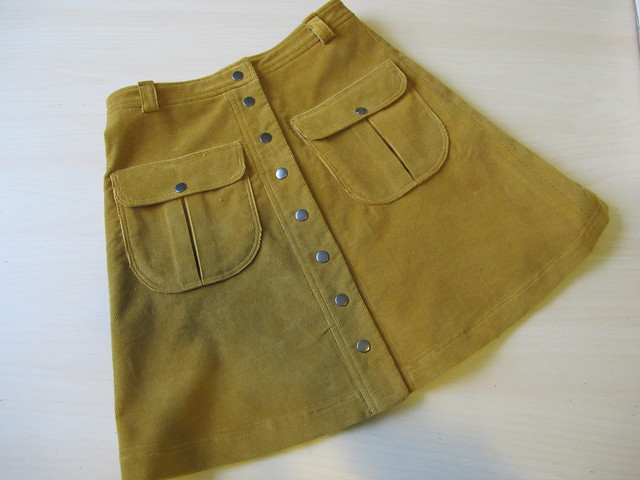
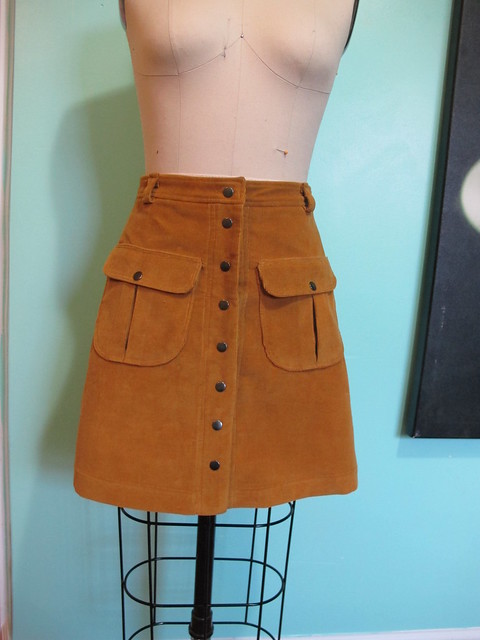
The mini skirt was made also on my Spiegel 60609! I used the Rosari skirt from Pauline Alice Patterns and some lightweight/stretch corduroy from Mood Fabrics. The skirt includes pockets, bound seams on the inside (for a bit of extra pretty cos why not?) and professionally set snaps down the front.

Full details on the corduroy mini can be found in this blog post!

Silk Top & Corduroy Mini Skirt//embedr.flickr.com/assets/client-code.js

I don’t necessarily find corduroy difficult to sew – most of the problem lies in making sure everything is cut and pressed correctly, as not to mess too much with the nap. Sometimes, depending on what machine I’m using, it’s a good idea to use a walking foot to help keep all layers feeding evenly, but I didn’t have any of these problems with the Spiegel 60609. The feed dogs were good enough on their own without any extra help. Always a plus! 🙂

Silk Top & Corduroy Mini Skirt

Silk Top & Corduroy Mini Skirt

Silk Top & Corduroy Mini Skirt

Corduroy Mini Skirt

Corduroy Mini Skirt

That’s all for this outfit! Stay tuned next month for that project – all I can say is, it’s gonna be FANCY 😀

Silk Top & Corduroy Mini Skirt

Note: The fabric used is part of my monthly allowance from Mood Fabrics, as part of my involvement with the Mood Sewing Network. The Spiegel 60609 was given to me by Spiegel, and it’s awesome!

In Progress: Corduroy Mini Skirt

22 Mar

IMG_2367

Following up on part one of my Spiegel 60609 sewing project for March (here is that post, in case you missed it!), let’s get to part 2! The bottom half 🙂

bdg-corduroy-button-front-mini-skirt-mustard-6

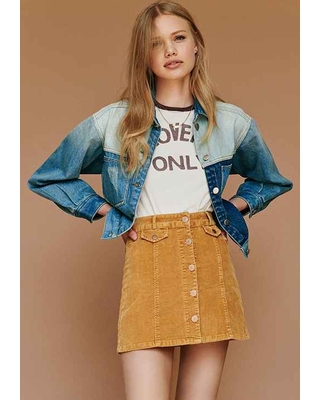
My original inspiration came from a skirt I saw at Nordstrom a couple of months ago – the most adorable a-line mini skirt, made in mustard corduroy with pocket flaps and snap closures down the front (above is an image of it – I think. It’s been a while and I’m forgetful!). I liked it enough to actually try it on (which was weird enough in itself – I haven’t been in a fitting room in ages, ha), but the fit wasn’t very good so it didn’t leave the store with me. Instead, I thought I’d try to make my own (surprise!).

I found this mustard cotton corduroy on the Mood Fabrics website and immediately set about finding a good skirt pattern for the fabric (unfortunately, that fabric is already sold out – sorry! I guess a lot of us snapped it up at the same time – it’s really the perfect shade of mustard, and a nice light weight with a subtle stretch. Just gorgeous!). Lots of googling around led me to eventually settle on the Rosarí skirt as it included pretty much all the elements of the original inspiration skirt, minus the separate side panels and with big (usable) pockets instead of just flaps. Honestly, it totally looks like something I’ve already made, I still wanted to give it a try. The patterns were just different enough to justify a second purchase, and plus, I’ve been wanting to try a Pauline Alice pattern.

Going by the finished measurements, I cut a size 34 and made the mini length with pocket C. Spoiler: The fit is really excellent and I’m totally gonna make this again with those zippered pockets. Anyway, back to the corduroy!

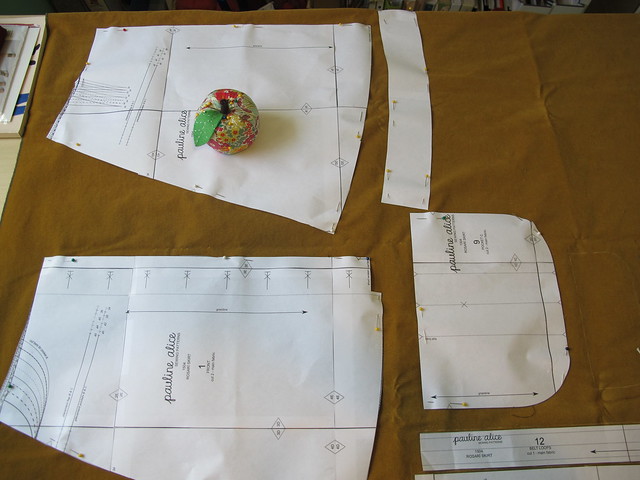
Corduroy Mini Skirt - cutting

One of the most important things to keep in mind when dealing with corduroy is the very visible nap. On fabrics with a pile (basically… hairs. Velvet, velour, corduroy, even fake fur – are all examples of fabric with a pile), the hairs lie in a particular direction, which is referred to as “nap.” If you run your hands up or down the pile, you can feel the pile. The pile can change color very subtly depending on the direction of the nap, so it’s extremely important to cut everything in the same direction – or else you run the risk of your pieces looking like they are slightly different colors. For my skirt, I made sure to lay all my pieces with the top facing the same end of the yardage, as shown in the picture.

Corduroy Mini Skirt - pressing naps

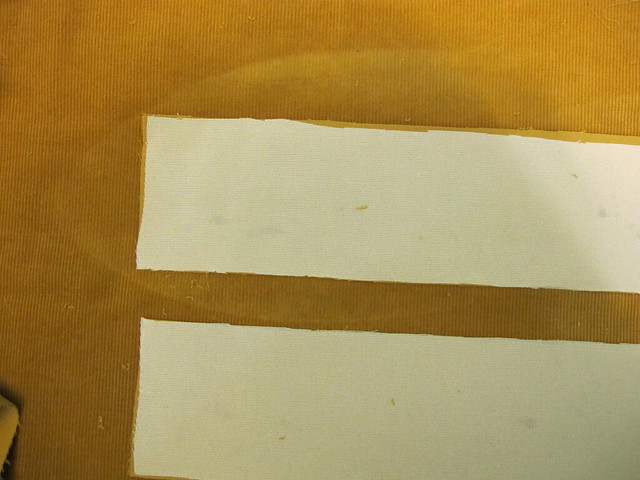
Another issue with naps and piles is that it’s *really* easy to crush the pile with your iron if you’re not careful. To prevent, this, the fabric can’t be pressed against a flat surface (like the ironing board, or the iron itself). One way to do this is to use a velvet needleboard, which has a million tiny wires to make a not-flat surface that the pile can lay against while you press. However, needleboards are freaking expensive (that one is $40, there, I just saved you a click haha)! They are fun to use, but ain’t kind on the wallet. So the cheap alternative is to just use a scrap piece of your napped fabric, and lay it right side up on your ironing board. You can press all your pattern pieces with the right side down, against the scrap fabric, and that provides enough texture to keep the nap from crushing. I had about 1/4 yard leftover from cutting my skirt, so I had a nice big piece to lay on my ironing board for pressing. Look at the picture above – do you see the iron imprints around my interfaced pieces? That’s what happens if you don’t protect the nap before pressing!

So those are two big things to keep in mind if you’re sewing with corduroy (or any other napped fabric, for that matter). Mind the nap 🙂 And just FYI – some napped fabrics (especially velvet and faux fur) require a little more finesse with sewing as they don’t like to feed evenly through the sewing machine. That being said, I didn’t have any problems with this particular fabric. Normally, I would use a walking foot – but the feed dogs on the Spiegel 60609 did a good job on their own, no extra foot required. Yea!

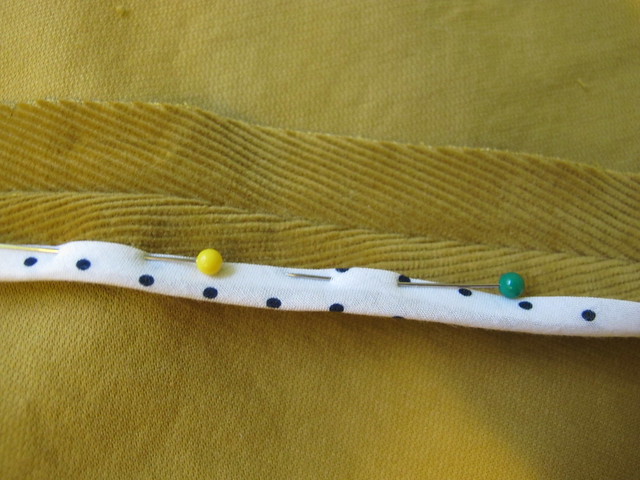
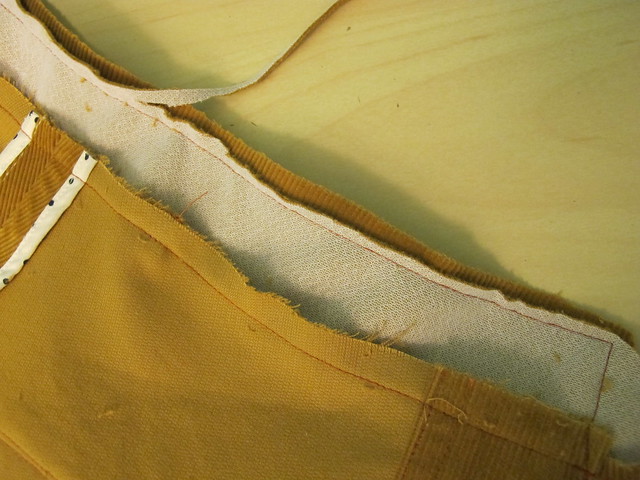
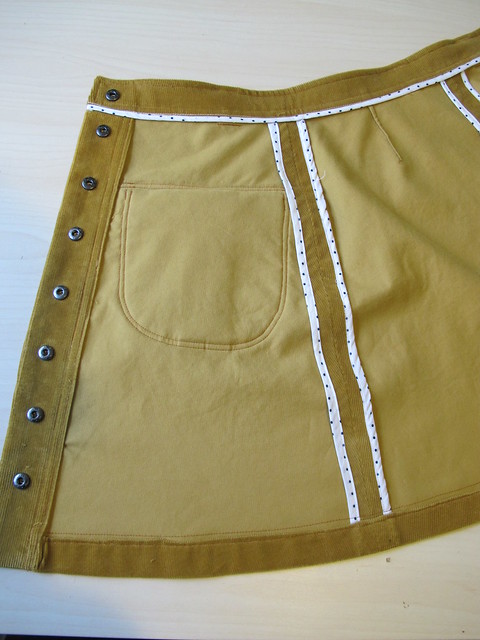
Since this is a really straightforward pattern with very few seams, I thought it would be fun to go the extra mile and do some pretty seam finishing on the inside 🙂 I decided to bind my seams with bias tape, which not only looks nice, but prevents the seam allowances from unraveling as the skirt gets washed/worn. This particular corduroy frays like a MOTHER, so it’s a very necessary step. I could have used my serger, but this looks prettier (and I didn’t have matching thread, ha!)!

Corduroy Mini Skirt - bound seams

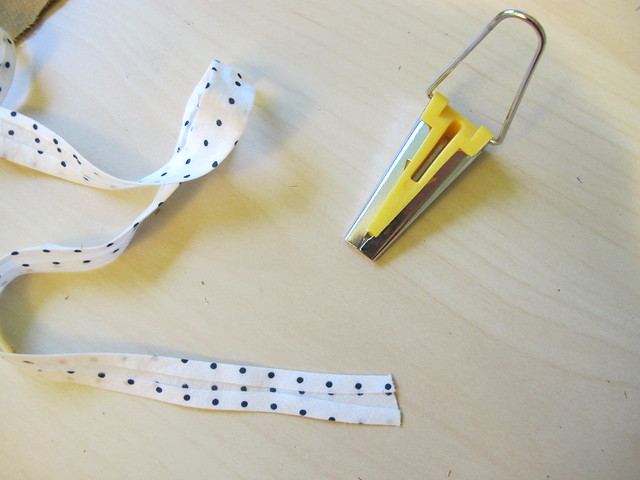
You can use pre-packaged bias tape to bind your seams, but I like to make my own because it’s a bit softer (and you get a waaaay better selection of colors and prints). This particular fabric has showed up on soooo many of my makes – I made a truckload of bias strips with it and it’s like the gift that keeps on giving! 🙂 I will be so sad when it runs out hahaha. Anyway, I like the Clover 1/2″ bias tape maker – I find the width is great for this finish, and the Clover brand ones in particular work really well. I’ve tried cheaper bias makers and they just don’t work as well for me. This one is tight enough at the opening to really fold the bias, and then it’s easy to press it flat so it stays that way.

Corduroy Mini Skirt - bound seams

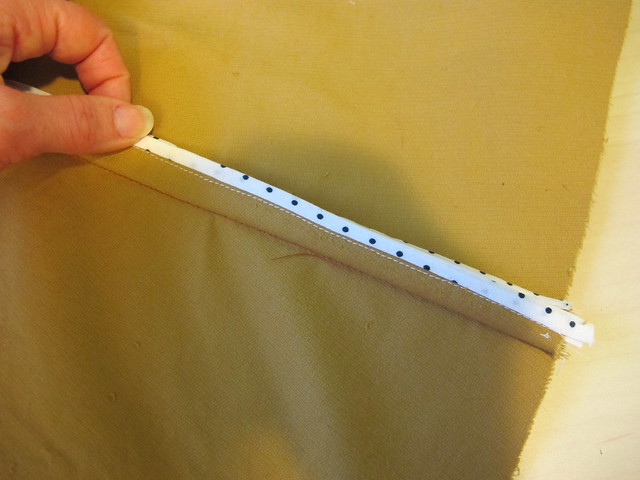
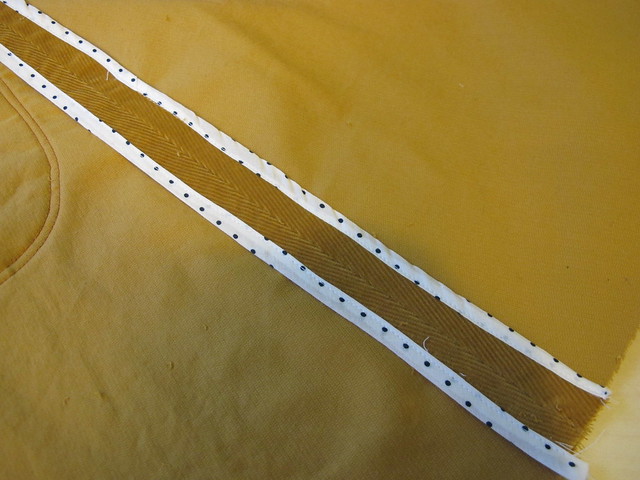
For this skirt, I did a Hong Kong bound finish – so both sides of the seam allowance are bound and then pressed open. You can also press the seam allowances to one side, and bind them together.

Corduroy Mini Skirt - bound seams

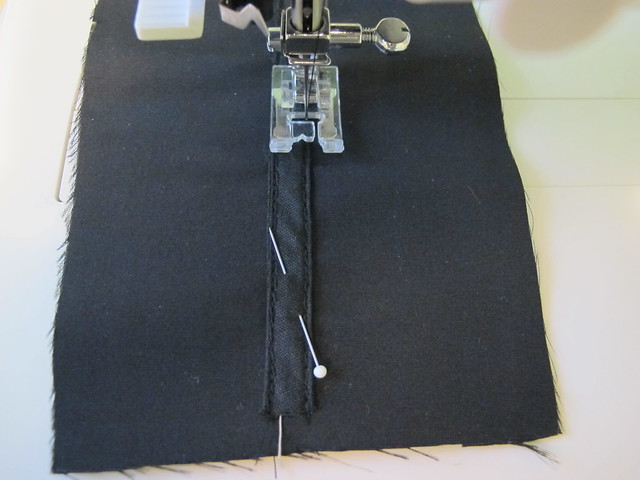
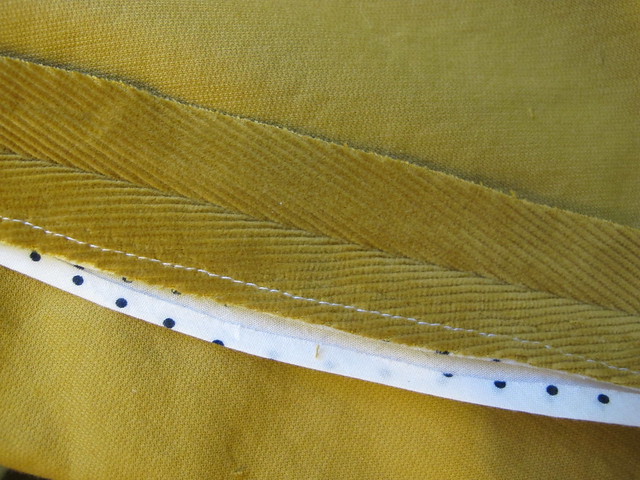
On the first seam allowance, sew the bias binding to the underside (the side that is against the garment when it’s pressed into place),  keeping your stitching line right along the pressed crease of the binding.Corduroy Mini Skirt - bound seams

Corduroy Mini Skirt - bound seams

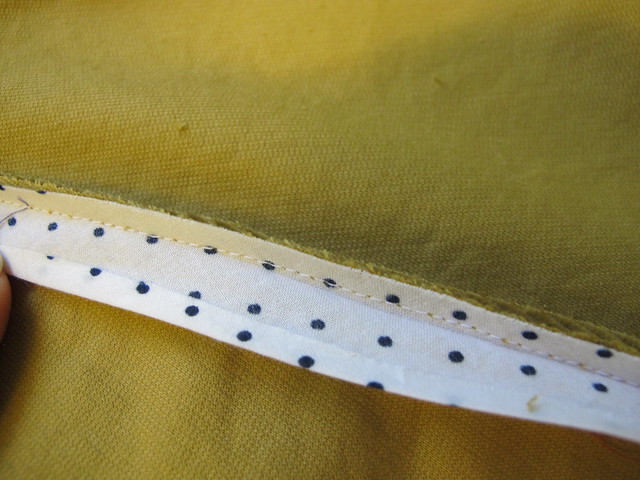
Pull the unsewn side of the bias around so it comes to the top and just covers the stitching line you created. Pin into place, and then topstitch close to the fold. Repeat for the opposite seam allowance, then press the seam allowances open.

Corduroy Mini Skirt - bound seams

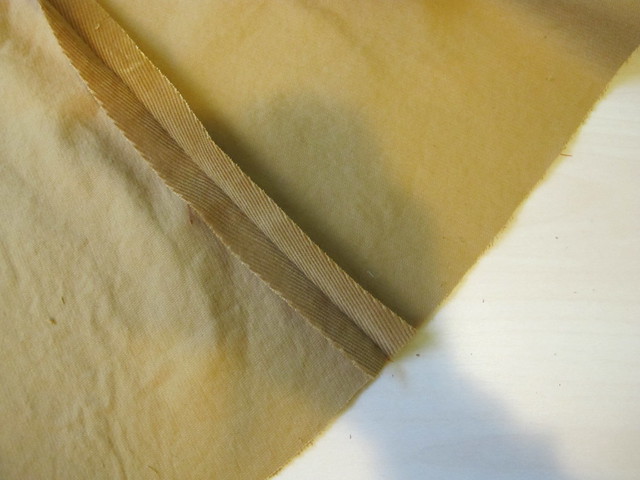
Here is what the underside of the seam allowance looks like. I do the first pass on the underside, so any stray topstitching is hidden when the seam allowances are pressed open 🙂

Corduroy Mini Skirt - bound seams

And here are both sides bound 🙂

Corduroy Mini Skirt - bound seams

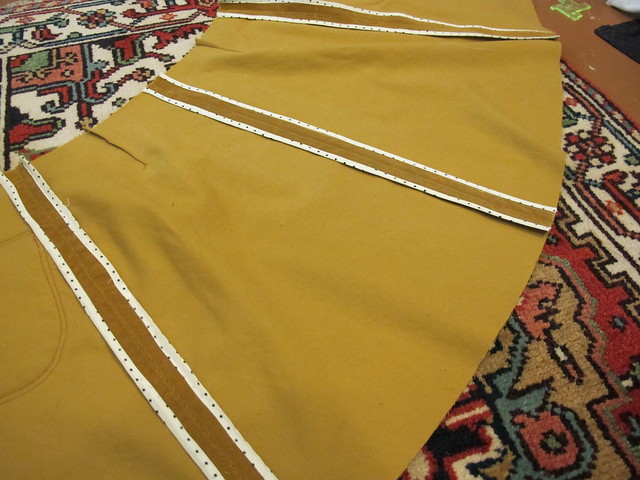
AND HERE IS THE WHOLE DAMN SKIRT 😀

I love this finish! It’s definitely a time-consuming addition, but it’s not so bad when the garment in question only has 3 seams to bind 🙂 And it looks soooo pretty on the inside!

Corduroy Mini Skirt - grading seam allowances

Last corduroy tip! This fabric tends to be really bulky, so it is important to really grade down your seam allowances in any part where there are multiple layers – such as the waistband. I trim my seam allowances down at staggering heights so that there isn’t a giant bulky ridge showing from the outside once the skirt is complete.

Corduroy Mini Skirt

And that’s it! Here’s a little sneak of the pretty insides 🙂 I also bound the lower edge of the waistband – instead of turning it under 1/4″ to hide the raw edge – as I’ve always liked the way that looks in dress pants hahaah. Oh, and my snaps were set using a professional snap setter (cos I work for a clothing manufacturer!)! They look GOOD.

Corduroy Mini Skirt

Corduroy Mini Skirt

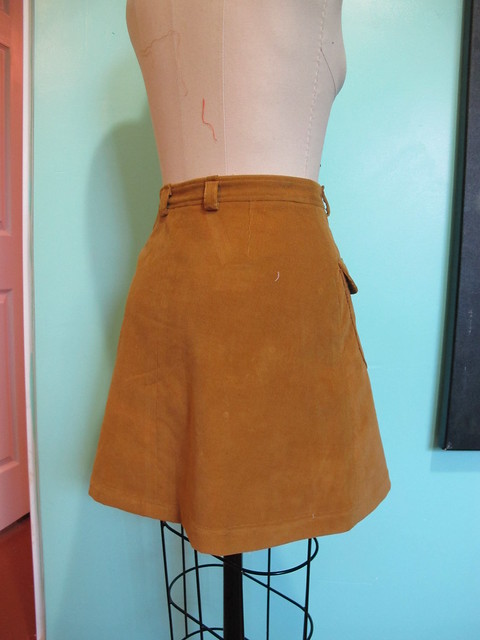
Some shots of the finished skirt on my form 🙂 I’ve already worn the hell out of this thing – the fit is great, I love the mini length, and the mustard color goes with pretty much everything in my closet. It looks EXTRA good with black and white polka dotted silk, though 🙂 I will be sharing the completed outfit next week!

In Progress: Polka Dot Silk Crepe Blouse

15 Mar

Hey everyone! A little different sort of post for today – instead of showing you a finished project, I want to share some progress pictures and tips. I used to do these kinds of posts in the past, and I’ve missed nerding out on construction talk. Since this is my blog and I do what I want, that’s what you get today 🙂

Silk Tie Blouse

Plus, I’m gonna make it on my new Spiegel 60609 sewing machine! Woohooo! 😀

This is *also* part of my Mood Sewing Network project for March, so you’ll have to wait a couple weeks until the Big Reveal 🙂

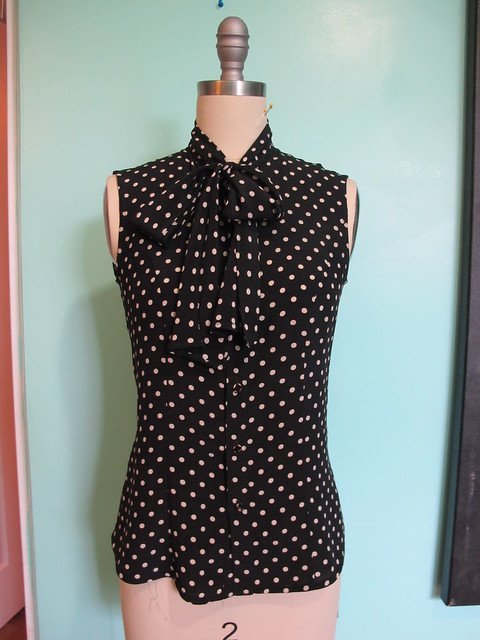
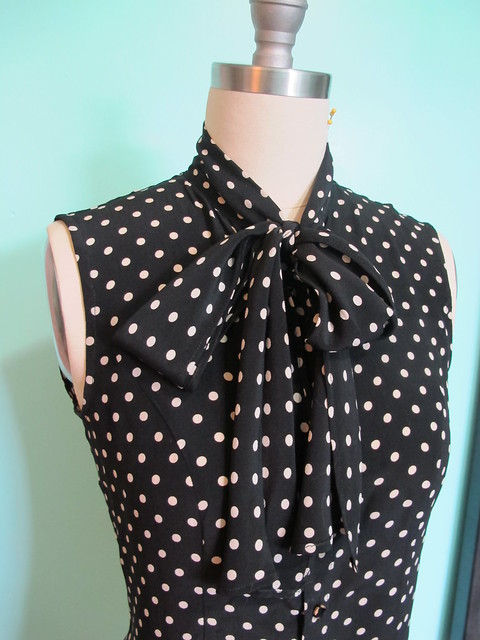
Anyway, I bought this fabulous black with white polka dot silk crepe while I was in Mood Fabrics flagship NYC store last November. I decided to make a silk button up shirt with it, although originally I planned to do a shirt with the standard collar (as I tend to do). Right before cutting into it, I thought it might be cool to give the shirt a big floppy bow at the neck instead, just to mix things up a little bit. I have vintage Simplicity 4676 in my stash, which I’ve made before. While I love the way the bow looks, I’m not as big a fan for the shape of the actual shirt – so I just put the bow on my beloved TNT Butterick 5526 and it worked out perfectly! As long as the neck measurements on the two patterns are similar (which for these, they are), then it’s easy to sub one neckline for another.

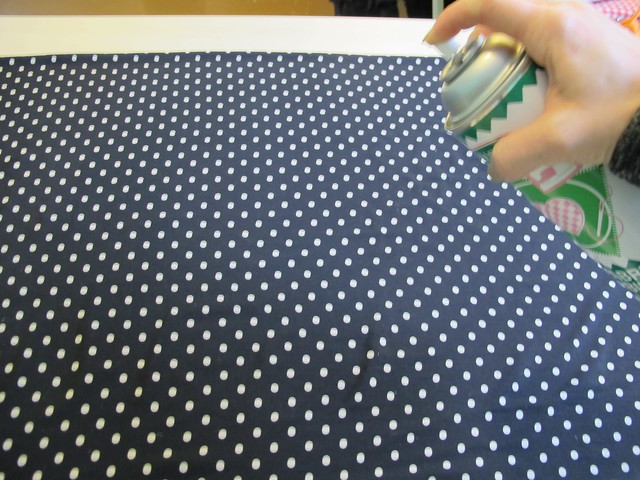
Silk crepe is one of the easier silks to work with, as the texture gives the fabric some grip, but it can still be quite shifty. It doesn’t have to be a nightmare, though, if you know how to work it! And, honestly, I think the hardest part about dealing with shifty fabrics (this isn’t necessarily limited to only silk, btw!) is getting an accurate cut without the piece morphing into a map of the United States once you move it around. There are tons of ways to accomplish this, but my personal new absolute favorite method is to use a stabilizer to make the fabric crisp, which gives it less chance to shift around. I use Sullivan’s Spray Stabilizer, as I like that I can direct that ~stable flow~ to whatever part of the fabric I need it to (sometimes you don’t need to cut your entire yardage, you know?), and it dries very fast. I have received some really good tips on other things to use for stabilizing fabric, such as gelatin, which I will eventually try! But spray stabilizer is also the bomb.

Silk Tie Blouse - cutting silk fabric

I spray it on evenly, then lay my fabric flat and straight on the table and allow it to dry (I guess you could do this on the floor if you don’t have a table, but my cat thinks that things laid on the floor are a special running obstacle course I have created just for her, so I personally try to avoid that route!). Since the fabric dries into whatever shape you leave it in, it helps to fold it in half and pin along the selvedges. Once the fabric is dry, it will feel like a silk organza – MUCH easier to handle. For pieces that really need to be accurate, such as a collar, it’s easy to reapply a second layer after you’ve cut, just to make sure there’s not shifting happening. Once your garment is completely assembled, you simply wash it out and it softens right back up. I always prewash my silks on cold water, so I don’t have to worry about water spots or shrinkage when I wash the garment.

Silk Tie Blouse - mirroring fronts

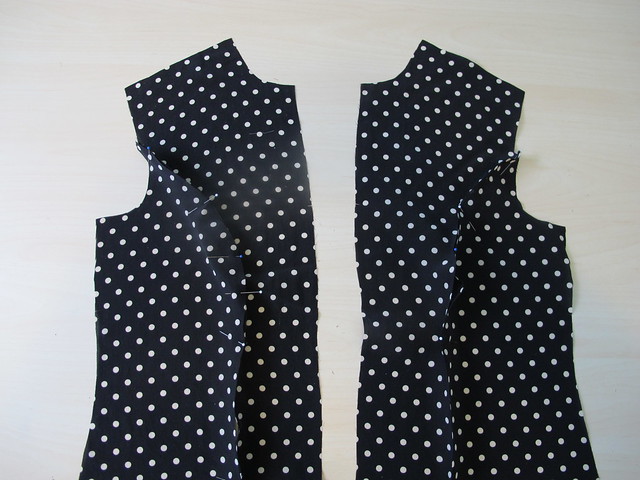
When I’m sewing a fabric that doesn’t have a definite right or wrong side, I try to be extra careful that I don’t sew two of the same piece. Unpicking sucks, and it’s even worse on a delicate fabric (that has been French seamed, no less!). To prevent this, I lay my pieces out so they mirror each other, and pin them like so before I take them to the machine. That way, I don’t accidentally sew two right fronts or whatever.

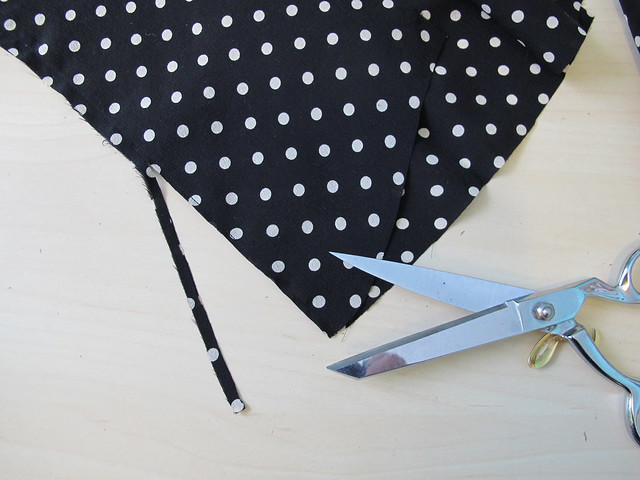
Speaking of French seams, the entire blouse is constructed using them. I love French seams because they are a beautiful finish, and they work really well with delicate fabrics. They do take some extra time because you are essentially sewing the same seam twice, but I think it’s totally worth the effort.

Silk Tie Blouse - sewing French seams

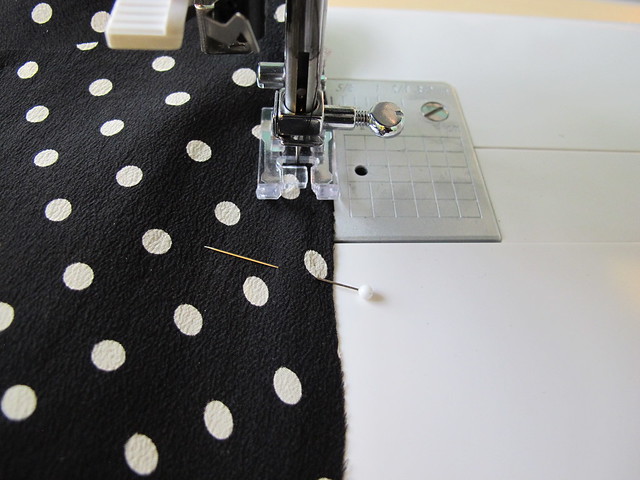
With WRONG SIDES TOGETHER, sew the first line at 3/8″ (this is assuming a 5/8″ seam allowance, which otherwise you’ll want to adjust accordingly). I know, sewing wrong sides together sounds totally backwards and all kinds of wrong, but trust.

Silk Tie Blouse - sewing French seams

Trim the seam allowance down to about 1/8″.

Silk Tie Blouse - sewing French seams

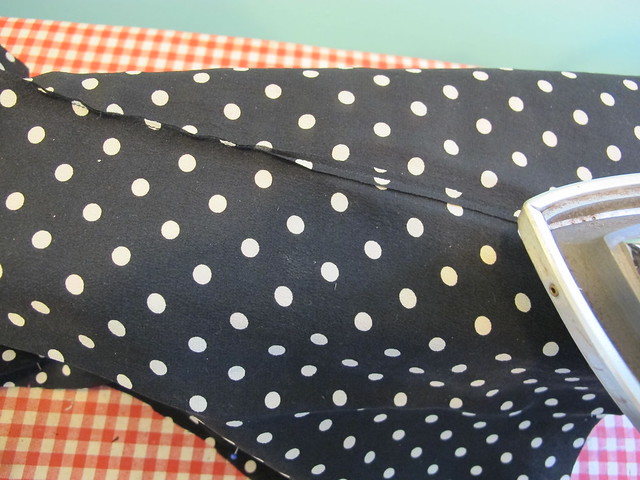
Press the seam allowances open. This can be kind of difficult if your seam allowances are super tiny, so do the best you can. I have a really hot iron and that helps a lot 🙂 Otherwise, you can press both seam allowances to one side – but I think pressing open gives a better end result.

Silk Tie Blouse - sewing French seams

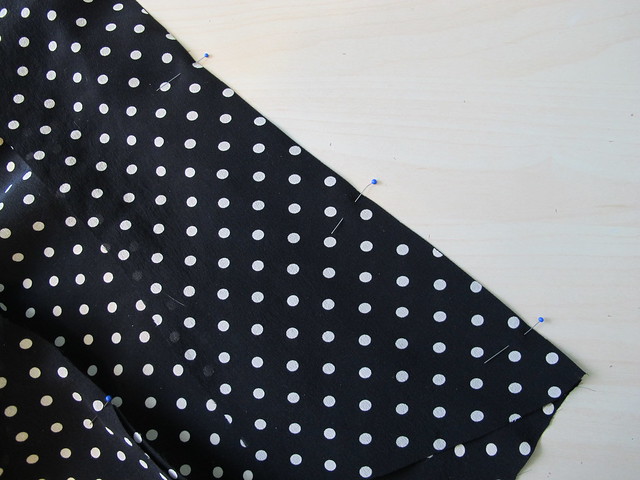
Fold the fabric so the right sides are facing and all the seam allowances are encased on the inside, and press.

Silk Tie Blouse - sewing French seams

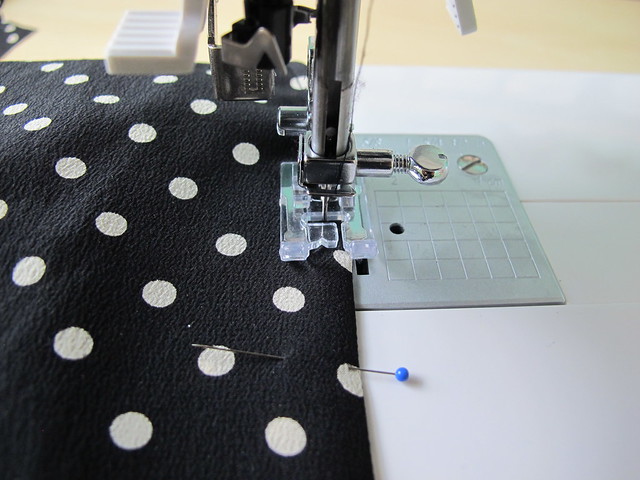
Sew again at 1/4″, then press one more time.

Silk Tie Blouse - sewing French seams

You should end up with something that looks like this – the seam allowances beautifully encased 😀

Silk Tie Blouse - bias faced hem

For hemming shirts – silk or otherwise! – I like to finish the hem with a self bias facing. Since the hem of shirts is usually curved, I find this gives me a MUCH easier way to get a MUCH cleaner finish. Contrasting bias is also fun, for a little flash of color! Here’s my tutorial for sewing bias facing. I like this method because you don’t have to pre-press the bias pieces – you press them after they are sewn, and it’s much faster and more accurate. I also used this method to finish the arm holes of my (obviously sleeveless, ha) blouse.

Silk Tie Blouse - button placket

After hemming the shirt, I added the button placket. Since this is one of those areas where you want to be really accurate and careful, I fused lightweight interfacing (I use this stuff from Fashion Sewing Supply, it’s a little pricey but it is 100% worth it in my opinion!) to my pattern pieces and then re-applied the spray stabilizer just so everything was really easy to handle. Honestly, attaching that silk crepe placket was no more difficult than if it were made out of cotton. YES!

I seem to have lost the pieces of me adding the neck tie – whoops! But that was pretty easy. It is cut on the straight grain, and the edges are rolled up to where the tie is attached to the neckline. It’s doubled over *only* at the neckline, and the ends are twice as wide so you can make a nice fat bow. In silk crepe, it’s super floaty and awesome. Love.

Silk Tie Blouse - button hole

The last step was adding all those button holes! I wasn’t sure if the Spiegel 60609 machine was going to come through on this one – button holes can easily look really terrible, really fast – but it did not let me down! The stitches are nice and tight, and the button hole foot calculates the correct size using the actual button. Also, how about those buttons? I found them at the flea market years ago and I’ve been hoarding them ever since for the ~perfect~ project, ha.

The finished blouse:

Silk Tie Blouse - finished!

Silk Tie Blouse - finished!

I am REALLY happy with how it turned out! I think the silk crepe is the perfect fabric for this type of blouse – it skims over the body, and the bow has a beautiful drape. Even with the polka dots and that big neck bow, it’s still not super incredibly sweet looking, which I like. And it feels SO GOOD to wear! I will never tire of wearing silk 🙂

~Big Reveal~ outfit photos to come soon! Next up – the bottom half of this outfit 🙂

As a side note, I’m headed back to NYC for the weekend to teach another Pants Making Intensive at Workroom Social! Just a head’s up that I’ll be a bit delayed in email/comment responses, as I tend to take off from the computer when I go out of town 🙂 I’m excited to go back to the city and get people making some pants, though! This particular workshop is sold out, however, there are still a couple spots open at my Garment Sewing Weekend at A Gathering of Stitches in Portland, Maine! Yay sewing! :DDD

Completed: Black Lace Boylston Bra

11 Mar

Ooh la la, y’all!

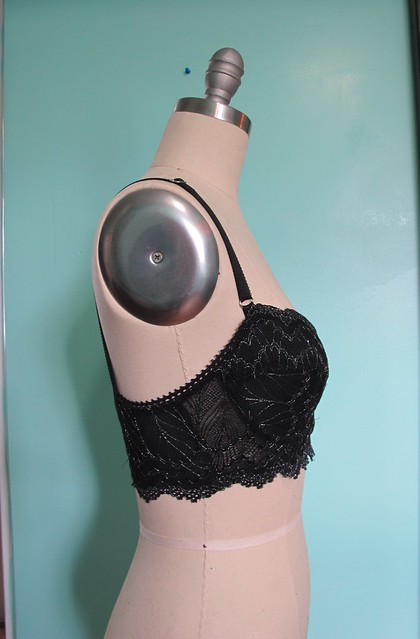
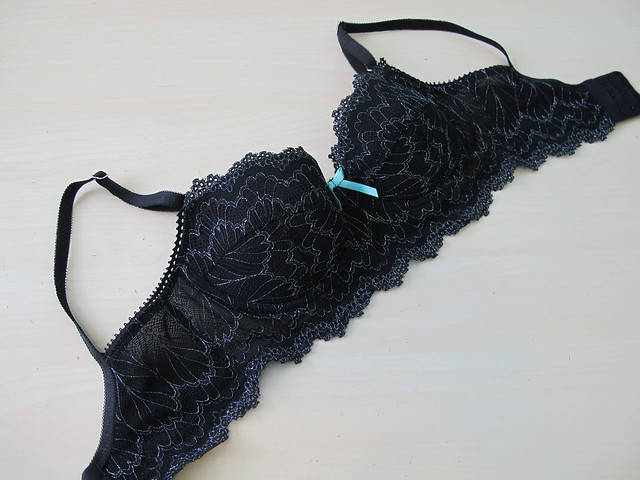
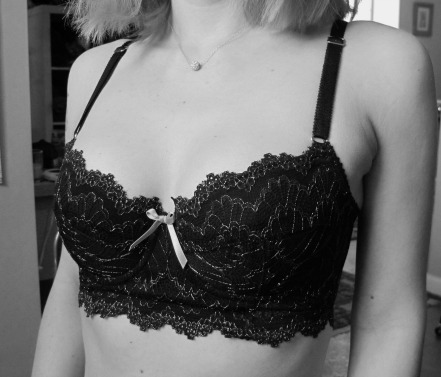
Black Lace Boylston bra

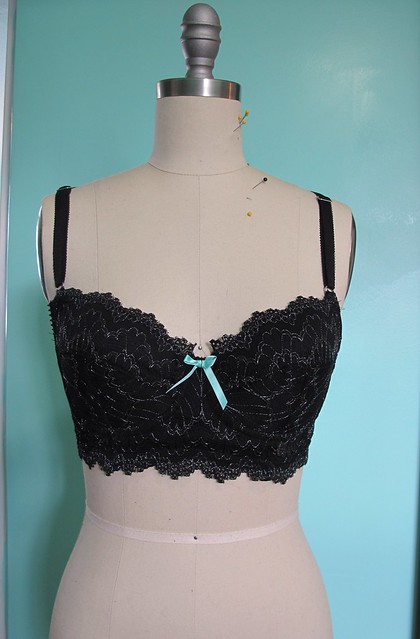
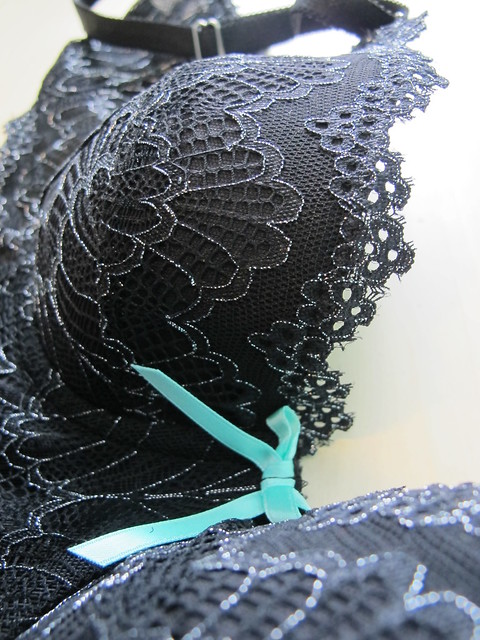
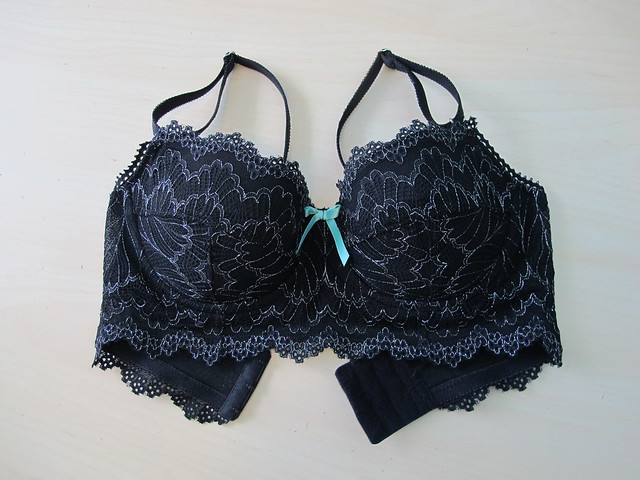
Hands down, this is definitely the sexiest bra I have ever made. Although, to be fair, it’s kind of hard to steer away from sexy anything if it involves black lace amirite.

Black Lace Boylston bra

It’s been a couple of months since I made this thing, which means I am going to have to dig deep into the recesses of my brain to try to remember all the little construction tidbits. On the flip, however, it does mean that I’ve worn it a lot in that time and can seriously vouch for the fit and comfort factor.

Black Lace Boylston bra

Black Lace Boylston bra

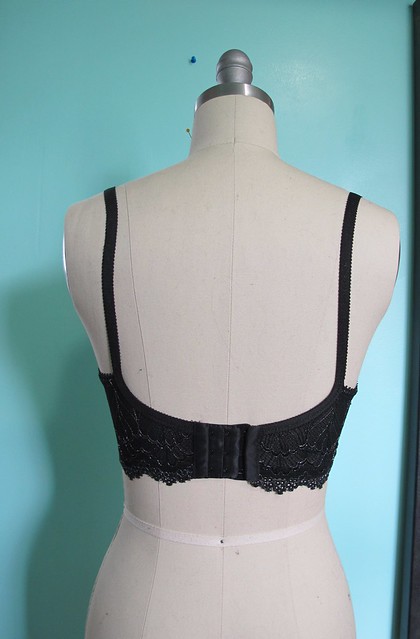
I used the Boylston bra from Orange Lingerie as the base for this pattern. Having made this pattern several times before, I did not make any additional changes to the fit (other than my previous edits to the back band). I sewed a 30D, which is in line with the size I wear in RTW. The big changes I made were in terms of construction – namely, trying to figure out how to incorporate both foam cups and a lace outer, while retaining all those cool little scallops that make the bra so pretty. I think this rendition is pretty good, although there is definitely room for improvement in future versions. Always learning 🙂

Black Lace Boylston bra

Black Lace Boylston bra

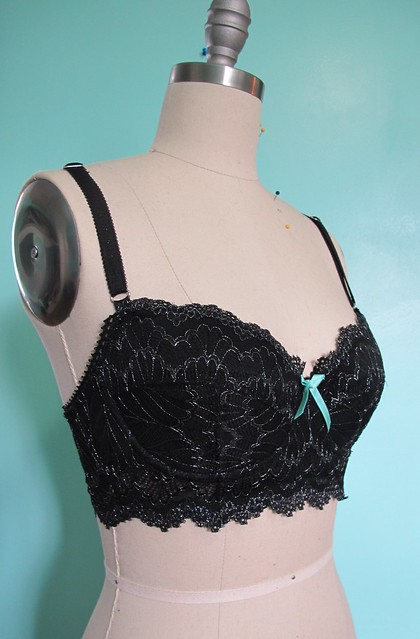
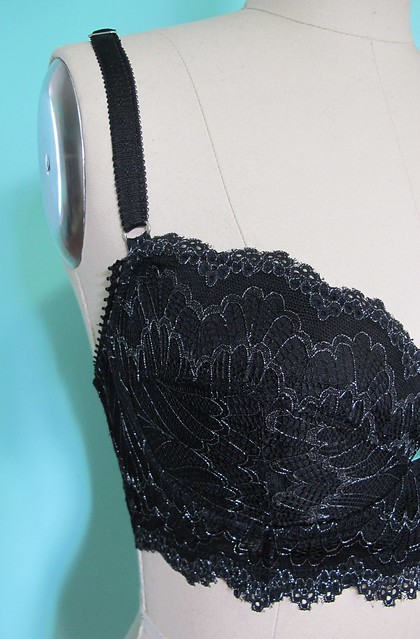
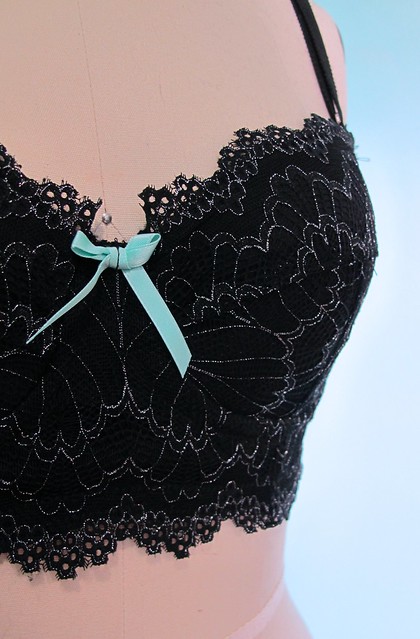
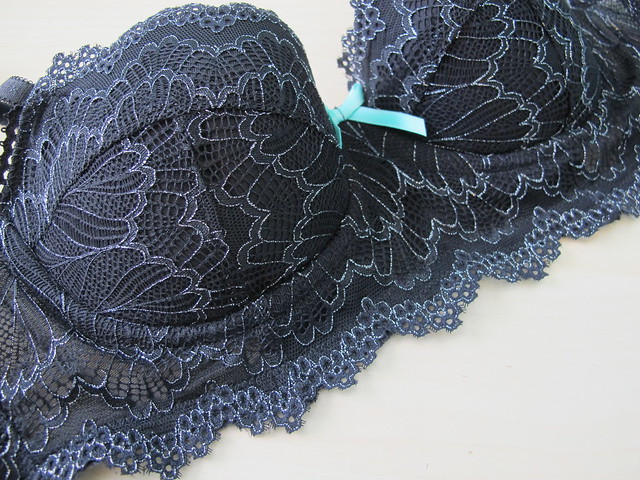
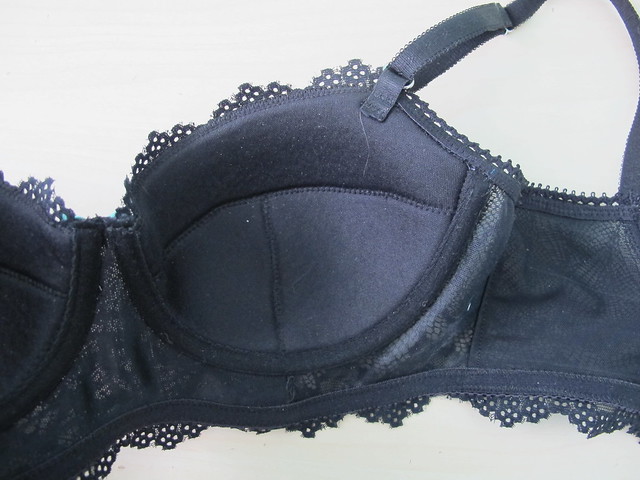
Like I said, getting that form cup + scallops gave me a bit of a head scratch, so I took to some store-bought bra snooping to try to figure out how to make it work for this lil guy. It appears that most RTW bras have the foam cup and lace outer cup sewn separately, and then tacked together at the top in a few places. With this in mind, I finished the top edge of my foam cup with a simple 3 thread overlock (it’s not really imperative to do this, as the foam doesn’t unravel – but it does look nice!), and then simply laid the constructed lace cup on top and lined the innermost points of the scallops with the edge of the foam cup. Rather than tack it down, I actually stitched all the way across. The lace is super busy, so the stitching doesn’t show- but it’s very secure. For the remaining edges of the cup, I followed the pattern as instructed.

I also had to figure out how to do the straps, as the patterns calls for self-fabric straps with a little bit of strapping elastic at the back. I actually spoke with Norma (she of Orange Lingerie, and the mastermind behind these patterns) at length about this when I met with her in Boston, and while she gave me some really good advice on how to do the fabric straps with a scalloped edge – I ended up not having enough lace to cut them! Whomp whomp. Maybe for the next one. For this particular bra, I had to stick with regular elastic bra strapping. I sewed the underarm elastic as instructed, stopping right where I planned on adding the straps (as the pattern is written, you attach the fabric straps and then sew the underarm elastic all the way up. Since I had no fabric straps, I had to improvise!). When I trimmed the excess elastic, I made sure to keep intact scallops so things looked more intentional. The front of the straps are attached with the rings going through a tiny piece of elastic – again, something I snooped on existing bras. The back is attached the same way the pattern instructs.

Black Lace Boylston bra

To get the scallops along the bottom, I used the same method of flat attaching the elastic, instead of turning it back, as I did on my lace Watson bra. Since having finished this bra, Erin has published a wonderful post on how to make a lace frame bra, one method which gives a beautiful gothic arch along the bottom (instead of the straight band you see here). I am really excited to try that method!

Black Lace Boylston bra

I really love the lace I used for this bra! This is the second piece that was given to me by Tailor Made Shop, and if it looks familiar – it’s because I also have some in navy (which I made into a lace Watson bra). It looks like the shop is out of this stuff in black, but they do have navy, pink, purple and white 🙂

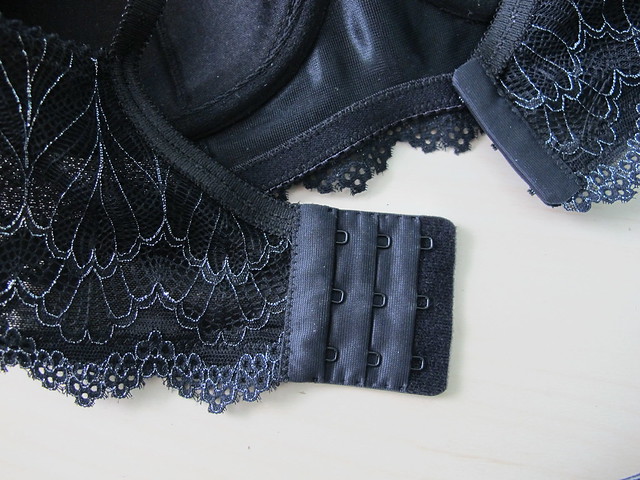
Because the lace is a bit lightweight, I underlined all the pieces. The bridge and frame have sheer cup lining for stability (mine is from Bra Maker’s Supply, but you better believe I am excited to restock from a US source haha!), while the band pieces are underlined with power mesh. I didn’t underline the cups, since there are foam cups and that’s pretty supportive enough 🙂

All elastics and notions are from my stash, which the exception of the scalloped bra strapping – which is also from Tailor Made Shop 🙂

Black Lace Boylston bra

Black Lace Boylston bra

Black Lace Boylston bra

Fit-wise, this is one my best yet! The bra is super comfortable, super supportive, and gives me a really nice shape (hell yeah my boobs look awesome in this thing). It’s not a push-up, but there is definitely some lift action going on in there. If you would like to see a picture of me wearing it, click here. This should go without saying, but, again, PLEASE do me a solid and don’t post this image all over social media 🙂 Posting strictly for science purposes.

My only complaint is the horizontal wrinkle along the bottom of the bridge. It only shows on the outside, when I’m wearing the bra, which leads me to believe it’s from excess lace fabric in the front (the inside stays smooth regardless). Ugh! It’s not a huge deal – the bra is still wearable and absolutely no on has noticed (or at least pointed out) the wrinkle, so I ain’t gonna let it bother me. But the next one will be wrinkle-free, hopefully 🙂

Black Lace Boylston bra

Ok, I think that wraps up about all the bra talk I have in me for today! 🙂 Happy Friday, y’all!

Completed: Vintage Simplicity 1799

29 Feb

Raise your hands if you’re ready for spring!

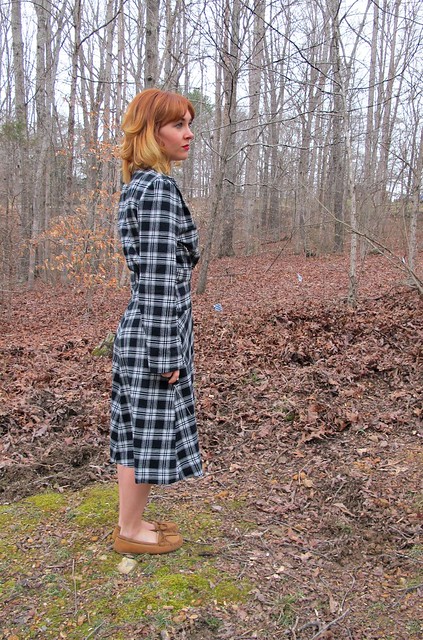
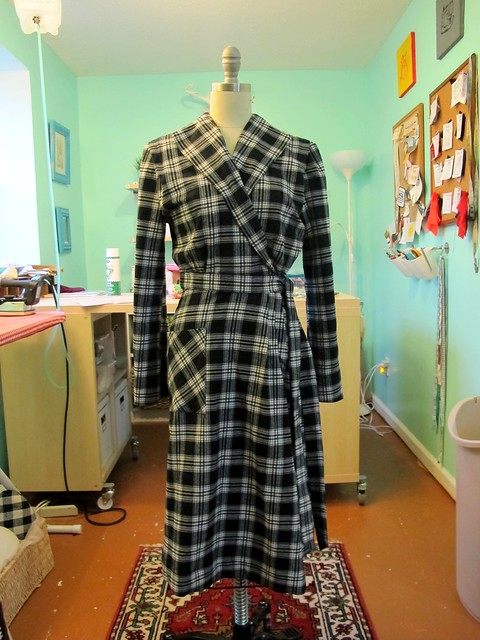
Simplicity 1799 robe

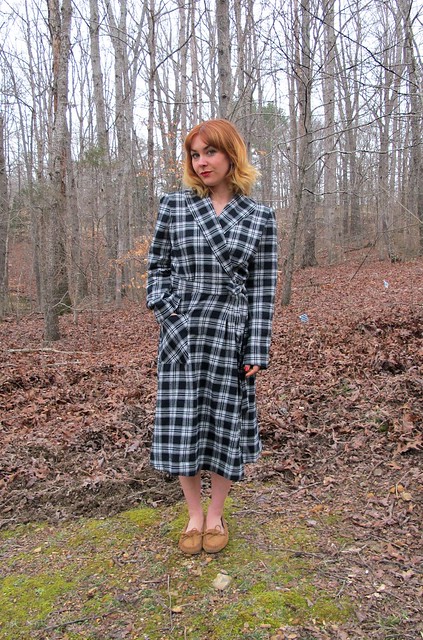
This is the time of year that I spend the majority of my day wrapped up in a robe, at least those days when I’m hanging around the house. My old fleece robe has truly served me well during these trying times, but its really starting to look its age (nearly a decade, I have recently realized!). I wanted to upgrade to something that was a little classier than the ugly fleece – something that wouldn’t make me feel quite so embarrassed to run to the mailbox in. I know, I live in the middle of nowhere – but the moment you run to the mailbox in your robe, that’s the moment someone you know decides to cruise on by.

Simplicity 1799 robe

Simplicity 1799 robe

Simplicity 1799 robe

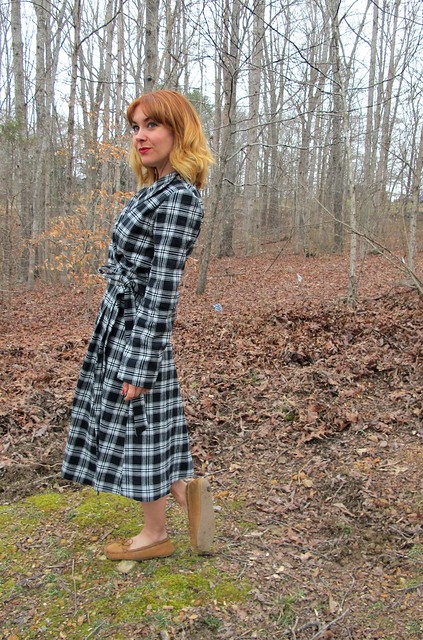
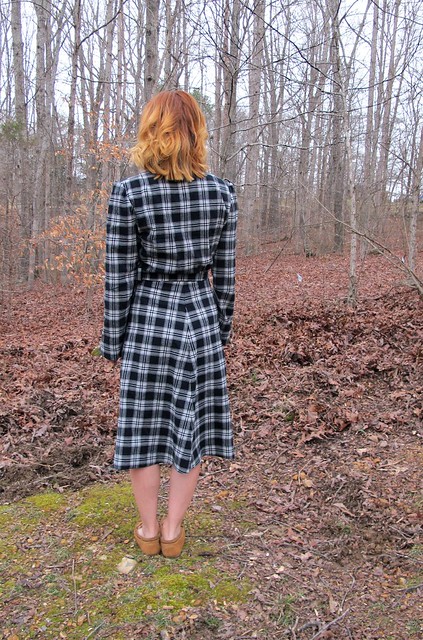
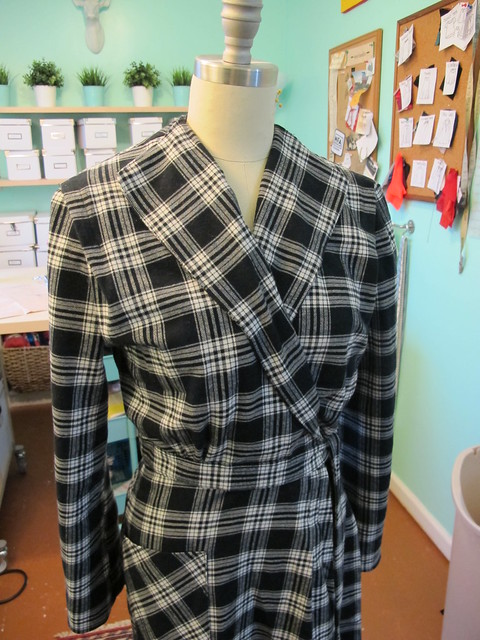
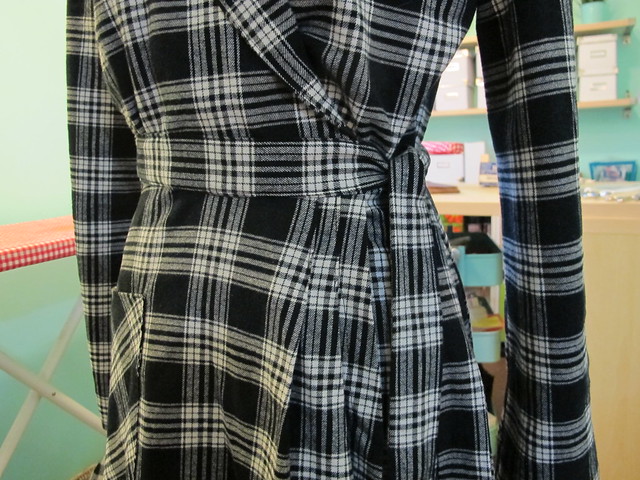
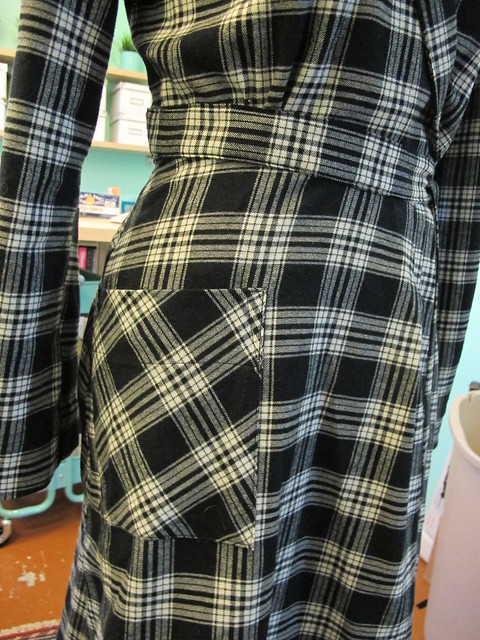
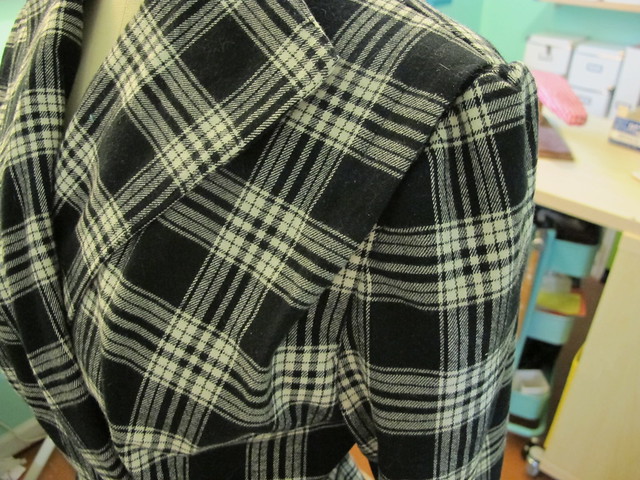
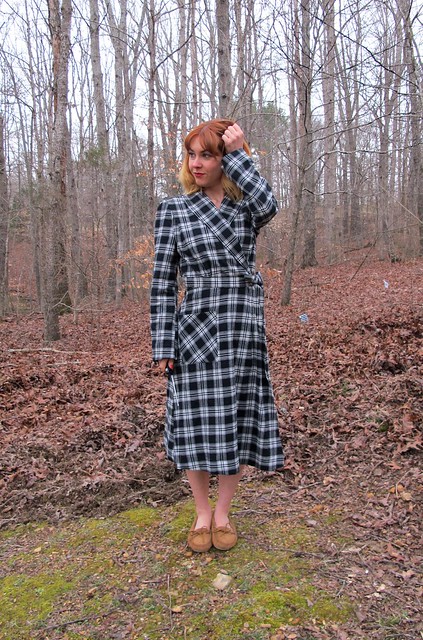
Since more fleece was out of the question, I went with a soft cotton plaid flannel from Mood Fabrics. Mood has tons of great cotton flannels on their site, but I picked this particular one because it kind of matches my plaid flannel Carolyn pajamas. It’s a thinner plaid, with one brushed side (the other side is smooth, which I used on the inside of the robe). My only complaint is that it’s quite a bit off-grain – which, combined with using a pattern that was decidedly NOT plaid-matching-friendly, meant that I really fucked up the plaid matching on this garment. Or, rather, just threw my hands in the air and gave up about halfway through cutting. I did manage to get the center back and sleeves to have a nice continuous line, but those side seams are all kinds of wrecked. Whatever. Sometimes in sewing, we have to pick our battles. I’m not going to argue with a garment that will get the majority of it’s judgement from my cat.

Simplicity 1799 robe

Simplicity 1799 robe

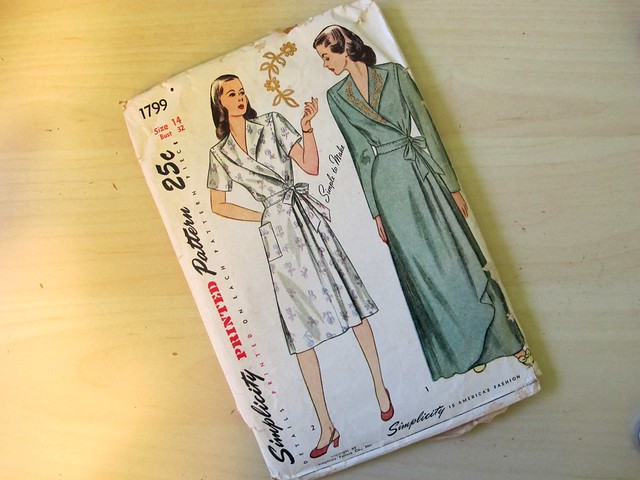
The pattern I used is Simplicity 1799, a 1940s vintage pattern I’ve had my stash for quite some time. I don’t really sew much with vintage patterns these days – I find the styles to be a little too cutesy and/or dated for how I roll with my clothes lately – but I still collect and appreciate them. And sometimes, you need a little cutesy glamour to make your day prettier, especially when we’re talking about an otherwise ugly robe. Look at how classy those ladies are!

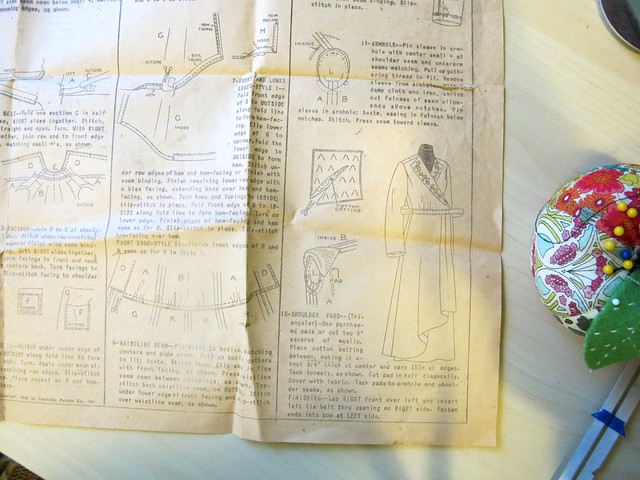
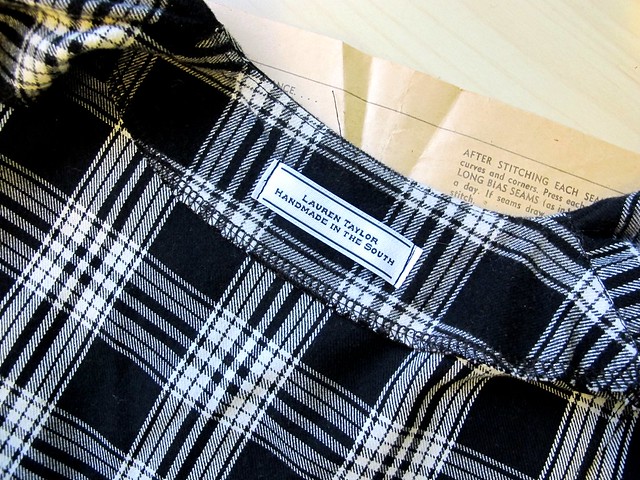
One thing I really love about vintage patterns are all the beautiful details that they include in the design. This pattern has tucks and gathers all over the places, elbow darts, and a boxy 1940s upper silhouette paired with strong shoulders. The instructions are pretty sparse as you can see, but anyone with common sewing sense can easily figure them out. I mostly went my own way – finished all the seams with my serger, left out the shoulder pads, and gave nice 2″ hems on the sleeves and bottom.

It’s really hard to see the pretty details in this, thanks to the plaid clusterfuck I’ve got going on, but I’ll try to show you some highlights:

Simplicity 1799 robe

Simplicity 1799 robe

Simplicity 1799 robe

Simplicity 1799 robe

Simplicity 1799 robe

Simplicity 1799 robe

Not much else to say about this one! Keepin’ it simple and cozy this month!

Simplicity 1799 robe

Note: This fabric was provided to me as part of my participation in the Mood Sewing Network. All declarations and opinions are my own!